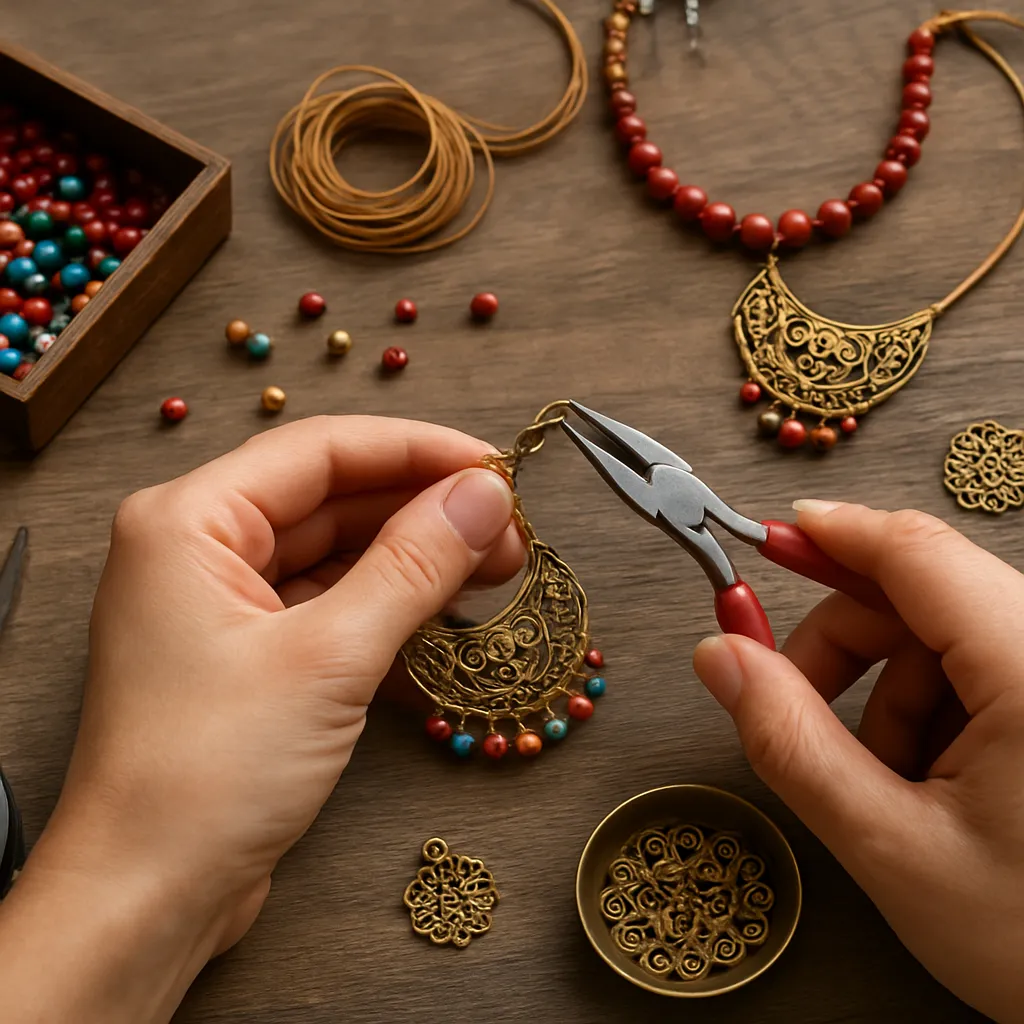
Festival jewelry carries stories, memories, and promises. It is more than ornament; it is a living archive that travels on the body, echoing songs, prayers, and family lore. Making such jewelry by hand invites you to slow down, to feel textures and weights, to choose color with intention, and to respect the ways communities celebrate milestones of the seasons and the soul. The guide below blends practical making steps with cultural sensitivity so your pieces shine not only with polish, but with purpose.
Listening to a Culture Before You Touch the Tools
Every festival has a social heartbeat. Before you sketch a single motif, learn the heartbeat. Speak with culture bearers, study reputable sources, and note regional differences. Wedding adornment in one village may be reserved for elders in the next. A shape that means renewal in one culture might signify mourning in another. Treat research as your first act of making; it shapes your hands long before metal or thread does.
Ask questions humbly and document answers carefully. Seek permission where appropriate, particularly for sacred, ceremonial, or restricted regalia. Many communities differentiate between public-facing festive pieces (welcomed during parades and open holidays) and items reserved for rites of passage or leadership. When in doubt, create in collaboration or step back respectfully. This is how you honor cultural heritage while contributing your skill.
Examples of respectful entry points:
- South Asia: Color-rich festival jewelry for Diwali, Holi, or Navratri often welcomes contemporary interpretations of floral and geometric motifs. Temple jewelry designs inspired by classical dance can be adapted for casual wear only when publicly shared by practitioners.
- East Africa: Beadwork patterns carry identity. Public-use color palettes for celebratory collars or bangles can be learned with local artisans; refrain from reproducing rank-specific sequences.
- Japan and East Asia: Seasonal flowers for matsuri, knotwork, and hair ornaments like kanzashi may be appropriate for public festivals; certain Shinto or Buddhist items are strictly devotional.
- Latin America: Marigolds, papel picado patterns, and embroidered forms celebrate Día de Muertos respectfully when paired with community narratives and not reduced to caricature.
Materials matter ethically as well as aesthetically. Research sourcing. Coral, ivory, hawksbill tortoiseshell, and some hardwoods are protected; choose lab-grown or reclaimed substitutes. Support fair-trade bead co-ops and small-scale smiths. Ethical sourcing is inseparable from cultural authenticity and environmental sustainability.
Design Language: Color, Motifs, and Forms with Meaning
Think of design as a vocabulary. Colors, shapes, and placements on the body all speak. Identify what each element says within the culture you are honoring, then translate those meanings into wearable form.
Color as a Festival Script
Color codes shift by place and time. Red may mean auspicious joy in one setting, while white might console grief in another. Map local meanings first, then build a palette: background neutrals, one or two dominant festival colors, and a highlight tone for contrast. Document your palette alongside citations and interviews. When a client asks why you chose a shade, you can answer with clarity rather than guesswork.
Motifs and Body Placement
Motifs—lotuses, suns, knots, birds, eyes—are never merely decorative. They align with cosmologies, households, and seasons. Determine if a motif is universal or reserved. Then consider where it rests on the body: earrings that frame the face, necklaces close to the heart, waist beads near the centerline, anklets that speak with every step. Placement and movement add layers of symbolism that static sketches cannot convey.
From Mood Board to Pattern
Create a mood board with community-approved references, natural textures from the festival environment (grains, leaves, textiles), and sample swatches. Turn the board into a technical drawing: a scaled plan with bead counts, wire gauges, stitch diagrams, and metal thicknesses. Small technical notes—like how a tassel will swing or how a clasp will be hidden—become the difference between costume and heirloom.
Materials and Tools for Festival-Grade Work
Choose materials that echo tradition while standing up to dancing, weather, and travel. Celebration days are long; your piece must be both beautiful and durable.
Metals
- Brass and bronze: Warm tones, cost-effective, excellent for bold collars and bangles.
- Copper: Earthy and conductive for patinas; seal to prevent skin marks.
- Silver and sterling: Reflective, classic, works well with filigree and granulation.
- Gold-filled or vermeil: Rich color without solid-gold cost; mind wear on plating.
- Cold connections: Rivets and tabs when soldering is impractical or culturally preferred.
Beads and Stones
- Seed beads (11/0 to 15/0): For intricate bead-weaving traditions.
- Glass, recycled glass, and trade bead replicas: Sustainable and historically resonant.
- Gemstones: Carnelian, lapis, jade, amber alternatives; verify provenance.
- Organic elements: Shells, tagua nut, wood from certified sources.
Textiles and Fibers
- Silk and cotton cords: Knotting, kumihimo, tassels for rhythmic movement.
- Soutache braids: Sculptural profiles for Mediterranean and Eastern European styles.
- Embroidery threads: Couching beads onto fabric backings for opulent festival pieces.
Preserved Botanicals
Flowers like marigolds, cherry blossoms, or jasmine can be pressed and set in resin. Consider climate and longevity; natural scents add emotional depth but fade—resin lock-in preserves hue and form for the festival’s span and beyond.
Tools and Safety
- Pliers: Chain-nose, round-nose, flat, and flush cutters for wirework.
- Bench tools: Jeweler’s saw, files, mandrels, dapping blocks.
- Heat: Micro-torch for soldering, pickle pot for cleaning, firebrick for safety.
- Textile rigs: Kumihimo disk, macramé board, bead loom.
- Finishing: Polishing compounds, patina solutions, sealants.
- Safety: Eye protection, respirator for particulates, good ventilation, fire extinguisher.
Keep a dedicated box for festival builds containing spare clasps, jump rings, hypoallergenic ear wires, and micro-screwdrivers. Festival days are moving targets; preparation keeps your artistry steady.
Core Techniques You Can Master
Technique turns idea into artifact. Select methods aligned with cultural precedent and the functional demands of long wear. The right technique is the quiet engine of a successful piece.
Wirework Foundations
Practice consistent wrapped loops, measured links, and tensioned coils. These create flexible chains that resist snagging in crowded streets. Use work-hardening by lightly hammering to increase durability. Closed systems—where every loop is soldered or wrapped—are your best insurance against loss mid-dance.
Bead Weaving and Lashing
- Peyote and brick stitch: Geometric motifs, excellent for festival badges, medallions, and fringe earrings.
- Herringbone and netting: Flowing drape for collars and sashes.
- Loom work: Speed and symmetry for repeating cultural patterns; finish edges with whipstitch and fold-over crimps for strength.
Metal Forming and Adornment
- Cold connections: Riveting layers of etched motifs to avoid heat on plated or delicate elements.
- Repoussé and chasing: Low-relief symbols that read at a distance during processions.
- Filigree and granulation: Lace-like tradition in many regions; practice on copper before silver.
- Enameling: Crush-and-fire glass colors echo festival palettes with durable brilliance.
Fiber and Knot Traditions
- Kumihimo: Round braids for cords that hold talismans; integrate beads along preplanned warp slots.
- Macramé: Adjustable closures, layered textures; waxed linen resists sweat and rain.
- Soutache: Channel beads between braids for sculpted silhouettes; back with ultrasuede.
Finish every technique with stress tests: tug at joins, simulate steps and spins, mist with water, and check for colorfastness. Festival jewelry lives in motion; test accordingly.
Project Blueprints for Iconic Festivals
Use the following blueprints as starting points. Each project pairs cultural research notes with modular steps so you can adapt details in consultation with local artisans or event organizers.
1) Radiant Rangoli Pendant for Light Festivals
Inspiration: Floor rangoli patterns celebrate welcome and auspicious beginnings at Diwali and other light festivals.
- Materials: 24–26 gauge silver or brass sheet, enamel powders or resin tints, jump rings, chain, fine saw blades, needle files.
- Key steps: Sketch a radial rangoli with fourfold or eightfold symmetry. Saw out the negative spaces, file edges smooth. Create low walls with wire for enamel cells, or pour colored resin in layers for transparency. Add a hidden bail so the pattern floats. Consider a matte back to keep the front luminous.
- Notes: Avoid sacred mantras or calligraphy you cannot read; focus on geometric welcome motifs instead.
2) Beaded Collar Inspired by East African Celebrations
Inspiration: Multistrand beaded collars celebrate status and community spirit in many regions. Build an homage without copying rank-specific codes.
- Materials: Size 10/0 seed beads, nylon beading thread, leather or vegan backing, beading foundation, crimp tubes, extension chains.
- Key steps: Draft a donut-shaped template sized to the wearer’s shoulders. Stitch color bands using brick stitch on a foundation, fluxed outward to fringe. Back with leather for comfort and strength. Add tie closures or chain with multiple rings for adjustability during layered clothing.
- Notes: Confirm which color sequences are public-friendly; favor widely shared celebratory palettes rather than clan-specific designs.
3) Kanzashi-Inspired Hair Ornament for Spring Festivals
Inspiration: Seasonal blossoms like plum and cherry grace hair ornaments during spring matsuri in Japan. Reinterpret with respect for seasonality.
- Materials: Silk squares, rice glue or PVA, hairpin blanks, thin brass wire, tiny freshwater pearls, clear resin for protection (optional).
- Key steps: Fold silk squares into petal units with tweezers. Wire petals into clusters with subtle movement. Mount clusters on a slim brass plate soldered or riveted to a hairpin base. Add pearl stamens for light-reflecting points. Consider detachable cascades so wearers can shorten length in crowded venues.
- Notes: Avoid sacred symbols; choose botanical forms and season-appropriate colors.
4) Marigold Fringe Earrings for Día de Muertos
Inspiration: Cempasúchil marigolds guide spirits home. Translate their warmth without trivializing altars and family traditions.
- Materials: Orange and gold seed beads, beading thread, felt foundations, ultrasuede backing, gold-filled ear wires, lightweight chain.
- Key steps: Bead-embroider circular centers on felt, couching faceted beads for sparkle. Add fringe in graduated lengths to mimic petals. Back neatly with ultrasuede, stitch the perimeter for a clean edge, then attach hypoallergenic ear wires.
- Notes: Share the story on a small card when gifting or selling: the marigold’s role in remembrance and love.
5) Mediterranean Protective Eye Bracelet for Summer Fairs
Inspiration: Eye motifs across the Mediterranean are worn as protection in crowded festivities.
- Materials: Glass eye bead or lampwork centerpiece, sterling or brass chain, silk cord, small dangles in blue and white.
- Key steps: Anchor the eye bead between wire-wrapped links so it always faces outward. Add knotwork tassels for movement. Finish with an adjustable sliding clasp to fit a range of wrists.
- Notes: Use locally made lampwork beads to support regional artisans and deepen connection to place.
6) Celtic Knot Torc-Inspired Bracelet for Seasonal Gatherings
Inspiration: Interlaced knots symbolize continuity and cycles in many Celtic traditions. Create a modern, wearable nod.
- Materials: Heavy-gauge bronze or sterling wire, mandrel, chasing hammer, liver-of-sulfur patina, clear wax sealant.
- Key steps: Twist double strands around a mandrel to form a rope. Shape into an open cuff with softly flared terminals engraved with knotwork. Hammer lightly to work-harden, apply patina to deepen recesses, then seal to avoid rub-off during dances in humid weather.
- Notes: Keep terminals smooth against skin; weight balance ensures comfort through long events.
7) Discreet Waist Beads for Harvest Festivals
Inspiration: Waist beads hold personal meaning for body awareness, rites, and adornment across parts of West Africa and the diaspora. Approach with privacy and respect.
- Materials: Fine seed beads, strong nylon or silk thread, barrel clasp, optional charm focal approved for public wear.
- Key steps: Take measurements privately. String beads in meaningful sequences agreed upon with the wearer. Knot at intervals for security. Use a low-profile clasp or continuous loop if culturally appropriate.
- Notes: Provide care instructions discreetly; these are intimate adornments not always intended for public viewing.
Finishing, Durability, and Comfort for Street Celebrations
Festival jewelry must endure sweat, sun, rain, and exuberance. Finishing choices determine whether your work returns home intact.
- Edges and joins: Round every edge; tuck wire tails. Consider a burnisher pass on contact points.
- Weight and balance: Heavy pendants need counterbalance; distribute weight along collars to avoid neck fatigue.
- Hypoallergenic findings: Offer niobium, titanium, or well-sealed precious metal for sensitive skin.
- Weatherproofing: Use UV-stable resins, colorfast threads, and seal patinas. Pretest dyes in sweat simulant (salty water) to prevent leaching.
- Movement: Hinges and tassels telegraph joy. Build stop-limits so parts don’t tangle with hair or garments.
Package pieces in breathable pouches with anti-tarnish tabs. Include a quick-repair kit: spare ear nuts, two jump rings, and a tiny clasp. Consider field-service during festivals—your booth or meetup spot becomes a community anchor for little fixes that build trust.
Working With Communities and Telling the Story
Collaboration changes everything. Co-design sessions with dancers, drummers, or elders yield insights you cannot guess at your bench. Offer prototypes for rehearsal; note snags, sound, and sightlines under stage lighting. Agree on credit, pricing, and future orders in writing; a good contract preserves friendship and art alike.
When you present your jewelry, let the community speak first—through photos of process (with permission), artisan names, and narratives vetted by participants. Tag collaborators on social posts and list material sources. This is not marketing fluff; it is ethical community practice and a record of shared craftsmanship.
Set prices that honor skilled labor. Festival customers often understand value when you demonstrate techniques on-site—wire-wrapping a link, shaping a rivet, or threading beads in pattern. Story and skill together justify the price and educate future makers.
Sustainability and Responsible Making
Sustainable practice keeps festivals vibrant for generations. Source recycled metals, reclaimed beads, and locally grown fibers. Design for repair: modular components that unscrew or unclip simplify upkeep. Offer refresh services—polish, restring, re-plate—so treasures stay out of landfills. Build small-batch runs and preorders to match demand, reducing inventory waste and deepening client relationships. In all, connect environmental sustainability to cultural continuity; both are stewardship.
Consider packaging made from plant fibers patterned after regional textiles. Reuse motifs only with documented permission, and share a portion of proceeds with culture bearers when designs are co-created. This creates a traceable line from ring or bead to festival stage, honoring both material and meaning.
Reference Timelines and Checklists
Eight-Week Festival Plan
- Weeks 1–2: Research and permissions. Compile mood board and vetted motifs. Confirm color meanings and dress codes.
- Week 3: Prototypes in inexpensive materials; test for movement, weight, and comfort. Schedule fittings with performers.
- Week 4: Finalize technical drawings, order ethically sourced supplies, and prepare jigs and templates.
- Week 5: Produce core pieces; keep a log for bead counts and cut lists to reproduce pairs consistently.
- Week 6: Finish and seal; conduct stress tests and weather simulations.
- Week 7: Photography, story cards, care guides; confirm booth logistics or delivery plans.
- Week 8: Buffer week for fixes, backups, and last-minute size changes.
Quality and Safety Checklist
- Tug test on every join and knot; movement check for tassels and hinges.
- Skin test for edges; snag test with a silk scarf and coarse weave cloth.
- Sweat and rain simulation; colorfast verification.
- All findings hypoallergenic or clearly labeled for sensitivities.
- Story and permissions documented, sources credited.
Day-of Kit
- Two pliers sets, flush cutters, micro files, bead mat, spare beads pre-sorted by color, headpins, ear wires, jump rings.
- Clear epoxy or fast-setting cement, beeswax for thread, rubbing alcohol, microfiber cloths.
- Story cards and small signage acknowledging collaborators and material sources.
Advanced Surface and Structure Techniques
Push your practice with finishes and structural tricks that elevate festival pieces.
- Patina layering: Apply liver-of-sulfur, then selectively polish peaks to reveal metal highlights—perfect for relief motifs that must read from a distance.
- Textile-metal hybrids: Stitch beads onto thin metal mesh, then fold and rivet onto a cuff. The result is flexible yet strong, a conversation between softness and shine.
- Resin inlays with natural inclusions: Trap tiny pressed petals or spice grains emblematic of a festival feast in thin resin domes; seal edges with bezel wire.
- Invisible supports: Hide spring steel cores inside braided cords for shape memory in elaborate headpieces that must withstand movement.
These moves require practice; prototype and document each step so future you can repeat success on deadline.
Ethics, Attribution, and the Line Between Inspiration and Imitation
Draw from broad patterns and principles rather than one-to-one copying of a living artisan’s signature piece. If a design is distinctive to a maker or workshop, commission or license it; do not replicate. Credit your teachers by name. When a community requests limits—no resale, private-only use, or seasonal restrictions—adhere faithfully. Attach a maker’s note that acknowledges origins: this keeps lineage visible and honors festivals as living traditions, not museum cases.
Appropriation often begins where context ends. Embed context in your process and presentation so admiration becomes partnership. In doing so, you keep the word ritual tied to real people and places, not abstract aesthetics.
Comfort, Accessibility, and Inclusive Design
Festivals welcome all bodies. Offer multiple closure types, light-weight options for chronic pain, magnetic clasps for limited dexterity, and clip-on earrings. Add soft backings for sensory sensitivities. Inclusive design is not an afterthought; it is skilled craftsmanship applied to human experience.
Balance tradition with care: if a style is historically heavy, create a visually similar but lighter version with hollow forms or foam-backed embroidery. Provide sizing that respects modesty and cultural dress codes. Ask wearers how pieces feel in motion; iterate quickly.
Documenting Your Work for Legacy
Keep a living archive: pattern numbers, bead counts, wire gauges, sources, and permissions. Photograph pieces on and off the body under festival lighting. Record voices—brief quotes from collaborators—about how the piece felt during the event. This documentation is a bridge for the next maker and the next celebration, turning individual items into a tradition of careful making and shared symbolism.
From Bench to Procession: The Maker’s Mindset
Making jewelry for cultural festivals is an act of service. It asks you to balance look and feel, craft and context, beauty and belonging. Hold these balances openly. Let feedback refine your methods. Let mistakes teach you repair techniques. Let joy guide finishes that sparkle when drums begin. And let quiet guide choices that protect stories bigger than any single necklace or bracelet.
When your work finally meets the street—catching sun, clinking softly, holding color against the day—you will sense why a good piece feels inevitable, as if it always existed and you merely assembled it. That feeling comes from patience, from research, from partnership, and from a respectful curiosity that never stops learning. In that space, you become a steward of living heritage, a keeper of practical innovation, and a bridge between the hand and the holiday, the bench and the procession.
