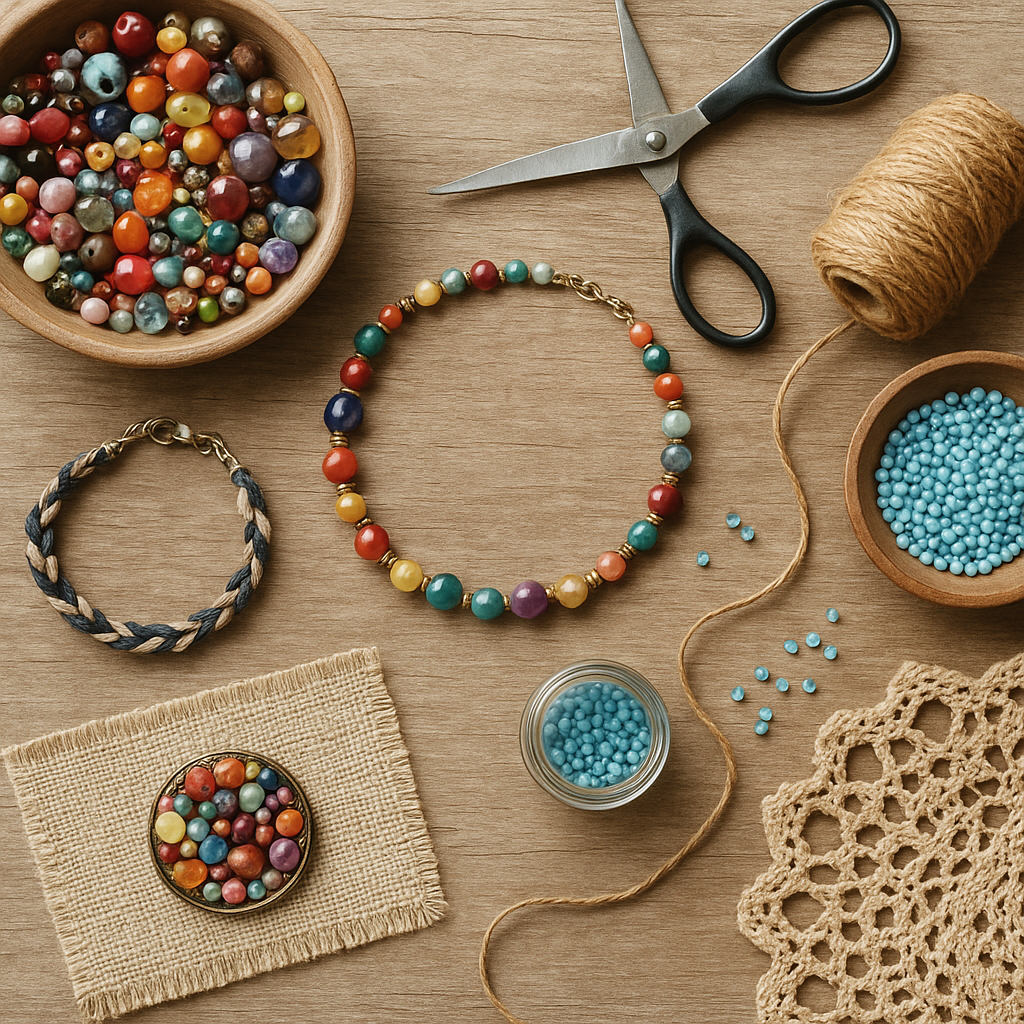
There’s magic hiding in every bead box: the odd singles, the tangled strands, the orphaned charms, the bits trimmed off a clasp. Treating leftovers as raw potential rather than clutter can transform your practice and your space. This guide gathers practical methods, design insight, and project ideas that help you use what you already have, grow your skills, and build pieces with story and soul. Along the way you’ll discover how constraints invite play, why tiny components are ideal for prototyping, and how humble trimmings can become the spark behind your next signature technique.
Why Leftovers Matter: Materials, Meaning, and Mindset
Every handful of mixed beads carries a timeline of experiments—colors you tested, techniques you tried, gifts you made. Embracing leftovers starts with reframing them as a palette. Small counts and mismatched finishes demand decisions you might avoid with fresh, uniform stock, pulling you toward new structures and habits. This frugal, inventive lens is also a quiet practice of sustainability: it reduces waste, trims budgets, and nourishes a circular studio workflow in which nothing is done until it’s truly done.
Work with what’s at hand and you hone agility. That odd bead with a chipped finish might become a focal when set in resin; a too-small spacer turns into a delicate fringe cap; a misdrilled pearl is perfect for a wire spiral trap. Scraps encode questions that nudge your craft forward: How do you transition between finishes? What pattern hides size differences? Where do you need contrast? Asking these questions—and answering with your hands—builds fluency in both technique and composition.
There’s also emotional weight. Beads from old repairs, heirlooms that broke, or a friend’s de-stash can find new life in talismanic objects. A leftover never travels alone; it drags memory along. Nothing packaged new can compete with the depth of a small, storied trove.
Sorting, Storing, and Seeing Possibilities
Leftovers flourish when you can find them. Systems don’t have to be elaborate—only visible and repeatable.
- Sort by pathway: Keep a tray for “weaving,” a tray for “stringing,” and a tray for “wire-friendly.” It’s faster than sorting by hue and instantly ties components to techniques you’ll reach for.
- Create micro-palettes: Fill small tins with five to twenty beads that feel related—color echoes, shared sheen, or complementary shapes. Treat each tin as a sketchbook page.
- Tag problem children: A jar labeled “tiny holes” or “heavy focal” speeds decision-making later. You’ll grab the right needle, cord, or chain without remeasuring.
- Swatch finishes: Thread samples of coatings (AB, matte, luster) onto safety pins or wire hoops, with handwritten tags. Seeing finishes together helps when balancing shine and matte color.
- Stage surfaces: Keep a neutral beading mat, a dark linen, and a white card nearby. Shift a layout to test contrast. A bead that disappears on beige may glow on charcoal.
- Track your inventory: A simple note—“12x 6 mm faceted glass, smoky, 0.8 mm hole”—avoids trial and error during design crunch time.
Tools support seeing. A 10x hand lens reveals chips and coatings; calipers detect tiny size differences; a needle gauge and a wire gauge card prevent cracked beads. Prepare a “leftover” toolkit with short lengths of various cords (polyester, nylon, silk, waxed linen), a scrap of 24–28 ga wire, a set of needles from size 10–15, and jump rings in 4–8 mm to audition attachments fast.
Design Principles for Using Scraps
Scraps reward deliberate structure. When beads don’t match, rhythm does the heavy lifting.
- Establish pattern families: Alternate one “anchor” bead with three “wanderers,” repeating the 1–3 cadence. Even if the wanderers vary wildly, the cadence reads as intentional.
- Cluster to equalize: Group smalls around a medium bead to match the visual weight of a single large bead. Think grape clusters around an olive.
- Echo shapes: If sizes differ, repeat silhouettes—multiple rounds versus a single large round. Echoes unify more than strict matching.
- Plan transitions: Use matte beads as bridges between metal-coated beads and polished gemstone. The shift through texture makes blends look planned.
- Mind contrast: Hard vs. soft, shiny vs. satin, warm metals vs. cool stones. If a section feels muddy, introduce one high-contrast spacer to reset the eye.
- Build focal gravity: Create a “gravity well” with denser ornamentation near the focal and lighter spacing elsewhere. Viewers accept irregularity when there’s a clear “center of mass.”
- Use odd numbers: Trios for symmetry without stiffness; fives for clusters that look organic.
Color strategies favor flexibility: analogous schemes tame mixed bins, while complementary bursts (e.g., violet with a citrus pop) energize. When a hue feels off, adjust temperature (add warmer/cooler neighbors) before changing hue entirely. Short runs of metallics—antique brass, gunmetal—act as buffers that stabilize loud palettes.
Techniques That Thrive on Mixed Lots
Patchwork bead weaving
Peyote, brick, and RAW (right angle weave) accept slight size shifts if you lean into it. Map off-size beads to the edges, where gentle wonkiness reads as hand-stitched charm. Use netting to corral odd shapes into scalloped collars; the openness forgives mismatch and makes light play.
- Tip: Add occasional “spacer rows” of uniformly small seed beads to reset tension and plane.
- Filler strategy: Reserve delicas or uniform 11/0s for structure, feed druks and chips as texture within cells.
Wire armatures and cages
Wire is the diplomat among misfits. Wrap 24–26 ga wire into frames that hold beads suspended, agnostic to hole size. Make bead caps from coiled wire to hide chipped drill holes. A spiral trap or prong setting turns a holeless shard into a pendant. Mixed metals (copper/brass) can be united with a patina or matte sealant.
Stringing and knotting salvage
Waxed linen and poly cord with overhand or figure-eight knots create visual separators that normalize irregular beads. Chinese knotting cord holds tight and fills mismatched hole diameters. Alternate double knots near heavier beads for security, then single knots near smalls to reduce bulk.
Resin, clay, and embedding
Use two-part epoxy clay to seat tiny leftovers into bezels, frames, and found objects. Resin domes over micro-beads trap sparkle and protect fragile foils. Make mosaic medallions from seed beads plus broken rhinestones; outline cells with thin wire before filling to keep order. This is high-yield for fragments you can’t otherwise string.
Surface embellishment
Hand-sew beads to garments, quilts, and accessories. Couch bugle beads along seams; seed beads edge pockets; single pearls accent buttonholes. When garments stretch, stitch to a non-stretch layer or use small clusters rather than long rigid runs. Backstitch plus a “tacking” stitch every few centimeters resists snagging and load.
Project Ideas: From Tiny Finds to Statement Pieces
“Memory map” bracelets
Organize beads by origin: a trio from a beach trip, a single from a broken earring, a handful from a friend’s stash. Separate clusters with knots or heishi spacers. Add a small tag with stamped initials for each cluster’s story. The narrative makes gift-giving potent and guides future repairs.
Cluster rings from five beads
- Tools/materials: 22–24 ga wire, ring mandrel, side cutters, five beads of mixed size.
- Steps: Wrap base on mandrel, twist to create a small platform, thread beads on tails, spiral and cinch each bead. Tuck ends. Oxidize or polish to unify metal.
- Tip: Balance heavy beads toward the knuckle side for comfort and to reduce flipping, a nod to ergonomics.
Bookmarks and page charms
Wire a slim line of beads onto a long headpin and attach to a shepherd’s hook blank or ribbon end. Combine glass with wood or shell to reduce weight and protect book spines. Librarians approve of soft-backed versions.
Sun catchers and window tassels
Mix clear glass, prism scraps, and silver-lined seed beads on 0.015–0.019 in beading wire. Anchor heavy crystals at the bottom, then graduate up to lighter. Test in direct sun to map rainbows. Add spinner swivels to avoid twisting tangles on breezy days.
Lampshade fringe
Use looped fringe on cotton tape or bias binding. Attach to the shade interior seam so the beads catch light but don’t tangle hands. Alternate bugles and drops for a rhythmic cascade. For heat safety, keep at least 5 cm from bulbs and use LEDs to minimize warmth.
Drawer pulls and zipper charms
Convert metal spacers and large-hole beads into knobs: epoxy onto blank hardware screws, then cap with a nut behind the drawer face. For zipper pulls, use lark’s head knots with waxed cord to absorb shock, add a split ring for redundancy.
Hair slides and combs
Wire-wrap beads to metal combs, staggering heights to fit scalp curve. Keep smooth beads at edges to avoid snagging hair. For barrettes, build a wire “bridge” to support weight and use light acrylics near the hinge to prevent torque.
Plant hangers with beaded accents
Integrate leftover beads into macramé: add them to square-knot tails or crown knots. Wood and ceramic suit outdoor light; avoid ferrous metals near moisture. Tie a drip ring beneath the pot with larger beads that can handle occasional splashes.
Holiday ornaments and keepsakes
Wrap lightweight foam or wooden shapes with fabric and beaded pins. Form snowflakes with wire hubs and six spokes; use pairs of seed beads to “rib” each arm. Personalize with initial charms scavenged from broken bracelets.
Visible mending with beads
Reinforce elbows or pockets with fabric patches, then bead over stitch lines. Edge beads protect raw hems. Combine sashiko-inspired running stitches with bead “berries” for dimension. Strategically place beads where garments flex the least to preserve durability.
Mixed-media art panels
On a wood cradle board, collage paper and fabric scraps, then embed beads with matte gel. Stitch through pre-drilled holes for secure attachment. The rigid surface welcomes weight; integrate wire nests to host irregular stones or glass shards.
Textile Crossovers: Stitching Beads into Fabric
Marrying beads with cloth absorbs oddities seamlessly.
- Tulle overlays: Sandwich small beads between layers of fine net; stitch gridlines. The transparency softens color noise and guards delicate finishes.
- Tambour beading: Chain-stitch beads rapidly from the back with a fine hook. Excellent for uniform seeds mixed with occasional feature beads.
- Couching pathways: Lay a beaded strand along a motif and tack every centimeter. Saves time and reduces strain on fragile fabrics.
- Beaded button loops: Use pearls or round glass alternated with knots to form loops that fasten around statement buttons—reclaims doubles and near-pairs.
Use beading thread compatible with fabric: polyester for strength on garments, silk for heirloom pieces, nylon for accessories. Pre-stretch threads to minimize later sag; wax lightly if friction is high. Always knot to a backing patch on the inside or to a hidden seam allowance for clean interiors.
Home and Studio Upgrades Made from Scraps
Leftovers can improve your making habitat.
- Custom bead board: Glue thin felt to foam core; embed flexible drinking straws as channel dividers; add a ruler strip for fast sizing.
- Portable palettes: Magnetic tins hold steel needles, tiny scissors, and jump rings. Line the bottom with a bead mat offcut to stop rolling.
- Charm swags: String metal findings and single charms on chain to hang above your bench; fast auditions without rummaging drawers.
- Spool corral: Thread seed beads onto leftover wire to act as decorative guards at spool edges—no more unraveling.
- Weighing helpers: Fill small organza bags with reject beads to create gentle pattern weights for tracing and cutting.
Teaching, Gifting, and Community
Leftover kits make excellent outreach tools. Assemble small assortments with basic instructions and host a swap night: everyone brings one organized tin and leaves with a different one. Consider themed swaps—metals only, beach glass, blue-green spectrum. For children’s workshops, prioritize large-hole plastic or wood and blunt tapestry needles; set magnet trays at each station to capture errant findings. Label each kit with technique suggestions and safety notes.
Gifting scrap-born pieces carries the story of resourcefulness and heart. Include a mini card that lists origins—“glass from my grandmother’s necklace, brass from a thrifted belt.” These narratives increase perceived value without requiring expensive stock, and they celebrate communal craftsmanship.
Repair, Revive, and Reinvent
Old, damaged, or unfashionable jewelry is a parts mine. Strip chain into varying lengths for tiered necklaces; turn clip-on earrings into pendants or brooches; cut memory wire bracelets for springy ring bases. Mute loud plating with matte spray or rub-on patina to pull disparate metals into one family. For porous stones with stained holes, cap them with bead cones or seat them in bezels so discoloration hides.
When restringing, standardize stress points: crimp covers at transitions, wire guardians at clasps, soldered jump rings for heavy sections. If you’re mixing old elastic with new strands, relegate elastic to the lightest zone; better, retire it and use covered beading wire to prevent surprise breaks.
Finishing, Comfort, and Longevity
Finishes make or break wearability. Think from the body outward:
- Weight distribution: Place heavier beads low and centered; reduce neck strain by migrating weight to drape rather than nape.
- Skin-friendly metals: Use stainless, niobium, or titanium for ear wires; seal base metals with microcrystalline wax or clear lacquer to slow tarnish.
- Friction planning: Add tiny seed-bead buffers near clasp attachments to absorb rub; use wire guardians where cord meets metal.
- Movement control: Employ short lengths of chain or beaded “hinges” between rigid elements for smooth articulation, supporting long-term modularity and repairs.
- Sealing and set: For porous or dyed beads, fixative sprays or brush-on sealants reduce color transfer. Test on a spare to avoid darkening.
Pricing and Presenting One-of-a-Kind Scrapwork
Uniqueness is your lever. Document the piece’s journey: a photo of the original heap beside the finished item highlights transformation. Package with recycled materials—paper offcuts stitched into envelopes, fabric selvage ties, a stamped scrap card. List time, technique complexity, and story elements in your pricing notes. Customers aren’t buying components; they are supporting ingenuity and conservation-driven upcycling. Offer “refresh services” to swap beads seasonally, deepening relationships and reusing your own work.
Challenge Prompts to Jump-Start Creativity
- Three-size rule: Choose only small, medium, large—one of each per repeat.
- Monochrome day: Work in one hue; vary only finish and transparency.
- Odd-hole puzzle: Design a piece using only beads with nonstandard or chipped holes.
- Constraint clasp: Pick the clasp first and make the rest submit to it.
- Left hand only: Force slower, more intentional motions and see what changes.
Troubleshooting Common Leftover Problems
- Inconsistent holes: Ream gently with a bead reamer; for fragile glass, soak in water to cool; for pearls, hand-ream only. If reaming risks cracks, seat the bead in wire cages or epoxy clay instead.
- Chips and flakes: Face the flaw away from abrasion. Stabilize foiled or painted beads with thin UV resin or clear nail lacquer, then re-drill the coating carefully with a fine bit if needed.
- Metal allergies: Convert ear wires to hypoallergenic. Add barrier beads (stone, glass) between metal and skin. Seal brass/copper with Renaissance wax; reapply after cleaning.
- Weighty pendants: Build a yoke—two beaded straps into a V—to distribute weight. Add counterweight beads at the clasp to reduce flipping.
- Color chaos: Insert “quiet” runs—mattes, wood, bone—to calm noisy sections. Repeat a single accent every 2–3 cm to stitch the palette together.
- Slippage on thread: Switch to textured cord like waxed linen or rough up smooth thread lightly with beeswax. Double back through the last three beads before a knot to lock structure.
- Tension drift in weaving: Add “breathing rows” of smaller seeds; switch to a stiffer thread (FireLine) for stability, then soften with flexible fringe at edges.
Materials Map: What Plays Well Together
- Glass + wood: Temperature contrast and weight balance; wood adds warmth and reduces overall load.
- Gemstone chips + seed beads: Seeds provide rails for unruly chips, taming edges and setting rhythm.
- Acrylic + metal: Acrylic supplies volume without weight; metal adds flash and structure.
- Ceramic + cord: Cord cushions heavy ceramics, preventing chipping where wire might bruise edges.
- Shell + linen: Natural luster pairs with natural fibers; knot spacing can echo shell ridges.
Process Habits That Multiply Ideas
Work in “study sets”: make three variations in quick succession while the palette sits open. Capture each in a photo grid before putting beads away. Maintain a “replay” box: components that worked especially well together go here for a future, more ambitious piece. Combine this with 15-minute micro-sessions: in spare moments, pre-string small sections or make ear wires from scrap wire. When a larger block of time opens, the hardest part—beginning—has already happened.
Prototype dangling parts with scrap chain and jump rings. Hang on a pinboard and gently shake; remove any component that clicks loudly or binds, then replace with soft spacers. Your hands will memorize quiet assemblies that feel sumptuous in motion.
Ergonomics, Safety, and Tool Care
Comfort fuels consistency. Position your mat at elbow height; rotate projects rather than twisting wrists. Choose padded pliers and widen handle angles for neutral grip. A desk mat with edge lip prevents beads from leaping. Collect trimmings in a small bowl so nothing sharp lurks on the floor. Ventilate when using adhesives, patinas, or sprays. Mark adhesive cure times on masking tape near your bench; patience protects finishes and joints. Long sessions? Alternate tasks—stringing, weaving, wire—so your muscles swap roles, the essence of workshop ergonomics.
From Scraps to Systems
What starts as rescue becomes routine. When you design with scraps in mind, you gradually choose primary materials that pair well with leftovers: versatile neutrals, reliable spacers, generous jump rings. You hold back a pinch of every new purchase for the “afterparty” bin—the birthplace of the next experiment. Over time, your work becomes a conversation across projects, bound by repeating solutions and a recognizable hand. This continuity increases durability not only of objects but also of your creative voice.
Maintain modular clasping strategies: lobster plus extender chain for adjustable necklaces; toggles with soldered rings on bracelets; two-part connectors that can be decoupled. Swap charms and clusters seasonally without remaking the base. This approach to modularity respects time and keeps your pieces in rotation, not retired.
Color and Finish: A Practical Mini-Clinic
Finish is often more important than hue for cohesion. Matte beads bridge shiny ones; AB coatings pair best with limited neighbors; frosted stones can sit beside raw wood with no visual fight. Try a rule: no more than three finish families per piece. If a palette still argues, add a “unifier”: a recurring spacer (antique brass, hematite, or matte black) every 1–2 cm. For sparkle with control, concentrate crystal near the focal and step down to satin or opaque as you approach the clasp, a gradient that reads as deliberate composition even in chaos.
Documentation and Storykeeping
Photograph leftovers before and after transformation. Record source memories: “sea glass—Capri, 2018,” “aunt’s brooch,” “market grab bag.” A simple ledger supports future commissions and authenticity cards. Paste tiny samples on index cards—one bead of each type—then jot thread or wire used, knot type, clasp style, and any issues encountered. This archive becomes a private textbook, saving you from relearning the same lesson twice and sharpening your long-view craftsmanship.
Gentle Economics of the Scrap Studio
Leftover-driven practice reduces costs while expanding repertoire. Spend strategically: buy quality thread, pliers, needles, and clasps, plus a small stash of neutral spacers. These amplify scraps without overshadowing them. Track time honestly; even found components deserve fair labor valuation. Offer repair credits to clients who return old pieces—salvaged parts become your future accents. Your studio evolves into an ecosystem where each purchase spawns multiple lives.
Advanced Assemblies: Hybrids and Hinges
Combine loomed strips with wire-built frames; hinge bead-woven tiles using jump rings; mount bead clusters on leather tabs for tactile contrast. Micro-tubes (crimp tubes used decoratively) can function as bushings at moving joints. Build “service loops” of extra chain at stress points so you can replace worn sections later without disturbing the core.
If you work large, integrate armatures hidden beneath beadwork to distribute weight—thin aluminum or brass strip, punched for stitch-through points. Pad with felt before beading to avoid hard edges telegraphing through. The structure invites ambitious forms while safeguarding comfort and lifespan.
Mindful Maintenance
Provide care cards: how to store (flat or hung), avoid chemicals and perfumes, wipe with soft cloth, seal wood with a drop of oil if it dulls. Encourage seasonal checkups. When a piece returns, mine its scuffs for data: where did friction win, what clasp failed, which finish wore? Feed answers into your next design so each object iterates toward greater durability across your body of work.
Closing Encouragement: The Beauty of Constraint
Leftovers ask for listening. Some days they’ll point you to a spare, meditative weave; others, to a riot of charms dense with life. Treat the pile as a collaborator. When you accept constraint, you gain freedom: the narrow path of what you have opens vistas for how you make. Bead by bead, scrap by scrap, your table becomes a proving ground for resourceful artistry—and a quiet testament to thoughtful sustainability at the heart of making.
