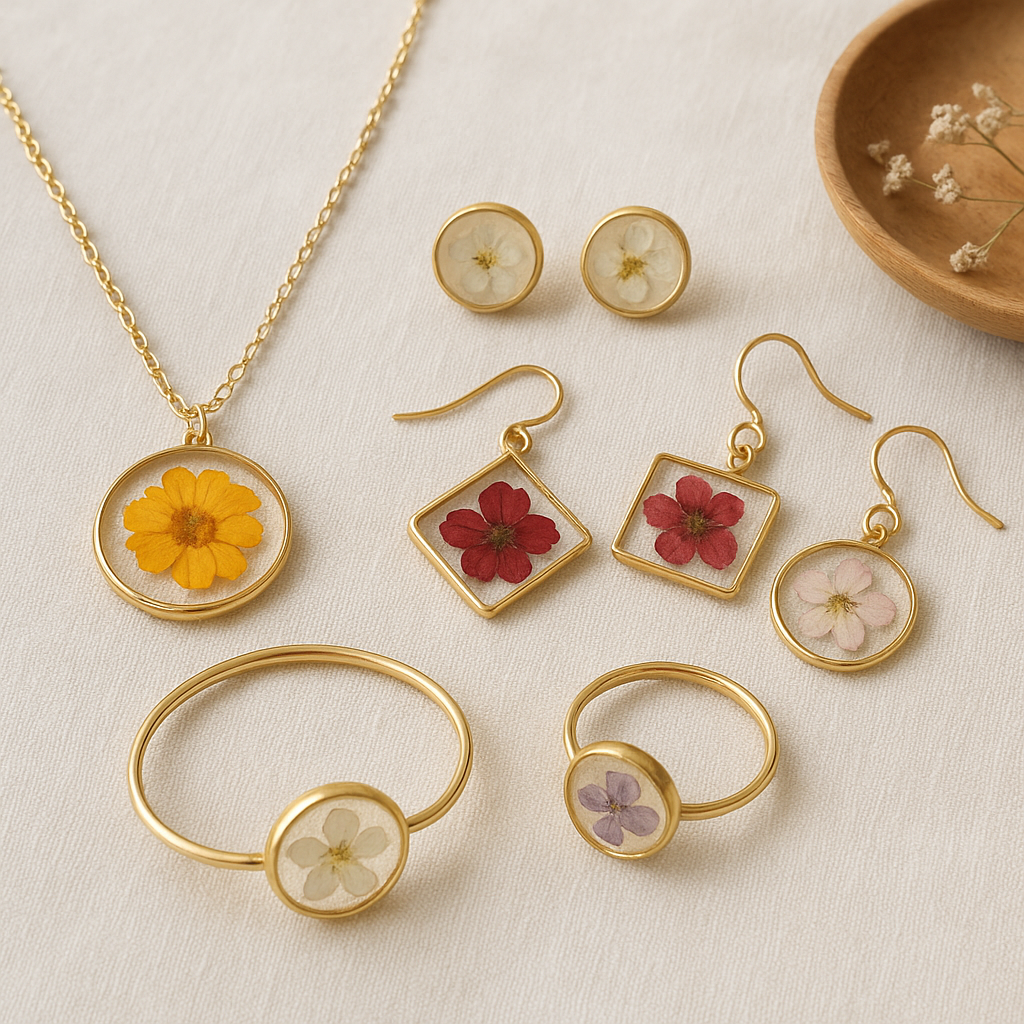
Birth flowers turn the calendar into a living garden, giving every month its own bloom and story. Translating those blooms into jewelry lets you wear a small piece of nature and time—pressed between glass, cast in resin, embroidered on silk, or sculpted in clay. Handicraft offers a slow, attentive path to make these ornaments meaningful: you choose a flower, trace its lines, mix its colors, and assemble it close to the skin. The result is not just a pendant or ring, but a keepsake that binds memory, place, and season into a tangible form.
Birth Flowers by Month: A Quick Reference for Design
Before drawing a single petal, it helps to know the traditional birth flowers. Some months have more than one recognized bloom; use whichever suits the story you want to tell, the recipient’s taste, or what’s available to gather and preserve.
- January: Carnation, Snowdrop — ruffled petals or minimalist white bells; both press well and hold detail.
- February: Violet, Primrose — rich purple or pastel rosettes; ideal for miniature embroideries and resin domes.
- March: Daffodil — iconic trumpet silhouette; perfect for wire outlines or polymer cane motifs.
- April: Daisy, Sweet Pea — daisy rays for clean graphic pendants; sweet pea curls for delicate wirework.
- May: Lily of the Valley, Hawthorn — tiny bells and clustered blossoms; beautiful for soldered glass lockets.
- June: Rose, Honeysuckle — layered romance or tubular elegance; great for engraved or repoussé metal.
- July: Larkspur, Water Lily — spurred vertical spikes or lotus-like forms; dramatic for statement cuffs.
- August: Gladiolus, Poppy — tall sword lilies or papery poppies; poppies shine as enamel or polymer veneers.
- September: Aster, Morning Glory — starbursts or coiled trumpets; ideal for beaded starbursts or wire spirals.
- October: Marigold, Cosmos — densely petaled suns or dainty disks; suited to layered felt or quilled paper jewelry.
- November: Chrysanthemum — intricate layers; try micro-mosaics or metal clay impressions.
- December: Narcissus, Holly — winter whites or evergreen with berries; perfect for festive brooches and cuff links.
These motifs adapt to different mediums. Carnations press flat beautifully, daisies lend clean silhouettes for cut metal, roses invite textured relief, and violets favor bead embroidery. Thinking like a craftsperson means looking for forms that translate well to technique, not just what looks pretty in a vase.
Materials and Tools: Building a Thoughtful Bench
Most DIY birth flower jewelry can be achieved with a limited toolkit and a few specialty materials. Choose based on the effect you want, your budget, and the time you have.
- Pressed flower work: plant press or heavy books, blotting paper, tweezers, micro-scissors, UV resin or glass cabochons, bezels, clear adhesive, toothpicks, silicone mat, UV lamp.
- Resin casting: two-part epoxy or UV resin, heat gun or torch for bubbles, silicone molds, digital scale, mixing cups, stir sticks, nitrile gloves, respirator if using epoxy.
- Metal work (cold connections): jewelers’ saw, files, needle files, sandpaper, metal blanks or sheet, letter/shape stamps, bench block, riveting tools, jump rings, pliers.
- Metal clay: fine silver or bronze clay, texture plates, rolling pin, kiln or torch (depending on clay type), polishing papers, burnisher.
- Embroidery and fiber: fine woven ground (silk, linen), micro-hoop or bezel frames, size 10–12 needles, silk/cotton floss, magnifier, fray check, tiny shears.
- Polymer clay: assorted colors, blade, needle tool, dotting tools, acrylic roller, pasta machine, oven thermometer, varnish.
- Wire and beads: 20–28 ga wire, mandrels, round/chain/flat-nose pliers, gemstones or glass in flower tones, nylon hammer, bench block.
Invest in a few quality items where they matter most—sharp tweezers for delicate petals, genuine UV-stable resin, and reliable pliers. Small upgrades in tools result in cleaner edges, fewer bubbles, and longer-lasting finishes, raising both the beauty and the durability of your work.
Preserving Blooms: From Garden to Keepsake
How you prepare the botanical material determines the crispness of lines, colorfastness, and longevity.
- Pressing: Harvest in late morning when dew has lifted. Arrange petals flat on blotting paper, cover with more paper, and press under weight for 1–2 weeks. Replace papers after 48 hours to avoid browning. Store finished specimens in acid-free envelopes for archival integrity.
- Silica gel drying: For three-dimensional blossoms like miniature roses or marigolds, bury flowers in silica gel for 3–7 days to retain volume. This is excellent for resin bezels with gentle domes.
- Sealing: Extremely thin mistings of archival spray (like clear acrylic or artist fixative) can preserve delicate pigments before embedding. Test first; overspray can darken whites.
- Alternative botanicals: If fresh flowers are out of season, use responsibly sourced dried blooms, paper quilling mimics, or embroidered renditions. Good craft is flexible.
Document each flower’s source and date—especially if the bloom came from a wedding bouquet or family garden. A note of provenance transforms a pretty trinket into a meaningful heirloom.
Project 1: Pressed Birth Flower Glass Locket
A minimal project that highlights the natural silhouette, perfect for lily of the valley, daisy, or snowdrop.
- Design: Choose a flat-fitting petal cluster. Plan negative space so the flower reads clearly against the wearer’s clothing.
- Assembly: Place the flower between two pre-cut pieces of UV-safe glass or acrylic. Add micro-dabs of clear adhesive at three points to tack, keeping glue away from visible edges.
- Frame: Fit into a metal locket frame with a secure hinge or screw closure. Add a jump ring and delicate chain sized for neckline ergonomics.
- Finishing: Polish glass, then store it for 24 hours before wearing to ensure full cure of any adhesives.
Because this design relies on transparency and silhouette, select species with distinct outlines; a single daisy head or a sprig of hawthorn reads beautifully even at a distance.
Project 2: UV-Resin Birth Flower Charm with Color Float
UV resin cures quickly, making it beginner-friendly for small charms.
- Base: Place a thin layer of UV resin in a shallow bezel. Partially cure for 30–60 seconds until gelled.
- Placement: Using tweezers, set your pressed violet, primrose, or aster. Add a whisper of mica or alcohol ink to create a soft halo of color—keep it subtle.
- Encapsulation: Add resin drop by drop to avoid trapping air. Tease bubbles to the surface with a toothpick; pass a heat gun briefly to pop them. Fully cure under a UV lamp per manufacturer guidance.
- Finish: Gently sand the back if needed and swipe with a resin gloss or micro-mesh. Add findings.
Introduce tiny text—an initial or date—on a vellum sliver under the top layer. This merges botanical symbolism with personal narrative.
Project 3: Micro-Embroidery Daisy or Chrysanthemum Pendant
Thread painting captures soft gradients and petal directionality in a way few mediums can.
- Transfer: Draw a reduced flower diagram onto silk using a water-erasable pen. Mark petal flow arrows.
- Stitch: Use long-and-short stitches for petals, French knots for centers, and couching for stems. Blend 2–3 floss shades to build depth.
- Mount: Back with a stabilizer, trim, and set into a bezel with contact cement and a beaded edge for protection.
Try chrysanthemums for a challenge; their many petals reward patient craftsmanship with intricate dimensionality.
Project 4: Polymer Clay Rose Cane Studs
Polymer clay can mimic petals in engineered slices that you reduce and repeat.
- Cane build: Create a bullseye core (flower center), then stack graduated petal logs around it. Wrap with translucent clay to soften edges.
- Reduction: Compress evenly from center outward, rolling on a tile to keep the cane round. Chill briefly for clean slicing.
- Form: Cut thin slices, place on domed bases, texture with a silicone shaper, and bake at the correct temperature using an oven thermometer.
- Surface: Sand through grits, buff, and seal with a satin varnish. Attach surgical-steel posts for hypoallergenic wear.
For honeysuckle or morning glory, create trumpet shapes by doming clay over bead mandrels and carving gentle channels before baking.
Project 5: Stamped Metal Birth Flower Outline Necklace
When pressed botanicals aren’t available, convey the idea through line and metal.
- Template: Print a small outline of the birth flower. Use a pin to mark key points on a metal blank.
- Stamp and Scribe: Use a liner stamp for stems and a dot punch for centers. Scribe petal edges lightly and refine with needle files.
- Finish: Oxidize to deepen lines, then polish the high areas. Let the recesses retain color to emphasize the sketch; a soft patina adds age and contrast.
This approach suits stark forms like daffodils and daisies, where negative space is central to recognition.
Design Principles: Scale, Composition, and Wearability
Jewelry succeeds when it balances beauty with comfort and function.
- Scale: Consider how far the flower must be seen. Studs and stacking rings rely on crisp geometry; pendants can carry more detail.
- Composition: Arrange focal, support, and negative space. A single bloom with a leaf accent often outperforms a crowded bouquet.
- Color: Pair complementary or analogous hues. With resin work, test swatches under UV to monitor shifts.
- Texture: Contrast smooth glass with textured metal, or satin thread against polished bezel.
- Wearability: Check weight and edges; ensure chains glide and earrings balance—true to good ergonomics.
Combining Birth Flowers with Birthstones
Gem accents refine the story. For June, a rose pendant pairs well with pearl drops. September’s aster glows against sapphire-blue glass or stones. Consider subtlety: tiny faceted rondelles on headpins clustered at a pendant’s jump ring are elegant and don’t outshine the bloom. This blend of stone and flower extends the language of symbolism without cluttering the design.
Eco and Safety Considerations
Handcraft should respect health and environment. Work in ventilated spaces, especially with epoxy resins and metal patinas. Prefer UV-stable resins and minimal microplastics. Collect blossoms in moderation; leave pollinator plants abundant. For metal, recycle offcuts; for fiber, choose plant-dyed threads when possible. Longevity is a form of sustainability—the more durable and repairable your piece, the fewer resources it demands over time.
Troubleshooting Common Issues
- Resin yellowing: Use high-quality, UV-resistant formulas; store pieces away from direct sun; avoid torching too long.
- Trapped bubbles: Warm resin slightly; pre-seal porous botanicals; layer in thin pours; pierce micro-bubbles with a pin before final cure.
- Petal browning: Dry thoroughly; change blotters; avoid humid storage; use a light archival spray.
- Cloudy glass lockets: Remove residue with isopropyl alcohol; use acid-free adhesives sparingly.
- Loose findings: Work-harden jump rings; solder closed for fine chains, or use locking crimps and quality split rings.
Personalization Pathways
Beyond the month-bloom, add initials, dates, or a tiny map snippet behind transparent petals. Compose a mother’s necklace as a “family bouquet,” each charm a child’s flower and birthstone. Etch a phrase along a pendant’s rim. Even packaging can personalize: include a printed card explaining the flower’s meaning, your materials, and care tips, all of which reinforce thoughtful personalization.
Care and Maintenance
- Storage: Keep resin and pressed botanical pieces in low-light, dry conditions, separated from abrasive metals.
- Cleaning: Wipe with a soft cloth. Avoid alcohol on varnished polymer or resin surfaces.
- Metal: Brighten sterling with gentle polishes; protect patinated surfaces with microcrystalline wax.
- Thread: Keep embroidered jewelry dry; if needed, spot-clean with a barely damp cotton swab.
Providing a simple care card not only helps the wearer but demonstrates makerly responsibility and pride in your work.
Packing, Storytelling, and Gifting
Presentation shapes how a handmade piece is received. Use a small box with a botanical print liner, tie with natural fiber twine, and tuck in a card naming the flower and its meaning—courage for gladiolus, remembrance for poppy, hope for snowdrop. A short note on your process (pressed for two weeks, set under glass) invites the recipient into the craft, fostering connection.
Advanced Techniques for Avid Makers
- Soldered glass bezels: Encapsulate pressed daisies between glass with copper foil and solder, achieving a stained-glass effect.
- Metal clay impressions: Press real petals to create subtle textures, fire, then patinate to highlight veins.
- Cold enamel or UV-gel enamel: Paint petals into engraved recesses for jewel-like color that’s still lightweight.
- Electroforming: Build copper skins over organic forms (properly sealed), creating sculptural pendants from miniature buds.
Each method expands your palette, but always circle back to the flower’s essence. Technique should serve the bloom’s character, not overshadow it.
Cultural Notes: Meanings Across Traditions
Birth flower associations borrow from Victorian floriography but also resonate in broader folklore. Roses carry layered meanings beyond love—varieties and colors shift the message. Marigolds in some cultures represent the sun’s warmth and remembrance; violets speak quietly of loyalty. A small research note attached to the gift underscores intent and invites conversation around heritage and memory.
From Hobby to Micro-Business
If your bench begins to bloom with finished pieces, consider sharing them. Photograph against matte backgrounds; diffuse light to avoid resin glare. Describe materials honestly—pressed aster in UV resin, sterling findings—so buyers know what they are getting. Price with a simple formula: materials plus time at an hourly rate, then a modest markup for overhead and packaging. Thoughtful branding can be subtle: a botanical stamp on tags, a color palette that mirrors your favorite garden beds.
Practice Plans: Month-by-Month Skill Building
- January (Carnation): Practice pressing thick petals; experiment with layered resin domes.
- February (Violet): Try micro-embroidery with satin stitches on petals and tiny beaded centers.
- March (Daffodil): Saw and file a clean outline in brass; stamp trumpets with a doming punch.
- April (Daisy): Make soldered glass lockets with a single centered bloom.
- May (Lily of the Valley): Explore wire bell shapes with tiny white seed beads.
- June (Rose): Build a polymer cane and reduce for studs and pendant sets.
- July (Larkspur): Create vertical drop earrings that echo the spire with graduated beads.
- August (Poppy): Use cold enamel in papery red layers over engraved petals.
- September (Aster): Bead a starburst brooch with a strong center and radiating petals.
- October (Marigold): Needle-felt dense petals into a brooch with metal backings.
- November (Chrysanthemum): Test metal clay petal textures and fire small charms.
- December (Narcissus): Combine white petals under glass with a gold-toned bezel for warmth.
By December, you’ll have explored most materials and refined a voice that resonates through your collection.
Sourcing Ethically and Locally
Gather blooms from your own garden or local growers using integrated pest management. For dried florals, choose suppliers who document handling and harvest practices. For metals, consider recycled silver; for packaging, use FSC-certified papers. A small maker’s choices ripple outward—ethics, like design, is built one decision at a time.
Finishing Touches: Chains, Findings, and Comfort
The right chain or ear wire can make or break a piece. For delicate lockets, use fine but sturdy cable chains; for resin charms, a textured satellite chain adds sparkle without distraction. Always deburr ear wires, polish contact points, and choose metals suited to sensitive skin. This is where attention becomes care—quiet details that the wearer feels rather than sees.
Your Maker’s Vocabulary
As you refine technique, you’ll start to speak in materials: choosing alloys for skin compatibility, weighing matte against gloss, deciding whether a piece wants quiet or drama. Keep a sketchbook of petals and profiles; swatch resins and enamels; press leaves alongside blooms for subtle backdrops. The language you develop—rooted in garden, hand, and bench—will carry through every birth flower you interpret.
Checklist: A Smooth Workflow
- Plan: Select flower, medium, and scale. Sketch two compositions.
- Prepare: Press or dry botanicals; test-seal; gather tools; stage a clean surface.
- Build: Work in layers, curing or resting between steps.
- Refine: Sand, polish, or embroider edges cleanly; test all joins.
- Protect: Apply final sealants or waxes; assemble with secure findings.
- Document: Note materials, care, and story for the recipient.
The flow saves time, reduces waste, and supports calm, attentive making—one of the quiet joys of handwork.
The Heart of It
DIY birth flower jewelry is a conversation between plant and person, season and moment. With simple tools and patient hands, you can fix a fleeting bloom into a small, wearable poem. Choose methods that honor the petal’s curve and the story it carries. Over time, your bench will fill with tiny gardens—pendants glowing like pressed windows, embroidered petals you can almost smell, metal lines tracing familiar silhouettes—all bound by your eye for detail and a commitment to enduring, gentle beauty. Let your practice bloom alongside the flowers you honor, guided by sensitivity to material, respect for nature, and a steady, evolving sense of design.
As you continue, remember the quiet strengths that shape good craft: thoughtful composition, material knowledge, humane scale, and an ear for what the flower wants to say. Stitch by stitch, pour by pour, your pieces will gather stories—worn at weddings, passed down in families, tucked into keepsake boxes. In this way, small adornments carry large meanings, and a calendar of blooms becomes a life of making.
Whether you are setting a snowdrop beneath glass or carving a marigold into bronze, keep close the essentials: clarity of form, integrity of materials, and care for the wearer. The rest follows—skill grows, intuition deepens, and the work begins to hum with its own quiet life. That is the enduring promise of handmade jewelry, rooted in petals and time, and cultivated through dedicated craftsmanship and thoughtful personalization.
