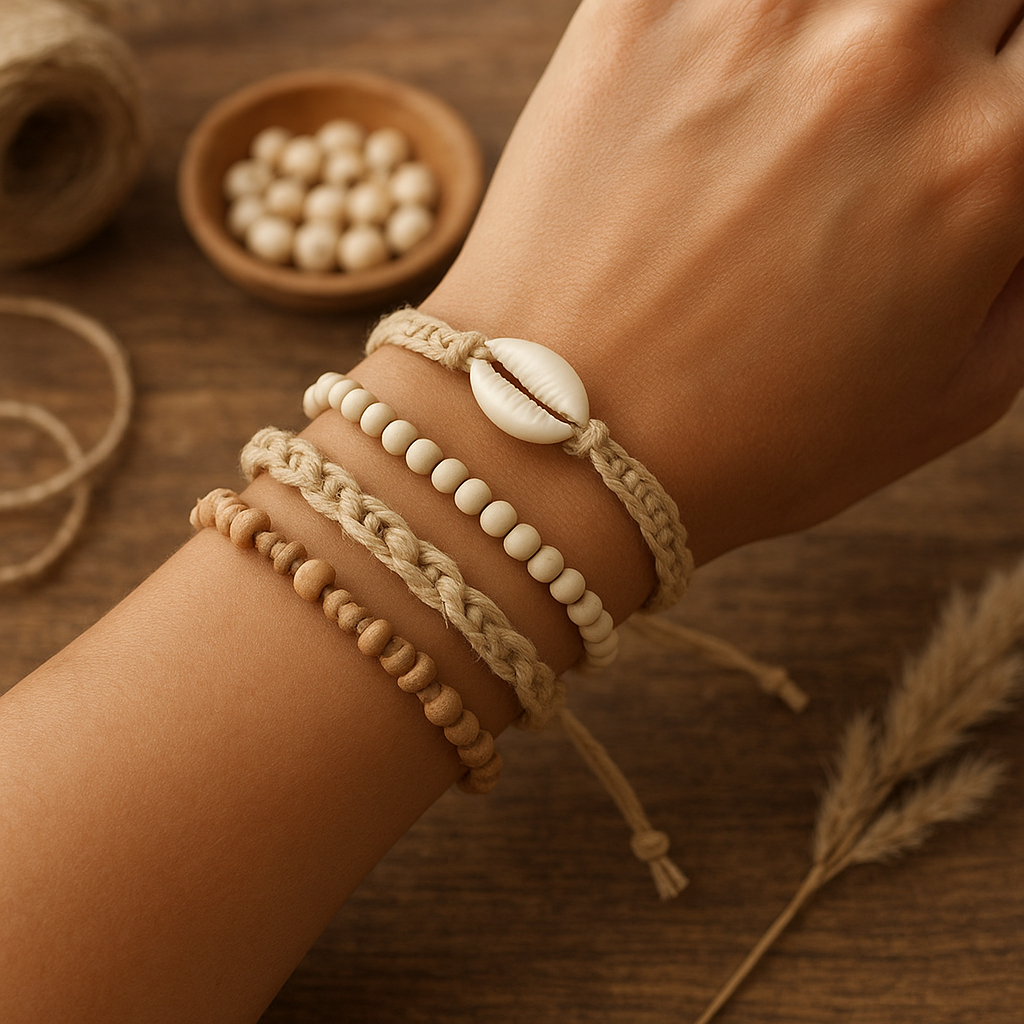
Boho bracelets made with natural materials feel like keepsakes from a walk through the forest, a day by the sea, or a visit to a vintage market. They carry story and place in their fibers, shells, seeds, and stones. When you make them yourself, you cultivate patience, technique, and a quiet confidence in your hands. This guide opens the toolbox and the treasure basket at once, showing how to choose materials ethically, master essential knots, experiment with color and form, and create bracelets that are beautiful, practical, and deeply personal. Every step invites you to slow down, to practice craftsmanship, and to connect with the natural world that supplies your palette.
Boho Aesthetics and the Story Behind Natural Materials
Bohemian style celebrates freedom, travel, and the poetry of the handmade. In bracelets, that spirit appears as loosely balanced compositions: rustic fibers, tactile knots, warm metals, and irregular stones that feel honest rather than polished. The charm isn’t perfection, but presence—the sense that each piece was gathered, assembled, and worn with intention.
Natural materials sit at the heart of this look. Plant-based cords like hemp, linen, cotton, and nettle have a soft hand and a lived-in drape. Dyed raffia or palm fiber adds earthy color and stiffness; jute brings a rope-like heft. Forest finds such as wood beads, seed pods, or pine-cone scales supply dramatic shapes with minimal weight. From the coast, shells and bits of polished driftwood contribute gleam and texture; from riverbeds, tumbled quartz and agates offer translucent depth. Brass and copper lend warmth and darken beautifully over time, developing a mellow patina that tells its own tale.
Boho bracelets also align neatly with sustainability. When you reuse scraps, buy from small vendors, and harvest respectfully, you reduce waste while enriching the narrative of each piece. A bracelet that features a beach-found shell, a friend’s garden twine, and a reclaimed button has more than visual appeal—it holds shared memory. In this way, boho jewelry becomes wearable storytelling.
Materials and Tools: What to Gather
Natural fibers and cords
- Hemp twine: sturdy, slightly coarse, excellent for knots that hold. Looks classic in natural tan but dyes well.
- Linen thread: smooth and strong; great for fine beadwork and delicate wraps when coated with beeswax.
- Cotton cord: soft, casual, easy to handle; mercerized cotton offers a subtle sheen.
- Waxed cord (hemp, cotton, or linen): pre-waxed options resist fray and glide through beads.
- Leather lace or thong: a structured base for wraps; pairs beautifully with stone or wood.
- Hand-twisted plant fibers: raffia, nettle, or banana fiber for rustic bracelets with striking surface interest.
Beads and focal elements
- Wood beads: olive wood, bayong, coconut shell, or reclaimed furniture offcuts drilled into discs.
- Seeds and pods: acai, tagua (vegetable ivory), bodhi seeds—ensure legal, ethical sourcing.
- Shells: cowries, mother-of-pearl fragments, and tiny spiral shells with natural apertures.
- Stones: river-worn pebbles, agate chips, quartz points; drill or wire-wrap as needed.
- Metal accents: brass, copper, or bronze spacers, flattened wire hoops, hammered discs.
- Found objects: bone buttons, beach glass, wooden toggles, carved horn pieces from verified byproducts.
Closures and findings
- Handmade toggles from twigs, carved bamboo, horn, or wooden dowel stubs.
- Loop-and-button closures using natural buttons or knots (e.g., diamond knot, Chinese button knot).
- Sliding knots for adjustable fits on cords that can cinch without cutting fibers.
- Wire hooks: hand-formed brass or copper hooks and eyes filed smooth.
Tools and bench aids
- Sharp scissors or thread snips for clean cord ends.
- Jeweler’s pliers: round-nose for loops, chain-nose for grip, cutters for soft wire.
- Dremel or hand drill with micro bits (0.8–1.5 mm) for stones, shells, or wood.
- Beeswax cake for conditioning thread and sealing ends.
- Ruler or measuring tape; a soft tape helps measure wrists accurately.
- Clipboard, corkboard, or macramé board with T-pins to hold patterns steady.
- Fine sandpaper for smoothing drilled surfaces.
Gathering respectfully
Whether beachcombing, woods-walking, or market-hunting, practice ethical collecting. Take only what’s abundant, leave habitats undisturbed, and know your local regulations. Clean and bake found organics (like seed pods) at low heat to remove moisture or pests. Rinse shells in mild vinegar solution to neutralize odor, then dry thoroughly. Responsible foraging ensures materials last and ecosystems remain healthy for future makers.
Core Techniques for Boho Bracelets
Knots you will use often
Knots shape the language of a boho bracelet. The square knot forms a flat, tidy body; the half hitch and double half hitch create sinuous lines and geometric chevrons; the lark’s head starts many patterns cleanly; the overhand knot adds small accents between beads. Spiral sinnets arise naturally from repeated half knots, adding movement and visual twist. If you’re new to knotting, begin with a simple band of square knots and a bead at the center, then branch into patterns from there.
Macramé foundations
Classic macramé structures transform simple cords into sculptural bands. Work 4–6 strands for comfortable width and alternate rows to achieve a bricklike rhythm. Vary cord thickness to modulate scale: thin linen for delicate boho whispers, chunky hemp for an earthy cuff. Use T-pins to keep lines straight. As you progress, introduce beads into the knots: slide a wood bead onto the filler cords and tie a square knot to lock it in place, creating a dotted path that feels both rhythmic and organic.
Bead stringing and wrapping
Leather wrap bracelets are a boho staple. Run a core of leather with beads stitched between the strands using waxed linen. This produces a supple bracelet that drapes beautifully and highlights natural stones. For more rustic effects, stitch seeds or shells onto braided raffia using blanket stitches, allowing edges to fray slightly for a soft halo of fiber.
Wirework without excess shine
Use brass or copper for warm, lived-in accents. Hammer wire lightly on a bench block to harden it and create subtle facets. File ends smooth to avoid catching on clothing. A simple hand-formed hook paired with a lark’s-head loop keeps the aesthetic organic and avoids factory-made findings.
Adjustability and closures
Bracelets that fit different wrists invite sharing and layering. Sliding knots work best on waxed cords or smooth leather; loop-and-button closures excel for structured pieces. If you love symmetry but want ease, place matching knots at both ends connected by an adjustable cord segment. Avoid heavy magnetic clasps for natural-material bracelets, as they can feel visually out of step and add unnecessary weight.
Step-by-Step Projects
1) Hemp macramé band with wood beads and shell focal
- Cut two 90 cm lengths of 1 mm hemp (filler cords) and two 150 cm lengths (working cords). Fold the long cords at center and attach to a clipboard. Lay the short cords between them as fillers.
- Begin with 2–3 cm of square knots to form a tidy start.
- Slide a small wood bead onto the filler cords; tie a square knot to lock it. Repeat every 1–2 cm to create a dotted rhythm.
- At midpoint, add a small drilled shell as a focal. Pass the filler cords through the shell, then anchor with two square knots.
- Mirror the first half with the same spacing of wood beads.
- Finish with a loop large enough for a wood-button toggle. Whip-finish the cords with waxed linen, dab a tiny amount of beeswax, and trim.
Design note: Space beads irregularly to keep the bracelet lively, or align them for measured calm. The shell’s gentle gleam contrasts with hemp’s matte surface, a classic boho juxtaposition.
2) Leather double-wrap with stone chips
- Cut two 70 cm lengths of 2 mm leather. Tie them together at one end with a surgeon’s knot, leaving a 1.5 cm loop for a button.
- Thread a beading needle with waxed linen. Stitch chips of agate or quartz between the leather strands: exit one side around the leather, through the bead, around the opposite leather, and back through the bead. Pull snug.
- Continue until the strand wraps a wrist twice, leaving 3–4 cm for the button end.
- Sew on a horn or wood button; reinforce stitches with extra passes.
- Burnish leather lightly with beeswax to soften and protect.
This is a timeless boho basic. It layers easily with macramé bands and introduces stone glow without heaviness.
3) Recycled-fabric braid with seed accents
- Tear three 1.5 cm-wide strips from an old cotton shirt or linen napkin. Tug to curl edges.
- Anchor the strips and begin a three-strand braid, dropping in acai seed beads every 3–4 passes by threading them onto the center strip with a large needle.
- When the braid reaches wrist length, stitch the ends together and cover the seam with a wrapped band of waxed linen.
- Form a loop on one end and add a carved wooden toggle on the other.
The rag-braid showcases material upcycling and feels soft against the skin. Choose prints with faded indigo or earth tones for a relaxed palette.
4) Copper-wrapped river stone on linen cords
- Select a small flat pebble. Wrap with 22–24 gauge copper wire in a crisscross net, leaving two small loops at opposite edges.
- Attach waxed linen cords through the loops with lark’s heads; double each side for stability.
- Braid or knot the cords to taste, adding occasional wood spacers for balance.
- Finish with a sliding-knot closure so the stone sits centered on the wrist.
A river stone focal grounds a stack and feels distinctly place-specific—an elegant souvenir from a walk near water.
Sizing, Fit, and Comfort
Measure the wrist at the bone, then add 1–2 cm for a snug fit or 2–3 cm for a looser drape. For wraps, multiply by the number of turns and add 1–2 cm for the closure. Keep beads smaller on the underside of the wrist for keyboard comfort and balanced weight distribution. If you plan to layer several bracelets, vary widths and weights for a comfortable stack: one stiff cuff, one soft macramé band, one beaded wrap. Tapering ends with smaller knots reduces bulk near closures.
Before final trimming, test on the intended wrist and make micro-adjustments. A loop that’s 1–2 mm too large can loosen over time; fine-tune while cords are still workable.
Natural Color, Dyeing, and Sealing
Earth-derived color harmonizes effortlessly in boho work. You can dye plant fibers using kitchen scraps and garden plants:
- Avocado pits and skins: blush pinks to dusty roses.
- Onion skins: golden amber (yellow onions) or coppery rust (red onions).
- Black tea or coffee: warm browns and antique tones.
- Walnut hulls: rich brown with excellent fastness.
- Indigo: timeless blues; requires a reduction vat but rewards with layered depth.
Pre-wet cords, simmer gently with the dyestuff, and use alum as a mordant where appropriate for improved colorfastness. Rinse until water runs clear and dry slowly out of direct sun to prevent brittleness. Expect subtle variation—embrace it as part of the bracelet’s character.
Finishing matters. A light beeswax rub on linen or hemp reduces fuzz and repels moisture. Food-safe oils like walnut or tung can protect wood beads; wipe off excess and let cure fully. Copper and brass can be sealed with microcrystalline wax if you wish to stabilize color, though letting them age enhances durability and depth of tone. Always test finishes on scraps to ensure they don’t discolor adjacent materials.
Design Principles for Organic Beauty
Great boho bracelets balance intention with spontaneity. Consider the following:
- Contrast and texture: Pair smooth shell with rough hemp, glossy stone with matte wood. A single unexpected surface enlivens the whole piece.
- Scale: Mix small seed beads with one oversized focal; use narrow cords beside a chunkier braid for visual music.
- Color ecology: Borrow palettes from nature—lichen green with slate gray, sand with seafoam, clay with sage. Build neutrals first, then inject a well-placed accent.
- Flow and focal: Lead the eye with knot rhythm toward a central bead or stone, then allow quieter segments for rest.
- Asymmetry vs. symmetry: Asymmetry feels free and traveler-like; gentle symmetry calms the composition. Try symmetrical structure with asymmetrical details, or vice versa.
Sketching helps, but so does arranging materials on the bench and shuffling until a conversation emerges. Boho design rewards listening to the materials as much as directing them.
Ethics, Cultural Respect, and Legal Considerations
Many beloved techniques—knotting, beadwork, weaving—have deep roots in Indigenous and regional traditions. Where your designs borrow patterns or symbols, credit the lineage and avoid sacred motifs. Choose alternatives to endangered materials (e.g., avoid coral, certain shells, and illegally sourced hardwoods). If using bone or horn, verify it’s a byproduct, not a driver of demand. Research import/export rules for seeds and woods to prevent ecological harm and legal trouble, especially if selling internationally.
Troubleshooting: Common Issues and Fixes
- Fraying cord ends: Burnish lightly with beeswax; trim with sharp snips. For leather, bevel with sandpaper and burnish.
- Loose beads on fabric braids: Stitch through the bead and the braid twice, knotting under tension; add a tiny dab of natural glue like hide glue if needed.
- Uneven knot tension: Practice on scrap first; pin your work and count beats aloud to keep rhythm. Mist dry cords slightly to improve grip.
- Metal discoloration: If you prefer brightness, clean with a paste of baking soda and water, rinse, dry, and seal. Otherwise, celebrate the gentle patina.
- Shell breakage when drilling: Tape the shell, submerge partly in water, and drill slowly with a fine bit; support the back with wood.
- Stiffness after dyeing: Work fibers between fingers with a touch of beeswax or oil; they’ll soften with wear.
Caring for Natural-Material Bracelets
Remove bracelets before swimming or heavy exercise, especially pieces with untreated leather or wood. Wipe with a soft cloth after wear. Store in breathable pouches; avoid sealed plastics that trap humidity and encourage corrosion. Refresh wood with a drop of oil, buffing until satin-smooth. For cords, lift lint with masking tape and re-wax sparingly when fibers look dry.
Mindful Making, Gifting, and Ritual
Bracelet-making is ideal for cultivating mindfulness. Knotting has a meditative cadence—the steady pull of cords, the repeat of movements—that settles the mind. Consider making sets for milestones: a shell focal for a beach honeymoon, a braided remnant from a child’s outgrown shirt, a river stone wrapped for someone who loves to hike. Package gifts in fabric pouches cut from old clothing, tied with linen thread and a sprig of dried herb. Include a small card noting the materials’ origins; it deepens connection and encourages care.
From Hobby to Microbusiness
If you decide to sell your bracelets, articulate what makes them distinct: ethically gathered materials, transparent sourcing, and the narrative of each piece. Photograph in natural light on wood, stone, or linen to echo the materials’ origin. Price to sustain your work: materials cost + time x hourly rate + overhead + profit margin. Keep records for tax compliance and, if using plant or animal materials, maintain sourcing documentation. Choose compostable mailers and protect items with shredded kraft or fabric scraps.
Invite customers into your process. Share sketches, dye pots, and beach finds. This authenticity resonates strongly with boho loving audiences and honors the craft behind the final product.
Glossary and Quick Knot Guide
- Square knot: a stable, flat knot made of two mirrored half knots; foundation for many macramé bands.
- Half hitch / double half hitch: knots used to create lines and curves; essential for chevrons and scallops.
- Lark’s head: a simple hitch to attach cord to a ring or cord; tidy starting point.
- Sliding knot: an adjustable closure made from two coils sliding over the standing cord.
- Wrap bracelet: beads stitched between two parallel cords or leather strands.
- Mordant: a substance (like alum) used to fix dye to fibers for better fastness.
- Burnishing: smoothing cord or leather edges by friction for a finished feel.
Expanding Your Palette: Advanced Ideas
- Hybrid weaves: Alternate macramé panels with sections of bead loom-work stitched onto a leather strap.
- Carved closures: Whittle toggles from driftwood or antler byproduct; sand and oil to a satiny finish.
- Inlay on wood focals: Set tiny shell shards or crushed stone into carved channels with natural resin.
- Textile prints: Block-print cotton tape with plant-based inks, then stitch as a bracelet band with bead embellishments.
- Modular charms: Create detachable bead-and-knot tassels on small copper rings for interchangeable looks.
Safety and Workspace Tips
Ventilate when sanding or drilling shells and stones; wear a dust mask, and keep materials wet to reduce airborne particles. Secure long hair and avoid loose sleeves when drilling. Keep beeswax and oils away from open flame. Label dye jars and mordants clearly, and store out of reach of children and pets. Dispose of dye baths responsibly—strain solids and dilute before disposal following local guidelines.
Why Boho Bracelets Endure
Boho bracelets remain beloved because they reconcile the urge to wander with the desire to belong. Each knot and bead is a small anchor to the places we’ve been and the people we’ve met. By choosing natural materials and shaping them by hand, you make more than an accessory—you craft a companion piece that changes with you, softening, deepening, and gathering meaning. Keep a small kit in your bag, collect ethically on your walks, and let your bracelets tell the evolving story of your making life.
Checklist Before You Begin Your Next Bracelet
- Concept: one sentence about the mood or place you’re channeling.
- Palette: two main colors, one accent, and a metal tone.
- Materials: fibers, focal(s), spacers, closure components.
- Technique plan: knots, wraps, or stitch type.
- Fit: wrist measurement, desired slack, closure style.
- Finish: wax, oil, or leave raw; storage plan for gifting or sale.
Final Encouragement
Start simple. A few square knots, a single shell, a loop and toggle—that’s enough to wear proudly. With practice, your hands will memorize tension and your eye will refine proportion. Let your choices reflect the landscape you love and the values you carry, from resourcefulness to reverence for the natural world. When your bracelet creaks softly like an oarlock or smells faintly of beeswax and leather, you’ll know you’ve captured that quiet boho magic that keeps this craft alive.
