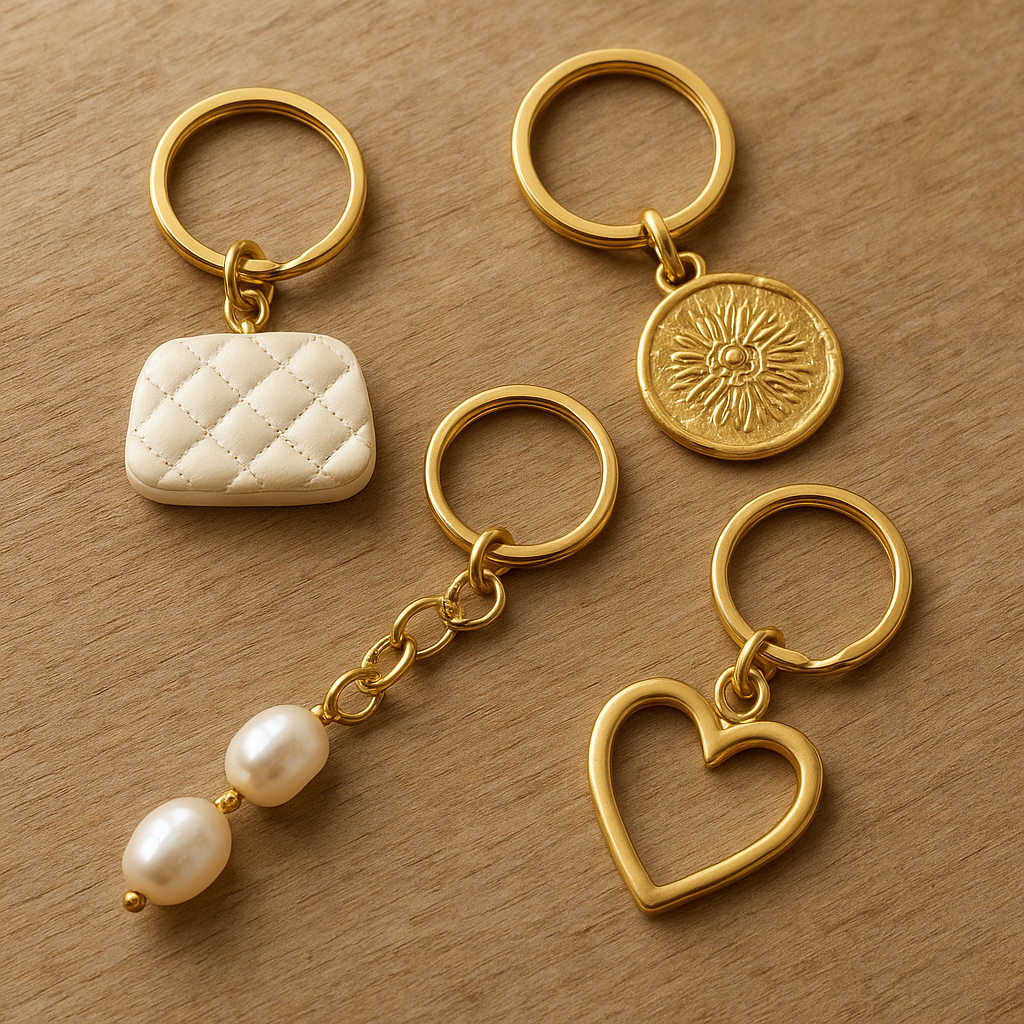
What if your keys could carry the same quiet luxury as a favorite ring or bracelet? DIY keychain accessories are a small canvas with a big opportunity: the chance to make something intensely personal, beautifully tactile, and surprisingly elevated. Leaning on centuries of jewelry-making tradition, you can craft pieces that jingle like talismans, age with grace, and turn an object you touch dozens of times a day into a pocket-size work of art. As a form of craftsmanship, these projects sit at the sweet spot between function and adornment—handicraft you can use, gift, and remake season after season.
What Makes a Keychain Feel Like Jewelry
Not every charm becomes jewelry by default. The transformation happens through intention, material choice, and how a piece interacts with the senses. Here are foundational design principles to guide your builds.
Proportion and Weight
Jewelry comfort often comes from balance. A key fob that’s petite yet weighty—think metal or stone accents—feels substantial without being cumbersome. Aim for a silhouette that fits in the palm, with a thickness that won’t dig in. Thin, wide shapes lie flat in pockets; rounded edges glide in and out of bags; small domes add tactility without bulk.
Material Quality
Jewelry-grade metal hardware—solid brass, stainless steel, or plated alloys—wears in, not out. The same goes for chains, jump rings, and split rings that won’t peel. Gemstone chips, freshwater pearls, carved bone, and polished hardwoods elevate the piece. Even leather scraps can become refined with edge finishing and a burnish that gleams under light.
Surface and Shine
Finish sets the tone. A mirror polish reads modern; a brushed surface feels quiet and architectural; hammered facets throw lively reflections. Chemical or heat-induced patina adds depth and story, while waxes and sealants protect touchpoints without interrupting luster.
Movement, Sound, and Touch
The best keychains have choreography: a chain that drapes, a tassel that sways, a bead cluster that produces a soft chime. Texture matters too—braided cord, pebble-grain leather, satin-smooth resin, or the cool glide of metal. Keep snag-free edges and smooth transitions so pockets and fingernails are safe.
Practical Elegance
Elegance comes from restraint. Treasure one standout element—a stone drop, a stamped tag, a leather arc—and let supportive components stay quiet. Thoughtful ergonomics, like wide loops for fingertip grip and flattened profiles, make daily use effortless.
Tools and Materials That Bridge Jewelry and Everyday Use
Before you start, consider building a concise kit. Many jewelry tools adapt perfectly to keychain work, and a few hardware-store staples add ruggedness.
- Metals: brass sheet and wire (18–20 gauge sheet; 16–20 gauge wire), copper, stainless findings, and optional sterling-silver for heirloom accents.
- Findings: split rings, key rings, lobster clasps, swivels, Chicago screws (for leather), compression rivets, eyelets, jump rings (choose 18–20 gauge for strength).
- Stones and beads: semi-precious chips, briolettes, seed beads (size 8/0 or 11/0), glass micro-facets, pearls.
- Leather: vegetable-tanned offcuts (2–3 oz for slim fobs, 4–5 oz for heft), edge paint, beeswax, burnishing tool.
- Cord and thread: waxed linen, nylon, silk cord, paracord guts for cores, and fine cords for micro-macramé.
- Resin and clay: two-part epoxy resin, UV resin for quick domes, polymer clay for custom shapes.
- Adhesives: E6000-type flexible glue, cyanoacrylate (thin and gel), two-part epoxy.
- Tools: round-nose pliers, chain-nose pliers, flush cutters, metal file set, sandpapers (400–2000 grit), bench block, chasing hammer, hole punch (leather and metal), deburring tool, steel wool, burnisher.
- Finishing: microcrystalline wax, Renaissance-style wax, lacquer options, and polishing cloths.
- Safety: nitrile gloves, eye protection, ventilation for resins and patinas.
Jewelry Techniques Adapted for Keychains
The same methods that make earrings and pendants sophisticated can be scaled for rugged charm carriers. These are durable, pocket-ready approaches.
Wire-Wrapping for Secure Drops
Wrap gemstone briolettes or glass droplets onto sturdy jump rings. A clean wrapped loop (two or three tight coils) resists tugging. Double-wrap for key-heavy sets, trim, and file the cut end to avoid snags.
Rivets and Solderless Joins
Instead of heat-based soldering, use a cold-connection approach: compression rivets, micro screws, and tube rivets. These joins create strong bonds between metal and leather, or metal to metal, without torches—ideal for home setups.
Texture and Metal Stamping
Hammering on a bench block adds sparkle and work-hardens the metal. Letter and symbol stamps create monograms, dates, or coordinates. Always tape a guide line to keep text straight, and practice on scrap first.
Leatherwork: Cut, Edge, Burnish
Trim leather cleanly with a sharp knife, bevel edges if desired, then burnish with water and beeswax until glassy. Apply edge paint in thin layers for a boutique look. Punch holes precisely for hardware alignment.
Bead Weaving and Braids
Peyote bands, herringbone tubes, or kumihimo cords translate elegantly into fobs. Use nylon thread or FireLine to resist abrasion. Add a hidden loop through the core to distribute stress.
Resin Doming and Inclusions
Encapsulate botanicals, metal leaf, paper initials, or micro charms in clear resin. A slight dome magnifies details and feels silky. Ensure thorough curing before assembly to avoid fingerprints and dust.
Six Project Recipes to Elevate Your Keychain
1) Minimalist Hammered Bar on a Riveted Leather Loop
This design blends soft leather and glinting metal for a balanced, pocket-friendly piece.
- Cut a 10–12 mm wide strip of 2–3 oz vegetable-tanned leather, 80–95 mm long.
- Bevel and burnish edges; optionally paint edges for contrast.
- Punch two holes 6–8 mm from the ends; loop around a key ring and mark for hardware alignment.
- Cut a brass strip (10 x 40 mm, 20-gauge), file corners round, and hammer a light texture on a bench block.
- Drill matching holes in the brass; deburr carefully.
- Stack leather and brass, set compression rivets through both, and peen or press for a flush finish.
- Wax the leather; polish the brass to your preferred finish.
2) Gemstone Cluster Charm with Wire-Wrapped Briolettes
Soft sparkle, controlled movement, and a gentle chime from clustered stones.
- Gather 5–7 small briolettes or micro-faceted drops.
- Using 24–26 gauge wire, wrap each drop with a secure loop and tight coils.
- Attach drops to a heavy jump ring (18–20 gauge, 8–10 mm diameter).
- Use a medium-length chain segment (20–30 mm) to create drape; connect all to the key ring via a sturdy split ring.
- Work-harden the jump ring with light taps to resist deformation.
3) Monogrammed Leather Fob with Edge Paint and Chicago Screws
Quiet luxury through disciplined leather finishing and crisp initials.
- Cut a 20 x 90 mm leather strip; stamp or hot-foil initials centered near the bottom half.
- Apply two to three thin coats of edge paint, sanding lightly between coats.
- Fold the strip through a solid brass D-ring; mark and punch aligned holes for Chicago screws.
- Glue lightly inside the loop for stability; add screws with a drop of thread locker.
- Condition with leather balm for a subtle sheen.
4) Resin Initial Coin with Metal Leaf
A glossy, modern medallion that protects a personalized insert under crystal-clear resin.
- Punch a 25 mm circle from heavyweight cardstock or thin wood; paint or paper-cover in a neutral tone.
- Apply gold or silver leaf accents; seal lightly with an acrylic medium.
- Place an initial decal or hand-letter the monogram; seal again.
- Dome with UV resin, curing in layers to avoid bubbles; flip and seal the back.
- Drill a 2 mm hole after full cure; add a grommet for reinforcement and hang on a jump ring.
5) Tasseled Cord Fob with Beaded Collar
Soft, tactile, and highly customizable for color and pattern.
- Create a tassel from waxed cotton or silk cord, 60–80 mm long.
- Build a beaded collar using peyote stitch that snugly fits the tassel neck (use 8/0 seed beads).
- Glue the collar in place; add a hidden wire core loop inside the tassel for strength.
- Finish with a protective wax and trim ends evenly for a clean fall.
6) Mixed-Metal Coin with Hammered Texture and Patinated Depth
Old-world charm meets daily grit, using controlled color to highlight texture.
- Cut a 22–28 mm disc from brass or copper; round edges and sand smooth.
- Hammer a stipple or crosshatch texture; stamp a symbol or date if desired.
- Apply a controlled patina; neutralize and seal with microcrystalline wax.
- Drill a 2 mm hole; insert a riveted eyelet for wear resistance.
- Pair with a short contrasting metal chain and a robust key ring.
Details That Signal Quality
Jewelry is judged by finish—how edges meet, how components align, how the hand feels when it explores the piece. Keychains are no different; attention to micro-details delivers premium impact.
- Edge Management: File and polish metal edges. Break every sharp corner with a tiny radius for pocket safety.
- Jump Ring Orientation: Use two jump rings at 90 degrees for stress isolation and smooth rotation.
- Work-Hardening: Light hammering can stiffen wire loops and reduce bending over time.
- Sealing and Waxing: A whisper-thin coat of wax enhances sheen and protects from fingerprints.
- Hidden Strength: Add internal wire loops, reinforcement stitches, or micro rivets where pulls concentrate.
- Thread Lockers: A drop on threaded hardware prevents loosening under daily movement.
Personal Meaning and Storytelling
Jewelry is intimate, and so can be the accessory that guards your keys. Think beyond decoration into memory and identity.
- Birthstones and Dates: Small stones to mark birthdays, anniversaries, or milestones.
- Coordinates and Maps: Stamp latitude/longitude of a special place; encase a tiny map segment in resin.
- Morse or Binary: Beads or stamp dots/dashes encode names or phrases privately.
- Sound: A tiny bell or glass charm adds a signature chime to help find your keys in a bag.
- Scent: Leather fobs can be conditioned with a faint layer of essential oil balm for a gentle note.
These touches aren’t merely aesthetic; they bring potent personalization, turning an everyday handle into a pocketable narrative.
Durability Without Bulk
Keychains endure rough handling—tossed in bowls, dragged across tabletops, squeezed into pockets with coins and tech. Build for resilience, and you’ll enjoy long-lived beauty.
- Hardware First: Choose split rings that spring back; avoid thin, easily warped options.
- Gauge Up: For high-use points, 18–20 gauge jump rings outperform lighter ones.
- Layered Protection: Use sealants on porous materials; wax and buff metals with frequent touchpoints.
- Bonding Choices: Epoxy for structural joins; flexible adhesives where flex is needed to prevent cracking.
- Stress Tests: Tug on assemblies before use; if anything creaks or gaps, rework the link.
Prioritizing durability doesn’t mean sacrificing elegance. It simply means your refined details keep performing as the years stack up.
Care, Cleaning, and Gentle Aging
Like jewelry, keychain accessories respond well to periodic maintenance. A minute or two of care can restore luster and prevent wear.
- Metals: Polish with a soft cloth; avoid harsh abrasives on plated pieces. Seal patinated surfaces to preserve tone.
- Leather: Condition quarterly with a neutral balm; avoid soaking. If edges fuzz, re-burnish with water and wax.
- Resin: Wash with mild soap; micro-scratches reduce with plastic polish and soft pads.
- Beads and Thread: Inspect for abrasion; reinforce with a fresh pass of thread where needed.
- Hardware Replacement: Swap out split rings at the first sign of distortion.
Color, Style, and Aesthetic Direction
Let your keychain reflect the broader style vocabulary you love.
- Minimalist: Brushed steel disc, single stone drop, crisp leather loop, and a tiny stamped symbol.
- Bohemian: Layered tassel, vintage glass, warm brass, and beaded wraps with varied textures.
- Industrial: Stainless components, hex nuts as spacers, oxidized chain, and geometric plates.
- Romantic: Pearl cluster, soft rose-gold tone, engraved script, and silk tassel.
- Heritage: Waxed leather, hand-stamped monogram, and heirloom coin with subtle patina.
Palette choices influence vibe: cool metals with blue/gray stones feel modern; warm metals with amber/green read organic; monochrome leather plus one high-gloss element feels editorial.
Ethical Sourcing and Thoughtful Making
Small objects can still have big impact. Consider materials with a responsible footprint and processes that respect both maker and wearer.
- Upcycle: Reclaim chain links, vintage beads, and leather offcuts.
- Traceable Stones: Favor suppliers who disclose origin; consider lab-grown for consistent clarity.
- Metal Choices: Brass and stainless are robust and widely recyclable.
- Longevity Over Volume: Build once and build well; repair rather than discard.
Intentional choices contribute to wider sustainability, amplifying the meaning behind every piece.
Safety, Comfort, and Everyday Usability
Refinement shows in how comfortably a keychain disappears into a routine, only to delight when noticed.
- No Snag Zones: File and sand until fabric glides; test with a silk ribbon or microfiber cloth.
- Skin-Friendly: Choose hypoallergenic metals for skin-contact points; add protective coatings when unsure.
- Weight Distribution: Keep the heaviest element closest to the ring so keys hang straight.
- Pocket Trials: Simulate real use—sit, walk, drop into a bag—and observe any pokes or clatter.
- Temperature and Moisture: Seal porous materials; avoid prolonged sun or water baths for resin and leather.
Advanced Touches That Whisper Luxury
Small upgrades subtly transform a craft into an heirloom-feeling object.
- Stone Setting: Bezel cups for cabochons on metal tags; glue plus a rim crimp for extra security.
- Micro Hardware: Mini swivels add graceful rotation; low-profile snaps keep leather tidy.
- Precision Lines: Mask edges before painting or patinating to maintain crisp borders.
- Weighted Cores: Conceal a brass slug inside a resin or leather build to achieve pleasing heft.
- Mixed Finishes: Pair satin and high-polish areas to create depth that catches the eye.
A Note on Patina and Aging Beautifully
The most beloved accessories evolve with time. Metals deepen in tone; leather develops shine where touched. Controlled aging brings warmth and character without neglect. To guide the process, apply a gentle patina, then wax to slow further change; or keep a polishing schedule to maintain brightness. There’s poetry in both paths.
Design Workflow: From Idea to Pocket
Turning inspiration into a refined accessory benefits from a simple sequence.
- Sketch: Define silhouette, materials, and focal point in a quick drawing.
- Prototype: Test with inexpensive materials; adjust proportions and attachment points.
- Refine: Upgrade to final materials; execute texture, stamping, and edge work.
- Assemble: Use measured tension when closing jump rings; test all joins with gentle force.
- Finish: Polish, seal, and buff; photograph for your records and future iterations.
Troubleshooting Common Issues
- Loose Jump Rings: If gaps persist, switch to thicker gauge, smaller diameter, or soldered/closed rings.
- Resin Bubbles: Warm resin gently before pouring; cure in thin layers; pop surface bubbles with heat quickly.
- Leather Fray: Re-burnish with water and wax; trim micro-fibers; seal with edge paint.
- Tarnish Too Fast: Use anti-tarnish bags; apply protective wax; clean skin oils off metals regularly.
- Color Clashes: Limit to two neutrals plus one accent; repeat the accent in two places for cohesion.
Why Keychain Accessories Are Perfect for Handicraft
They are small enough to complete in an evening, yet rich with techniques: a playground for testing textures, colors, and mechanisms. They also invite iteration—each new variation teaches something about balance, wear, and material behavior. For sellers at markets or online, they’re approachable price points that showcase skill in tiny, collectible formats.
Finishing Rituals That Elevate the Experience
Build a closing routine that mirrors a jeweler’s bench: final wipe with a polishing cloth, a breath to find smudges, a quick click test of every join, and a card noting materials and care. Package like a boutique piece—a small pouch or paper wrap—so the everyday object begins life as a gift, even if it’s just for you.
From Everyday Object to Adorned Companion
A keychain that feels like jewelry doesn’t shout; it whispers through balanced weight, clean edges, layered textures, and thoughtful motion. It delights each time a hand reaches for it, reminding you that useful things can also be beautiful. With a few well-chosen techniques and materials, your pocket can carry a tiny, evolving gallery piece—handmade, personal, and ready to age gracefully by your side.
