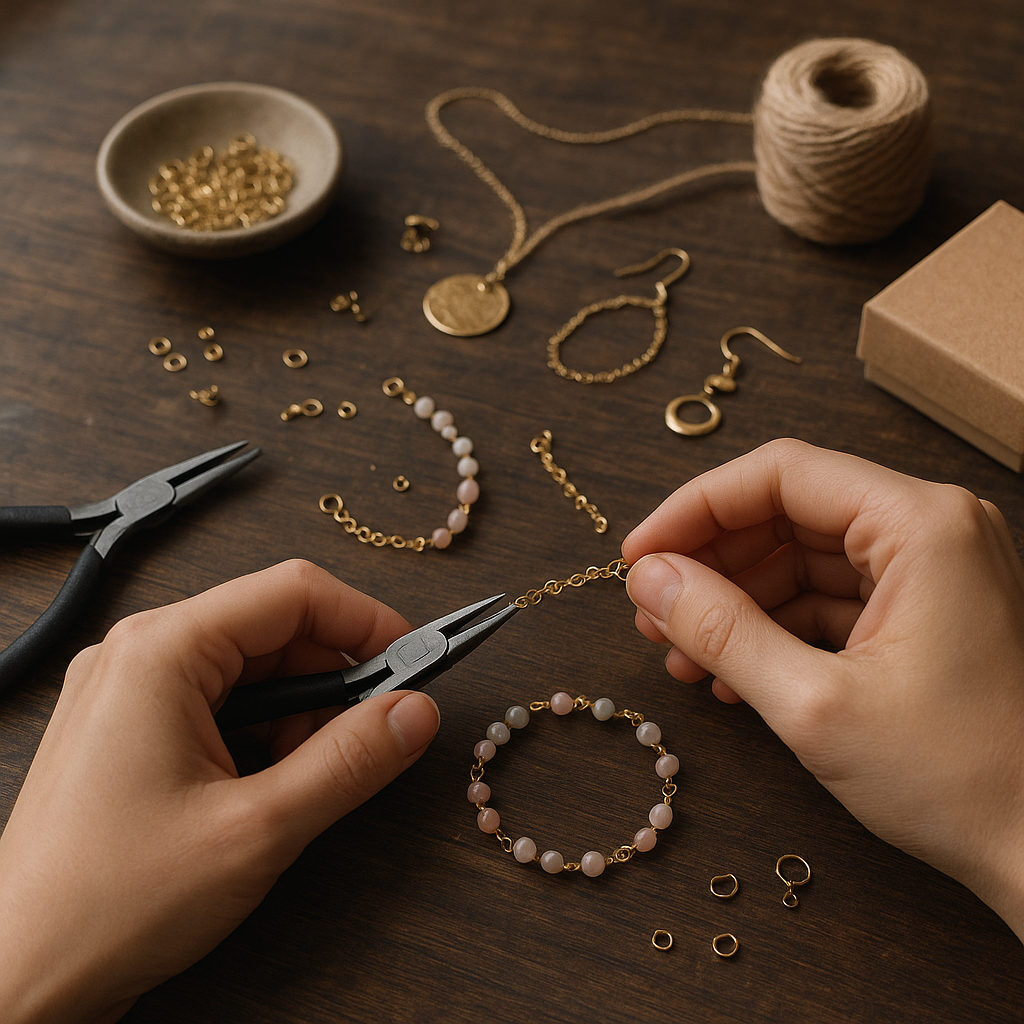
A handmade jewelry label can begin at a kitchen table with a torch, a sketchbook, and a point of view strong enough to cut through the noise. Building a durable brand from scratch is less about luck and more about choices—choices about materials, techniques, values, voice, and the way you treat every customer. This guide walks through the art and the business of handicraft jewelry: how to refine your designs, structure your operations, set prices, market ethically, and grow with intention while keeping your hands at the bench and your heart in the work.
Define Your Vision and Niche
Every successful label starts with a clear vision that travels from the bench to the marketplace without distortion. Before you cut a single sheet of metal, write down why your work matters, who it is for, and how it will live on the body.
Pinpoint your signature
- Sketch 30 concepts quickly, then reduce to 5 that feel distinctly yours. Look for patterns in silhouette, texture, and movement.
- Identify a signature: a recurring motif, a clasp geometry, a particular surface finish, or a proportion (e.g., oversized links with slender connectors).
- Choose a materials palette you can master—sterling silver and brass, 14k gold-fill and freshwater pearls, recycled gold with translucent enamel—then commit to consistency.
Understand your wearer
- Create 2–3 personas: a minimalist office professional, a bohemian festival-goer, a heritage collector. Map their budgets, occasions for wear, and pain points (allergies, weight, durability).
- Observe real customers at craft fairs or online reviews of similar brands. Collect their words and design to solve their problems—lightweight statement earrings, secure clasps, stackable rings that don’t pinch.
Clarify what makes you different
Study 10 peers at various price levels and list what they do well. Your path isn’t to copy but to step sideways. Maybe you combine metalsmithing with textile weaving, or you source stones from a single mountain range with documented provenance. This is your differentiation.
Foundations: Business Basics for Makers
The success of a studio depends on the boring things you set up early. Good systems protect your time, profits, and peace of mind.
Structure, permits, and protection
- Choose a legal structure appropriate to your country (sole proprietorship, LLC, micro-enterprise). Register your business name and obtain any required seller’s permits.
- Open a dedicated bank account and set up cloud bookkeeping. Categorize income, materials, tools, packaging, shipping, and marketing from day one.
- Insure your studio and show inventory. Consider product liability coverage, especially for items with moving parts or sharp edges.
Trademarks and naming
- Search registries to avoid conflicts. Check domains and social handles that match your name.
- File a trademark once you confirm availability and intend to trade broadly. Protect your logo and word mark; document first use.
Sourcing and ethics
- Prioritize recycled metals and traceable gemstones. Ask suppliers for chain-of-custody documentation and nickel content statements.
- Build redundancy: two suppliers for each critical material, including fluxes, solders, and findings.
The math of making: smart pricing
Do not guess your price. Price to stay in business:
- Direct materials + Direct labor (bench rate) + Overhead allocation = Cost of goods (COGS).
- Wholesale = COGS × 2.2–2.5 (adjust for category and market).
- Retail = Wholesale × 2.0 (or COGS × 4–5). Ensure a minimum 60–70% gross margin at retail.
- Bench rate: total monthly expenses you must cover divided by billable bench hours. Include your salary.
Price for perceived value: limited editions, precious alloys, hand engraving, or custom fit justify higher tiers. Discounting should be rare and strategic.
Materials, Tools, and Methods
Technique is voice. The way you set a stone or finish a surface is a form of language that creates trust through visible skill and invisible decisions.
Core techniques for a small studio
- Metalsmithing: sawing, filing, soldering, forging, texturing, patination, and finishing.
- Stone setting: bezel, flush/gypsy, prong, pavé (start with bezel for reliability and weight control).
- Wirework and chainmaking: hand-fabricated links, cold connections, rivets.
- Alternative media: carved wax for lost-wax casting, resin inlays, enamel, polymer clay accents.
Workflow that scales from one-off to batch
- Create master templates: brass blanks, 3D-printed jigs, angle gauges. Keep them in labeled bins.
- Batch similar operations: cut all blanks, then drill, then solder, then tumble. Switching costs time.
- Use simple production travelers (cards that accompany each batch) that track steps, dates, and signatures.
Quality standards and compliance
- Measure and log dimensions and weights. Keep tolerance ranges per SKU.
- Stamp karat and fineness properly (e.g., 925, 585/14k) and follow hallmark rules by region. Consider assay offices where required.
- Nickel, lead, cadmium limits vary by country; request supplier declarations and keep them on file.
Safety and studio ergonomics
- Ventilate for soldering and polishing; use particulate masks and eye protection.
- Ergonomic bench height, anti-fatigue mats, and task lighting reduce strain and mistakes.
Packaging that protects and delights
- Use tarnish-resistant inserts, anti-tarnish tabs, and non-reactive tissue.
- Add care cards, branded stickers, and a handwritten note. Include a polishing cloth for silver collections.
Brand Story and Visual Identity
Your audience wants to know not just what you make but why. Lean into storytelling that connects your techniques, materials, and values with the wearer’s life.
Identity system
- Logo, type, and palette that echo your materials (e.g., oxidized silver tones, jewel-inspired accents). Build a style guide that defines spacing, grid, and use of negative space.
- Create mood boards: landscapes, textures, architecture, and vintage references that inspire your shapes.
Photos that sell the feel
Great photography reduces returns and increases trust. Capture three angles per piece (front, side, scale-on-body), macro details, clasp, and a video with light movement. Use consistent backgrounds, soft daylight or continuous lighting at 5600K, and color-calibrated editing so metal tones reproduce accurately.
Voice and messaging
- Write concise copy that names materials plainly, explains techniques, and anticipates questions (weight, allergy risk, care, lifetime repair policy).
- Anchor your brand story in place and process: the bench, the tools, the rituals of making.
Digital Presence and Sales
Your storefront is where customers are: craft markets and your site, but also modern e-commerce platforms and social channels.
Choose platforms wisely
- Etsy or marketplaces: fast discovery, strong search, but fees and competition.
- Shopify or similar: control, design freedom, and first-party data. Start lean with a clean theme and strong PDPs.
- Link-in-bio pages to consolidate channels; keep naming consistent across handles.
Search and product detail pages
- SEO: keyword-rich titles (material + type + motif + finish), alt text for images, and descriptive URLs.
- Product pages: sizes, weight, materials, hypoallergenic notes, fit guidance, production time, and repair policy.
- Offer ring sizers or printable guides; clarify resize fees and turnaround.
Content strategy
- Plan a monthly calendar: launch teasers, making-of clips, studio tips, customer spotlights, and care tutorials.
- Use short videos showing flame, filing, stone setting, and the final polish—they convey authenticity quickly.
Email and retention
- Automations: welcome series, post-purchase care email, review request, birthday reward, and back-in-stock alerts.
- Lead magnets: mini guide to jewelry care, early access to limited drops, or a ring sizing tool.
Sales Channels Beyond Your Website
Physical presence multiplies credibility. Customers love to touch and try, especially for earrings and rings.
Craft fairs and markets
- Invest in a modular booth: neutral linens, risers, mirror, secure displays, and hidden storage. Lighting changes everything.
- Prepare SKUs in durable travel trays; pack a repair kit (pliers, jump rings, superglue, polishing cloth).
Wholesale and consignment
- Create a line sheet: photos, materials, dimensions, wholesale prices, MSRP, and lead times.
- Set terms: opening order minimum, reorder minimums, net terms, repair policy, and packaging requirements.
- Consignment can test demand; agree on shrinkage policy and inventory audits.
Collaborations and capsules
- Design a small capsule with a boutique or artist—shared storytelling and split marketing lifts both brands.
Marketing, PR, and Community
Press and word of mouth work when you have a clear story, strong visuals, and a consistent release rhythm.
Public relations
- Build a press kit: founder bio, lookbook, line sheet, and high-res images with transparent backgrounds.
- Research editors and micro-influencers who cover craft, slow fashion, or local makers; pitch with a hook (limited collection, new technique, seasonal story).
Influencers and user-generated content
- Gift proactively with clear usage rights; prioritize creators whose audience matches your price tier.
- Encourage customers to share unboxing. Reshare and credit; create a community hashtag for easy curation.
Loyalty and referrals
- Reward repeat buyers with early access or complimentary clean-and-polish services.
- Offer refer-a-friend credits; track via unique codes or platform tools.
Operations, Logistics, and Customer Experience
Consistency builds trust. Make every order—from packaging to post-sale care—feel considered.
Order flow and capacity
- Decide which items are made-to-order and which are stocked. Publish lead times and stick to them.
- Use a Kanban board or digital tool to track stages: paid, in production, polishing, QC, packed, shipped.
Shipping and international
- Offer tracked shipping and signature on higher-value orders. Use padded mailers inside outer cartons for protection.
- International: list HS codes, materials, and origin. Clarify duties and taxes at checkout.
Aftercare and repairs
- Provide a one-year repair warranty for manufacturing defects; publish a fair price list for other repairs.
- Include care cards: storage tips, cleaning methods, and warnings (avoid chlorine, perfumes before wearing).
Finance and Analytics
Data makes your intuition sharper. Track inputs and outcomes to guide design and production decisions.
- Key metrics: conversion rate, average order value, customer acquisition cost, lifetime value, return rate, defect rate, and production hours per SKU.
- Cash flow planning: forecast materials buys for the next two launches; maintain a 90-day runway for rent, payroll, and inventory.
- ABC analysis of SKUs: double down on A items (top 20% of SKUs generating 80% revenue) and retire underperformers.
Ethics and Environmental Responsibility
Responsibility is both a compass and a magnet—it keeps you oriented and attracts customers who care. Build sustainability into the DNA of your studio.
- Recycle scrap diligently; track melt and recovery yields.
- Choose non-toxic fluxes and pickle; dispose of waste responsibly.
- Source gemstones from verifiable programs; explain provenance in product pages.
- Use recycled, plastic-free packaging and right-size boxes to reduce weight and emissions.
Protecting Your Work
Originality deserves protection and respect, starting with your own studio practices.
- Watermark process photos and share enough to entice, not to enable copying of technical drawings.
- Document designs and dates. Consider design registrations or patents for unique mechanisms.
- Trademark your name and logo; police marketplaces for obvious infringements with calm, professional notices.
Scaling Without Losing Soul
Growth exposes bottlenecks. Plan for controlled scalability so your quality and values stay intact.
People and process
- Train an assistant or apprentice with standard operating procedures (SOPs) and clear acceptance criteria.
- Outsource selectively: casting and polishing can be externalized while final assembly and QC remain in-house.
Tooling and technology
- Invest in equipment with the highest time savings: rotary tumbler, micro-motor, ultrasonic cleaner, and a reliable laser welder as you scale.
- Use CAD for complex geometries; keep hand-finished surfaces to retain human warmth.
Assortment strategy
- Build a pyramid: core evergreen pieces at the base, seasonal capsules in the middle, and limited-edition showstoppers at the top.
- Retire pieces gracefully with made-to-order options for legacy buyers.
Common Pitfalls and How to Avoid Them
- Underestimating labor time: time every step; update prices as you improve or as costs rise.
- Too many SKUs: each new size/finish multiplies inventory complexity. Focus on winners.
- Inconsistent quality: implement QC checklists and batch travelers. Track defect causes.
- Neglecting customer service: slow replies and unclear policies erode trust. Template your responses without losing empathy.
- Weak product-market fit: validate with small runs and preorders before heavy investment.
A Practical 90-Day Launch Plan
Days 1–15: Foundation and focus
- Define your vision, target personas, and signature design language.
- Register your business, open accounts, and set up bookkeeping.
- Source materials and build two supplier relationships per critical component.
Days 16–45: Design, test, refine
- Prototype 12–15 pieces; wear-test for comfort and durability. Collect feedback from 10 target users.
- Lock final 8–10 SKUs with spec sheets and repeatable processes.
- Set prices with full cost breakdowns and margin targets.
Days 46–70: Visuals and storefront
- Shoot product and lifestyle images; edit for consistency. Write clear product copy.
- Build your website or marketplace storefront; configure policies, shipping, and payment.
- Set up email automations and a content calendar.
Days 71–90: Prelaunch and launch
- Tease on social and email with behind-the-scenes process. Offer early access signup.
- Host a small studio drop or local pop-up with appointment slots.
- Collect reviews, analyze first-week metrics, and iterate packing and PDPs.
Craft, Character, and the Long Game
What keeps a handmade jewelry brand alive is visible craftsmanship, invisible systems, and the courage to keep refining. Choose fewer, better pieces. Ship when you say you will. Speak directly and kindly. Let your materials and methods be the proof of your values. Over time, your reputation becomes the quiet engine that powers growth, fueled by the loyalty of people who can feel the care in your work—and who wear a small piece of your studio’s world on their skin.
