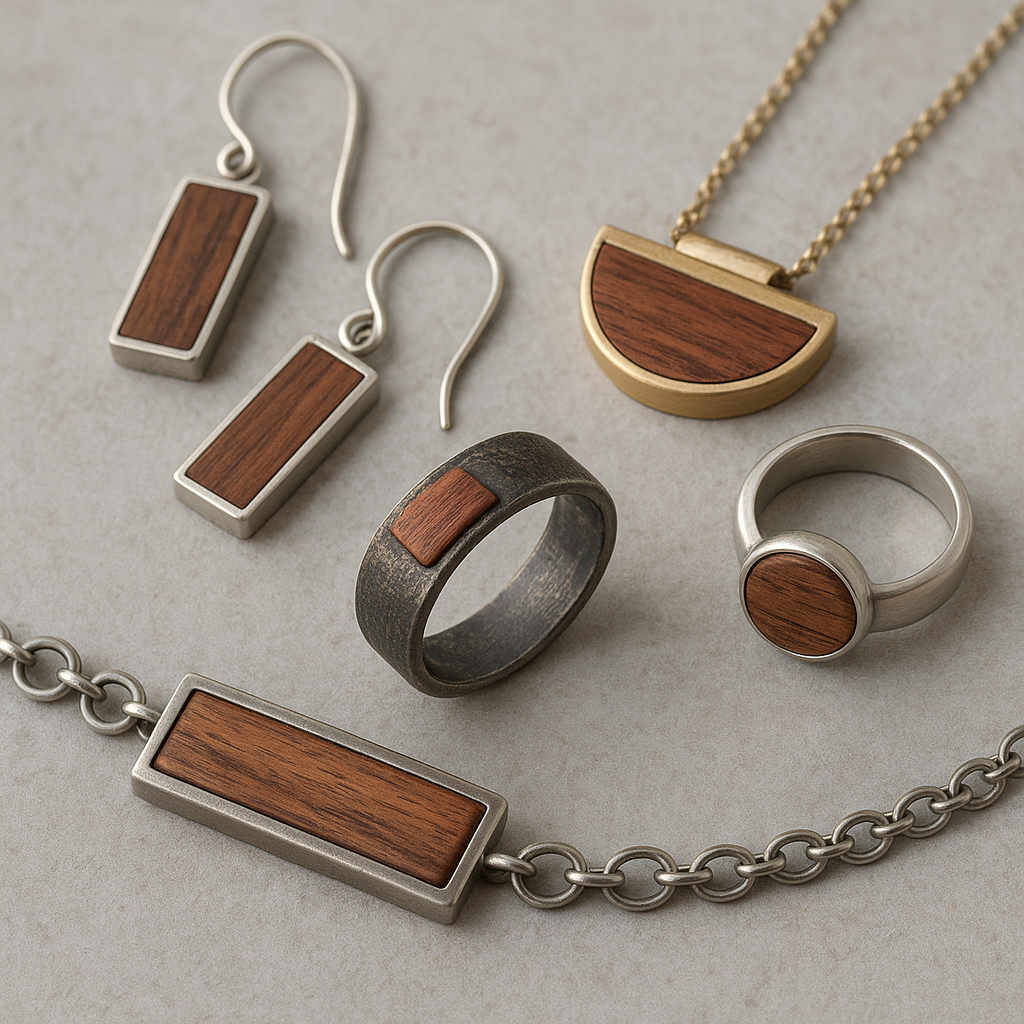
Wood and metal have been neighbors on the workbench for centuries, yet their union in jewelry still feels surprisingly fresh. The warmth of grain beside a cool gleam of alloy creates a dialogue of contrasts—organic versus engineered, matte versus reflective, soft lignin against resilient crystalline structure. For makers who love Handicraft, combining these materials offers a field of expression that rewards patience, precision, and a deep respect for both mediums. This guide gathers practical methods, workshop-tested tips, and design philosophies so you can fuse wood and metal into pieces that are as wearable as they are poetic.
Understanding materials and design intent
Before you cut, solder, or sand, decide what the piece must do and for whom it is made. Rings live in constant contact with skin, moisture, and abrasion; pendants enjoy more space and can tolerate bolder profiles; earrings demand lightness and balance. In mixed-media jewelry, the design conversation begins with the material properties—how they expand, contract, patinate, and age—because those traits will either strengthen your concept or fight it.
Wood is anisotropic, moving more across the grain than along it. Dense species offer crisp detail and better wear resistance, while softer woods carve easily but dent quickly. Metals vary in hardness, corrosion resistance, and allergen potential. The art is to pair them responsibly: set oily, stable woods into noble, low-tarnish metals for daily wear; save reactive metals or dramatic patinas for pieces worn intermittently.
- Recommended woods: walnut, ebony, African blackwood, cocobolo, olivewood, desert ironwood, maple, bog oak, stabilized burl hybrids. Each has distinctive figure and Janka hardness; dense woods take a finer polish and resist crushing near joints.
- Metals for skin-friendly wear: sterling silver (often 925), Argentium silver, 14k/18k gold, bronze with minimal lead content, 316L stainless steel, titanium, and niobium. Avoid nickel-bearing alloys for sensitive clients.
- Surface temperament: brushed or satin metal can soften glare and complement a low-sheen oil finish on wood; mirror polish pairs with high-contrast ebonized grain.
Two critical numbers shape your plan. First, wood moisture content: a target of 6–8% helps ensure dimensionally stable stock for jewelry-scale parts. Second, thermal and moisture movement mismatches: wood swells in humidity while metals barely move. Manage this with mechanical allowances, slip joints, and finishes that slow exchange. Taking time to define these constraints up front is a hallmark of true craft.
Planning for movement and longevity
When metal and wood meet, one material will always try to tell the other what to do. Your job is to let them disagree safely. Think of wood as a tiny lung that breathes with seasons. If you trap it too tightly in a metal frame, it will crack or blow out rivets; if you allow it to float without guidance, gaps can appear. Successful mixed jewelry uses a blend of elastic adhesive, controlled compression, and geometry that channels stress away from fragile edges.
Moisture content and stabilization
Work only with seasoned wood. If you mill your own blanks, sticker them and allow weeks to equilibrate to the studio. Kiln-dried or vacuum-stabilized stock is ideal. Stabilization infuses resin into cellular structure under vacuum and heat, replacing air and moisture so the wood behaves more like a stable composite. This is particularly effective for burl, spalted, or open-pored species. Stabilized pieces sand cleanly, take fine threads for micro-screws, and resist sweat. Use sharp tools to avoid heat buildup, which can pull resin to the surface and clog abrasives.
Seal every exposed edge, especially end grain, which is thirsty and prone to wicking. A penetrating oil/varnish blend or a cyanoacrylate (CA) “wick coat” can lock fibers before final finishing. Pay special attention to thin tabs and narrow bridges where moisture gradients would be steep. Thoughtful stabilization doesn’t make wood waterproof, but it slows exchange enough to keep joints honest.
Metal choices, skin chemistry, and corrosion
Sweat is a mild electrolyte containing chloride salts; it tarnishes copper alloys and can drive galvanic reactions between dissimilar metals. In mixed pieces, choose compatible alloys or isolate them physically. For everyday wear in humid climates or for active clients, 316L stainless, titanium, niobium, and high-karat gold excel. Sterling and bronze can be used, but plan for patina management. Keep nickel out of any component that touches skin if your client has sensitivity. Consider clasp parts and ear wires carefully; sometimes a hypoallergenic component solves 95% of wear issues.
Tools, bench setup, and safe practice
A modest bench with good lighting and dust control will carry you far. Wood dust—especially from exotic species—can be sensitizing. Metal dust is heavy and often sharp. Combine a downdraft table with a shop vacuum and wear a P100 mask when sanding. Maintain separate abrasives for metal and wood to avoid cross-contamination; steel grit can stain pale wood, and wood dust can scratch mirror-polished metal.
- Core tools: jeweler’s saw with 2/0–4/0 blades, bench pin, needle files (barrette, half-round, crossing), rifflers for wood, micro-chisels, carving knives, and skew chisels for detail.
- Shaping and drilling: pin vise and micro drill press, carbide burrs (ball, flame, cylinder), brad-point bits for clean wood holes, step drills for thin sheet metals, and reamers for precision fits.
- Holding: bench vise with leather-faced jaws, soft-jaw parallel pliers, mini F-clamps, and thermal sticks for heat-sensitive holding when soldering near wood elements (always remove wood before soldering).
- Surface work: abrasive papers 240–5000 grit, micromesh pads, polishing compounds (Tripoli, rouge), burnishers, and a buffing motor with separate wheels for wood and metal.
- Safety: eye protection, ear protection, P100 respirator, nitrile gloves for finishing, and a clean area for adhesives.
Joinery methods for wood–metal jewelry
Mixed-media jewelry usually employs three strategies: adhesive bonds, mechanical connections, or hybrids. Each has a voice. Adhesives provide broad contact and distribute stress; mechanical joints express structure with visible hardware; hybrids offer redundancy and visual rhythm.
Adhesive bonding done right
Modern two-part epoxy is a workhorse for wood-to-metal bonds. Choose a high-quality, slow-set formula (longer open time allows wetting and better penetration). Mix by weight if possible for accuracy, and warm the components slightly to reduce viscosity and improve flow. Surface preparation is everything: degrease metal with acetone or alcohol, scuff with 320–400 grit in a crosshatch pattern, and wipe again. For wood, seal end grain lightly, then scuff to create micro-tooth.
Spread a thin, even film on both surfaces. Clamp with gentle, uniform pressure; too much squeeze starves the joint. Aim for a slight ooze of adhesive, which you remove with a swab and solvent while gelled but not fully cured. Epoxy cures more completely with time and mild warmth; read the data sheet and resist rushing. Alternatives include polyurethane glue (expands, good for end grain, but foams and can stain), and CA adhesive (excellent for tiny inlays and quick tacks, brittle under peel stress). Thickeners like colloidal silica can keep epoxy where you want it on vertical surfaces.
Mechanical fasteners and cold connections
Rivets, screws, pins, and tabs let materials move while staying married. They are the jewelry equivalent of timber framing—strong, visible, and dignified. Use them as design elements rather than hiding them. For wood, drill undersized pilot holes and support fibers on exit to avoid blowout. Chamfer holes slightly so peened rivet heads seat cleanly without crushing grain.
- Solid rivets: classic for joins you never want to undo. Anneal silver or brass before peening. Back each side with a steel stake, and mushroom gently using many light blows.
- Tubular rivets: lighter and neat; flare with a setting tool. Great for earrings where weight matters.
- Micro-screws: allow disassembly for maintenance; add a drop of removable threadlocker, and consider threaded inserts in stabilized wood.
- Prongs and bezels: anchor and showcase inlaid wood tiles or resin-stabilized burl “stones.” Provide tiny relief gaps so wood can swell without splitting settings.
When designing rivet patterns, think like an engineer: triangulate to resist shear, space hardware away from edges equal to at least 1.5 times the hole diameter, and orient grain so stress follows strength. Done elegantly, a line of rivets becomes punctuation that guides the eye and articulates the form.
Hybrid strategies: inlays, laminations, and frames
Inlay marries contrast with precision. You can inlay metal into wood (wire, sheet, shot) or wood into metal frames. Cut a channel slightly undercut, so the inlay keys mechanically. For wire inlay, scribe, knife the walls, and use micro chisels to raise tiny barbs that grip the metal when burnished. For wood into metal, mill a pocket with crisp walls and leave a paper-thin expansion gap; conceal it under a chamfer or a shadow line. Fill minute gaps with matching dust and thin CA, then level with a razor.
Lamination—stacking thin layers—adds strength and visual complexity. A wood–metal–wood sandwich can hide a metal core for rigidity while keeping warm surfaces outside. Frame-and-panel logic also applies at jewelry scale: a metal bezel or channel frame can hold a floating wood panel that’s free to move minutely behind a lip, reducing stress. This is the essence of thoughtful inlay composition.
Finishing strategies that last
Finishing is a conversation with light. Plan a grit progression and stick to it. Scratches you skip at 320 grit will haunt you at 2000. Keep separate papers for wood and metal; contaminating wood with rouge can stain pores. For the metal, decide early: brushed, satin, mirror, or intentional patina. For wood, consider the environment: a penetrating oil hardwax brings out figure and offers repairability; a CA film yields a glossy, tough shell suitable for ring interiors; hybrid varnish-oils give a low-sheen, tactile surface that ages gracefully.
Seal transition lines carefully. Masking helps, but the best barrier is sequencing. Often you’ll finish the wood first, wax it, then polish the metal; or vice versa. Burnish edges to soften the touch. On rings, shape a comfort-fit interior; a subtle radius elevates perceived quality and helps the piece slide over knuckles. Finish with microcrystalline wax for fingerprint resistance and a pleasant hand.
Step-by-step projects to build skill
Project 1: Wooden inlay ring with a metal liner
Goal: a slim wood ring stabilized by a metal liner for strength and hygiene.
- Materials: 316L stainless or titanium tube (inner diameter sized to the wearer), stabilized walnut or ebony blank, slow-set epoxy, abrasives up to 5000 grit, microcrystalline wax.
- Process:
- Prepare the liner: deburr, chamfer edges slightly, and scuff the exterior with 320 grit. Degrease.
- Mill or drill the wood blank: bore slightly undersize, then ream to a slip fit over the liner. Keep grain circumferential; avoid end-grain at the wearing surface.
- Dry-fit: aim for a firm slide without force. The wood should seat flush with the liner edges or proud if you intend to bevel later.
- Bond: apply epoxy inside the wood bore and on the liner. Rotate as you seat to wet both surfaces. Clamp using a ring clamp or wrap with elastic bands; avoid overpressure.
- Shape: once cured, mount on a mandrel and turn/sand the exterior profile. Add a small bevel at the wood–metal seam to protect the edge.
- Finish: seal the wood with thin CA or oil depending on sheen preference. Polish metal to satin or mirror. Final wax and buff.
Outcome: a durable ring that marries the tactile warmth of wood with the protective strength of a metal core. The liner provides hygienic contact and reduces swelling risk. Comfort-fit contours enhance ergonomics.
Project 2: Brass frame pendant with walnut panel
Goal: a framed wood panel that can move microscopically without cracking.
- Materials: 1.0–1.5 mm brass sheet, walnut panel 2–3 mm thick, tubing for bail, two tubular rivets, liver of sulfur or ammonia fuming for patina, oil/wax for wood.
- Process:
- Cut a rectangular brass frame with a jeweler’s saw. File internal corners square with escapement files.
- Mill a shallow inside lip (or solder a thin frame) to create a channel for the wood. Leave 0.1–0.2 mm clearance on each side for expansion.
- Fit the walnut panel: orient grain horizontally to reduce vertical movement. Test fit until it drops in with tactile resistance but no force.
- Secure with two tubular rivets through hidden tabs or at opposing corners; do not clamp the panel rigidly. The lip retains, rivets prevent escape.
- Finish metal: apply brushed finish, then patinate. Seal with microcrystalline wax to slow color change.
- Finish wood: oil and wax; avoid heavy film so it can breathe within the frame.
Outcome: a composed pendant where metal geometry frames organic figure. The concealed clearance keeps the wood safe while the rivets add a crisp visual beat.
Project 3: Lightweight earrings—titanium hooks with olivewood drops
Goal: airy movement and skin-friendly hardware with a secure mechanical joint.
- Materials: olivewood billets, 0.8 mm titanium wire for hooks, 1.5 mm brass rod for pins, CA for pore sealing, wax finish.
- Process:
- Shape drops with a knife and micro-rasps; maintain wall thickness for strength while keeping weight down.
- Drill cross-holes and insert brass pins to create decorative mechanical anchors. Peen lightly over washers to avoid crushing.
- Seal end grain with thin CA; sand to 2000 grit and wax.
- Form titanium hooks, heat-color if desired, and mechanically lock to the wood drops via captured loops or micro-screws.
Outcome: swingy, comfortable earrings where every functional choice serves comfort and longevity.
Aesthetic approaches and storytelling
Mixed materials speak in contrast. Let your concept decide which voice leads. A mirror-bright silver bezel around a matte bog oak tile is a study in restraint; brushed bronze beside a rippling maple curl is warmth on warmth. Texture is a profound tool: cross-grain scraping leaves a whisper of shimmer that sets off a high-polish edge; hammered metal next to straight-grained ash makes the metal feel organic and the wood feel engineered.
- Contrast palettes: ebonized oak with 18k gold; pale holly with oxidized silver; cocobolo with brushed titanium.
- Pattern echoes: repeat the direction of grain in a line of decorative rivets; mirror a tree growth ring with a concentric turning on metal.
- Negative space: frames, windows, and pierced forms invite air into the design, lightening weight and visually sharpening transitions.
Above all, chase coherence. Each mark should feel necessary. Limit the number of finishes; too many voices can drown the theme. A single, confident finish often beats a chorus of mismatched textures.
Troubleshooting and field repairs
Even well-made mixed pieces can need service. If a bond fails, ask why: oily wood starved the joint, metal was contaminated, or the adhesive wasn’t suited to peel stress. Clean to bare material, key surfaces, and rebond with a suitable adhesive. For swelling that opens seams, add a micro-chamfer to hide seasonal gaps, or convert the joint to a floating capture. If wood cracks, stabilize with thin CA from the back, clamp gently, then refinish. Tarnish near wood edges can be lifted with a cotton swab and mild compound; re-wax immediately to protect the boundary.
Rivets that loosen in soft wood respond to thin CA injected into fiber around the hole and re-peened once cured, or replace with a slightly larger diameter. If patina creeps onto wood, sand lightly and re-oil. Keep a service log so recurring issues inform your next design iteration.
Ethics, sourcing, and sustainability
Responsibility deepens the story your jewelry tells. Source wood from FSC-certified suppliers, urban salvage, or reclaimed furniture; small pieces thrive on offcuts. Many species on CITES lists are off-limits; stabilized domestic burls can deliver drama without pressure on endangered forests. For metals, consider recycled sterling, Fairmined gold, or scrap reuse. Avoid leaded brasses for skin contact and be transparent with clients about care and origin. A beautiful piece with a clean conscience is easier to wear and to sell.
Care guidance for clients
Include a care card with every mixed piece. Advise removing rings for heavy work, chlorinated pools, and prolonged hot water exposure. Recommend gentle cleaning: a soft cloth for metal, a dab of mineral oil or wax on wood as needed. Store jewelry dry, away from direct heat. Encourage periodic checkups—tightening a fastener or renewing a wax can extend life dramatically. You are not only selling an object; you are stewarding its future durability.
Advanced techniques and creative expansions
Once you master the basics, consider expanding your vocabulary. Combine Damascus or mokume-gane with calm-grained wood for layered narratives. Laser-engrave metal to echo the wood’s figure, or CNC mill pockets for precise inlays. Cast metal around removable wood placeholders to create organic voids later filled with stabilized timber. Explore resin–wood hybrids where metal powder in resin bridges materials visually. Try ebonizing with iron acetate to darken tannin-rich woods, then contrast with pale metals. Each technique is a tool for meaning, not just for show.
When pushing boundaries, prototype. Build test coupons to practice joints, finishing stacks, and patina sequences. Record what works: grit sequences, adhesive cure times, and environmental notes. Speed follows from knowledge; elegance follows from discipline; and discipline is what makes moisture management, stabilization choices, and mixed-media geometry feel effortless in the finished piece.
Putting it all together
Great mixed-material jewelry balances physics with poetry. It respects the wet breath of wood and the quiet stoicism of metal. It chooses joints that suit the forces, finishes that honor touch, and silhouettes that invite light to play. On the bench, it means cleaning surfaces meticulously, choosing the right adhesive for the job, and laying out hardware where it can speak. In the hand, it means edges that feel soft yet defined, weight that reassures, and details that align when you look twice. Practice is the patient teacher. Start small, build deliberately, and let each finished piece teach you the next question worth asking.
In that slow, iterative process lives the real reward: objects that age with their wearers, deepen in character, and remind us why wood and metal are such faithful partners. With resolved joints, careful finish work, thoughtful ergonomics, confident inlay, and the quiet authority of well-peened rivets, your pieces will do more than survive—they will belong. The fusion of warmth and resilience is not merely a style; it is a language, one you can learn fluently through attentive craft, material empathy, and an unwavering devotion to durability.
