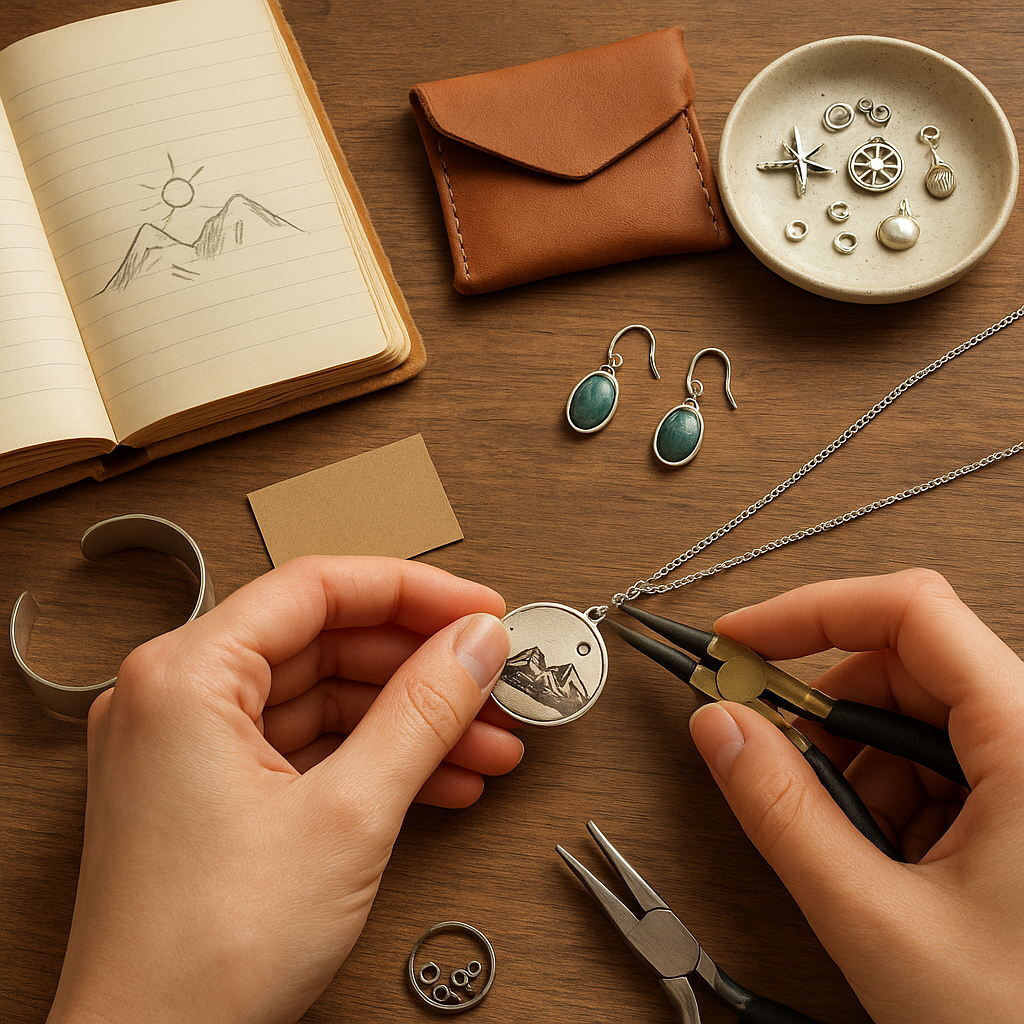
Travel leaves a trail of textures, colors, scents, and fleeting conversations. Turning those impressions into jewelry is a way to keep the glow of a sunrise or the echo of a crowded market alive at your fingertips. Rather than collecting dust on a shelf, your journeys become wearable companions that invite questions, spark stories, and connect strangers. This article explores how to translate memories into form, how to gather materials respectfully, and which techniques help you craft pieces that hum with place and time. It focuses on practical processes but also on the quiet, reflective work of distilling meaning—because the first tool of any maker is attention.
Mapping Memories into Motifs
Begin by noticing the building blocks of your travel days. What patterns repeat—arches in Moorish courtyards, ripples in a lake at dusk, tessellated tiles underfoot? What recurring sounds, words, and scents rose and fell with your steps? Jewelry loves motifs that carry rhythm and metaphor, and you can gather them like sketches in a field notebook.
Set aside a few minutes each evening while traveling to capture tiny details: the hue of the sky behind the bus window, the way a vendor ties twine around a parcel, the chipped paint on an old café door. Translate sensations into shapes: triangles for mountain switchbacks, circles for ferry portholes, rectangles for city blocks. Assign a texture to each: hammered metal for cobblestones, silk cord for river reeds, glass beads for streetlights viewed in rain. This step roots your design in lived experience and lays a foundation of intention and symbolism.
From your notes, create a small motif library. You might end up with a handful of geometric shapes, a stylized leaf from a highland trail, or a spiral inspired by a temple carving. These are your alphabet. Later, you will string them into sentences—a bracelet for the week you crossed a continent by rail, earrings for a night market lit by lanterns, a pendant for a café conversation that changed your route.
Gathering Materials with Respect and Story
Collecting materials on the road adds immediacy to your designs, but it demands care. Fragile ecosystems, cultural property, and local rules govern what can leave a region. Instead of prying beads from history or disturbing protected shorelines, learn to identify what is ethically collectable, what is better purchased from artisans, and what is best admired and left in place. The richest materials often carry not just color and texture but clear provenance.
- From markets: Seek handmade components—ceramic beads, handwoven trims, tiny brass charms—that are sold openly by local makers. Ask about origin and technique. Photograph the stall (with permission) and jot the maker’s name on the receipt; these details become part of your piece’s story card.
- From nature: Collect responsibly only where it is legal and sustainable. Beach glass, wind-fallen seeds, or pebbles from unprotected areas can be beautiful. Avoid live corals, artifacts, or plants that might carry pests. When in doubt, purchase rather than pocket.
- From daily life: Transit tickets, maps, postage stamps, museum flyers, wine bottle foils, and café sugar wrappers can be encapsulated in resin or set under glass cabochons. These humble scraps often prove more evocative than rare stones.
- From repairs: Thrifted jewelry, broken watch chains, and orphaned earrings become raw stock for upcycling. The scars they carry—scratches, dents, mismatched patinas—are portals into earlier journeys, yours or someone else’s.
Carry a simple travel kit: small zip pouches for components, paper envelopes for fragile finds, a fine-tip marker to label origin and date, a notebook or phone app for quick sketches and material notes. Treat your suitcase as a roving studio and your itinerary as a rolling syllabus in observation.
Design Alchemy: From Field Notes to Form
Back at your workbench, spread your finds and notes like a map. Group items by color and texture before you think about function. If a piece of twine perfectly echoes a fishing village, experiment with fiber techniques; if a stone carries a rugged surface, plan to keep its edges rather than polishing them away. Preserve the gestures of place.
Create mood boards: one for palette, another for texture, a third for line and silhouette. Add swatches of fabric, photos, and small samples of wire gauge or chain weight. Then sketch five distinct concepts for each motif or cluster of materials, even if the first idea feels perfect. Constraint breeds invention: challenge yourself to design a statement necklace, a minimal pendant, and a pair of lightweight earrings from the same story seeds. Your design process becomes an act of translation that privileges essence over duplication.
Balance is crucial. Feature pieces that carry narrative—like a map fragment or a distinctive bead—need quiet companions. Use negative space the way a traveler uses a pause between destinations; air lets memory speak. Think in proportions: a strong central pendant with a thread of tiny seed beads; an asymmetrical pair of earrings where one side holds the story and the other anchors it.
Core Handicraft Techniques for Place-Based Jewelry
Techniques are dialects that help your motifs speak. Choose those that mirror your memory’s character: crisp geometry may favor cold connections and saw-piercing; coastal softness might want knots and flowing cord; urban density could call for layered chains and mixed metals.
Wire-Wrapping and Cold Connections
Wire offers both structure and delicacy. Use fine gauges to cradle sea glass or wrap pebbles without drilling. Heavier gauges can form frames for paper cabochons sealed in resin. Cold connections—like rivets, tabs, and micro-bolts—join dissimilar materials (metal to wood, resin to shell) while preserving textures. The tactile logic of a rivet mirrors the joining of moments in travel: two sheets of time captured with a pin.
Knotting and Textile Work
Knots are archives of place. Sailor’s knots, Andean braids, and friendship bracelet techniques hold movement in their crossings. Integrating macramé lets you frame stones without metal, echo fishing nets, hammocks, and woven market bags. Waxed linen offers crisp lines, while silk and cotton cords soften edges. A travel ticket laminated into a small, flat insert can be couched into a corded necklace and sealed for durability.
Metal Texturing and Saw-Piercing
Brass, copper, and silver sheet can be hammered with improvised tools—a pebble, a spoon, a scrap of lace—to capture surfaces from your journey. Saw-piercing silhouettes transforms skyline sketches into pendants. Salt, vinegar, and heat (applied safely) can coax color on copper, evoking sunlit stucco or canal water. Leave intentional irregularity to honor the handmade pulse of a place and to elevate craftsmanship over perfection.
Surface Color and Protective Layers
Color can be embedded by alcohol inks sealed with resin, by patination recipes, or by kiln work if you have access at home. With glass powders, cloisonné wires, and controlled heat, enameling becomes a way to paint with fire. For paper or fabric inclusions, use archival adhesives and sealants to guard against humidity. Test small before committing valuable memories to a new technique.
Beadwork, Stitching, and Bezel Alternatives
Seed bead bezels, peyote stitch, or brick stitch can cinch small tokens—a pressed flower under resin, a coin replica, a ceramic disc—without metal. This approach lets color gradients carry the mood of a skyline or a changing tide. Harmonize bead finishes: matte for fog, lustrous for wet stone, transparent for rain-glossed streets.
Palette, Texture, and the Language of Place
Color is memory’s shorthand. Build palettes in threes: dominant, secondary, and accent. For a desert-inspired palette, think ochre, sand, and a slice of azure tile. For alpine trails, granite gray, moss green, and sunrise pink. Texture deepens the chorus: pair hammered metal with raw linen, smooth glass with braided cord, polished shell with brushed brass. Let the ratio of textures mirror the ratio of experiences: if your trip was 80 percent long trains and 20 percent wild hikes, a piece with sleek chain and a rugged focal invokes that balance.
Acknowledge aging. Metals darken; fibers soften. Embrace graceful patina where appropriate, stabilizing only what would compromise function. A postcard fragment under resin may yellow slightly over years; that warmth can mirror the way memory mellows into story.
Cultural Respect and Ethical Practice
Jewelry of place courts cultural motifs and traditional techniques. Approach with humility. Research the origin of symbols and patterns you admire; better yet, collaborate with local artisans when possible. Commission beads or components directly, credit the maker, and pay fair prices. Avoid sacred or proprietary designs meant only for community use. If you adapt a technique, name your sources, and be transparent in sales or exhibitions. The path from admiration to appropriation is crossed when context and respect are stripped away.
Ethics also includes materials. Choose recycled metals, vintage beads, and consciously sourced stones. If a beach or park warns against collecting, honor the sign and instead photograph textures to translate later in metal or fiber. Let sustainability shape your constraints; limitations unlock creative forms that often feel more true to place than raregathered specimens.
Three Project Narratives
1. Night Market Earrings: Lanterns and Laughter
Materials: hand-dyed silk cord from a market stall, two small brass bell charms, seed beads in chili red and plum, gold-filled ear wires. Technique: cord wrapping, bead fringe, gentle hammering.
Design: Sketch a lantern silhouette. Form a light brass frame with 20-gauge wire, flatten lightly for texture. Wrap the frame with slim silk cord, anchoring ends with tiny knots and archival glue. Suspend a brass bell inside the frame to echo lantern clappers. Add a beaded fringe at the base to mimic tassels. The silk carries streetlight glow; the bell whispers with each step, recalling late-night laughter.
2. Coastal Pendant: Tide Pool Under Glass
Materials: small piece of sea glass (collected where permitted), a scrap of nautical chart, clear domed glass cabochon, bezel setting or wire frame, linen cord.
Design: Crop the chart around the cove you loved. Adhere chart fragment to sturdy paper and seal. Set under the domed glass with non-yellowing adhesive. Create a wire frame to hold the cabochon if you lack a bezel. Drill a small hole in the sea glass (use water and a diamond bit; protect your eyes and lungs), or cradle it with wire. Hang both from a knotted linen cord, alternating knots with tiny beads the color of wet sand. When you hold the pendant to light, the map gleams like shallow water.
3. Mountain Path Bracelet: Switchbacks in Metal
Materials: thin copper sheet, graphite transfer of your trail map, jeweler’s saw, liver of sulfur for color, suede lace tie.
Design: Transfer the trail’s switchbacks onto copper. Saw-pierce the path as narrow windows through which skin will show. Texture the surface with a stone from the trail (used as a hammering tool), then patinate lightly. Punch end holes, add a suede lace, and tie around the wrist. The negative spaces become breaths between climbs; the cuff’s curve echoes ridge lines.
Finishing, Comfort, and Longevity
Finishes make wearing a pleasure. Deburr every cut edge; floss chain ends with ultra-fine sandpaper. Balance weight so earrings swing without pulling. Use hypoallergenic findings for sensitive ears. Shield embedded paper with multiple resin layers, curing fully between. Treat fiber cords with beeswax or microcrystalline wax for durability and water resistance. Where metals might stain skin, add a clear sealant or plan for periodic polishing.
Build in repair paths. Keep a small envelope of extra beads or cord with each piece’s story card. Record measurements, wire gauges, and materials in a log. If a clasp fails on a trip, your future self—or a local jeweler—will thank you for the roadmap.
Story Cards and Presentation
Each piece thrives with context. Write a small card that names the place, date, materials, and a two-sentence memory that guided the design. Include maker credits when components come from other artisans. Packaging can extend the narrative: wrap in a square of fabric purchased at a bazaar, tie with twine from a bakery, and enclose a tiny print of your field sketch. A QR code linking to a photo album or a short audio note lets recipients hear the street sound that inspired the cadence of your chain or the sea that softened your glass.
Photography matters for sharing and selling. Stage pieces with props that evoke but do not overshadow—a sprig of dune grass, a torn map edge, a ceramic tile. Natural light preserves color accuracy; a reflector or white card softens shadows. Macro shots should prioritize clean lines and honest texture; do not over-smooth or misrepresent scale. Visual clarity honors both memory and making.
The Discipline of Revision
The first version rarely holds the most truth. Wear prototypes for a day. Do the bells chime too loudly on the metro? Does a pendant catch a sweater? Trim, rewrap, rebalance. Let cuttings pile like shavings under a carpenter’s bench; they are evidence of listening. Revisions reinforce intent: if a river walk felt serene, your piece should rest calmly, not fight. If a festival was riotous, asymmetry and saturated color may better sing its chorus.
Building a Portable Studio
For extended travel, assemble a compact kit: micro pliers, flush cutters, a travel-size metal file, a thread burner, needles, a small bench pin that clamps to a table, soft wire, a handful of findings, UV resin and a pocket UV lamp (where allowed), seed beads in a restrained palette, and cord in two neutral colors. Add a lightweight magnifier and a cloth pouch that doubles as a work mat. Respect local spaces: lay a towel to catch shards, work away from food, and never discard scrap metal or thread ends outdoors. Leave your workspace cleaner than you found it.
Learning from Local Hands
Workshops and informal lessons amplify the soul of a piece. If you find a studio offering classes—bead-stringing in Oaxaca, metal stamping in Jaipur, basket weaving in the Balkans—sign up. Learn a knot from a fisherman, a color pairing from a textile seller, a term in the local language for the motif you love. Ask permission to integrate what you learn and note the context on your story card. Even a ten-minute chat can reshape a design’s heart.
Beyond Souvenirs: Pieces as Companions
When you craft jewelry from travel, you build companions that call you back to attention. A pendant becomes a pocket watch of recollection; a ring becomes a compass for the next step. Share them. Gift a pair of earrings to the friend who watched your plants. Trade a bracelet with a fellow traveler you met on a night bus. Commission components from artisans you admire and send them photos of the finished work. Let the network of hands be visible.
Documentation for Memory Keepers
Even if you never sell your work, keep a binder or digital folder per piece: sketches, material receipts, maker contacts, process photos, care instructions. Add a short note six months later: how it aged, what you would change, whether a clasp type failed. Your future projects benefit from this quiet ledger. It also ensures that if someone inherits your work, they inherit its living map as well.
Common Pitfalls and Gentle Fixes
- Colors that looked perfect abroad feel loud at home: ground them with neutrals—matte black beads, natural linen cord, brushed brass—to make saturated hues friendly.
- Paper inclusions bubble under resin: pre-seal both sides with a thin coat of archival medium and allow full drying before doming.
- Earrings too heavy: substitute hollow or stamped components, trim fringe length, or convert to pendants.
- Metal allergies: switch findings to niobium or titanium; create hooks from hypoallergenic wire or slip on silicone sleeves.
- Stories feel forced: step back. Let the motif breathe. Sometimes a location wants to live as a simple silk bracelet with a single knot—the exact knot you learned at the harbor.
The Poetry of Small Decisions
What turns a memento into a meaningful ornament are the small, steady decisions: which edge to keep rough, which side of the bead faces forward, which knot to leave visible. The gestures you choose become a language. Over time, your work will reveal recurring sentences: a love of soft asymmetry, a taste for half-tones, a penchant for hidden clasps. This is you, meeting a place in the liminal space where hands think.
Materials that Echo Regions Without Imitation
- Mediterranean: terracotta beads, brass hammered to mimic sunstruck waves, cord dyed with tea for warmth.
- Nordic coast: tumbled glass, pewter tones, linen cord, pale wood discs diluted with whitewash.
- Andean highlands: woven trims, alpaca silver, stone beads in earth reds and deep greens, braided closures.
- Southeast Asian markets: silk tassels, bell charms, punchy jewel tones balanced by rice-paper inclusions.
- Urban overlays: oxidized chain, geometric silhouettes, concrete-hued polymer clay beads alongside a single neon accent.
These are invitations, not prescriptions. Let your own feet decide the palette; let your own eyes choose the weight of line.
Honoring Chance
Serendipity is a co-designer: a broken tile revealing a beautiful edge, a ticket stub flaring with the exact color your palette needed, a wrong turn into a street that ends up threaded through your chain. Invite chance by leaving one decision open until the end—an accent bead, a knot placement, a final patina angle. In choosing with what you have, you honor the contingency that makes travel thrilling.
When Memory Needs a Frame
Not every keepsake is wearable raw. Build frames with simple bezel cups or wire cages that protect fragile finds. For paper, consider double domes—glass on both sides—so the back of a stamp or ticket remains visible. For fabric, stitch edges with a tiny overcast or blanket stitch to prevent fray inside resin. The frame should whisper, not shout, letting the keepsake’s voice carry.
From Workshop to Wayfinder
Complete pieces often signal the next journey. A cuff that maps your old commute might coax you into a slower walk on new streets; a pair of lantern earrings might lead you to seek night markets in every city. Jewelry becomes a compass when it listens to you as much as you listen to it. Consider dedicating one piece per year as a wayfinder, crafted not to summarize a trip but to invite the next one.
Selling, Sharing, and Archiving
If you choose to sell, curate collections by place or theme—Coastal Drift, Market Lanterns, Alpine Switchbacks. Include story cards, maker acknowledgments, and care notes. Photograph processes to share with buyers who value transparency and human touch. Archive a sample from each collection for your own records. Think in seasons of making, echoes of travel cycles: arrival, immersion, departure, return.
Closing the Loop: Upkeep and Renewal
Wear changes jewelry as surely as wind changes dunes. Schedule gentle care: rinse salt from cords after beach days, polish clasps quarterly, re-wax thread ends when fuzzy. Invite aging where it suits the narrative; resist it where it threatens structure. When a piece feels stale, recompose it. Just as routes can be redrawn, clasps can be swapped, pendants re-strung, beads migrated to a new city of metal and fiber. Renewal is a form of listening, too.
Symbols, Talismans, and Quiet Power
A final note on meaning: never underestimate a small charm or a recurring bead that becomes a private signal. A pebble encased in copper that sat in your pocket during a hard conversation. A tiny stamp under glass mirroring a lesson learned under rain. Worn daily, such objects gather power and memory until they hum beneath the wristbone. When a piece becomes a personal talisman, you will know—it will feel slightly warmer to the touch, slightly heavier with recollection.
A Simple Practice to Begin Today
Pick one memory from your last trip. Sketch three shapes for it. Choose a color family. Pull five materials from what you already own and one from a drawer of forgotten things. Make a prototype in an hour. Do not overthink. Wear it tomorrow on a small errand. Notice how it sits, what it says, what you wish it whispered or shouted. Revise once. Name it after the street where you turned left instead of right. In this way, small acts of making will accumulate into a life’s archive of places, held together by threads and metal, warmed by skin, and softened by time.
Tool and Material Checklist
- Tools: round-nose pliers, chain-nose pliers, flush cutters, needle files, awl, bench pin, small hammer, steel block, micro drill or rotary tool with water setup, beading needles, thread burner, UV lamp where appropriate.
- Metals: recycled copper/brass/silver wire and sheet in varied gauges.
- Fibers: silk, cotton, linen cords; waxed linen; leather or suede scraps; embroidery floss.
- Findings: ear wires (hypoallergenic options), jump rings, clasps, crimp tubes, rivets, micro screws.
- Surface: archival adhesives, resin (UV or two-part), sealants, patina solutions, microcrystalline wax.
- Components: beads (glass, ceramic, stone), charms from local artisans, paper ephemera, beach glass, pebbles, map fragments, postage stamps.
- Safety: eye protection, dust mask for drilling, nitrile gloves for chemicals, good ventilation, cut-resistant mat.
Living with the Work
The goal is not to reconstruct a place but to let it resonate. Allow gaps the way a storyteller pauses. Accept that each piece is an interpretation made at a particular time by a particular self. Future travels will write new chapters; future versions of you will see different light in old stones. Through attention, care, and a commitment to honest making, jewelry becomes a gentle instrument—tuning you to what matters, and in the quiet between notes, to what calls you next.
As you collect, design, and finish, keep returning to three touchstones: attention to detail, respect for origin, and joyful experimentation. With these, your bench becomes a harbor, your materials the tide, and your hands the small boats that carry memory back to shore.
And when someone asks where your necklace came from, you can smile and answer with a story that is not only about distance, but about presence—in the market’s hum, on the trail’s edge, at the workbench’s glow, where place becomes form and form becomes home.
