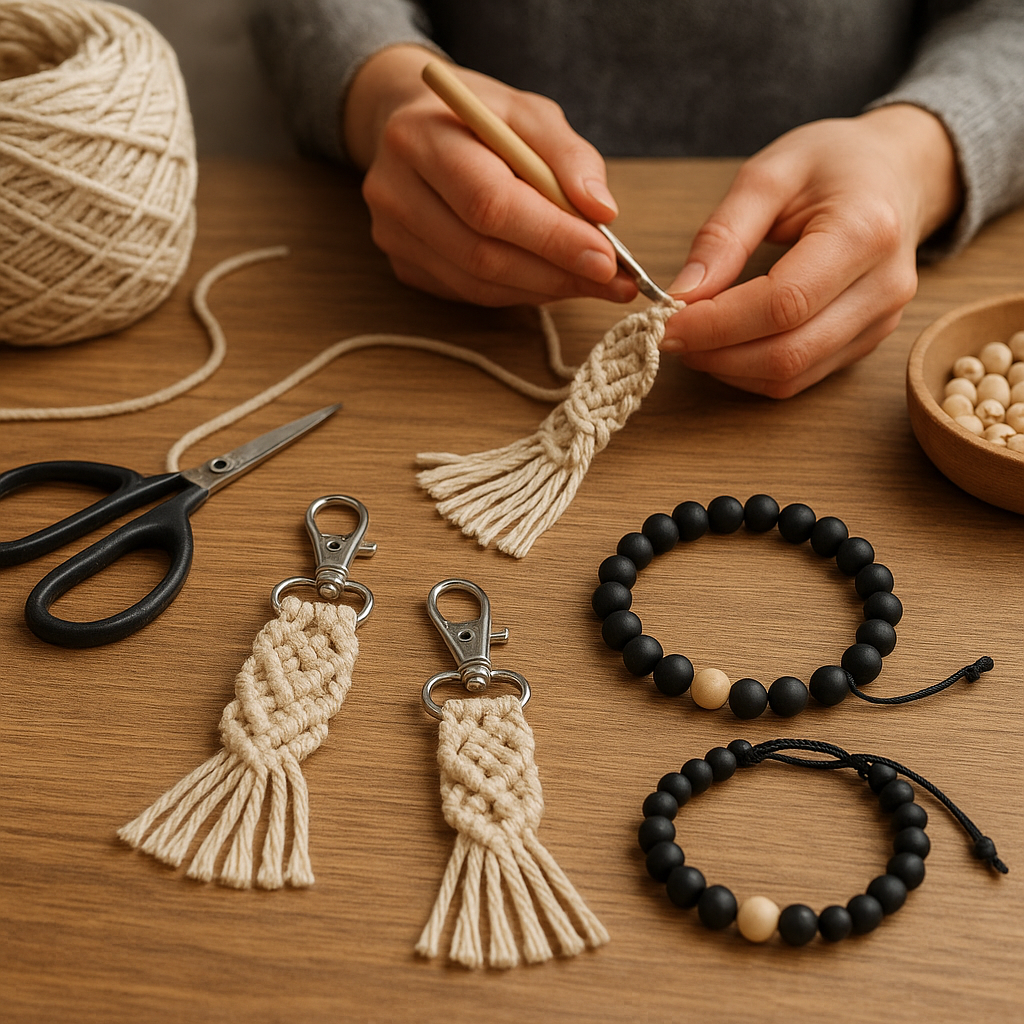
Creating matching accessories for couples is more than a cute visual statement; it is a practice rooted in shared identity, intimate storytelling, and the tactile joy of making. Whether you are hand-stitching a pair of leather key fobs, knitting twin beanies for autumn markets, or crafting complementary bracelets that whisper inside jokes in Morse code, the process invites you to translate memories and values into wearable form. Handicraft excels here: it slows us down, honors craftsmanship, and lets two people carry a subtle reminder of their bond through thoughtfully made objects.
Why Matching Accessories Work: Style, Story, and Substance
Matching does not have to mean identical. A pair can coordinate through color families, mirrored motifs, or shared techniques while still honoring individual tastes. Complementary sets reduce visual redundancy and bring nuance to outfits, allowing each person to maintain a distinct look that harmonizes with the other. Think navy-and-cream scarf and beanie, leather key tags cut from the same hide but dyed differently, or minimalist necklaces that interlock when placed side by side.
At their best, couple accessories tell a story. A mountain silhouette stamped on two wallets may recall a first hike. Paired lanyards in the palette of a favorite café hint at early dates. Embroidered coordinates point to an engagement spot, while woven charms replicate a pattern from a family quilt. When design decisions emerge from shared memories, the set becomes a talisman. This is the quiet power of symbolism: the ability of shape, color, and texture to hold meaning without a single word.
Substance follows story. Materials and construction choices determine how comfortable, useful, and long-lasting your pieces are. Limit synthetics if skin sensitivity is a concern; choose nickel-free hardware; reinforce stress points. By bridging aesthetics and function, you make accessories that transcend trend cycles and invite daily use.
Design Foundations for Couple Sets
Finding a Shared Aesthetic
Begin with a joint mood board. Gather fabric swatches, snapshots of favorite places, typefaces that feel like you, and color chips from a paint deck. Scan wardrobes: which colors dominate, which silhouettes recur, and which textures (matte vs. glossy, smooth vs. nubby) feel authentic? If one partner leans minimal and the other loves vintage flair, compromise through restrained silhouettes rendered in heritage textiles, or pair a bold print with a solid accent.
- Stick to two core colors plus one accent for cohesion.
- Mix finishes for depth: brushed metal with waxed canvas; polished shell buttons with felted wool.
- Choose repeated geometry: arcs, chevrons, or grids create an invisible thread between items.
Mirrored, Identical, or Complementary
Decide the relationship between the pieces:
- Identical: Same item, same colorway. Best for minimalists or ceremonial items (rings, cuffs).
- Mirrored: Left-right inversion or reversed color dominance. Great for earrings, shoe charms, or appliqués.
- Complementary: Different items that share a motif. A bow tie for one, a hair clip for the other, both built from the same cloth; a wallet paired with a key lanyard cut from matching leather.
Color and Texture Strategy
For everyday wear, neutrals with a small pop last longer. Consider tonal variations: charcoal and graphite, sand and camel, sage and olive. Choose a hero texture—pebbled leather, basketweave cotton, rib knit—and repeat it across the set. This quiet repetition communicates connection without shouting.
Comfort, Fit, and Accessibility
Comfort must be baked into early sketches. Bracelets should allow a two-finger gap; necklaces should not sit on pressure points; lanyards need breakaway clasps for safety. Consider magnet closures for those with limited dexterity. Lightweight fibers (e.g., Tencel, bamboo) can be kinder to sensitive skin, while flexible knits accommodate fluctuating sizes.
Choosing the Right Materials and Hardware
Build from quality materials and appropriate hardware. For leather goods, use vegetable-tanned leather when possible; avoid untreated chrome-tanned scraps if skin contact is expected. For textiles, stable weaves (cotton twill, linen) resist distortion in bags, while knits (merino, alpaca) shine in hats and scarves. Opt for YKK zippers, marine-grade snaps, and solid brass split rings; these components age gracefully and are easy to replace later.
Techniques by Craft Discipline
Sewing and Textiles
Sewn accessories provide scope for subtle coordination. Reversible totes let each partner flip to a favorite side while keeping the set coherent. Scrunchies, bow ties, pocket squares, and simple zip pouches are perfect entry-level projects.
- Fabric selection: Pre-wash linens and cottons to prevent surprise shrinkage. For structure, add interfacing (medium-weight woven for totes; foam for camera slings).
- Stitching: Use a 2.8–3.0 mm stitch length for seams, 3.5 mm topstitch for a professional look. Reinforce stress points with bar tacks.
- Edges: French seams or bias binding reduce fray and feel smooth against the skin in scarves and neckwear.
Leathercraft
Leather couples beautifully with minimal design. Matching keychains, card sleeves, and watch straps carry daily romance discreetly. Tools are modest: utility knife, edge beveler, pricking irons, mallet, and waxed thread. Dyes and conditioners add personality; experiment with oil finishes for a rich hand.
- Cutting and marking: Always cut along the leather grain; mark stitching with pricking irons for even spacing.
- Edges: Bevel, sand, and burnish with water or gum tragacanth for glassy edges.
- Hardware: Solid brass or stainless-steel rivets resist corrosion better than plated metals.
Jewelry and Beading
Cord bracelets, beaded strands, and simple pendants are time-honored couple pieces. Memory wire suits beginners; crimped beading wire offers a refined profile. Seed beads encode words in color patterns, while semi-precious stones bring tactile presence. For sensitive skin, use surgical steel or titanium components.
Knitting and Crochet
Hats and scarves excel as seasonal couple sets: same yarn, different stitch patterns. Consider a knit-purl texture for one partner and a cable variant for the other. Crochet offers quick gifts—phone pouches, cup cozies, and lanyards—with structural charm.
- Gauge: Swatch both items; adjust needles to keep coordination consistent.
- Fiber: Superwash wool balances warmth and washability; alpaca blends for drape; cotton for sensitive skin or warmer climates.
Macramé and Braiding
Macramé bracelets and adjustable lanyards bridge style and utility. With a few knots—square, half-hitch, lark’s head—you can craft robust, elegant cords. Color-blocking or mirrored ombrés create instant pairings.
Wood and Metal Small Goods
Thin hardwoods become minimal key tags, while copper sheet turns into stamped charms. Hand tools suffice: coping saw, files, sandpaper, letter stamps, and a bench block. Seal woods with natural oils; patina metals deliberately for character.
Resin and Botanical Inclusions
Resin pendants with pressed flowers from a shared place are quiet keepsakes. Work in well-ventilated spaces, measure resin precisely, and use silicone molds for repeatability. Pair a teardrop pendant with a hexagonal key charm for a complementary duo.
Embroidery and Print
Embroidery turns ordinary textiles into heirlooms. Satin stitches for initials, backstitch for coordinates, sashiko for geometric echoes. For prints, block printing or screen printing can repeat a motif across different items—like matching bandanas and tote pockets.
Step-by-Step Projects to Get You Started
Project 1: Minimalist Leather Keychain Pair
Time: 60–90 minutes. Skill: Beginner to intermediate.
- Cut two 20 mm × 150 mm leather strips from the same hide.
- Bevel and burnish long edges; punch a hole 12 mm from one end.
- Fold strip through a brass split ring, align ends, and set a double-cap rivet.
- Heat-stamp initials or a small icon on opposite sides for mirrored effect.
- Condition with balm; buff to a soft sheen.
Variations: Dye one strap deeper; swap hardware finishes (antique brass vs. nickel); add a tiny stitched saddle detail in a shared thread color.
Project 2: Reversible Tote and Tablet Sleeve
Time: 3–4 hours. Skill: Confident beginner.
- Cut outer and lining fabrics: two panels each at 38 × 42 cm for the tote; add 1.5 cm seam allowances.
- Fuse medium-weight woven interfacing to the outer fabric for structure.
- Sew panels right sides together, box corners at 5 cm, and insert 65 cm cotton webbing handles.
- For the sleeve, cut to device dimensions plus 2 cm ease; add foam interfacing. Insert a zipper and topstitch cleanly.
- Use the same patterned cotton as tote lining to visually link the set.
Project 3: Fisherman’s Beanie Duo
Time: 4–6 hours per hat. Skill: Intermediate knit.
- Yarn: 100–120 g worsted merino. Needles: 4.5 mm circular.
- Cast on 88 stitches; knit 1×1 rib for 14 rows. Continue in stockinette until 18 cm; decrease crown over 6 rounds.
- Partner variation: same yarn, but swap to a broken-rib texture for subtle difference.
- Add matching woven labels inside with a shared icon.
Project 4: Morse Code Bracelets
Time: 60 minutes. Skill: Beginner beading.
- Choose a short word or date; translate to Morse (dots and dashes).
- Assign dot beads (small) and dash beads (long), separated by spacers.
- String on beading wire, crimp to a lobster clasp, and add a 3 cm extender for adjustability.
- Make the second bracelet with reversed color order for a mirrored set.
Project 5: Embroidered Linen Handkerchiefs with Coordinates
Time: 2–3 hours. Skill: Beginner embroidery.
- Hem a 30 × 30 cm linen square with mitered corners.
- Lightly mark coordinates in pencil; backstitch with 2 strands of cotton floss.
- Stitch initials in the opposite corner; choose thread colors that echo each partner’s wardrobe.
Patterns, Measurements, and Replicability
Consistent replication is a hallmark of good patternmaking. Even when items are complementary rather than identical, you will benefit from recorded measurements, seam allowances, and documented techniques. Create a pattern folder (physical or digital) for each couple set, with swatches, thread/yarn labels, and hardware specs. This allows quick repairs or future additions—like adding a matching card sleeve to an existing tote.
- Bracelets: wrist circumference plus 1.5–2 cm ease; keep an extender chain for flexibility.
- Necklaces: 45–50 cm for a standard; 55–60 cm for looser drape; add jump rings for micro-adjustment.
- Totes: handle drop 22–26 cm for comfortable shoulder carry; reinforce at least 3 cm into the bag body.
- Beanies: negative ease of 2–4 cm ensures a snug fit; document gauge per yarn batch.
- Keychains: leather thickness 1.6–2.2 mm for durability without bulk; loop length 7–8 cm finished.
Use jigs and templates for repeat operations: a hole-punch jig for belts and straps; a stitch guide for topstitch spacing; a corner curve template for consistent bag silhouettes. For printed motifs, align registration marks on screens or blocks to achieve clean repeats on multiple items.
Finishing, Quality Control, and Care
The line between homemade and heirloom often lies in finishing. Take time to close seams invisibly, bury yarn ends neatly, seal leather edges, and polish hardware. Press textiles at each stage—pressing is not optional. On leather, buff with a lightly waxed cloth to awaken luster; on knitwear, block to measurements so the pair matches in form as well as material.
- Textiles: trim threads, grade seams, steam shape curves, and use edge-stitching to crisp outlines.
- Leather: bevel, sand up to 800–1000 grit, burnish, and seal if needed; condition sparingly.
- Metal: file and deburr edges; apply microcrystalline wax to slow tarnish.
- Resin: wet-sand through multiple grits; finish with a plastic polish for clarity.
Quality control is kinder when done early and often. Inspect symmetry, check fasteners, tug-test stitches, and ensure edges are uniform. Have both partners try items on; verify that closures are intuitive and that proportions look intentional.
Finally, write care cards. Proper preservation extends the life of your creations and gives couples confidence to use them daily.
- Knits: gentle hand wash, towel-roll to remove water, lay flat to dry; re-block as needed.
- Leather: keep dry; if soaked, air-dry away from heat; condition with neutral balm twice a year.
- Textiles: cold wash for cotton/linen; spot clean interfaced pieces; press with a pressing cloth.
- Jewelry: store in soft pouches; avoid perfume and lotions; polish with non-abrasive cloths.
Sourcing, Sustainability, and Ethics
Thoughtful sourcing anchors your work in respect for both people and planet. Prioritize local suppliers, deadstock fabrics, and recycled metals. Upcycle: retired denim becomes rugged straps; vintage linens become embroidered bandanas; offcuts from a bag become coordinating key loops. This is where sustainability meets style—lower waste, higher meaning.
- Look for FSC-certified wood, organic cotton, and vegetable-tanned leather.
- Choose water-based adhesives and non-toxic dyes whenever possible.
- Mind cultural motifs: admire, research, and credit; collaborate or purchase from makers of that tradition when appropriate.
- Accommodate allergies: nickel-free metal, latex-free elastics, and fragrance-free finishes.
Personalization, Packaging, and Gifting
Few things feel more intimate than personalization. Consider subtlety: stitched initials on the inside hem, a date hidden in Morse code beads, or a shared icon hidden under a collar. For leather, hand-stamping, foil debossing, or pyrography all work. For textiles, embroidery, appliqué, or custom labels with meaningful phrases are simple and enduring. For metal and wood, hand stamping and laser etching (or carefully carved monograms) deliver crisp results.
Packaging tells the prelude to the gift. Wrap both items separately but tie them with the same ribbon color; include a small card explaining the motif and how to care for each piece. For long-distance couples, consider mailing each item in staggered envelopes with numbered open dates, turning a pair of accessories into a shared ritual.
Safety, Comfort, and Longevity
Good accessories feel as safe as they look beautiful. Test breakaway clasps for lanyards, ensure rings and hooks have no burrs, and verify stitches at load-bearing points. If an accessory goes near the face—masks, scarves, hats—select fibers that do not shed excessively or irritate skin, and place labels where they will not scratch.
Think in decades, not months. Maximize durability by double-stitching stress areas, using bonded threads, lining bags, and sealing porous edges. Choose hardware that can be replaced without dismantling the whole piece: screw-in rivets, detachable clips, modular chains. Equal attention to comfort helps pieces become true companions: weigh pendants and earrings; pad shoulder straps; line rough surfaces; opt for closures that close silently in quiet spaces.
Design with ergonomics in mind. For wristwear, respect the curve of the ulna; for neck straps, use a 2.5–3 cm width to distribute weight; for headwear, finish interior seams smoothly and avoid thick ridges over pressure points. The more natural an accessory feels, the more likely it is to be worn daily and cherished.
Ideas for Every Season and Situation
- Spring: lightweight linen bandanas with hand-printed motifs; slim leather card sleeves for market strolls.
- Summer: macramé key lanyards in sea-glass hues; straw hat bands with embroidered initials.
- Autumn: twin beanies and matching cup sleeves; wool-felt phone pouches with contrast topstitching.
- Winter: reversible scarves with monogram corners; leather mitten ties cut from the same hide.
Travelers might prefer passport covers and luggage tags with a shared stamp. Remote couples can share matching desk accessories—pen sleeves, cable keepers, or embroidered mouse pads—that keep each other present during the workday. New parents will appreciate stroller strap covers and coordinated pacifier clips. There’s always a context for coordinated design.
Common Pitfalls and How to Avoid Them
- Over-matching: Reserve overt repetition for small surfaces; complement rather than clone on larger pieces.
- Ignoring lifestyle: A delicate suede key fob will suffer on a construction site; canvas or metal fares better.
- Under-finishing: Ragged edges and loose threads unravel trust. Build finishing time into your plan.
- Hard-to-clean items: Pre-shrink fabrics, choose washable fibers for daily wear, and provide clear care notes.
- Scale imbalance: Keep proportions in dialogue—if one item is bold, pair it with a subtler partner.
From Keepsake to Daily Companion
Accessories become part of a couple’s shared rhythm when they serve real needs and evoke shared meaning. Start with a simple set and iterate: add a coordinating coin pouch to a tote, swap basic lanyards for knotted cords, or echo a favorite stitch on a new winter piece. Keep notes, keep swatches, and treat each pair not as a one-off, but as a living set you can expand over time.
Matching accessories are less about being seen and more about feeling connected. Through patient making, careful selection of fibers and hardware, and the quiet discipline of refinement, you craft objects that hold hands even when you are apart. And that is the heart of handmade couple design: small, durable companions that carry shared stories into everyday life—softly, faithfully, beautifully.
