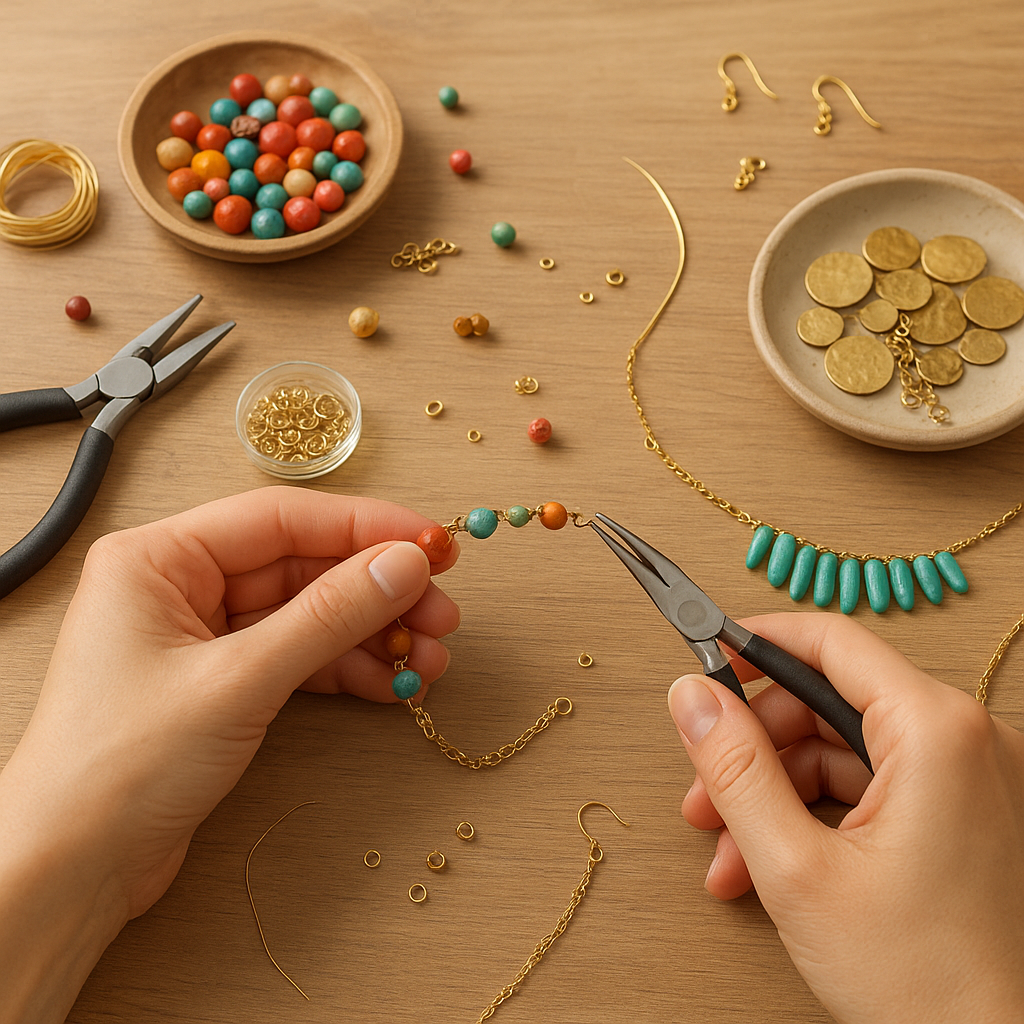
Festival jewelry lives at the intersection of craft, story, and movement. It must photograph beautifully at golden hour, survive dancing until sunrise, slip under a jacket at a security check, and still feel like a talisman the next morning. The heart of the craft is the same as any fine handicraft tradition: deliberate choices in materials and process, calibrated for the conditions and culture of gatherings. This guide translates studio know‑how into field‑tested advice for making showstopping, comfortable, and resilient jewelry for music festivals, renaissance faires, weddings, cultural parades, and nightlife events.
Know the Event, Know the Wearer
Every festival or event has a visual grammar and a set of practical constraints. Before you sketch, distill the brief: who is wearing the piece, where they will move, and what the event asks of adornment. Your job is to harness spectacle without sacrificing function.
- Audience and pace: Bass-heavy dance tents reward light-catching, UV-reactive accents; slow ceremonial processions favor heirloom forms and symbolic motifs.
- Weather and environment: Hot, dusty fields call for sweat-safe finishes and easy-clean surfaces; rainy streets need corrosion-resistant metals and secure closures; indoor clubs reward shimmer and low snag risk.
- Rules and logistics: Some venues restrict long spikes, chains, or heavy metals; many have metal detectors. Design modularity so parts detach or reconfigure quickly.
- Duration and movement: Four-hour wear is different from fourteen. Aim for balanced weight and smooth contact points to prevent chafing during continuous motion.
- Photography and stage lights: Surfaces with micro-texture, mirrored facets, or AB coatings read bigger from a distance; translucent elements glow under backlight.
Translate these constraints into a mood board: silhouettes, motifs, palettes, and materials that tell a consistent story. If you sell on-site, prepare a spectrum: subtle day pieces, mid-level statements, and one or two showstoppers people will remember years later.
Materials, Tools, and a Field-Ready Workspace
Essential hand tools
- Round-nose, chain-nose, and flat-nose pliers; flush cutters for clean wire ends; nylon-jaw pliers for finishing without marring.
- Crimping pliers or a smooth-jaw alternative for wire cable work; bead reamer; micro files; burnishers; a chasing hammer and bench block for shaping.
- Measuring tools: calipers, ring mandrel, bracelet mandrel, and a soft tape for on-the-spot sizing.
- Beading needles, thread conditioner, and a mini loom or macramé board for textile-forward designs.
- UV resin lamp, mixing cups, silicone mats, and dome tools for fast-curing accents; slow-cure epoxy for structural set-ins.
- Adhesives: flexible industrial-grade cement for fabric-to-metal, two-part epoxy for hardware, and cyanoacrylate for point fixes.
- Safety gear: eye protection, respirator for resin or metal dust, finger guards, and a compact first aid kit.
Material choices and how they behave
Metals define structure and tone. Brass takes a deep shine and patina; copper warms skin tones and work-hardens quickly; aluminum is featherlight and non-tarnishing; stainless resists corrosion but is harder to bend; sterling silver elevates heirloom pieces. For sweat-heavy environments, sealed brass, anodized aluminum, or stainless hardware pays off in fewer returns.
- Stringing cores: 49-strand steel cable has unmatched kink resistance for statement necklaces; micro-macramé cord (polyester or nylon) gives flexible drape; silk suits heirloom beads but dislikes puddles; waxed linen handles grit gracefully.
- Beads and stones: Glass and crystal amplify light; acrylic and lucite keep weight low; gemstones add story and texture; wood and horn warm the palette but need sealing in rain.
- Textiles and leather: Fringe engages movement and sound. Back edges with ultrasuede or edge-paint leather cuffs to eliminate rub points.
- Polymer clay and UV resin: Clay shapes custom cabochons and motifs at low weight; resin encapsulates botanicals, glitter, or micro-mosaics that read powerfully at distance.
- Findings and closures: Leverage locking leverbacks for earrings, lobster or magnetic clasps with safeties for necklaces, and swivel hooks where motion is constant.
Two questions drive your bill of materials: comfort over time and durability under stress. Favor hypoallergenic hardware (surgical steel, niobium, titanium), lead- and nickel-safe components, and coatings that resist sweat, sunscreen, and dust. Test every closure with a real-world tug—if it fails at home, it will fail in a crowd.
Workspace that travels
- Lighting and surface: A neutral mat with bead wells reduces bounce; headlamp or clip light saves night repairs.
- Modular storage: Small tins or divided boxes by color and size; pre-made kits for on-site assembly; silica packs to curb tarnish.
- Clean zones: Separate resin from textile and metal work; alcohol wipes and microfibre cloths for quick cleanup.
- Repair pouch: Extra ear nuts, jump rings, converters for stretched piercings, magnetic extenders, and a mini toolkit for customer fixes.
Design Foundations That Survive the Dance Floor
Palette, contrast, and stage presence
Think in planes and distances. The closer the viewer, the more micro-details matter; the farther away, the more silhouette and contrast do the work. Map a palette using the color wheel: analogous schemes for harmony, complementary for pop, triadic for playful balance. Metallics are neutrals that also reflect moving light—mix warm and cool to match skin undertones and lighting temperatures. For night venues, add AB-coated crystals, mirrored sequins, holographic foils, or UV-reactive pigments that answer blacklight with a glow.
Form and comfort
Great performance pieces vanish on the body until you want them to shout. Weight distribution and touchpoints are key elements of ergonomics. Spread weight across larger surfaces with curved plates or multi-strand supports; round or cap all wire ends; avoid high-friction pivots at the collarbone and under hairlines. Test jump ring orientation so dangles move but do not snag. For earrings above 10 grams each, add comfort patches or chain supports that hook to cartilage cuffs.
Symbol, story, and meaning
Festivals are stages for identity. Embed narrative through motifs: lunar phases for night rituals; knotwork for heritage; circuitry patterns for futurist themes; pressed wildflowers for a specific meadow; coordinates or dates for weddings. Story gives customers a reason to choose your work over mass-made imports—and to treasure it long after the music ends.
Core Techniques to Master for Event Wear
A small, reliable repertoire of techniques covers most event scenarios. Build a toolkit you can execute cleanly in batches and adapt to trend shifts without retooling your entire process.
Wire wrapping for structure and motion
- Use dead-soft for initial curves, half-hard for frames that hold shape. Work-harden with a few taps of a chasing hammer on a bench block.
- Make closed wraps on all dangles; open loops are invitations to lost charms in a crowd.
- For comfort, tuck tails into the core of your wrap and burnish transitions until smooth.
Bead weaving and loomwork for texture
- Peyote and herringbone stitches produce flexible, fabric-like surfaces that drape around the neck or wrist.
- Loomwork scales quickly for geometric patterns; back with ultrasuede and add a foldover clasp for a smooth finish.
- Seal thread knots with flexible glue, not brittle cyanoacrylate, to preserve movement.
Macramé and knotting for grippy drape
- Use polyester micro-cord for sweat resistance and crisp knots; finish with heat-set tips or metal cord ends.
- Integrate gemstone beads or metal sliders as focal points; test sliders for true adjustability on humid days.
Cold connections and stamped accents
- Rivets, screws, and tabs join mixed media without heat—perfect for travel and on-site assembly.
- Metal stamping personalizes pendants and tags; anneal and polish to reduce burrs that snag fabric.
Polymer clay and UV resin for custom forms
- Condition clay thoroughly, bake per thickness, and sand progressively for jewelry-grade surfaces; dome with resin for depth.
- UV resin cures in minutes—ideal for encapsulating glitter, micro-shells, or confetti that catch club lights. Always degas slowly to limit bubbles.
Tassels, fringe, and chain choreography
- Fringe multiplies motion; plan lengths so they clear zippers and bag straps.
- Use soldered chain for stress points; mix link sizes to create texture without extra weight.
Four Festival-Proof Projects
1. UV-Glow Resin Pendant
Materials: open-back bezel or wire frame, UV resin, UV lamp, mica powder, UV-reactive pigment, tiny foil shards, 49-strand cable, crimp beads, lobster clasp, silicone mat, toothpicks, alcohol wipes.
- Seal the back of the bezel with clear tape; burnish so resin will not leak.
- Layer resin with pinches of pigment and foil, partial cures between layers to freeze depth.
- Dome the final layer; cure fully; peel tape and finish the back with a flood coat.
- String on steel cable; add two crimps on each side for redundancy. Tug test.
Why it works: low weight, big light response, sweat-safe surface when fully cured.
2. Boho Fringe Earrings with Chain and Fiber
Materials: half-moon brass findings, fine chain in three lengths, polyester tassels or silk cut to length and sealed, jump rings, leverback ear wires, 20-gauge wire.
- Hammer brass half-moons lightly for texture; polish edges.
- Stagger chain lengths; attach with closed jump rings so each strand swings independently.
- Add fiber tassels at the center for volume; cover wraps with tiny caps for a professional finish.
- Use leverbacks to lock; offer silicone backs as a second safety.
Why it works: maximal motion with minimal mass; easy to recolor for different events.
3. Renaissance-Inspired Circlet
Materials: soft aluminum or annealed brass wire, gemstone cabochon, filigree stampings, cold connections (tiny screws or rivets), chain for back, velvet ribbon lining.
- Shape a gentle arc that hugs the forehead; anchor filigree elements with rivets.
- Bezel-set or wire-cage the cabochon; secure all wire tails deep within the structure.
- Line the inner band with velvet to prevent slipping; finish with an adjustable chain-and-hook closure.
Why it works: heirloom look, comfortable base, adjusts to hair styles and head sizes.
4. Statement Macramé Collar with Stone Focal
Materials: 0.8–1 mm polyester cord, centerpiece cabochon, backing fabric, cord ends, extender chain.
- Knot a symmetrical base using lark’s head and double half-hitches; test drape repeatedly.
- Cage the cabochon with tensioned knots; back the focal with ultrasuede to avoid scratches.
- Finish cords into end caps with epoxy; add a 5 cm extender chain for adjustability.
Why it works: sculptural presence with soft contact, resists stretch and sweat.
Finishing, Testing, and Field Maintenance
Festival pieces endure sweat, dust, and enthusiastic embraces. Your finishing routine is their armor. Round and polish every edge; file wire ends with a cup bur; tumble-polish metal components for hardened surfaces; apply microcrystalline wax or clear lacquer to slow tarnish on brass and copper. For polymer, sand through grits, buff, and seal only if needed; for resin, dome cleanly and fully cure to avoid tackiness.
- Hardware redundancy: double-crimp main strands; add safety chains to chokers and heavy pendants; thread guards at cable exits reduce fray.
- Sweat-proofing: choose cords that do not bleed dye; pre-soak test in saltwater; rinse and dry. Seal porous beads with archival varnish sparingly.
- Tangle control: train chain with steam or gentle tension; package on cards that prevent knotting.
- On-site triage: carry pliers, spare ear wires, jump rings, and cutters; offer quick repairs to turn a problem into loyalty.
Personalization Without Slowing the Line
Customization is a magnet at live events. Offer a menu of quick personalization options that add meaning in minutes.
- Stamping bar: initials, dates, tiny symbols on pre-cut blanks in brass, aluminum, or sterling; sand edges and polish swiftly.
- Charm buffet: zodiac, birthstones, talismans that clip to bracelets or chains with mini carabiners.
- Size tailoring: carry extenders, reducers, and alternative backs; swap to niobium or titanium for sensitive ears on request.
- Palette swaps: stage pre-made colorways so you can exchange a few beads or tassels rather than rebuild.
Price add-ons visibly, time them with a small hourglass or timer, and keep a clean stamping surface to preserve the premium feel.
Ethics, Waste Awareness, and Sustainable Choices
People wear values as much as metal. Build trust by choosing responsible sources and transparent practices anchored in sustainability.
- Metals: recycled sterling or brass when possible; disclose plating and base metals; avoid mystery alloys.
- Stones: prefer vendors who share provenance; consider lab-grown for sparkle with lighter footprints.
- Textiles: upcycle festival banners or deadstock trims into tassels; finish edges to extend life.
- Resin and clay: plan molds that minimize waste; cure full batches; reclaim scraps creatively into micro-inlays.
Back your ethics with smart packaging: sturdy, recyclable cards and boxes, anti-tarnish papers, minimal plastic, and repair/refresh programs that keep pieces in rotation rather than in landfills.
Production Planning, Pricing, and Display
Festival calendars are sprints. Build a pipeline that protects quality and your energy.
- Batch intelligently: cut, hammer, and finish components in runs; assemble late so you can pivot colors to last-minute trends or weather.
- SKU tiers: small impulse buys, mid-range statements, and a few premium centerpieces. Use consistent hardware and color stories to simplify restock.
- Time tracking: log average minutes per piece; price with materials, labor, overhead, and event fees; add margin for on-site customization.
- Display for touch: earring boards, necklace busts, and mirrors at different heights; keep heavy pieces at eye level; use lighting that flatters skin tones.
- Payment and care: clear signage, mobile payments, and tiny care cards; offer a modest discount for same-day repairs to encourage returns.
Troubleshooting: Common Issues and Fast Fixes
- Green skin marks: it is usually copper in contact with sweat. Add a sealant to back surfaces or switch to stainless contact points.
- Earring droop: focal is too forward-heavy. Add a counterweight at the back or switch to a wider support like a hoop or ear cuff chain.
- Tangled chains: train chains on cards; add a tiny pendant to the clasp end to give weight and reduce spin.
- Resin tackiness: undercure or oxygen inhibition. Wipe with alcohol, add a thin flood coat, and cure under a dust cover.
- Thread show-through in beadwork: step down to finer thread, increase tension, or add a bead count to maintain pattern parity.
- Macramé slipping: wrong cord or finish. Switch to textured polyester, use slider beads with interior grip, and heat-set ends before crimping.
Care Instructions to Send Home With the Piece
Keep it simple and empowering: avoid long chemical lists. Recommend putting jewelry on last and taking it off first; store separately on the provided card; wipe after wear with a soft cloth; keep away from pools and sprays; recharge glow or UV-reactive pieces under direct light; bring pieces back for annual refresh—tightening, re-plating, or re-stringing—so they keep celebrating new seasons.
Style Playbooks by Event Type
Outdoor music festivals
- Materials: anodized aluminum, sealed brass, acrylic accents, UV-reactive resin.
- Forms: layered chokers, ear cuffs with chain drapes, arm stacks, lightweight headpieces.
- Practical: magnetic clasps with safeties; dust-friendly finishes; sun-safe cords.
Renaissance and historical faires
- Materials: antiqued brass, copper, pewter, carved bone or wood (sealed), glass cabochons.
- Forms: circlets, handflowers, bodice chains, brooch conversions.
- Practical: smooth backs to protect woven fabrics; pin guards; period-inspired but comfort-first.
Weddings and formal events
- Materials: sterling, pearl, crystal, silk, heirloom components.
- Forms: collarbone-skimming necklaces, hair vines, discreet threader earrings.
- Practical: snag-free finishes; backups for bridesmaids; colorways tied to florals.
Club nights and raves
- Materials: mirrored acrylic, iridescent foils, silicone, resin with glow pigments.
- Forms: kinetic pendants, shoulder chains with elastic anchors, ear climbers.
- Practical: sweat-proof coatings; nickel-free hardware; pieces that pass metal checks when needed.
Skill Growth and Creative Resilience
Keep a pocket sketchbook and a phone album of textures, shadows, and stage rigs; photograph your pieces on moving bodies to see what works beyond the table. Learn from guilds and maker communities; trade techniques across mediums—milliners, cobblers, and aerial riggers all understand load paths and comfort. Schedule post-event debriefs: which closures failed, which palettes sold out, which displays drew crowds. The craft of festival adornment is iterative; celebrate each round of refinement as part of the art.
From Studio to Celebration: A Maker’s Mindset
The best event pieces fuse spectacle with stewardship: of bodies, materials, budgets, and stories. They are engineered for motion and sweat, tuned to light and distance, and finished like heirlooms. Let a single design principle guide your decisions—clarity of purpose. When you choose a motif, a metal, a clasp, or a stitch, ask how it serves the wearer’s experience in the moment and in memory. If the answer is strong, keep it. If not, simplify. Do this, and your pieces will not only look right under the lights; they will feel inevitable in the hand, honest in the making, and generous in the wearing.
