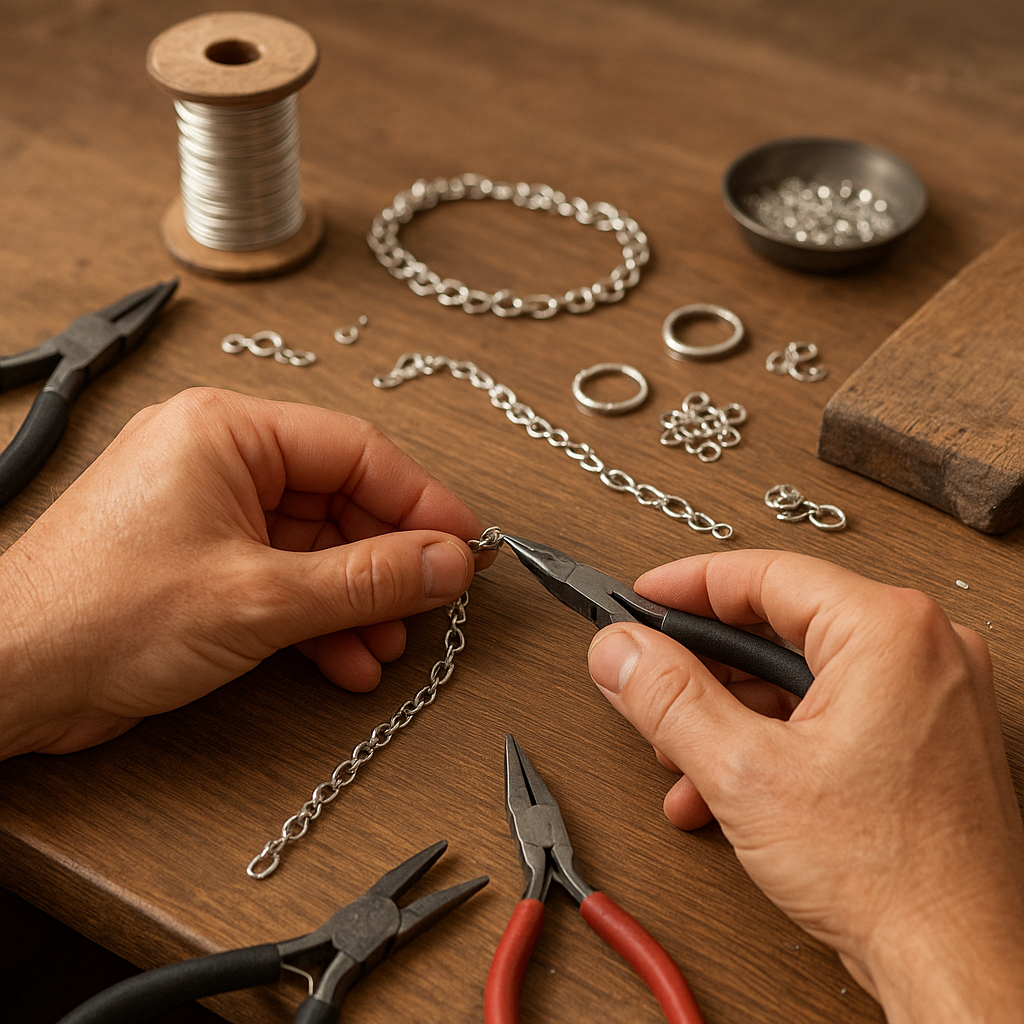
Speed in jewelry-making is not about rushing; it is about removing friction so your hands can translate ideas into pieces with less hesitation and fewer steps. Whether you fabricate silver rings at a bench, string gemstone necklaces on a beading mat, or cast resin charms in small molds, you can accelerate your process without compromising artistry. The goal is to spend more time on the moves that matter and less on searching for tools, redoing work, and managing clutter. The following guide gathers practical, bench-tested methods from craft studios, small workshops, and artisan businesses to help you shave minutes from every stage—design, preparation, making, finishing, and even packaging.
Why Speed Matters Without Sacrificing Craft
Handmade jewelry carries the spirit of touch. Customers buy it for character, materials, and human attention, not because it rolled off a conveyor belt. Still, time is the silent cost behind each earring hook and bezel. If your process includes unnecessary motions, indecisive design changes mid-build, or preventable rework, your margins shrink and your energy fades. Efficient makers protect their creativity by giving routine tasks a reliable rhythm: repeatable steps, clean work surfaces, and tools where they expect them to be. This foundation preserves the handmade feel while creating room for experimentation.
Speed changes your business math: more pieces per session, steadier income, and buffer time for custom work. It can also improve consistency and reduce injuries, because faster usually follows smoother, not harder. When you reduce the micro-decisions your hands must make—to find a burr, set up a torch, measure a jump ring—you reduce mental load and free attention for details that your eye and clients value.
Mindset, Metrics, and the Power of Small Improvements
If you can’t measure it, you can’t improve it. Start by timing a normal making session without altering your routine. Note how long you spend designing, cutting, soldering, sanding, polishing, assembling, photographing, and packing. Use simple time-tracking on your phone or a paper sheet clipped to your bench. Record only start and stop times and brief notes, such as “prep 20 min, solder 18, finish 25.” A single day of honest data can reveal surprising bottlenecks, like 30 minutes lost to tool changes or material searches.
Apply the 80/20 principle: identify the 20% of steps causing 80% of delays. Maybe it’s blade breakage, mis-cut wire lengths, or a complicated finishing sequence. Then apply one improvement at a time. This incremental approach compounds. Saving two minutes on five high-frequency steps can unlock an extra hour each day without extending your workday.
Give routine steps checklists or short SOPs (standard operating procedures). A soldering SOP can specify flux type, solder size, torch tip, heat sequence, and quench routine. A finishing SOP can fix the grit progression and expected visual outcomes. With these set expectations, you accelerate because you remove hesitation.
Studio Organization and Ergonomics
Clean studios are fast studios. Adopt a lightweight version of 5S (Sort, Set in order, Shine, Standardize, Sustain). You do not need to label every drawer with a bar code, but you do need predictable homes for tools and consumables. Try this practical sequence:
- Sort: Remove everything you did not use in the last month from the bench. Store it in a nearby cabinet, not on your primary surface.
- Set in order: Place tools by frequency and sequence of use. Hammers and bench block within arm’s length; specialty pliers on a rack; soldering gear on a dedicated station.
- Shine: Clean dust and metal filings daily. A clean bench reduces accidental scratches and improves fitting accuracy.
- Standardize: Use identical trays and bins for in-progress work, each with a label and contents list. Your hands memorize where items live.
- Sustain: Schedule a 10-minute reset at the end of each session. This tiny habit is a huge speed multiplier next time.
Mind your posture, reach, and tool forces. Good ergonomics prevent fatigue and repetitive strain, both of which slow you down and can halt production entirely. Elevate your bench pin to a comfortable height; use a forearm rest for detailed work; keep your flex shaft foot pedal stable; choose pliers with padded grips and spring returns; tilt your beading surface to reduce neck strain. Bright, color-accurate lighting (5000K-6500K) cuts inspection time and mistakes, particularly when matching stones or spotting solder flow.
Tools: Choosing, Setting Up, and Caring for Your Edge
Tools are multipliers only when ready to use. A flex shaft with quick-change handpieces, a set of uniform needle files, predictable torch tips, and sharp saw blades can erase countless micro-frictions. Invest where you touch materials often: high-quality shears for sheet, burrs that cut cleanly and last, and mandrels sized for your most common rings and loops. Keep a dedicated polishing motor so you don’t swap wheels constantly. Store abrasives in labeled sleeves with grit order from coarse to fine so your hands automatically pull the right next step.
Build a small but firm policy for tool maintenance: sharpen gravers on a set day, replace worn sanding discs at a visible threshold, oil your shears, and vacuum dust near motors. Mount a magnet or hook for safety glasses at each station to avoid hunting. Stock spares of the few consumables that stop production when they fail—saw blades, solder, gas, sandpaper grits, tiny screws for eyeglasses, ultrasonic solution. A five-minute check before starting prevents a 45-minute mid-session store run.
Material Preparation and Batching for Flow
Preparing materials in larger runs unlocks speed later. Pre-cut standard wire lengths for ear wires, head pins, and common jump-ring diameters. Coil and cut rings using a simple mandrel and saw; store sizes in labeled tins. Pre-mark sheet metal with templates so you can cut multiple blanks at once. Keep a pile of pre-fluxed, pre-sized solder chips ready on a mica sheet. These habits accumulate into reliable batching, which naturally reduces setup time per unit.
For stringing projects, sort beads into segmented trays by color and size, and pre-measure cord lengths. For resin, pressure-cast multiples of your frequently used blanks and store them ready for sanding and finishing. For clay, condition a larger batch and store wrapped disk portions so you can start shaping immediately.
Consider standard gauges and metal thicknesses for families of designs. When you reuse the same 20-gauge ear wire or 1.0 mm sterling sheet, you can exploit patterns and fixtures that already fit. This quiet form of standardization reduces errors, accelerates setup, and helps you reorder supplies on autopilot.
Jigs, Templates, and Fixtures: Your Invisible Assistants
Speed loves guides. A small bending jig, a drilling template, or a soldering fixture eliminates alignment checks. Make or buy simple aids: hardwood blocks with dowel pegs for repeatable wire shapes; steel plates with stops for drilling evenly spaced holes; third hands and cross-locking tweezers arranged on a fire brick to set angles. Low-cost 3D-printed forms are superb for repeat curves or bracelet shapes. Even a piece of cardboard with measured slits can serve as a spacing guide for chain tassels.
Templates reduce mental overhead: print ring size circles, earring card cutouts, pendant outline families. Store these on a ring binder with plastic sleeves near your saw frame and bench pin. A go/no-go gauge—like a slot the finished piece must pass through—turns subjective checking into a one-touch decision.
Process-Specific Speed Tactics
Soldering and Torchwork
Clean metal, right fit, correct heat. Those three save more time than any trick. Degrease and pickle parts thoroughly before soldering; file mating surfaces flat; close gaps. Pre-cut solder paillons to consistent sizes and place them with a minimal flux amount. Practice pick-soldering to transfer paillons with control. Heat the assembly not the solder, moving the flame to bring the joint to flow temperature evenly. Keep separate stations for silver and brass to avoid cross-contamination that dulls results and adds rework.
Clever habits include staging multiple assemblies on a firebrick, soldering in a logical sequence (lowest-melting solder first), and quenching/pickling as a batch. Use ceramic pins or binding wire to hold parts instead of chasing tiny shifts. Keep a spare striker and extra torch tip nearby.
Polishing and Finishing
Define a grit ladder—220, 400, 600, 800, 1200, then polish—and follow it without skipping. Skips cause you to chase scratches later, which costs more time than staying disciplined. Use fresh abrasives; dull paper polished with hope is still dull paper. For many small parts, a vibratory or rotary tumbler with stainless shot or mixed media can finish edges and surfaces in bulk. Document your recipe: media type, compound, time, and water level. When patinating, batch pieces and standardize your solution strength and rinse routine to avoid uneven results.
Pre-wrap polishing wheels by metal type and compound, labeling the arbors to prevent cross-contamination. Keep muslin, felt, and bristle brushes separated. Wipe pieces with a tack cloth between steps to avoid embedding debris that forces you to backtrack.
Beading and Stringing
Set up a beading tray that travels: bead mat with wells, a small ruler, side cutters, crimping pliers, and spare crimps and covers. Pre-thread wire guardians and clasps on a short length of scrap wire so you can slide them onto a live piece without fumbling. Use bead stoppers or small binder clips to prevent spills. When repeating designs in multiple colors, lay out one “master lane” on the tray and mirror it in parallel lanes for faster duplication.
Neutralize static and reduce tangles with a light pass of thread conditioner on nylon cords. For knots, mark reference spots on the mat so you can eyeball spacing without measuring each time. Keep a micro-vac or lint roller handy; clearing the mat often keeps fine seed beads from hiding and stealing minutes.
Wirework
Practice consistent loops with stepped mandrel pliers or bail-making pliers. Wrap coils on a rod clamped in a bench vise; saw through the coil for uniform jump rings. For wrapped loops, form all 90-degree bends across a batch first, then make the loops, then close wraps. This one-change-at-a-time approach outpaces completing each piece start-to-finish. Harden finished ear wires in a tumbler to both polish and work-harden in one pass. Use color-coded tape on pliers to mark the spot for repeat loop diameters.
Resin and Clay
Mix resin by weight with a digital scale and a repeatable ratio to reduce cure failures. Degas under vacuum or cure in a pressure pot to avoid bubble-chasing later. Pour multiple molds in one session and cover them to limit dust. Set up a UV lamp array for uniform curing of UV resins. For polymer clay, condition a larger slab once, then store thin sheets between plastic to pull out and cut shapes quickly. Use texture sheets and cutters in sets so you can stamp and cut an entire tray before baking. Sand resin edges with a progressive grit system and end with micro-mesh; mount strips on popsicle sticks for control.
Stone Setting
Prepare seats with the right burr in a predictable order: pilot, setting burr, relief. Pre-mark centers with a self-centering punch. Use a head magnifier or microscope for faster, more confident cuts. Round and mirror-polish burnishers; a smooth tool moves faster and leaves fewer marks to fix. Practice prong tightening in a rhythm—opposites first—so you don’t fight shifting stones. Keep a tiny roll of thin Teflon tape to protect soft gems during setting and burnishing.
Design for Manufacture in the Handicraft Context
Not every beautiful idea scales. When making collections, favor designs that share parts, tools, and steps. A pendant family that uses the same bail size, chain, and finish can be produced in cohesive batches. Small changes—texture, stone color, patina—provide visual variety without new jigs or abrasives. Build a design library with templates and parametric measurements. When a design repeats, you should not be refiguring the ring shank length or bezel wall height from scratch. This is living workflow wisdom: capture what worked so the next pass starts ahead.
Use fast, low-cost prototyping methods. Cut a paper or thin brass pattern before committing precious metal. For 3D-printed masters, iterate in resin to fine-tune size and ergonomics. Every hour you save in iteration is paid back many times in downstream making.
Digital Aids, Documentation, and Visual Tools
Simple digital tools can streamline analog craft. Store SOPs, bill of materials, and vendor links in a shared note app. Use a smartphone to capture how-to clips for your future self; a QR code on a tray can link to the solder sequence video for that piece. Maintain a photo template and light box so product shots take minutes, not hours. Back up cutter files and laser templates with clear version names. When you outsource laser cutting or waterjet, maintain a standard kerf offset so parts arrive fitting your fixtures.
Quality Control as a Speed Strategy
Fast work that returns for repairs is slow work. Build in quick, repeatable checks: a ring mandrel sweep to ensure roundness; calipers on ear wire thickness; a scratch test on patina durability; a tug test on crimps. Create go/no-go gauges for chain lengths or pendant widths. Use bright inspection light and a 10x loupe near your finishing area. Error-proof common failures with simple poka-yoke strategies, such as dedicated bins for left and right components, or asymmetric jigs that prevent reversed assembly. Protecting quality eliminates rework—the slowest step of all.
Planning Flow: Batches, Trays, and WIP Limits
Move work through your studio in trays labeled by stage: Cut, Solder, Pickle/Rinse, Sand, Polish, Assemble, QA, Pack. Limit how many pieces you allow in each bin. Ironically, smaller batches often finish faster than large piles because you reduce waiting and context-switching. Group tasks by machine or tool setup to cut changeover time. If you need to swap buffing compounds, finish everything on one compound first, then change once. Between metals or finishes, treat the switch like a mini-setup event: a 2-minute cleaning checklist can save 30 minutes of contamination fixes.
Kanban cards or a simple whiteboard that lists current orders, in-progress pieces, and blockers keep your head clear. Visualizing where work sits makes bottlenecks obvious: if your Polish bin always overflows, you either need more abrasive capacity or you’re sending pieces downstream with too many surface defects.
Inventory and Supplier Strategy
Speed stops when parts run out. Standardize findings and create reorder points. If your weekly ear wire use is 100 pairs and lead time is two weeks, set the reorder point at 300 pairs to include a safety buffer. Build relationships with reliable suppliers and keep notes on metal batch quality, color tone, and hardness. Consider bulk buys on non-perishables like jump rings and clasps, but avoid hoarding unusual stones that tie up cash. Label materials with date and supplier; if a defect appears, you can trace and address it faster.
Packaging, Photography, and Shipping Without Fuss
Assemble packaging kits: jewelry box, tissue, polishing cloth, care card, and thank-you sticker in one sleeve. Pre-print logo labels and common shipping sizes. Use a label printer integrated with your storefront to avoid copying addresses. Keep a photo corner set permanently with a consistent backdrop and lighting so you can shoot finished pieces in three angles in minutes. Store a size reference (coin, ruler, or template hand) to include in one image automatically. Consistency reduces customer questions and returns, both of which consume time.
Habits, Focus, and Recovery
Focus wins over frenzy. Use short work sprints with deliberate breaks. A 50/10 rhythm (50 minutes on, 10 minutes off) balances output and recovery for hands and eyes. Stretch forearms, shake shoulders, and hydrate. Play consistent, non-lyrical music or ambient noise if it helps concentration. Set a daily top three tasks before you start; when decision fatigue rises in the afternoon, these anchors keep momentum. Clear close-of-day rituals—sweeping filings, returning tools, and staging tomorrow’s first tray—let you re-enter quickly next session.
Mini Case Studies: From Hours to Minutes
Silver band rings: A maker reduced per-ring time from 95 minutes to 52 by switching to pre-sized strip blanks stored by ring size, adding a small alignment jig for butt joints, pre-cutting solder, and using a fixed grit ladder. Another 8 minutes vanished when they bought a second buffing motor, eliminating constant wheel changes.
Beaded bracelets: A small studio cut assembly time by half by placing clasps and crimps on short feeder wires, pre-measuring elastic, and making a color-coded tray for standard sizes. They introduced a finish check that caught over-crimping early, reducing restringing later.
Resin charms: By mixing resin in larger measured batches and pressure-curing multiple molds simultaneously, a crafter eliminated most bubble-sanding and re-pours, gaining back an hour per batch. Labeling molds and using a dedicated curing shelf reduced accidental dust inclusions that used to force re-casts.
Quick Wins You Can Implement This Week
- Create a one-page soldering SOP and tape it near your torch.
- Pre-cut and label 10 common wire lengths you use most.
- Set up a three-tray flow: To-Make, Finishing, QA/Pack.
- Build or buy one bending jig for your most repeated shape.
- Standardize two metal gauges across your collection.
- Print drilling templates for evenly spaced holes and keep them on a ring.
- Install brighter, 5000–6500K lighting above your main bench.
- Dedicate a tumbler recipe and timer for small batch finishing.
- Make packaging kits to prevent end-of-day scramble.
- Track time for one full day and circle your top two bottlenecks.
Common Pitfalls That Quietly Slow You Down
Over-customizing every piece in production time sinks. Reserve open-ended customization for premium orders; for your standard line, constrain options. Another trap is tool hoarding—more tools can paradoxically slow you when they are not well-placed or maintained. Beware of perfectionism at the wrong stage; it’s faster to refine surfaces after all soldering is done than to polish a component you will heat again. Finally, scattered notes cost hours over a season; centralize your vendor lists, design specs, and finishing recipes.
Lean Ideas Translated for Artisans
Borrow a few ideas from lean manufacturing, sized for a craft bench:
- 5S Light: keep only what you reach for weekly on the main bench.
- SMED (quick changeovers): organize polishing compounds and wheels so changes take under two minutes.
- Kanban: visual cards or divider tabs signal when to reorder solder, saw blades, and boxes.
- Poka-yoke: asymmetrical jigs make it impossible to assemble left/right components incorrectly.
- Takt awareness: if you aim for four pairs of earrings per hour, design steps to fit 15-minute sub-blocks.
Use lean as a language to discuss bottlenecks, not as a dogma. Your work remains human; these are just tools to protect your attention and momentum.
Balancing Artistry and Repeatability
Speed doesn’t mean sameness. In handmade jewelry, repeatability provides the scaffold so artistry can flourish safely. Texture with your favorite hammer or roll-mill pattern; let stone choices sing; experiment with patinas. Behind that creativity, use fixtures, SOPs, and a predictable bench layout to carry the load. When you map your sequence, you gain the headspace to notice small refinements—flame angle, file stroke, polishing pressure—that raise the piece. This is where true efficiency lives: fewer wasted motions and deeper attention to the details customers feel but cannot always name.
From Idea to Delivery: A Model Day in Flow
Imagine a morning start. Your bench is reset; trays hold pre-cut blanks; solder paillons await. You warm up with five minutes of scrap soldering to set your hand, then assemble a batch of pendants using your fixture. While the tumbler runs, you clean and prep ear wires from your standard-length bin. After lunch, you move to finishing: grit ladder, buff, patina in a pre-measured bath, neutralize, dry on a rack. You inspect under bright light, do micro-fixes, then photograph against your template backdrop. Packaging kits let you close orders quickly. The day ends with a 10-minute reset—tools returned, replenishment notes made. This rhythm keeps surprises to a minimum and protects your creative spark for the next design session.
Final Encouragement: Start Small, Keep What Works
No studio changes overnight. Choose one bottleneck and fix it deeply—maybe taping a solder SOP to your torch station, or building a single bending jig for your best-seller. Track time for a week, celebrate small wins, and archive what works into your studio playbook. Keep your eyes on the balance: speed that preserves touch, repeatability that supports exploration, and a sustainable pace that lets your hands keep making for years. With steady practice, the compound gains from better workflow, reliable maintenance, strong quality habits, smart batching, practical standardization, a dependable jig library, disciplined prototyping, mindful ergonomics, and simple time-tracking will make your jewelry flow from bench to box with ease.
