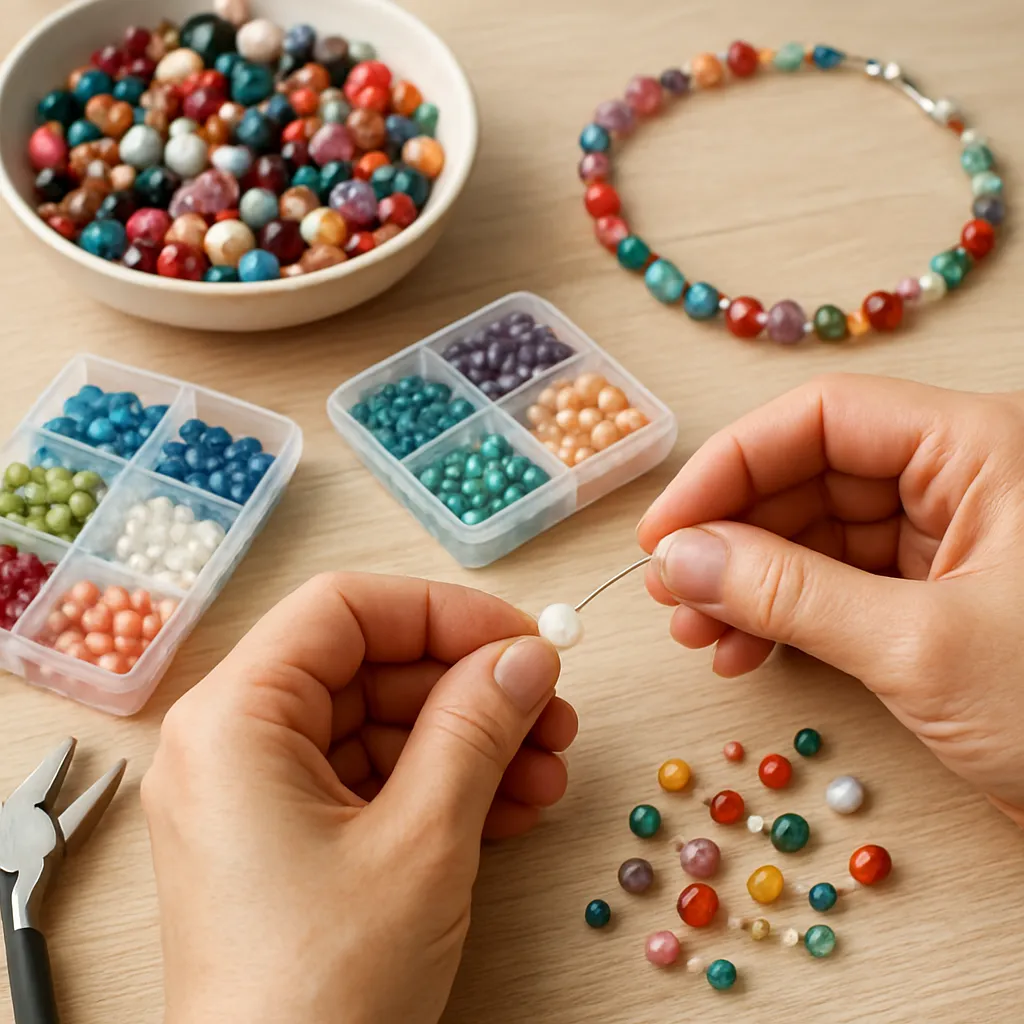
Bead mixes turn a small pile of color and shape into wearable stories. They invite improvisation, soften perfectionism, and transform limited resources into distinctive pieces. Unlike buying beads by the strand, mixes encourage you to listen—really listen—to what materials want to become. Whether you aim for an airy necklace that drifts like smoke or a bold cuff that feels architectural, bead mixes offer a dynamic way to design, practice techniques, and refine your eye for proportion without overthinking. This guide explores the principles, tools, workflows, and projects that will help you craft jewelry with confidence and delight, from your first stringing attempt to advanced, gallery-worthy builds.
Why bead mixes inspire imaginative jewelry
A curated bead mix is a microcosm of design: different sizes, finishes, and materials living together. This diversity sparks ideas you might not reach if you shop in purified palettes. It also teaches you to reconcile differences—small with large, matte with glossy, translucent with opaque—so the piece feels intentional rather than accidental.
In practical terms, mixes help you:
- Prototype quickly, discovering unexpected combinations that formal planning might miss.
- Develop your sense of proportion and rhythm through repeated, low-stakes experiments.
- Use up leftovers, reduce waste, and create one-of-a-kind results that no one can replicate exactly.
- Learn problem-solving: working with irregular hole sizes, weight disparities, and finish clashes improves your adaptability.
The most compelling designs harness three forces: color, scale, and movement. With bead mixes, these variables are baked in. You get immediate access to a library of options, which you can shape into harmony with a few dependable design habits and simple finishing skills.
Understanding the anatomy of a bead mix
Not all mixes are equal. High-quality mixes feel thoughtful, like a restaurant tasting menu: surprising yet cohesive. Evaluate any mix along these lines:
- Materials: glass (pressed, lampwork, Czech fire-polished), gemstone (agate, jasper, quartz), ceramic, wood, metal, shell, resin. Each impacts weight, polish, and long-term wear.
- Shapes: rounds, ovals, bicones, cubes, daggers, drops, chips, faceted rondelles, bugles, seeds. Form dictates how beads seat against one another and how light reflects.
- Finishes: matte, lustre, AB (iridescent), Picasso, etched, electroplated. Pair like with like for calm or mix vigorously for energy.
- Hole consistency: wide holes glide on thicker cords; tiny holes require fine wire or thread. Inconsistent holes can be a design asset if used with intention.
- Weight balance: stone and metal cluster heavily; resin and wood are featherlight. Balance the distribution so a necklace hangs true.
Train your fingers as much as your eyes. Rub beads lightly on a bead mat: does grit shed (poor finish) or does the surface feel silky (quality)? Hold a few in your palm. Temperature drop (stone and glass) vs. warmth (wood) hints at mix composition and informs wearability for different seasons.
Tools, threads, and findings
Basic tools for mix-based jewelry:
- Round-nose, chain-nose, and flat-nose pliers for loops, bends, and firm holds.
- Flush cutters for clean wire cuts; keep a second, older pair for steel memory wire.
- Crimping pliers or a crimp cover set for professional stringing finishes.
- Awl or reamer to clear bead holes and untangle knots.
- Bead mat or flocked board to prevent rollaway and visualize layouts.
- Calipers or a small ruler to measure beads precisely in millimeters.
- Needles: size 10–12 beading needles for seed beads; big-eye needles for thicker threads.
Thread and wire choices shape both aesthetics and longevity:
- Beading wire (7–49 strands, nylon-coated): ideal for mixed-material necklaces and bracelets, especially with glass or stone. Choose 0.014–0.019 in for most mixes.
- Silk: classic drape for pearls and smooth glass; double-strand for strength; knot between beads to protect against abrasion.
- Nylon beading threads (Nymo, KO, FireLine): excellent for weaving or light stringing, with high abrasion resistance (FireLine especially).
- Elastic cord (0.5–0.8 mm): convenient bracelets; pre-stretch and glue the surgeon’s knot sparingly.
- Jewelry wire (20–26 gauge): for links, wrapped loops, charms, and structure. Softer tempers shape easily; harder tempers hold angles crisply.
Findings are the architecture that keeps your ideas wearable:
- Clasps: lobster, toggle, magnetic (mind pacemakers and small children), hook-and-eye.
- Jump rings and split rings: connectors; soldered rings for high-stress points.
- Crimps and wire guardians: the cornerstone of secure finishing.
- Headpins/eyepins: create dangles and quick links from odd singles in your mix.
- Ear wires and posts: choose hypoallergenic metals for sensitive ears.
Designing with mixes: from chaos to cohesion
The secret to successful projects from a random assortment is intention. Before stringing, articulate a feeling word: airy, grounded, luminous, rustic, geometric. That single word guides your curation as you edit the mix. Keep these principles close:
- Hierarchy: decide on a focal. One element—by size, finish, or rarity—anchors the narrative.
- Repetition with variation: repeat a motif (e.g., round-glass, spacer, chip) to establish rhythm; vary color or size to keep it alive.
- Scale management: cluster smalls for presence; space larges for breathability.
- Negative space: small gaps, seed beads, or chain sections let the eye rest.
- Unity: one unifying metal tone or a consistent bead family threads disparate parts together.
Think like a collage artist. Draft your composition on a bead board in zones: left shoulder, center front, right shoulder. Ask: where does the eye enter and exit? Use light/dark contrast to create movement and draw attention to key transitions. If the mix is saturated, inject a few neutrals; if it’s muted, slip in a metallic glint.
Texture literally and visually matters. Matte next to gloss, facet beside smooth—these pairings create tactile delight. Frame extremes with intermediates so they feel blended. Try a “texture ladder”: matte seed → satin-finished round → lightly faceted bicone → high-shine metal spacer. This scaffolds the leap from quiet to bright, growing your sensitivity to texture in every piece.
Finally, test for balance. Suspend a half-strung necklace by the center bead and watch how it hangs. If it twists, correct with counterweight (a slightly heavier bead or metal accent) on the opposite side. In bracelets, distribute any heavy components away from the wrist’s underside to avoid constant rotation and to protect ergonomics in daily wear.
Sorting strategies without killing the magic
Full sorting flattens spontaneity; zero sorting breeds chaos. Strike a middle path:
- Quick triage: separate by size groups (tiny, small, medium, focal) and by finish (matte, glossy, metallic). Leave color sorting loose for surprise pairings.
- Parking lots: keep ambiguous beads in a small tray to audition them periodically without cluttering your main layout.
- Anchor bowls: place a few “unifiers” (matching metal spacers, seed beads) in easy reach to resolve arguments between clashing elements.
- Rule of threes: when in doubt, cluster odd numbers (3, 5) of smalls near a large bead for instant harmony.
Essential techniques every bead-mix jeweler should know
Professional stringing with crimps
1) Measure and cut beading wire 6–8 inches longer than your target length. 2) Slide on a crimp tube, a wire guardian, and half your clasp. 3) Feed the wire back through the crimp and a few beads. 4) Crimp with a proper crimping tool (create the “C,” then fold to “O”), or use a well-sized crimp tube and flat-nose pliers for a neat squash. 5) Hide with a crimp cover if desired. 6) After stringing, repeat on the other end, leaving a whisper of slack for drape.
Silk knotting for elegance and protection
Cut ample silk, pre-stretch gently, and thread your needle. After the first bead, tie an overhand knot and seat it using tweezers tight against the bead. Repeat: bead, knot, bead, knot. Knots prevent abrasion and add luxurious spacing. Finish with French wire (bullion) or wire guardians to protect silk at clasp points.
Wrapped-loop linking for modular builds
Cut 22–24 gauge wire. String a bead, form a 90-degree bend above it, wrap a loop (two to three turns), trim, and tuck the tail. This method transforms singles and odd pairs into consistent links that chain gracefully. It also rescues beads with tiny or fragile holes, isolating stress to the wire rather than the bead.
Bead weaving to stretch smalls
Use seed beads from your mix to build volume: peyote stitch for supple sheets, right-angle weave for structural grids, herringbone for sleek columns. Accent rows with standout mix beads as punctuation. Weaving interludes inside a strung necklace adds complexity without overwhelming the design.
Four projects to master with one mix
1. Gradient bracelet with hidden clasp
Goal: teach value transition and restraint.
- Lay out beads from darkest to lightest (or vice versa). Insert micro-spacers between intensity jumps.
- String on 0.018 in beading wire. Test on a mandrel for fit, allowing 1/2 inch for the clasp assembly.
- Finish with wire guardians and a low-profile magnetic clasp. Securely crimp and test pull strength.
- Tip: If your mix lacks true lights or darks, fake it by clustering three small mid-tones on one side of a large bead to imply a deeper shadow.
2. Asymmetrical pendant necklace
Goal: practice controlled unpredictability and a clear focal.
- Select one dramatic bead as center. Build ladders of growing/smaller beads on each side—but not equally.
- Add a short chain segment on one side to lighten that shoulder; balance with a heavier stone cluster on the other.
- Terminate with a toggle clasp 1–2 inches off-center to underscore the asymmetry without compromising comfort.
- Tip: Mirror only color echoes, not shape; the tension between mirrored hue and mismatched form adds energy.
3. Cluster earrings from leftovers
Goal: turn fragments into volume.
- Make 10–14 wrapped-loop drops on headpins, mixing shapes but keeping a tight palette.
- Hang on a small ring beneath an ear wire, shortest to longest to create a taper.
- Finish with a single sparkling accent at the tip for emphasis.
- Tip: Keep each earring’s total weight under 6–7 grams for comfort and ergonomics.
4. Woven cuff with seed-bead backbone
Goal: integrate stringing and weaving.
- Weave a peyote or herringbone base 6–8 beads wide, long enough for your wrist.
- Stitch in larger mix beads as studs across the surface, spacing irregularly for organic texture.
- Back with ultrasuede or add a button-and-loop closure for softness and reliability.
- Tip: Color the thread to match the base so stitches disappear, letting structure support the stars.
Measurements, math, and fit
Accurate sizing separates amateur from pro. Consider these reference points:
- Common bead sizes: seed (11/0 ≈ 2.1 mm), 4 mm, 6 mm, 8 mm, 10 mm. Mixes often include irregulars—measure rather than guess.
- Necklace lengths: choker 14–16 in, princess 18 in, matinee 20–24 in, opera 28–36 in. Add 1/2–1 inch for bulk if using many large beads.
- Bracelets: wrist circumference + 0.5 in for snug, + 0.75–1 in for comfort on beading wire; elastic requires testing because beads eat stretch.
Formula for target stringing length: finished length − clasp assembly length − allowance for drape. Drape allowance varies with bead size; for 8–10 mm beads across a full strand, subtract another 3/16–1/4 in because large beads “steal” interior length on curves.
For earrings, mind proportional drop: jawline-length drops flatter most faces. Use paper or a ruler against your ear to visualize; sketch before committing to expensive components.
Finishing like a pro
Make quality visible and invisible. Visible: neat crimps, aligned loops, clean cuts. Invisible: secure terminations that withstand daily life. Best practices:
- Trim wire tails inside the first three beads after a crimp; never leave sharp ends near skin.
- Work-harden loops by lightly tapping with a nylon hammer or by gentle wiggles to resist deformation.
- Use appropriate adhesives sparingly: a micro-dot of gel cyanoacrylate on elastic knots, epoxy for porous end caps. Wipe excess immediately.
- Polish metals before packaging; remove factory oils from beads with a soft cloth.
- Proof-test: hang a finished necklace by the clasp and add a small weight for 30 seconds. If it creaks or stretches oddly, reassess crimps and stress points.
Troubleshooting and rescue tactics
Common issues—and how to pivot:
- Twisting necklace: weight imbalance; insert a denser accent opposite the heaviest section or replace a chain segment with lighter links.
- Clasp flipping to the front: too short or too heavy in the back; add an extender chain or lighten the rear third with smaller beads.
- Wire kinking near crimp: left no slack; restrand the last inch, leaving 1–2 mm play for movement.
- Thread fraying in weaving: switch to a more abrasion-resistant thread (e.g., FireLine), wax lightly, and avoid sharp-edged beads or ream them.
- Mix looks muddy: insert a repeating “spark” (tiny metal spacer or lined seed bead) every 3–5 units to reintroduce rhythm and light.
Salvage tip: If a plated metal component tarnishes unattractively, embrace or edit. You can accelerate or mute patina with controlled methods, or replace the piece and re-house the beadwork on fresh findings. Keep spare clasps and jump rings on hand for fast rescues.
Style, story, and sustainability
Bead mixes are ideal for storytelling. Curate by theme: shoreline blues and driftwood browns for a coastal tale; smoky purples and hematite for a night-sky mood; warm ceramics and brass for a folkloric vibe. Pair found objects (keys, sea glass, stamped charms) with the mix to ground your narrative in place and memory.
For sustainable practice:
- Upcycle old necklaces by harvesting beads into new mixes; combine with contemporary findings for better wear.
- Favor quality over quantity: better components extend durability and reduce breakage waste.
- Choose skin-friendly metals (stainless steel, titanium, niobium, sterling) and avoid allergenic coatings when possible.
- Mind sourcing: gemstone authenticity, recycled metals, and fair labor mark a responsible studio.
Practice regimen: train your eye and hand
Consistency beats intensity. Build a routine that cultivates your voice:
- Ten-minute drills: each morning, arrange a three-bead motif expressing a feeling; photograph and archive for future reference.
- Limited palette challenges: restrict to five beads from a mix plus one metal; force ingenuity in spacing and sequence.
- Reverse builds: design from clasp to focal; this flips assumptions about weight and rhythm.
- Texture diaries: document pairings that sing—matte jade beside brushed brass, etched glass beside satin acrylic—to accelerate instinct.
Selling and pricing handmade bead-mix jewelry
If you sell, clarity and trust matter as much as design. Write concise material descriptions and care cards. Shoot crisp photos on neutral backgrounds; include a scale reference (a ruler or modeled shot). For pricing, tally materials (including findings), add a realistic hourly rate, overhead (tools, packaging, platform fees), and a profit margin that sustains the business.
Packaging should protect and educate: anti-tarnish paper for silver, earring backs secured, bracelet lengths labeled precisely. Include micro-polish cloths for metal. A short origin note about the bead mix—provenance, mood, or the “happy accidents” you kept—invites the buyer into the piece’s story and highlights your craftsmanship.
Care, storage, and longevity
Well-made jewelry deserves mindful care. Advise clients (and remind yourself): last on, first off—avoid perfumes and lotions near porous beads. Store pieces flat or hung to prevent kinks, in soft pouches or compartments to keep finishes pristine. Use silica gel or anti-tarnish strips for metals. Schedule seasonal inspections; relink or re-crimp before minor wear becomes failure.
Advanced variations with bead mixes
Once you’re fluent with stringing and loops, explore sculptural builds: layered chains with bead stations, ladder wraps for boho bracelets, mixed-media cords (leather, silk ribbon) for tactile depth. Try “color blocking” by grouping portions of the mix into micro-palettes—earth, ember, ash—and cycling them across a necklace like chapters.
For structure, wire armatures let heavy or odd-shaped beads sit proudly without torqueing the strand. Build a minimal wire frame and lash beads on with fine wire or strong thread, strategically locating pressure points so stress flows through metal, not fragile glass.
Common mistakes to avoid
- Overloading with too many heroes: pick one or two standout beads; let the rest support.
- Ignoring skin and wardrobe: choose finishes that won’t snag knitwear; avoid rough edges against delicate fabrics.
- Mismatch between technique and bead: silk and rough stone can grind; move to nylon or coated wire when needed.
- Skipping mockups: always stage a version on your mat or board; photograph and step away before committing.
- Clasp thought of last: design the clasp into the piece from the start so transitions feel natural.
A field guide to visual decisions
When stuck, conduct a quick audit:
- Light/dark: do you have a clear path for the eye? If it’s all mid-tone, inject sparkle or deep shadow.
- Scale: do large beads crowd? Create breathing room with seeds or tiny rondelles.
- Rhythm: are intervals predictable to the point of boredom? Break the pattern deliberately.
- Edges: do start and finish areas honor the clasp with intention? Frame them with subtle echoes of the center.
Above all, make deliberate choices. It’s not about “using up” a mix—it’s about listening to it. Ask, what does this collection want to say?
Glossary of power words for bead-mix designers
Use these concepts as checkpoints during design:
- balance: the felt equilibrium of weight, color, and visual pull.
- composition: the arrangement and relationship of elements in space.
- contrast: differences in value, finish, scale, or shape to create focus.
- texture: surface quality, from matte to high gloss, and how it’s sequenced.
- focal: the element that commands attention and tells the story.
Final thoughts
Crafting jewelry with bead mixes is a masterclass in choice, sensitivity, and play. You learn to weigh possibilities, to simplify without impoverishing, and to let materials speak. Equip yourself with sound technique and a few trustworthy heuristics, and you’ll unlock endless variations—each piece a small collaboration between your eye and a constellation of beads. Keep practicing; let your hands remember. Over time, your voice will emerge as surely as a favorite chord, and your work will carry the quiet authority of thoughtful design, reliable build quality, and long-wearing beauty.
