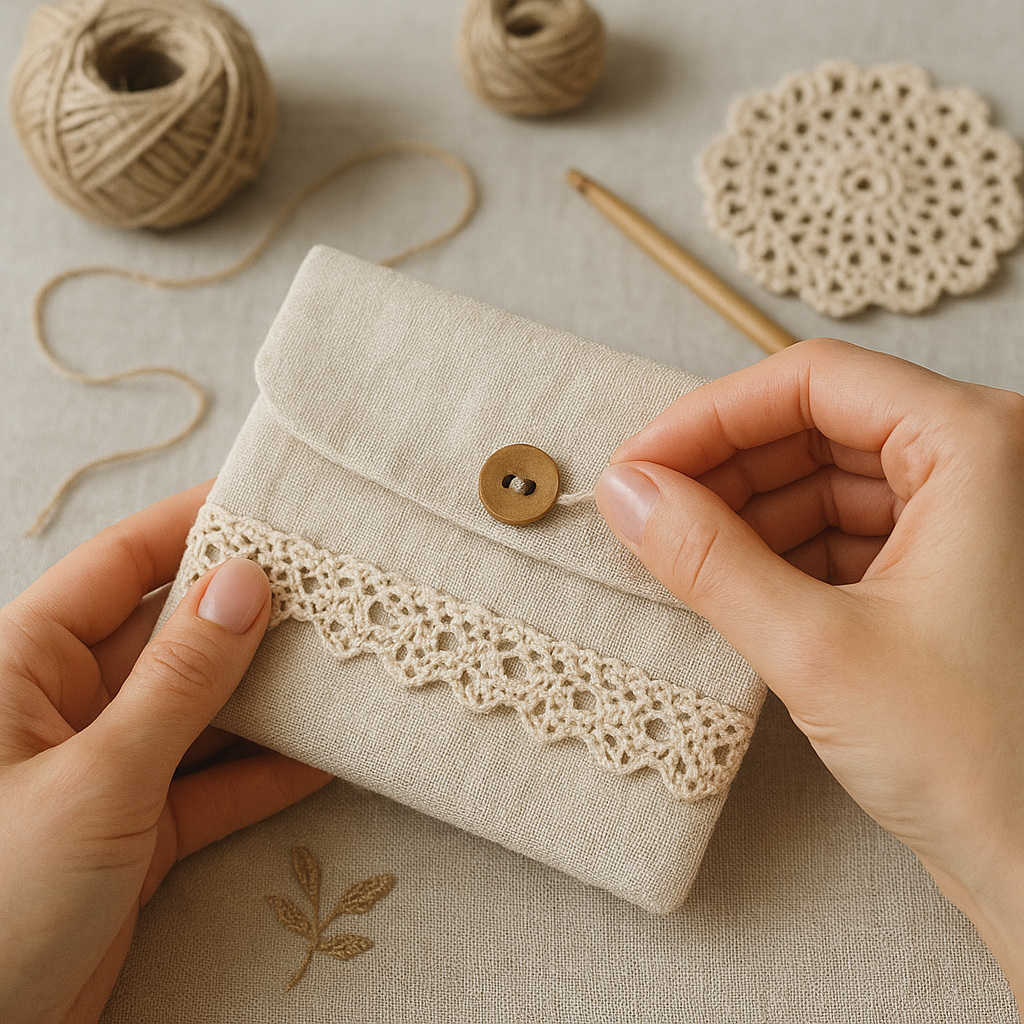
Simple designs are the quiet workhorses of handicraft. They let materials breathe, keep the maker’s hand visible, and age with dignity. Yet plain forms can sometimes look unfinished or generic. The remedy is not to add complexity but to tune the small places where hand, tool, and material meet. A neat edge, a crisp radius, a line of hand stitching, a subtle shift in sheen—these are the kinds of details that lift modest objects into pieces worth keeping. The following guide explores how to identify those leverage points, how to execute them cleanly, and how to build a personal vocabulary of fine touches that amplifies purpose and beauty without drowning out simplicity.
Why small details matter
In handicraft, the human eye loves order punctuated by nuance. We notice repetition, spacing, and micro-transitions, often without realizing it. The gap between ordinary and exceptional is the sum of dozens of tiny choices: thread thickness, stitch distance, edge radius, grain direction, and how light slides across a finish. These micro-decisions signal craftsmanship through restraint. They also serve performance. A rounded wooden rim feels better on the lip; a burnished leather edge resists fray; a pressed seam lies flat forever. The true impact of detail is revealed over time, when the object still looks intentional after a hundred uses.
Small details are also story carriers. A contrasting bar tack says this handle is reinforced. A thumb divot on a mug says a potter thought about how your fingers land. A line of visible mending honors wear. These choices connect the maker’s sensibility with the user’s daily gestures, creating emotional durability to match physical durability.
The mindset: from macro to micro
Start with the essential function and silhouette. Then zoom in and ask where the hand touches, where stress accumulates, where light pools, and where edges meet. Those are your high-leverage zones. Apply precision there and leave other areas quiet. This asymmetry focuses attention without clutter. As you plan, sketch both the outline and the important inches: the 3 mm reveal around a pocket, the 1.5 mm edge paint bead on leather, the 6–8 SPI (stitches per inch) along a structural seam, the 2 mm roundover on a wooden tray that softens the transition from palm to surface.
Materials and their micro-behaviors
Materials reveal themselves most clearly at the edges and joins. Learning those micro-behaviors lets you choose the right detail at the right spot.
Textiles and yarn
Fabric edges ask to be controlled. Wovens respond well to turned and bound finishes, French seams, and topstitching that locks the structure. Knits prefer finishes that stretch and recover: banding, coverstitch, or i-cord edges. For small projects, use a baby hem (rolled 3 mm twice) to keep lines airy. Press early, press often; steam sets memory into fibers, which supports clean geometry later.
Leather
Vegetable-tanned leather rewards skiving and burnishing. Thinning a fold line by 30–50% reduces bulk without sacrificing strength. Edge bevel, dye, then burnish with water or gum, finishing with wax for a glassy seal. Choose thread diameter to suit scale: 0.45–0.6 mm for wallets, 0.8–1.0 mm for bags. A tidy crease line set 2–3 mm from the edge frames the piece like a mat around a painting.
Wood
End grain drinks finish and appears darker; long grain can look streaky if sanded unevenly. Break edges with consistent chamfers or roundovers. A 1–2 mm chamfer removes fragility while keeping crispness; larger chamfers communicate robustness. Grain direction should guide your details: carve with the grain for clean arrises; adjust profiles near knots to avoid tear-out.
Clay and ceramic
Small rims, foot rings, and handle transitions make or break usability. Compress rims on the wheel to reduce chipping. Carve a foot ring to lift the form visually and keep glaze off the table. Where handle meets body, blend and refine the fillet so it feels intentional and avoids stress risers during firing.
Paper and bookbinding
Paper announces quality through accuracy. Square cuts, even kerfs, and true folds tell the story. A 1–2 mm board overhang on a casebound book protects the text block, while cloth headbands add a dignified finish. Consider edge coloring or deckle effects to add tactility without loud graphics.
Metal accents
Hardware scale and finish matter. Brushed or matte fasteners sit quietly in minimal designs; polished parts make a small statement. Keep spacing rhythmic; small misalignments are magnified by reflective surfaces.
Edges: the frame of a simple design
An object’s edge is the final line your eye reads. Finish it with intention.
- Textile edges: bias binding, narrow hems, Hong Kong seams, rolled hems, serged edges tucked under a topstitch.
- Leather edges: bevel, dye, burnish, edge-paint; or fold-and-stitch for a softer profile.
- Wooden edges: chamfer, roundover, knife arris, or a shallow cove to catch light.
- Ceramic edges: compressed rim, subtle flare to meet lips, defined foot to lift the vessel.
- Paper edges: corner rounding, edge painting, or a revealed layer in laminated stock.
Consistency is the soul of small work. Match edge treatments across the piece. If a tote bag strap has a 1.5 mm beveled and painted edge, echo that same radius on the bag’s mouth or inner pocket. Such repetition creates visual rhythm and quietly ties elements together.
Stitches, joins, and the music of spacing
Spacing choices telegraph intent. In hand sewing leather, 3.0–3.38 mm pricking irons yield a refined line on small goods; 4.0 mm feels modern and bold on bags. Keep backstitches invisible at pivots by planning stitch timing so corners land between holes. In textiles, topstitch 2–3 mm from an edge for crispness; double rows at 2 and 6 mm add depth and strength. In woodworking, visible joinery—dovetails, box joints, wedged tenons—acts as both structure and ornament, but keep proportions delicate enough to match the scale of the object.
Surface techniques add gentle character when used sparingly. A single Sashiko column reinforcing a stress zone, a few seed stitches along a hem, or a corded piping that frames a cushion can carry the whole composition. Let texture handle the ornament while the form stays calm.
Color, sheen, and value: micro-accents over loud statements
Color is a powerful lever that becomes more refined when rationed. Consider a 60–30–10 distribution: dominant natural material, secondary neutral, and a 10% accent. A single contrasting bartack, a line of edge paint, or a ceramic glaze break at a rim can be all you need. Value contrast—light against dark, matte against gloss—can separate planes more gently than saturated color. Judicious contrast reveals form without noise, especially in minimal designs.
Sheen control is a secret weapon. Pairing matte leather with a satin thread, or oil-finished wood against a high-gloss metal rivet, draws the eye where you want it. Experiment with micro-textures—pebbled vs. smooth leather, twill vs. plain weave, sandblasted vs. polished wood—so the hand feels invited before the eye fully registers the detail.
Scale and proportion in small decisions
Even on simple objects, small mis-scales can feel off. A button that’s 2 mm too large can dominate a neckline; a handle drop that’s 10 mm too short turns a tote into a nuisance. Study proportion by prototyping with paper or masking tape. Mark stitch lines, hardware positions, and edge widths at full size, then step back. Your eye will tell you what the ruler misses.
Try favorite ratios as starting points: a 1:2 relationship between edge reveal and topstitch distance; a 1:3 relationship between strap width and bag mouth seam allowance. Then deviate toward what suits the material and use-case.
Functional micro-details that quietly improve use
- Gussets and darts: add volume without visual weight. A 20 mm gusset on a pouch might be enough to keep corners crisp and capacity useful.
- Reinforcement patches: discrete leather or fabric patches under stress points prevent blowouts and look tidy if mirrored left and right.
- Closures: swap a chunky magnet for a slim bar magnet inside a leather welt; use keyhole buttonholes on dense cloth; place zippers 3–5 mm away from corners for smoother turns.
- Handles and grips: a shallow thumb divot on wood, a rolled leather edge on straps, a subtle ceramic fin at the back of a mug handle for comfort and leverage. Prioritize ergonomics without breaking the minimal silhouette.
- Footing: add felt dots, silicone pads, or a carved foot ring to preserve surfaces and add shadow line separation.
Finishing: the last 5% that changes everything
Finishing turns clean work into resonant work. In textiles, pressing with a clapper sharpens seams and reduces bulk. On leather, beeswax and friction lock fibers at the edge and deepen tone. Wood rewards patient sanding up to 220–320 grit, a light water-raise, then final passes to control whiskers. Oil-wax blends bring out grain and build a subtle patina over time. Ceramics benefit from smoothing the foot and polishing unglazed surfaces with fine abrasive pads. These acts do not shout; they simply rhyme with the object’s intent and lengthen its longevity.
Case studies across crafts
The quietly elevated tote
Base design: a plain rectangular tote with two straps. Upgrades: edge-paint the straps with a 1.5 mm bead, add a single brass rivet per strap hidden from the front with a backer washer, stitch a subtle 2 mm frame line around the bag mouth, and include a key leash in matching leather. Result: the same simple shape now has focal points at the hand and opening; wear areas are reinforced; the bag reads intentional, not basic.
The scarf with thoughtful selvedges
Base design: a stockinette scarf. Upgrades: add a slipped-stitch selvedge or i-cord edge for stability, block to measurements so edges lie true, and weave a single contrast thread into the final row as a maker’s mark. Result: straight edges resist curling; a thin line of hue anchors the piece; the touch is improved without pattern noise.
The wooden stool that invites touch
Base design: three-legged stool, round seat. Upgrades: carve a shallow dish in the seat for comfort, break edges with a 1.5 mm chamfer, and use wedged through tenons with wedges in a slightly darker wood. Result: stronger joinery and a tactile seat; the joinery doubles as gentle ornament and reinforces the piece’s structural honesty.
The mug with a kinder rim
Base design: cylinder mug with a pulled handle. Upgrades: compress and round the rim lightly, undercut the foot to create a clean shadow, and add a thumb rest where the handle meets the body. Result: smoother drinking experience, better table contact, and a place for the hand to settle.
The stitched notebook that stays flat
Base design: simple paper notebook. Upgrades: choose a 1–2 mm board overhang, sew signatures with a kettle stitch for lay-flat behavior, add cloth headbands, and round corners to 4 mm radius. Result: the book opens well, wears slower, and looks composed from every angle.
Practical measurement guide for small upgrades
- Topstitching textiles: 2–3 mm from the edge for crispness; double rows at 2 and 6 mm for depth.
- Leather stitching: 6–8 SPI on small goods; 5–6 SPI on larger bags. Keep distance from edge 2.5–3.5 mm; crease line at 2–3 mm.
- Rivets: center 6–10 mm from edge depending on leather thickness; always use backer washers on soft material.
- Edge finishing on wood: 1–2 mm chamfer or roundover for small objects; 3–4 mm for furniture-scale pieces.
- Paper overhang: 1–2 mm beyond text block; corner radius 3–5 mm for pocket notebooks.
- Ceramic foot: 2–4 mm high, outside diameter 3–5 mm smaller than body to create a pleasing shadow.
- Piping: 3–5 mm cord for cushions; match seam allowance so cord sits flush without puckers.
- Binding width: bias binding finished width 8–12 mm for bags; 6–8 mm for garments and small accessories.
Mini tutorials: five tiny upgrades
1) French binding on a coaster
- Cut bias strips 35 mm wide.
- Join strips on the bias; press seams open.
- Align raw edges to coaster edge; stitch at 10 mm SA.
- Wrap to back; stitch-in-the-ditch from the front. Result: tidy, durable edge that flatters curves.
2) Corded piping for a cushion
- Cut bias strips 40 mm wide; encase 4 mm cord.
- Baste piping to front panel, clipping curves as needed.
- Sew back panel on with zipper foot, stitching directly over basting line.
- Turn and steam. The slim shadow line frames the form.
3) Burnished leather edge
- Bevel both sides with edge beveler.
- Dye edge if desired; allow to dry.
- Moisten lightly with water or gum; rub with canvas or wood burnisher until glossy.
- Seal with wax and buff. The edge now resists wear and reads as intentional.
4) Hand-stitched buttonhole
- Mark slit; stabilize with tight zigzag or small patch on the back.
- Cut carefully; whipstitch edges with buttonhole stitch using strong thread.
- Add a bar tack at each end. The result beats machine-made buttonholes on dense fabrics.
5) Thumb rest on a wooden spoon
- With a gouge, carve a shallow dimple where the thumb naturally sits.
- Refine with a card scraper; sand through 220 grit.
- Oil and buff. The small contour dramatically improves grip.
Texture that serves, not shouts
Texture should invite touch and reinforce structure. Use quilting to stabilize bias-prone areas, slub yarns to break up flat planes, or a light cross-hatch with a checkering file on tool handles to improve grip. In leather, choose pebbled or saffiano textures for abrasion zones; in wood, leave a faint hand-planed surface on undersides to communicate the maker’s touch. Aim for a tactile hierarchy that enriches form without stealing attention from the whole.
This is where the word texture earns its keep. A single material can carry multiple feelings when you vary micro-topography. Keep transitions clear and purposeful, as if you are scoring the piece with sentences the fingers can read.
Developing a vocabulary of details
Collect swatches and test pieces. Make an edge board with labeled treatments: baby hem, bound seam, painted leather edge, roundover sizes, finish samples. Photograph these on their objects to see which combinations harmonize. Reduce the menu to a curated set you can execute perfectly. Consistency builds brand and confidence, and it frees your mind to innovate within known tools.
As you refine, listen for the cohesion between form and detail. Your personal signature might be a quiet 2 mm reveal line, or a specific thread sheen against matte fabric, or wedged joinery in a contrasting wood that echoes the piece’s silhouette. Repeat a few motifs across projects so your audience recognizes your hand.
Process discipline: doing small things well, repeatedly
- Template and jig making: a corner-radius template in 2, 3, 4, 6 mm; a leather strap jig; a seam-allowance guide for topstitching. Jigs produce consistency you can feel.
- Marking: use fine pencils, silver gel pens on dark leather, tailor’s chalk sharpened to a blade, or scribing awls on wood. Crisp marks equal crisp lines.
- Pressing and setting: hammer seams over a clapper for textiles; set leather seams with a bone folder; pre-bend wood strips with steam when needed.
- Quality checks: inspect under raking light to spot unevenness; run fingertips along edges to find proud spots; measure critical distances in pairs for symmetry.
Troubleshooting common detail issues
- Wavy topstitching: slow down, use edge guides, lengthen stitch slightly, and press before stitching to lock fabric shape.
- Uneven leather burnish: keep moisture consistent, work in stages (dye, bevel, burnish, wax), and sand lightly between passes with 600–1000 grit.
- Blotchy wood finish: raise the grain and resand, flood finish evenly, and wipe in long strokes with the grain. Avoid skipping grits.
- Paper fray at folds: score deeply with a bone folder and work-harden the crease; use grain-correct paper to minimize cracking.
- Ceramic rim chips: compress and round rims; avoid over-thinning; glaze-break the rim so the clay body can show and act as a durable edge.
The role of restraint
It is tempting to add detail upon detail. Resist it. A simple piece thrives on an economy of moves. Choose one or two hero details and support them. This discipline echoes classical notions of balance where one accent can carry the composition. When in doubt, remove a flourish and strengthen the fundamentals: straighter lines, tighter corners, safer edges. The clarity that follows is often the hallmark of mature work.
Sustainability through small choices
Scraps and offcuts can become meaningful accents: leather washers under rivets, pieced bindings, or inlays that repair rather than hide damage. Visible mending with thoughtful color and stitch becomes narrative as much as fix. Finish choices matter too; oil-wax blends that can be renewed raise an object’s longevity without heavy sanding. Design for disassembly where possible so parts can be repaired, not replaced.
Pricing and communicating detail value
Clients may not know why a piece feels better, only that it does. Educate with photos of edges, stitches, and process steps. Brief captions that note stitch counts, hand-finishing, and material pairings help people connect price to value. Keep language plain; let the object do most of the talking. A little transparency about time spent on edges and finishing builds trust and highlights your commitment to precision and craftsmanship without boastfulness.
Building a personal canon of simplicity
Over time, your canon might distill to a handful of moves: a favorite edge treatment, a repeatable stitch spacing, a go-to chamfer size, and a color palette that respects material truth. When these are dialed in, you can iterate on form and function with confidence. The result is not sameness, but harmony. Each new piece sings in the same key while exploring different melodies of material and use.
Field notes: tiny choices with outsized effects
- Switching from polyester to bonded nylon thread in leather goods can transform feel and wear.
- Moving a zipper stop 8 mm inward avoids stressed corners and gives cleaner turning.
- Adding a 1 mm reveal between inlaid wood species creates a shadow line that separates tones cleanly.
- Using a clapper after steaming a seam locks the fold sharper than pressing alone.
- Chamfering only the underside of a tabletop preserves a thin visual edge without sacrificing strength.
- Glaze breaks at edges in ceramics read as intentional design, not glazing error, when repeated consistently.
The emotional register of small details
Well-placed details create confidence in the object. Hands relax around a carefully profiled handle; eyes trace a seam that runs truly; time reveals that wear patterns look better, not worse. This is design that ages well. The patinated shine on an often-touched leather tab, the smoothed wooden rim after countless breakfasts, the softened cloth at the fold of a pocket—all of it writes a record of use that deepens attachment. That is the quiet promise of small details in simple designs.
Putting it all together
Choose a simple project you already know: a pouch, a board, a mug, a notebook. Identify three leverage points: an edge, a join, a touch zone. Assign one detail to each: a specific stitch spacing, an edge treatment, a comfort carve. Prototype, then revise. Strip out any decorative flourishes added to compensate for poor fundamentals; rebuild the fundamentals instead. Repeat until the object looks inevitable, as if it could not have been made any other way. That is the essence of simplicity refined through detail.
In the end, let your best tools be restraint, coherence, and a practiced hand. With a keen eye for proportion, belief in the power of contrast, sensitivity to texture, and faithful attention to the object’s silhouette, you will discover how a few careful moves can transform the plain into the quietly extraordinary. Treat edges like frames, stitches like sentences, finishes like voices, and let the whole composition hum with enduring rhythm. The reward is not only beauty, but a felt sense of rightness in use—a union of utility and grace that defines thoughtful handicraft.
