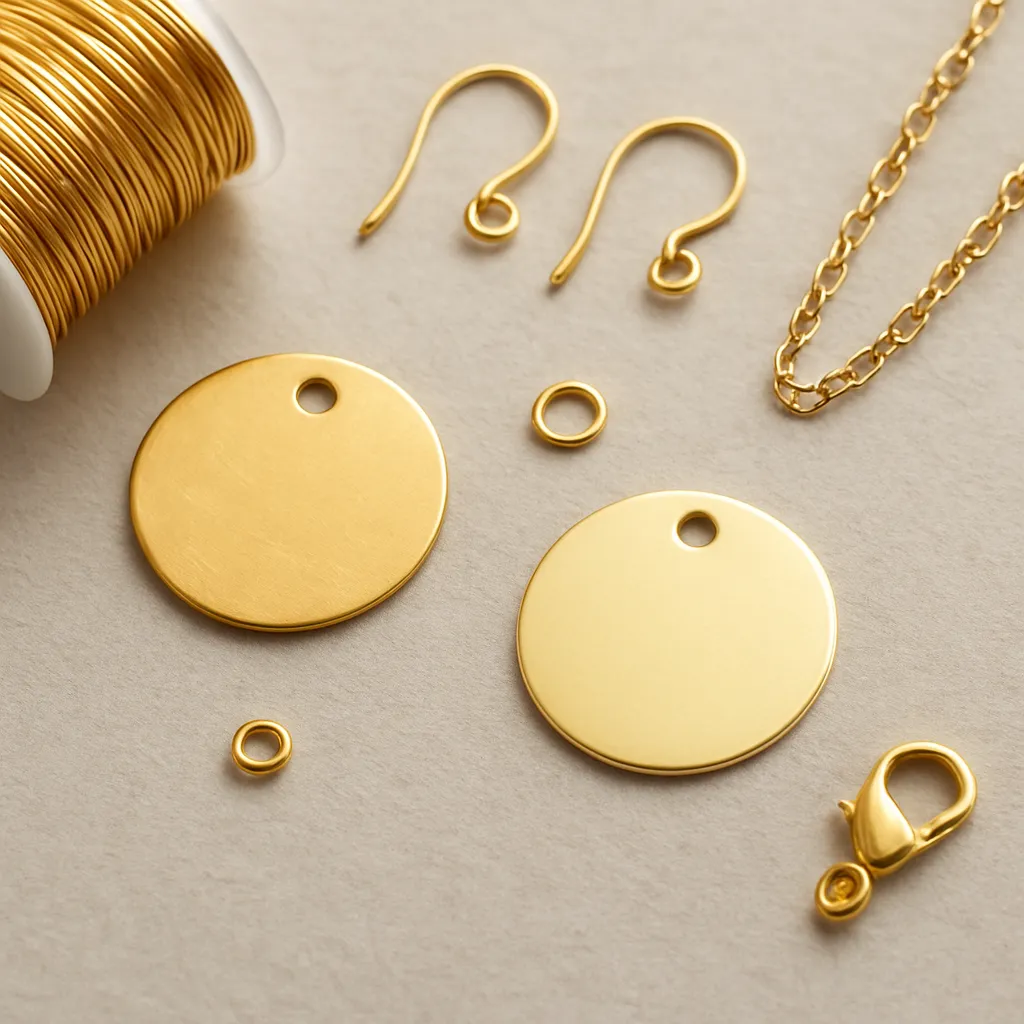
Gold tone is more than a color; it is a promise of warmth, heritage, and value that makers bring to life through their hands. For artisans deciding between gold-filled and gold-plated materials, the choice determines how a piece will wear, how it will be priced, how it will be marketed, and how customers will remember it after months or years of daily use. This guide goes far beyond quick definitions to equip crafters with practical, bench-tested insight—from thickness and standards to joining methods, finishing, and customer aftercare—so you can select and work with the right metal for each design.
What Gold-Filled Really Means
Gold-filled is not a simple coating. It is a layered composite made by pressure-bonding a sheet of gold alloy onto a brass (sometimes copper) core using heat and mechanical force. Unlike electroplating, the gold layer is physically welded to the base, producing an exceptionally robust cladding that stands up to years of friction and skin contact. In the United States, the Federal Trade Commission requires that items labeled gold-filled carry a minimum of 5% gold by weight for the total item—often stamped as 1/20. The gold layer itself is an alloy expressed by its karat (for example 14K GF or 12K GF), which dictates color and hardness.
Because the gold content is determined by weight, not thickness, a small, dense component can meet the gold-filled standard with a thinner layer than a large, lightweight piece. In practice, typical sheet and wire used in handicraft jewelry have substantial cladding thicknesses—frequently in the range that withstands years of wear on bracelets and necklaces. The bonded interface resists peeling, and unlike light plating, a scratch does not immediately expose base metal; instead, wear is gradual.
Common forms available to makers include round and half-round wire (for stacking rings and bangles), jump rings and chains, sheet for stamped blanks, and tube bezels. Findings like clasps, crimp beads, and ear wires are widely stocked, which allows a consistent gold tone across a full collection.
Understanding Gold-Plated Components
Gold plating is created through electrochemical deposition. A clean base metal part (often brass, copper, or nickel silver) is suspended in a bath containing gold ions. A controlled current lays down a thin skin of gold that follows the contours of the piece. Plating can be very thin (flash) or relatively thick; in the trade, thickness is typically measured in microns or microinches.
Standard decorative plating for fashion jewelry can be as little as 0.05–0.1 micron (flash), which looks beautiful when new but is easily abraded. Heavier decorative plating might run 0.5–1.0 micron, while high-wear plating on watch cases may be 2.0–5.0 microns or more. The part beneath—the substrate—matters: brass is common, copper is malleable but can diffuse into the gold layer over time, and nickel underplates can harden the surface but pose allergy risks. Responsible suppliers disclose both thickness and underplate strategies, for example copper strike, then nickel barrier, then gold alloy topcoat.
For makers, plating offers unmatched design freedom: you can plate complex shapes, mixed metals, or even apply selective accents. It also allows color tuning—yellow, rose, or greenish hues—through alloying. The trade-off is abrasion resistance and time-to-wear-through. Design choices that minimize friction points and edge contact dramatically improve longevity for plated pieces.
Comparative Performance for Handicraft Projects
From the wearer’s point of view, the big questions are shine, color stability, and how long a jewel looks new. The foremost advantage of gold-filled is durability. In daily use, the thick bonded layer withstands rubbing from clothing and skin much better than conventional plating. Bracelets and rings, which see heavy contact with hard surfaces, are ideal use cases for gold-filled stock.
Plated items can still perform well in necklaces, earrings, and hair ornaments that avoid constant abrasion. Strategic design improves results: larger surfaces with gentle curves, suspended pendants that do not ride against zippers or knits, and closures that place wear on sacrificial jump rings rather than visible components.
Another concern is tarnish and color change. Pure gold does not tarnish, but alloys do—especially when they are thin and over reactive bases like copper. In gold-filled, the outer gold layer is thick enough to keep the surface gold-rich for years. In plating, sulfur in the air, chlorine in pools, and cosmetics can reach and react near micro-pores, leading to dulling. Clear e-coats or nano-ceramic sealants can slow these effects on plated components, though they may slightly change the feel of the metal.
- Best uses for gold-filled: everyday bracelets, stacking rings, permanent jewelry chains, ear wires for sensitive skin, charm bracelets for children.
- Best uses for plating: statement necklaces, large sculptural earrings, seasonal collections, mixed-material pieces combining resin, wood, or fabric.
Design and Fabrication Techniques
Joining Without Burning the Gold Layer
Heat can be friend or foe. With gold-filled, traditional soldering is possible but demands discipline. Excess heat may cause the gold layer to alloy with the brass core at the seam, creating visible color shifts or pits. Use the lowest-flowing solders practical, employ heat sinks and precision flame control, and pre-finish seams to minimize cleanup. After soldering, limit time in pickles—especially aggressive ones—since they can etch exposed base metal at a joint. Many artisans prefer cold connections, micro-rivets, or laser welding for gold-filled to avoid disturbing the cladding.
For plated parts, soldering typically destroys the finish. Instead, plan mechanical assembly: wire wrapping, riveting, prong or tab settings, miniature screws, and split rings. If solder is unavoidable, solder before plating or mask and re-plate after assembly. When designing a product line, sequence fabrication so that heat steps happen upstream and finishing steps (plating, coatings) happen last.
Forming, Texturing, and Stamping
Gold-filled can be forged, drawn, and gently hammered; its gold surface work-hardens nicely and takes crisp stamped impressions. Avoid overly aggressive abrasives that could thin the cladding. With plating, texturing should be applied to the base piece before plating; post-plate stamping risks cracking the gold skin, inviting premature wear. If you tumble-finish plated parts, choose fine media and short cycles to preserve thickness.
Surface Finishes and Seals
Both materials can be finished to mirror, satin, or brushed textures. Gold-filled welcomes standard polishing compounds and burnishing in stainless shot. For plated pieces, think soft: rouge on a clean wheel, microfiber hand-buffing, and protective lacquers or ceramic clears that extend gloss life. Wax microcoatings (conservation wax) can reduce fingerprinting on both, though they slightly mute shine.
Allergy, Skin, and Everyday Use
Customer comfort is a sales driver. Many makers reach for gold-filled ear wires because they are often well-tolerated and considered relatively allergy-safe for people sensitive to base metals. The thick gold layer shields skin from brass, and quality suppliers avoid nickel in the gold alloy. However, no material is universally safe; always disclose alloys and offer titanium or niobium options for the most sensitive clients.
With plated goods, pay attention to underplates. Nickel barriers are common but regulated in some regions; EU standards restrict nickel release rates for items in prolonged skin contact. Ask suppliers for compliance statements regarding nickel, cadmium, and lead. If you build your own plating stack, consider palladium or white bronze as non-nickel barrier layers.
Quality, Marking, and Ethics
Language matters in marketing and compliance. In North America, it is permissible to stamp 1/20 14K GF for gold-filled. Stamping practices vary by region, but the core idea is transparent hallmarking that tells the customer what they are buying. Avoid stamping plated products with karat marks unless accompanied by clear qualifiers like GP (gold plated) and thickness where appropriate. On packaging, write plainly: gold-filled chain, 14K color; or brass with heavy gold plating, 2 micron topcoat.
Ethical sourcing includes asking for recycled content and conflict-free declarations for gold. Many mills now offer gold-filled made with recycled gold. For plating, ensure solutions are properly handled and disposed of by your vendor, and request documentation on cyanide-free processes if offered.
Choosing the Right Material by Project Type
Earrings
For ear hooks and posts, choose gold-filled or solid titanium for comfort and longevity. Dangles and large chandeliers can be plated to keep weight and price down. Keep contact points—jump rings, loops—robust and consider sacrificial jump rings that can be replaced if plating wears.
Necklaces and Pendants
Pendants that rest on fabric can be plated without immediate wear; pendants that slide on chains may abrade at the bail. Use gold-filled chains for daily-wear necklaces and pair them with plated pendants for a balanced cost. A soldered or laser-welded closed jump ring in gold-filled adds strength at the bail.
Bracelets and Anklets
These see the toughest use. Gold-filled shines for paperclip and cable chains, bangles, and permanent jewelry. Plated bangles can succeed if they are thicker-walled with a heavy topcoat, but expect more frequent refresh cycles or offer a re-plating service as part of your brand.
Rings
Stacking rings in gold-filled wire are a staple for craft shows and online stores: attractive margin, fast to make, and resilient. Plated rings are best positioned as fashion accents for occasional wear, especially with large stones or sculptural top elements where cost savings are significant and wear surfaces are limited.
Technical Benchmarks and Numbers That Matter
- Gold-filled content: minimum 5% gold by total weight; commonly marked 1/20 14K GF or 1/20 12K GF.
- Plating thickness guideposts: 0.1 micron (flash), 0.5–1.0 micron (decorative), 2.0–5.0 microns (heavy, watch-grade). Thicker lasts longer, especially on edges.
- Color: 14K yellow is the common hue for both gold-filled and plating, balancing warm color and hardness. 18K looks richer but is softer.
- Hardness: Gold-filled surface hardness depends on alloy; spring-temper wire holds shapes better for ear components and clasps.
Studio Workflow: From Prototype to Production
Plan your processes in a way that respects the metal’s limits. For gold-filled, make your high-heat operations early with careful control, then move to mechanical assembly and final polish. For plated items, finish all forming, soldering, filing, and stone setting that can withstand cleaning before sending for plating; mask sensitive stones or set them afterward if heat is needed.
Create finish boards for color consistency: line up gold-filled components from different suppliers to confirm hue, and test plated lots from multiple vendors to ensure your line looks unified. Keep a wear-test set for real-life trials: bracelets worn by staff for a month will tell you more than a spec sheet.
Care, Maintenance, and Aftercare Cards
Every handmade jewel leaves the studio with a story—and instructions. Provide concise care cards:
- Remove jewelry before swimming, cleaning, or applying perfumes and lotions.
- For gold-filled: wash gently with mild soap and water; pat dry; occasional tumble in stainless shot restores luster.
- For plated: wipe with a soft cloth after wear; avoid abrasives; store separately to limit friction; consider periodic re-plating for heirloom pieces.
- Travel tip: store in a small zip bag with anti-tarnish tabs; keep chains clasped to avoid knots and kinks.
This simple education reduces returns and builds trust, especially for plated fashion collections.
Costing and Sourcing Smartly
Material choice is ultimately a business decision. Gold-filled has higher upfront cost per gram but lower warranty risk and longer service life; plated allows larger, showier designs and trend-driven color experiments at approachable retail prices. Calculate landed cost with waste factors: for gold-filled, offcuts can be saved and later refined; for plating, factor vendor minimums, setup fees, and rework rates.
When evaluating suppliers, ask:
- For gold-filled: Is the gold recycled or newly mined? What is the stated karat of the cladding? Do you offer mill test reports?
- For plating: What is the topcoat thickness in microns? What is the underplate? Are nickel-release and lead/cadmium content compliant with your target markets?
- For both: What tolerances exist on wire diameter, chain solder integrity, and clasp spring strength? Do you batch-color-match lots?
Testing and Troubleshooting for Makers
Bench tests help diagnose problems before customers do:
- Adhesion: Light cross-hatch and tape pull on hidden areas of plated pieces checks bond quality.
- Abrasion: Simulate wear by rubbing against denim or leather for set intervals; inspect edges and high spots.
- Chemical resistance: Expose samples to saltwater mist, chlorine solution (dilute), and cosmetic sprays; document color shifts.
- Heat sensitivity: Practice on scrap gold-filled before committing a design to torch work; note when cladding shows alloy smearing.
For identification, beware quick acid tests—they can permanently mar plated items by exposing base metal; use them only on sacrificial samples. A microbalance and thickness gauge are invaluable if you do in-house plating. For gold-filled scrap, segregate and label clearly for refining to recapture value.
Environmental Footprint and Lifecycle
Gold carries a complex history. Many artisans prefer recycled gold for ethical reasons. Gold-filled producers increasingly offer recycled-content cladding; ask for documentation. Plating facilities vary widely in environmental controls. Look for vendors with closed-loop rinse systems, proper waste treatment, and non-cyanide options when feasible. In your studio, extend product life through design: replaceable components, re-plating services, and repair pathways keep jewels out of landfills and in circulation.
Myths, Terms, and Clear Communication
- Myth: Gold-filled is the same as plating. Reality: it is mechanically bonded, thicker, and legally defined by weight percentage.
- Myth: Plating always fails fast. Reality: thickness, underplates, and design can deliver long wear for the right use cases.
- Term check: RGP (rolled gold plate) historically referred to lower-percentage bonded gold; modern usage varies. HGE (heavy gold electroplate) is plating, not gold-filled.
- Truth in ads: Use precise language—gold-filled chain with cast brass pendant, heavy gold plating—so customers know exactly what they own.
Case Studies for the Craft Bench
Permanent Bracelet Bar
For in-person events offering permanent welded bracelets, gold-filled chain is the sweet spot. It resists daily abrasion, welds cleanly with micro-welders, and maintains color at solder points if heat is localized. Pair with gold-filled jump rings and offer a one-year polish service to enhance perceived value.
Festival Statement Earrings
Oversized hoops and sculptural drops thrive in plating: you can scale up without a weight penalty. Specify 1–2 micron plating with a nickel-free barrier for skin comfort, and use surgical steel posts soldered before plating. Offer a re-plate program for superfans who want their favorites refreshed annually.
Minimalist Stacking Rings
Make in gold-filled wire, lightly hammered for sparkle. Avoid deep file work near seams; use tight-fitting joints and the lowest-flow solder possible. Tumble to work-harden and brighten. For a mixed set, introduce one solid 14K accent ring to anchor the narrative of real gold in the collection.
A Practical Decision Framework
- Daily wear and high abrasion (rings, bracelets) → Choose gold-filled.
- Occasional wear and low abrasion (pendants, large earrings) → Plating can shine if thickness is specified.
- Sensitive-skin contact (ear wires, nose rings) → Gold-filled or hypoallergenic alternatives.
- Complex shapes, selective color, or mixed-media accents → Plating before final assembly or selective pen-plating.
- Brand promise of longevity and heirloom quality → Emphasize gold-filled and limited solid-gold accents.
- Trend-forward, seasonal capsules with bold scale → Plated with clear aftercare and refresh options.
Working Notes and Bench Tips
- Edge management: Break sharp edges on gold-filled gently; a light bristle brush with compound is safer than coarse papers.
- Pickle discipline: For gold-filled, use mild pickle briefly and rinse thoroughly; neutralize in baking soda solution.
- Rivet beauty: Decorative tube rivets join plated parts without heat and add visual punctuation.
- Color matching: If mixing gold-filled and plated in one piece, target 14K color for harmony; keep distance between surfaces that might rub.
- Documentation: Keep supplier specs in your product file; if a batch changes color or plating thickness, you can trace and correct quickly.
From Material to Message
Handcrafted jewelry is the sum of material science and narrative. Gold-filled offers the comfort of a thick gold presence and the satisfaction of longevity at a reachable price. Plating unlocks daring scale, sculptural freedom, and seasonal variety. When you choose with intention—aligning wear patterns, customer expectations, studio capabilities, and brand ethics—both approaches become powerful tools. The craft is to know which tool to pick up for the story you want your piece to tell, and then to finish that story with thoughtful care, transparent labeling, and designs that respect the way people truly live in their jewelry.
