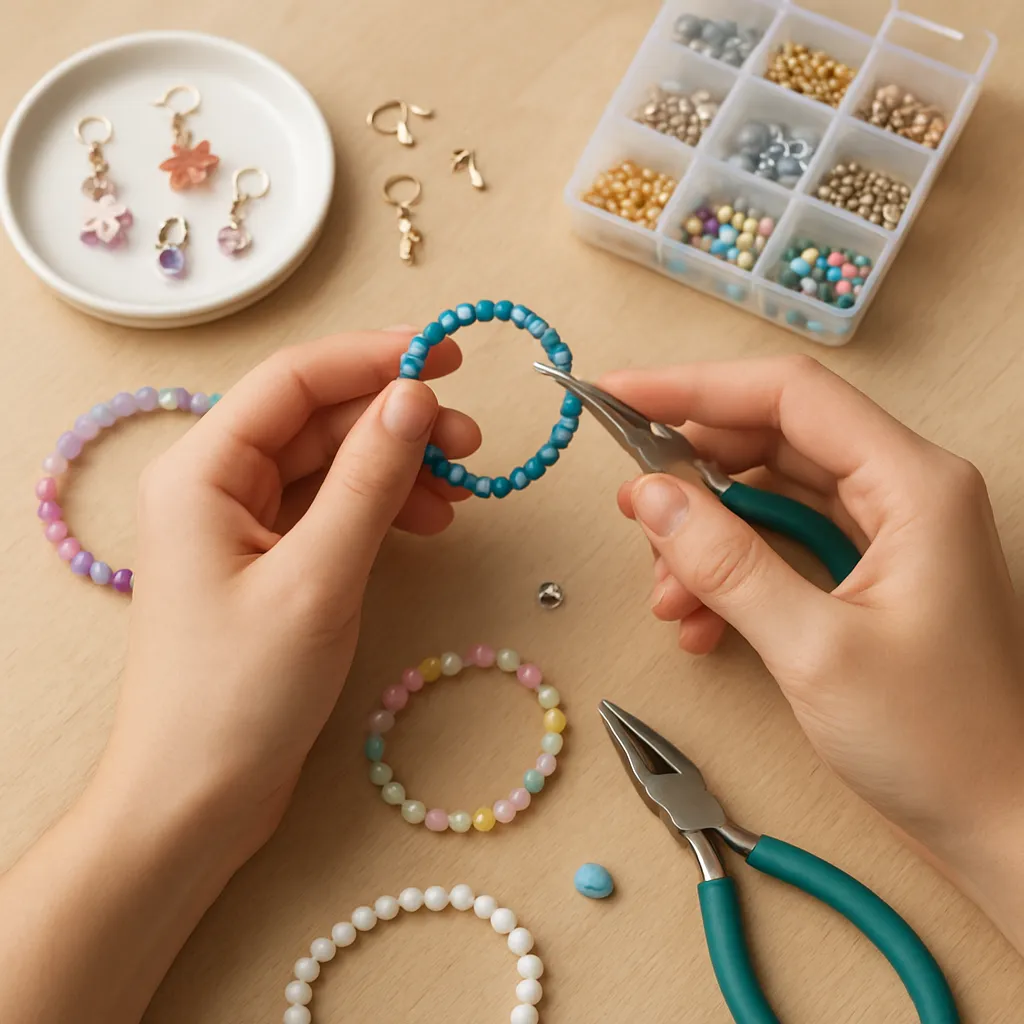
Teenagers reach for jewelry to test identities, join scenes, and signal taste to friends. Handcrafted pieces can speak to this moment more clearly than mass-market accessories because they carry the maker’s hand, small imperfections, and a sense of story. The challenge is to design pieces that feel current without becoming disposable, and to produce them efficiently in a small workshop. Below is a practical guide to creating teen-friendly jewelry that blends craft skill, market sense, and design empathy, so your work looks fresh on the feed and feels meaningful in real life.
Understanding What Teens Want from Jewelry
Before you choose a bead or bend a wire, consider the psychology of teen buyers. Many are navigating taste quickly through school hallways and social media; they want items that can pivot between daily wear and special moments. The key is balancing originality with social legibility—pieces should feel unique yet still “read” to peers as stylish rather than off-trend.
One core value for teens is authenticity. They prefer items that look like they were made by a real person who cares, not a faceless factory. Visible handcraft touches—hammered textures, hand-stamped letters, hand-braided cords—are strengths rather than flaws. Share making visuals to reinforce credibility.
Price sensitivity matters. Offer a ladder of price points so a teen can afford an entry piece with pocket money, but still aspire to a statement item. Think small charms under the cost of a movie ticket, and premium sets near gift-level pricing for birthdays or holidays.
Teens interact with jewelry as both fashion and social token. Bracelets can be swapped with friends, necklaces can mark fandoms, rings can symbolize inside jokes. Designing for sharing makes your line sticky within friend groups.
Design Principles That Win Attention and Keep It
Personal relevance and adaptability
Few things beat personalization. Initials, nameplates, zodiac signs, team colors, birthstones (real or simulated), and engravable tags turn a generic object into “mine.” Offer simple customization menus: metal color, charm selection, bead palette, length options, and font choice for stamps or engraving.
Teens also love to remix looks, so embrace modularity. Use lobster clasps, split rings, and hinged bails that let charms be added, stacked, and moved across chains, phone straps, and backpacks. A single base chain can power multiple styles with swappable pendants.
Wearability and daily-life constraints
Design for comfort: smooth edges, rounded corners, light weights, and tangle-resistant chains. Consider school rules where loud jingling or oversized spikes might be banned; provide “quiet” alternatives. If a piece brushes the neck or collarbone, ensure polished surfaces and curved wire ends.
Never compromise on safety. Prioritize nickel-free findings, lead-free solders, and secure closures for chokers and anklets. Avoid anything sharp near the face or eyes. Use breakaway clasps for lanyards and phone straps. Make metal allergies a first-class design requirement, not an afterthought.
Visual language and proportions
Scale is generational: chunky chains, oversized hearts, and bubble letters photograph well on smartphones, while micro-charms and seed beads invite close-up conversation. Mix these in single collections so teens can layer contrasts—delicate with bold, matte with gloss, soft cord with hard metal.
Color choices drive mood. Pastels, neons, and high-contrast black-white schemes cycle in waves. Try warm-cool duos (lavender with lime) or gradient bead strands. Incorporate texture: frosted acrylic, faceted glass, rubberized finishes, and satin ribbons introduce tactile variety that cameras capture nicely.
Materials and Techniques for Handcrafted Appeal
Hypoallergenic, durable, and photogenic
- Metals: stainless steel (316L), titanium, and sterling silver play well for sensitive skin and resist tarnish. Aluminum is light and colorful (anodized), great for chainmaille. Brass and copper are trendy but may patina; seal or offer care instructions.
- Cords and fibers: nylon, satin rattail, paracord, and waxed cotton support knotting styles and friendship bracelets. Use colorfast lines to prevent dye transfer onto clothing.
- Beads and accents: seed beads (11/0, 8/0), heishi vinyl disks, Czech glass, acrylic stars, freshwater pearls for a luxe-spin, and glow or UV-reactive beads for night events.
- Polymers and resins: polymer clay for charms and beads; UV or two-part resin to embed glitter, dried flowers, or micro-charms. Sand, buff, and seal to a skin-friendly finish.
Techniques that photograph well and feel special
- Wire wrapping: frame crystals or cabochons with soft curves and clean wraps. Use nylon-jaw pliers to avoid marring. Tuck tails carefully to prevent snags.
- Macramé and friendship braids: adjustable sliding knots give universal sizing. Combine heishi disks for modern surfer vibes.
- Stamping and engraving: initials on aluminum tags, laser etching acrylic charms, or hand-stamped secret messages inside bangles (visible only to the wearer).
- Chainmaille: lightweight anodized aluminum in bold colors. Patterns like Box or Byzantine read well on camera and feel satisfyingly tactile.
- Clay sculpting: mini food charms, celestial motifs, tiny sneakers, or mascots. Bake consistently, sand wet for smoothness, and glaze selectively for pop.
- Shrink plastic: draw or print icons, shrink, then dome with resin for clarity. Great for fandom micro-collections and low-cost experiments.
Finish and quality checks
Polish metals with tumblers or soft cloths. Deburr jump rings; double-ring where needed. For cords, heat-seal nylon ends. For resin, cure fully to avoid skin irritation. Package with a small care card so teens know how to clean and store pieces.
Reading Trends Without Becoming a Trend Victim
Effective trendspotting does not mean copying viral styles blindly. Build a radar while preserving your voice. Watch TikTok and Instagram Reels, but also observe hallways, skate parks, thrift stores, and concert lines—places where looks incubate before they hit feeds.
- Scan microtrends by color: sudden spikes in chrome, jelly translucence, or iridescent finishes often signal a coming wave.
- Note subcultures: e-girl/e-boy chains, cottagecore florals, K-pop fan charms, skater paracord, indie sleaze pearls with leather, Y2K butterflies, academia signet rings.
- Track seasonality: pride palettes in June, back-to-school friendship swaps, winter sparkle, spring florals and pastels.
- Rule of thirds: keep one-third core timeless pieces, one-third updated classics, and one-third experimental capsules. This cushions you from fast fade-outs.
From Idea to Prototype, the Teen-Centric Way
Start with a concise brief: who is the wearer, what moment are they dressing for, what problem are you solving? Build a mood board mixing textures, motifs, and two color routes. Sketch variations, then make quick-and-dirty prototypes using scrap wire and cheap beads to test silhouette and scale on-camera and on-body.
Test with actual teens when possible—respecting consent and privacy. Offer options A/B/C with slight differences (length, charm placement, clasp type) and ask which feels cooler and why. Record feedback and iterate fast. Avoid over-engineering before you learn which choices resonate.
Build Collections that Tell a Cohesive Story
Teens respond to arcs and universes. Use storytelling to turn single SKUs into a world: a “Night Market” capsule with neon beads and lantern charms; “After Practice” with sweat-resistant cords and team colors; “Cloud Room” with milky acrylics and pearly whites.
- Unify by motif: stars, safety pins, dice, horseshoes, cherries.
- Unify by material: all-clay charms in two glazes; all-stainless minimal chains with tiny tags.
- Unify by palette: two hero colors plus a neutral; limit SKUs to maintain focus.
Write micro-stories for product cards or captions: where the idea came from, what the symbol means, how to layer it. This creates meaning that outlives algorithm spikes.
Pricing, Packaging, and Positioning That Fit Teen Budgets
Calculate costs carefully: materials, labor time, overhead, and a buffer for remakes. Create three tiers—accessories under a low price for impulse buys, mid-tier for gifts, and premium small-batch sets. Multipacks (e.g., ring stacks, charm trios) feel generous while improving average order value.
Packaging should be delightful but not wasteful: branded backer cards, reusable satin or cotton pouches, and recyclable mailers. Add a QR code linking to a care guide or styling video. Make unboxing social-media-friendly without balloons of plastic filler.
Clarify your branding with a recognizable logo mark, a consistent palette, and tone of voice. Teens notice when your website, shop banner, and thank-you card align; cohesion signals professionalism and boosts trust.
Responsible Making for a Generation that Cares
Many teens value sustainability and ethics. Communicate clearly about materials and sourcing. Use recycled metals when feasible, repurpose thrifted beads, and design with longevity: replaceable cords, repair services, and spare jump rings included in the pouch. Offer a tiny discount for returning broken pieces for repair, turning accidents into loyalty moments.
- Trace your chains and findings when possible; mention hypoallergenic standards.
- Minimize waste by batch-cutting wire and standardizing lengths to reduce offcuts.
- Upcycle: melt scrap silver into new components, harvest charms from vintage pieces.
Marketing Where Teens Actually Look
Show, don’t just tell. Short videos of knots forming, charms snapping into place, or resin reveals beat static photos. Mix POV shots with maker-face clips; authenticity beats polish. Post in series (Idea → Prototype → Final → Styling) to invite followers along for the ride.
Build community with co-creation: polls to choose next colors, DMs for charm suggestions, limited pre-order slots that make drops feel special. Activate micro-ambassadors: customers who get early samples in return for honest reviews and outfit reels. Encourage UGC by designing photogenic backer cards and staging tips on your site.
- Platforms: TikTok for discovery, Instagram for lookbooks and DMs, Pinterest for mood-driven saves, and a lightweight storefront (Etsy, Shopify) for checkout.
- IRL touchpoints: school craft fairs, pop-ups near bubble tea spots, skate events, and local concerts. Bring a customization tray for on-the-spot charm swaps.
Three Quick Handicraft Projects That Teens Love
1) Heishi Friendship Stack Bracelet
- Materials: 6 mm heishi vinyl beads, 2–3 accent metal spacers, stretchy cord (0.8 mm), glue for knots.
- Method: String a palette gradient with one accent spacer off-center for asymmetry. Size to wrist plus a little tension, tie a surgeon’s knot, dab glue, hide inside a bead. Offer add-on charm with a small split ring for modular upgrades later.
- Why it works: Lightweight, colorful, sharable; easy upsell with charms.
2) Polymer Clay Initial Pendant
- Materials: polymer clay in two colors, blade, letter cutter or hand-cut template, eye pin, glaze.
- Method: Condition clay, laminate a marbled slab, cut initial, insert eye pin, bake per specs. Wet-sand edges, glaze the face only for dimensional shine. Hang on a 2 mm ball chain.
- Why it works: Personalized, photogenic marbling, low cost, fast batch production.
3) Paracord Phone Charm with Bead Accents
- Materials: paracord, seed beads, small acrylic charms, lark’s-head loop, lighter for ends.
- Method: Lark’s-head the cord to a small split ring, string beads and charms in segments, tie macramé square knots to lock zones. Create a loop to attach to phone case. Heat-seal ends carefully.
- Why it works: Functional, bold textures, and a canvas for future charm additions.
Quality, Comfort, and Safety Checklist
- Edges: file and round every cut wire end; no burrs against skin.
- Allergies: prioritize nickel-free and test coatings; disclose materials in listings.
- Closures: test jump rings with a pull gauge; double-ring where tension is high.
- Finish: test colorfastness of cords and beads; avoid coatings that flake under sweat.
- Durability: perform a 24-hour wear test—showers, sleep, backpack tug—to catch weak points.
- Comfort: check snag points on hair and sweaters; smooth resin domes fully.
Systems That Let You Scale While Staying Handmade
As demand grows, protect craft quality with repeatable systems. Standardize component bins, pre-cut chain lengths, and jig up for repeat wire shapes. Document a build order for each SKU: prepare charms → assemble bases → attach closures → final QA → package. This speeds production without losing human touch.
Outsource selectively: buy pre-made hypoallergenic chains but keep charm design in-house; have a local engraver handle bulk tags while you assemble and style. Maintain your voice by controlling final assembly and quality checks.
Ethics of Symbols and Cultural Sensitivity
Teens notice cultural cues. Research symbols before using them; avoid sacred motifs as casual fashion. Invite feedback from communities represented by your designs. When in doubt, create your own iconography—abstract shapes, invented mascots, or hybrid symbols that belong to your brand universe.
Photography and Presentation Tips
- Lighting: diffuse daylight near a window; bounce with white foam board.
- Backdrops: lockers, textbooks, skate decks, notebooks—context matters.
- Angles: close-ups for texture; full outfits for scale; hand shots for bracelets.
- Motion: short clips of clasp swaps to highlight modular systems.
- Captions: keep playful, include size info, and styling prompts (“Layer with a 40 cm chain”).
Care, Repairs, and After-Sale Delight
Offer simple repair options and teach basic maintenance. A “repair kit” add-on with two jump rings, a mini clasp, and an instruction card empowers teens and reduces returns. A punch card for future discounts or a birthday code keeps them coming back.
Putting It All Together
Creating jewelry that resonates with teenagers means fusing design empathy with craft discipline: make it personal, make it swappable, make it safe, and make it feel like part of a bigger world. Keep your radar tuned to microtrends while steering with your own compass; choose materials that respect skin and planet; prototype with real feedback; and present your pieces with clarity and heart. If you center the values of authenticity, personalization, modularity, comfort, safety, trendspotting, storytelling, branding, community, and sustainability, your handmade designs will not only look great on camera—they’ll earn a cherished place in everyday life.
