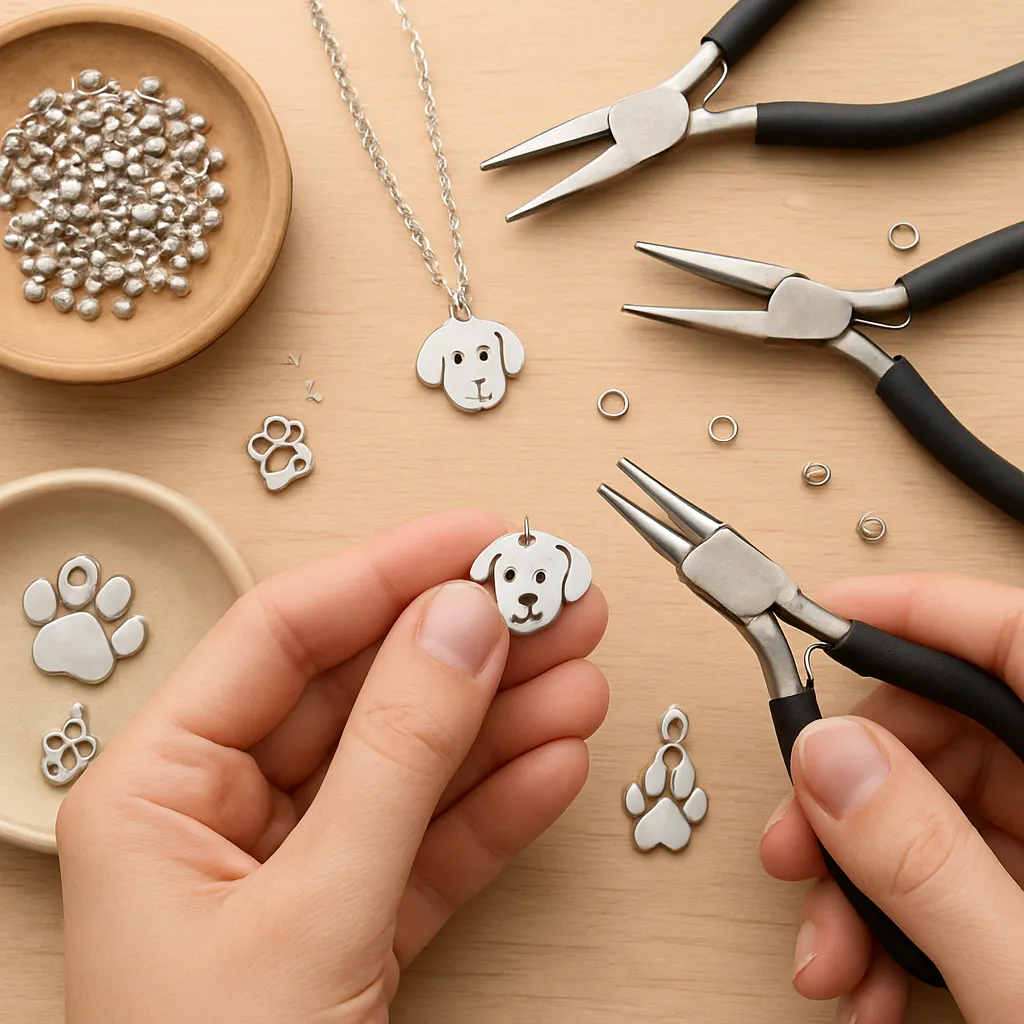
Pet-themed jewelry sits at the crossroads of memory, style, and making with your hands. It transforms whiskers, paw prints, feathers, and names into wearable talismans that keep our companions close even when we are away from home. As a branch of handicraft, it offers a deeply tactile way to tell stories: each hammer mark, brushstroke, bead, or knot captures the quirks and affections that make a pet one of a kind. Whether you are new to crafting or an experienced maker seeking a meaningful collection, building adornments that honor an animal’s life opens a rewarding path of creativity and care.
The Appeal and Living History of Pet-Themed Adornments
Animals have inspired jewelry for millennia. Ancient Egyptians set protective amulets in the shapes of cats and scarabs; Roman mosaics depicted favorite hounds; Edo-era netsuke carvers miniaturized dogs and foxes in wood and ivory toggles; Victorian families braided locks of hair—human and animal—into mourning bracelets and brooches. Today’s pet-themed pieces owe much to that lineage, blending intimacy with portability so a cherished animal can accompany us discreetly at work, on errands, or to distant places.
What makes pet jewelry so compelling is the blend of sentiment and material ingenuity. A polished tag can broadcast a name and adoption date; a tiny locket can hold a snippet of fur; a carved bone or clay charm can reference a favorite toy. For many makers, the process becomes an act of meditative remembrance: selecting colors that echo a tortoiseshell’s mottling, chasing hammered textures that resemble fish scales, or choosing a metal finish that flatters a parakeet’s iridescent green. Unlike mass-market accessories, handmade adornments allow intense personalization—from initials and birthstones to silhouettes taken from actual photographs—so the result feels intimate and singular.
Beyond sentiment, pet-themed jewelry also provides a learning ground for craft techniques. The same skills you apply to a pendant in the shape of a rabbit’s ear translate to broader metalwork, clay artistry, beading, and finishes. The project ideas below are stepping-stones into a wider realm of wearable craftsmanship.
Design Foundations: Motifs, Styles, and Color Choices
Motifs by Species
Dogs: Paw prints, bones, collars, and ear shapes (think the gentle triangle of a shepherd or the rounded tip of a pug) are easily stylized. Long-eared breeds invite sweeping, ribbon-like lines, while terriers render well in angular silhouettes. Names and micro-etched nose prints provide excellent personalization cues.
Cats: Crescent moons echo feline grace, while whisker arcs and almond eyes translate to minimalist pendants. Consider negative space—the interior cutout that suggests a curved back with tail—to keep forms light and wearable. Tiny bells, yarn balls, or fish can accompany a central cat silhouette as playful dangles.
Birds: Feathers become naturally rhythmic motifs. Triangular layering mimics wing coverts, and a single drop-shaped tail feather makes a slender, elegant earring. For parrots and finches, color-blocked patterns in tiny inlays or paint capture species-specific vibrancy. Always use shed feathers or crafted imitations and check local regulations regarding wild species materials.
Fish and Reptiles: Scale patterns lend themselves to texture plates and hammered dimples. A koi-inspired pendant benefits from sinuous outlines and enameling for color gradations; turtles invite circular or hex-based geometry reflecting carapace scutes.
Small Mammals and Hoofed Companions: Rabbits, hamsters, and guinea pigs are charming as soft, rounded forms. Horses can be honored by braiding a small, naturally shed lock of tail hair into a bracelet—a modern echo of historic hairwork.
Styles That Wear Well
Minimalist line art reduces pets to a few precise curves, resulting in pieces that layer easily with daily outfits. Geometric abstraction uses triangles, circles, or hexagons to imply animal forms—especially effective in earrings, where weight matters. Illustrative approaches suit brooches and lockets, where extra surface area allows for portrait detail. Consider ergonomics: necklace pendants benefit from a smooth reverse side, earrings from balanced weight, and rings from low-relief motifs that do not snag sweaters.
Color and Finish
Neutral metals like brass and silver complement most coats. Warm alloys flatter golden retrievers and calicos; cooler tones suit grey tabbies or huskies. Surface finish affects perceived complexity: brushed matte looks modern; mirror polish reads luxe; deliberate patina adds depth, especially to stamped fur textures or feather barbs. For vibrant species, translucent enamel over textured metal mimics the way light plays through feathers or scales. If you’re painting polymer clay, seal with a varnish formulated for wearability to preserve hues against skin oils.
Materials and Tools for Every Skill Level
Beginner-Friendly Options
- Polymer clay for lightweight charms and portrait brooches; it bakes in a home oven and sands smoothly.
- Shrink plastic (graph, trace, color, bake) for crisp silhouettes and name tags.
- Air-dry clay and wood blanks for painted pendants; seal to protect artwork.
- Basic findings: jump rings, eye pins, ear wires, and lobster clasps.
- Paint pens, archival ink pads for paw or nose prints, and microbrushes.
Intermediate Materials
- Two-part epoxy or UV-curing resin for encapsulating fur, tiny charms, or confetti paw prints.
- Cold connections (rivets, tabs) to join metal and wood without heat.
- Wire and jigs for wire-wrapping silhouette pendants; select gauges 18–24 for structure vs. detail.
- Metal stamping kits with letter and design punches.
Advanced Approaches
- Metal clay (silver, bronze) for sculpted paw pads and miniature collars.
- Traditional metalsmithing with soldering for bezels, layered silhouettes, and custom clasps.
- Hot glass or kiln enamel for durable color fields.
Ethics and Wearability
Choose metals that match skin needs: stainless steel and titanium are notably hypoallergenic. Recycled silver and brass improve sustainability, as do plant-based or low-VOC sealants. If you include organic materials like fur or whiskers, gather only naturally shed fibers and avoid stress to the animal. For feathers, verify local regulations—many wild species are protected. When in doubt, replicate textures with metal, clay, or ribbon instead of using real parts.
Techniques: Step-by-Step Projects You Can Adapt
1) Resin Paw-Print Charm With Embedded Fur
Ideal for memorial pieces or celebratory charms. You’ll need bezels or silicone molds, a UV lamp or measured cups (for two-part), gloves, stirring sticks, tweezers, a heat tool or alcohol mist, and a level surface.
- Prepare the base: Place a thin layer of clear resin in the bezel. Pop bubbles with a quick pass of heat.
- Add elements: Position a tiny ribbon of fur in a gentle spiral, a micro name decal, or confetti shaped like paws. Keep pieces below the surface so they do not snag.
- Seal and dome: Pour or drip more resin until a convex dome forms, staying within the bezel rim. Eliminate bubbles, then cure fully (UV: a few minutes; two-part: the manufacturer’s schedule).
- Finish: Wet-sand edges if needed and polish with a microfiber cloth. Attach a jump ring and chain.
Tip: A tinted layer under the clear dome highlights white fur. To ensure long-term durability, avoid direct sunlight during curing and measure parts precisely for a full set.
2) Metal-Stamped Name Pendant With Darkened Letters
This quick piece looks like boutique personalization. Gather a steel bench block, letter stamps, tape, a brass or stainless blank, a heavy mallet, and finishing pads.
- Align: Tape the blank to the block, drawing a baseline on the tape to level letters.
- Strike: Hold each stamp vertical and deliver one confident blow. Re-strike risks shadows.
- Darken: Use a highlight wax or induce a gentle patina (for copper/bronze/silver) to make letters pop; buff the surface to leave darkness in the recesses.
- Assemble: Punch a hole if needed, deburr, then add jump ring and chain.
3) Polymer Clay Portrait Brooch
Polymer excels at capturing fur swirls and nose textures.
- Condition and plan: Soften clay and mix custom fur tones. Roll a base ellipse to the brooch size.
- Sculpt: Add a muzzle, ears, and a low-relief nose. Use a stiff brush to lightly texture fur; a pin creates whisker follicles.
- Bake: Follow the specific clay’s temperature curve. Cool fully before sanding edges smooth.
- Paint and seal: Add eye highlights and a faint pink nose glaze. Seal with a compatible varnish and glue a pin back.
4) Wire-Wrapped Cat Silhouette Pendant
Wire projects emphasize motion and elegance.
- Form: With a jig or mandrels, shape an 18–20 gauge frame in the outline of a sitting cat.
- Detail: Use 26–28 gauge to weave the frame lightly at points of stress and to add a curled tail crossing for visual interest.
- Bail and finish: Spiral a simple bail, then burnish. Optional liver-of-sulfur bath adds antique depth; polish high points for contrast.
The technique flexes: the same method can create a dog-ear outline, a rabbit profile, or a fish.
5) Felt and Bead Feather Brooch
For bird lovers, stitched felt gives softness without fragile real feathers.
- Cut two feather shapes in wool felt.
- Stitch barbs with split stitch; bead a central rachis with seed beads.
- Sandwich a pin back between layers and whipstitch the perimeter.
Capturing Your Pet: From Photo to Miniature
A faithful likeness begins with good reference photos. Shoot at eye level in diffuse light; grab profile, three-quarter, and frontal views. Measure key proportions: ear base-to-tip, nose-to-eye, head-to-shoulder. In a sketchbook, reduce the pet to lines and negative spaces—this produces silhouettes ideal for pendants and earrings. Digitally, import a photo into a vector app and trace a high-contrast outline; you can laser-cut metal or wood blanks from the file later or print it to guide hand sawing.
When painting or inlaying color, match not just hue but value patterns—the dark mask of a Siamese or the saddle of a beagle. For birds and fish, look for directional texture: paint or engrave strokes that follow feather and scale growth so highlights feel natural.
Safety, Quality, and Longevity
Ventilation and protective gear matter. When working with resin, gloves and a respirator rated for organic vapors are prudent, and a dust mask helps when sanding cured pieces. Secure long hair, keep pets at a distance from small parts, and cap blades when not in use. If you heat metal, set up a fire-resistant surface and have quench water at hand. Label food-only vs. craft-only tools to prevent cross-use.
For jewelry that lasts, attend to closure integrity and surface protection. Close jump rings fully (and, for high-wear areas, consider heat-closed or welded rings). When painting or patinating, lock in results with microcrystalline wax or lacquer appropriate to your metal. Store silver with anti-tarnish strips; avoid chlorinated pools. Thoughtful finishing—burnishing edges, smoothing snags, and choosing strong crimps—pays dividends in day-to-day durability.
Customization, Symbolism, and Storytelling
Every element can carry meaning. Birthstones or adopt-aversary gems in a collar charm, GPS coordinates of a favorite park engraved inside a ring, or a locket with a miniature watercolor portrait converts an accessory into a micro-biography. Consider symbolic pairings: hematite and huskies (cool gray), citrine and golden retrievers (warm sun), peridot for parakeets (leafy green). Stacking charms—bone, heart, paw—lets the wearer narrate playful traits and tender memories.
Texture and relief also convey character. A hammered pattern suggesting whisker pads might be gently oxidized and buffed to create shadows; high polish reads as sleek and youthful, while satin finishing adds an experienced calm. Tiny script on the reverse can capture a nickname known only to family members, fostering a private ritual each time the piece is put on.
Eco-Friendly and Ethical Choices
Handicraft thrives when it respects sources. Opt for recycled sterling and brass; consider lab-grown gems or vintage stones reclaimed from broken jewelry. Plant-derived sealants and low-tox adhesives lighten the environmental load. Replace real bone or horn with vegetable ivory (tagua), carved wood, or clay. Shed fur or whiskers are fine (never trim whiskers; they are sensory tools for the animal), and substitute faux feathers or stitched felt for protected-species plumage. Always check local guidelines before collecting natural materials—responsible making ensures continuity of our crafts and the ecosystems that inspire them.
Troubleshooting and Professional Finishes
- Resin sticky surface: Under-cure or bad ratio. Wipe with isopropyl, recoat thinly, and cure on a level, dust-free surface.
- Trapped bubbles: Warm resin components before mixing; pour in layers; flash with heat briefly; avoid over-stirring.
- Stamping misalignment: Use a stamped spacer dot between words and blue tape with a pencil guideline. Practice on scrap aluminum.
- Polymer clay cracks: Under-conditioning or rapid cooling. Knead thoroughly and allow gradual cool-down after baking.
- Wire tool marks: Cover plier jaws with tape, use nylon-jaw pliers, and plan bends at measured intervals.
- Uneven patina: Degrease metal prior to oxidizing; agitate gently; neutralize and seal consistently.
For finishing finesse, think layers. A light abrasive pad followed by a rouge polish brings metal to a jewelry-grade shine; microcrystalline wax deepens a chemical patina and protects highlights. Tumbling with steel shot work-hardens and smooths small parts; ultrasonic cleaners lift polishing residues. On clay, progressively finer wet-sanding yields a glassy edge that feels comfortable against skin.
Gifting, Packaging, and Small-Batch Selling
Presentation extends the story. A card printed with the pet’s silhouette or a short note about the adopted materials turns a gift into a keepsake experience. Include a care card (avoid water, store flat, polish with a cloth), a tiny polishing square for metals, and a pouch that prevents scratches. If you venture into selling, document each piece with clear photos on neutral backgrounds and in-scale lifestyle shots. Pricing should respect your time: materials + time (at an hourly rate) + overhead + profit. Offer made-to-order options where customers submit photos; a simple questionnaire (breed/species, quirks, favorite color) guides design decisions while showcasing your emphasis on personalization.
Maintenance and Repairs
Even careful wearers need occasional tune-ups. Replace stretched jump rings, restring beaded collars with fresh beading wire, and re-seal painted wood annually. Silver brightens with a treated cloth; copper and brass benefit from a light wax after polish. On enamel and resin domes, avoid abrasive cloths—use plain microfiber. For mixed-media brooches, inspect pin backs; if adhesive weakens, sand, degrease, and reattach with a structural glue rated for metal and the companion substrate.
Templates, Measurements, and Helpful Lists
Common Gauges and Uses
- 18 gauge: sturdy frames for pendants and pet silhouettes.
- 20–22 gauge: ear wires, lightweight connecting arcs.
- 24–28 gauge: weaving, detail wrapping, miniature bails.
Jump Ring Pairings
- 6 mm outer diameter, 18–20 gauge: general pendant connections.
- 4 mm, 20–22 gauge: earring dangles and charm clusters.
- 8 mm, 16–18 gauge: heavier focal pieces or braided hair loops.
Necklace Length Guide
- 16 in: sits high; good for small pendants and daily wear.
- 18–20 in: most versatile; frames one-inch silhouettes well.
- 22–24 in: suits lockets or layered talismans.
Color Prompts by Pet Type
- Black coats: mirror-polished silver, moonstone, bright enamel dots for contrast.
- Orange tabbies: brass, citrine, warm amber tints, brushed finishes.
- Blue merle dogs: oxidized silver with pale sapphire accents.
- Parakeets: layered translucent greens and blues over textured metal.
- Koi: coral and cream enamel in soft gradients.
Inspiration Gallery in Words
Imagine a slim oval locket of recycled silver, its front etched with a sleeping cat’s back as a single, continuous line. Inside, a miniature watercolor shows the cat perched on a radiator in winter light. Or picture a series of stickpin birds: each a sliver of brass with a hammered wing, dipped in transparent teal enamel that pools near the edges like pond water. A horsehair bracelet braids into a herringbone beside a narrow sterling bar stamped with a trail date, joined by a discreet magnetic clasp that clicks home with satisfying certainty. For fish keepers, a coin-sized pendant carries scales carved in relief and washed with indigo and green—when tilting, the ridges wink like light in water. And for rabbit lovers: a pair of asymmetrical earrings, one a soft ear folded forward, the other a tiny sprig of clover; together they tell a favorite meadow story.
There is poetry in simpler pieces too: a brushed brass bone with a single flush-set birthstone; a round tag whose reverse hides a tiny heart where a nose would boop; or a finely sawed silhouette of a gecko, its toes suggested by five tiny granules that also add friction so the pendant rests flat. Each approach invites experiments, from layered textures to mixed alloys, from monochrome minimalism to riotous color blocks that celebrate a parrot’s chatter.
From Hobby to Heirloom
Pet-themed jewelry welcomes constant learning. Your first stamped tag might curve slightly or show a double hit; your tenth will sit straighter, your hundredth will carry a refined rhythm of spacing and depth that speaks to seasoned hands. Over time, you may venture into stone setting for birthstones, experiment with cloisonné for feather veins, or explore box clasps custom-shaped like a paw to unify function and theme. With practice, your pieces evolve from sweet snapshots into heirlooms that future generations will touch and ask, Who was this friend? That is the special magic of this craft: it makes everyday love tangible—portable, sturdy, and ready to accompany us out the door.
Gather your sketches, sweep the worktable clean, and begin with one small idea: a line, a paw, a name. Layer meaning with method. Keep a steady eye on comfort, hypoallergenic choices, and durability. Let sustainability guide material sourcing. Lean on time-honored techniques—yes, even a touch of soldering or a whisper of patina—and give color the luminous lift of enamel. Whether you twist a graceful silhouette with wire-wrapping or pour a clear dome of resin over a beloved curl of fur, your hands are building not just ornaments but devotions—small, shining proofs that companionship changes our lives for the better.
