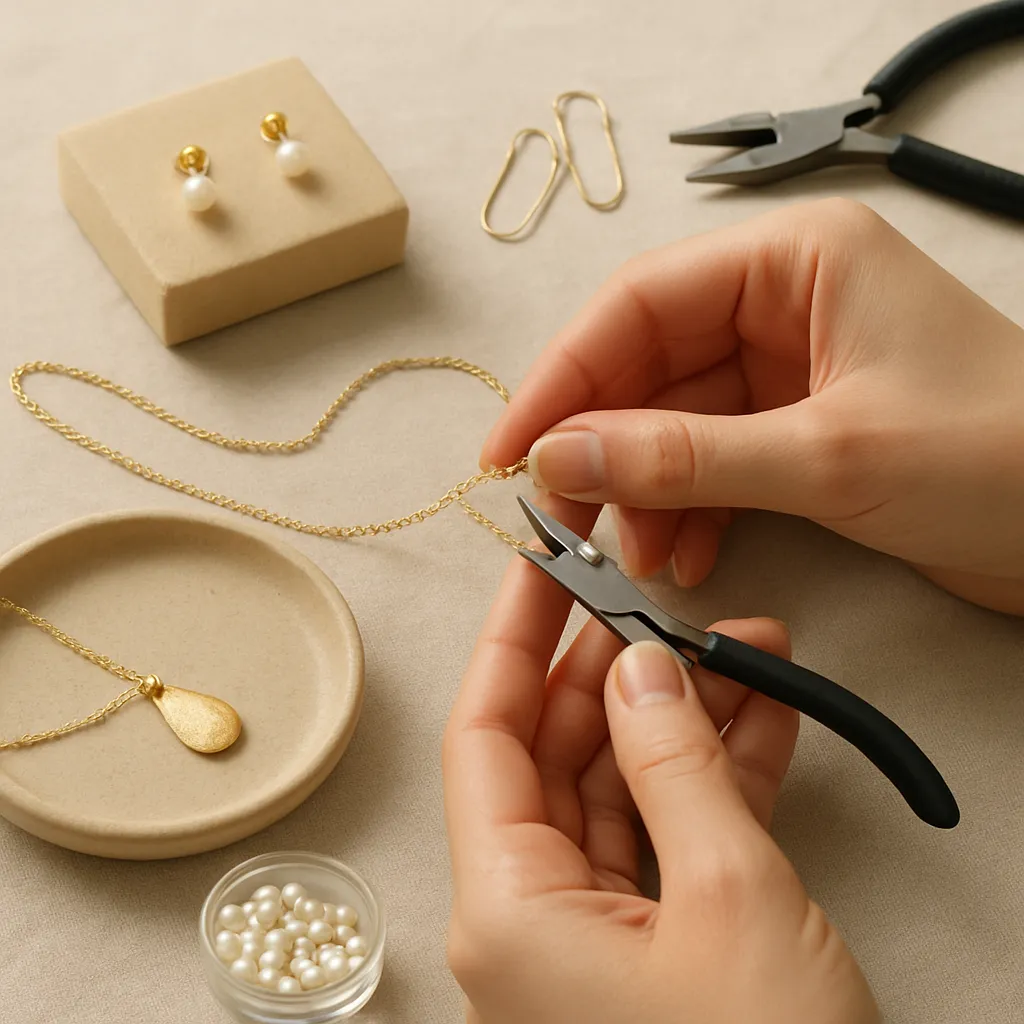
Office jewelry is a quiet conversation between personal style and professional cues. When you make it by hand, every choice—metal gauge, clasp geometry, stone orientation—either earns or loses the right to be worn eight hours straight, five days a week. The goal of this guide is to help you craft pieces that look poised under fluorescent lighting, behave well around keyboards and headsets, and feel good from commute to coffee break. Rooted in studio practice and mindful design, the following ideas connect practical constraints with the expressive language of handwork so your creations can deliver lasting value, seasonal relevance, and understated flair. In this space, true craftsmanship and quiet innovation matter more than spectacle, and the best compliment you can receive is a client who forgets they are wearing your work—because it simply belongs there. Think in terms of wardrobe systems, not one-off novelties; seek reliability, easy maintenance, and modularity; and build an ethos that prizes versatility for the rhythms of office life.
Reading the Office: Aesthetics, Codes, and Constraints
The modern office is not a single place. Some environments expect conservative tailoring and subdued hues, while others embrace creative accents and a bit of color. To design jewelry that thrives across settings, begin by mapping the social and functional boundaries likely to shape daily wear. Consider formality, movement, sound, and technical interfaces—because a delicate chain can snag on a lanyard, and a jangly bangle can become a distraction in a conference room.
Silence is underrated. Pieces that clack against desks or echo during a presentation can feel unprofessional. Items that scratch laptop palm rests or interfere with touchpads are similarly ill-suited. Likewise, earrings that collide with headsets or scarves, necklaces that compete with ID badges, and rings that pinch during typing quickly fall out of rotation. Your task is to make jewelry that performs invisibly: it should clear collars and cuffs, resist denting, and lie flush when a wearer leans forward to type.
Color and reflectivity also matter. Ultra-high polish can look glamorous at night but harsh at 10 a.m. under LEDs. Subtle sheens—satin, brushed, or lightly hammered—catch light without blinding colleagues. Palette-wise, neutrals (silver, gold, graphite, bone, navy) and low-saturation stones bridge multiple outfits. The more outfits a piece can harmonize with, the more likely it will become a staple.
Design Principles for Office-Friendly Pieces
Clarity in design is the backbone of daytime jewelry. Edit out anything that looks fussy, snag-prone, or loud. Prioritize visual calm, tactile comfort, and workplace practicality. This does not mean boring; it means intentional. A controlled line, a disciplined silhouette, a considered texture—these are your allies.
An aesthetic of minimalism is not about deprivation; it is about selecting the essential and amplifying it. Work with negative space, clean edges, and a limited palette. The fewer the moving elements, the fewer failure points, and the more quietly the piece reads in a meeting or across a desk.
Think in terms of proportion. For earrings, scaled studs and short drops (under 25–30 mm from the lobe) rarely interfere with headphones or scarves. For necklaces, aim for lengths that clear collars (16–18 in/40–46 cm for a crew neck, 20 in/51 cm for button-downs). For bracelets, a snug oval bangle or soft chain that rides slightly above the wrist bone avoids desk contact while typing.
Visual balance is equally vital. Consider how an earring’s mass is distributed around the lobe, how a pendant centers along a neckline, and how a cuff’s opening relates to the wrist’s thinnest dimension. Symmetry can feel authoritative; gentle asymmetry can read creative—but keep both calm and purposeful. A balanced form is easier to style and more versatile across outfits.
Finally, remember eyestrain and screen life. Mid-size shapes with graceful outlines read well on video calls. Ornamentation should hold up in low-resolution thumbnails without screaming for attention. Tiny fuss fades; oversized drama overwhelms. Aim for forms that communicate in a simple, legible way from two to three feet away.
Materials That Work: Metals, Stones, and Alternatives
Material choice determines performance. Metals carry the structure, stones and inlays lend tone, and alternative media soften or add texture. In offices, longevity and skin-friendliness are paramount. Plan for desk bumps, sweater friction, sanitizer exposure, and daily wear-and-tear. Your decisions here drive durability and comfort.
Metals:
- Sterling silver (925) offers a bright neutral that pairs with most wardrobes. Oxidation is manageable with polishing cloths, and satin finishes disguise micro-scratches. Consider anti-tarnish storage or rhodium flash for high-visibility pieces.
- Gold-fill (14/20) provides the look of gold with better affordability than solid karat. It resists wear better than simple plating and keeps edges crisp.
- Stainless steel (316L) and titanium are tough, modern choices, often lighter and resilient against everyday impacts. They especially suit minimal geometric designs.
- Brass and bronze are warm and cost-effective. Seal them or instruct clients on maintenance to avoid skin discoloration on humid days. A high-quality lacquer or microcrystalline wax can slow toning.
Fittings and findings should be hypoallergenic when they contact skin, especially earring posts and backs. Surgical-grade stainless or niobium are excellent for sensitive ears. For cuff edges and ring interiors, break corners to a satin round so they glide on smoothly.
Stones and inlays:
- Pearls, moonstone, and gray chalcedony read professional and soft. Avoid sharp or protruding points in office studs that can pinch phone earpads or snag hair.
- Opaque neutrals (onyx, hematite) anchor palettes; pastels (morganite, aquamarine) whisper color without stealing scenes. Small cabochons (3–6 mm) are friendly at scale.
- Resin, enamel, or terrazzo-style inlays add quiet personality while laying flush. Choose matte or satin surfaces to reduce glare.
Alternative media:
- Fine leather cords or ultrasuede add softness under collars. Finish ends cleanly and test for dye-fastness under perspiration and sanitizer contact.
- Textile techniques (tiny macramé nodes, soutache accents) can be integrated sparingly to keep silhouettes flat. Use color-fast fibers and seal edges.
- Wood and bio-based composites supply warmth and lightness. Seal with hardwax oil or polyurethane to resist office grime.
Surface treatments set a piece’s tone. A controlled patina on silver can frame stones or deepen relief. Brushed and satin sheens reduce glare and hide micro-wear. Hammered textures sparkle subtly in conference rooms without turning flashy. Choose finishes that support the design’s quiet intent rather than fight it.
Tools and Techniques for a Studio That Serves the Office
Good office jewelry is won or lost in process: clean joins, tidy edges, consistent textures, and secure mechanisms. Even simple stud earrings deserve deliberate edge relief, accurate post alignment, and thoughtful backings. A bench that supports repeatable, calm execution will reward you with reliable pieces clients reach for daily.
Core tools:
- Saw frames and blade assortments for crisp profiles and interior cutouts that won’t snag on knits.
- Files (barrette, half-round) and progressive abrasives for edge refinement. Sand to finer grits than you think; fingertips will feel what eyes miss.
- Measuring and layout precision—calipers, dividers, scribe—so pairs match and findings seat perfectly.
- Bench pin with V-notch and a ring clamp for safe, controlled work at small scales.
- Rotary tools for texturing and clean-up, with care to keep edges soft, not sharp.
Joinery and closures decide service life. Practice sweat solder setups, mechanical cold connections (rivets, micro-screws), and hybrid bonds where adhesives back up tension. Heat discipline keeps stones safe; jigs keep earrings symmetrical. When you finish, test closures twenty times; if they survive the bench, they’ll fare better at the office.
The last stage is where the piece becomes wearable art: meticulous finishing. Tumble-polish for uniform sheen, then hand-refine focal planes so light skips across them gently. Deburr earring posts and chamfer tiny interiors of jump rings to prevent thread pulls. The polish is not only visual; it is tactile insurance against irritation.
Ergonomics, Weight, and All-Day Comfort
Few topics are more important to office jewelry than ergonomics. A piece can look superb yet feel fatiguing by 3 p.m. Minimize weight at the extremities (earlobes, bracelet drape), distribute mass toward the body, and keep forms close to the silhouette of the wearer. Consider the way a cuff slides as a wrist flexes, the way a pendant tips when someone leans forward, and the way a ring rests while typing.
Weight targets help. Stud earrings under 2.5 g per ear are generally comfortable—even lighter when stones are involved. Short drops should keep their center of gravity near the lobe. Necklaces should not press into the collarbone under a blazer lapel. For bracelets, flat chains and soft cuffs reduce desk rattle and prevent pressure spots during extended typing sessions.
Comfort also means friendly interfaces. Choose smooth, locking earring backs with ample pad area; well-fitting friction nuts are safer than loose ones. For necklaces, consider short extenders (2–3 cm) to fine-tune drape around different necklines. For rings, low dome profiles clear keyboards better than prongs or tall bezels. Where contact is unavoidable, soften transitions; a 0.25 mm easing on a ring’s interior edge can rescue a long day.
Quiet Mechanisms: Clasps, Hinges, and Backs
Hardware is your invisible partner. Tidy lobsters, small but secure spring rings, or tiny magnetics housed in silicone sleeves streamline donning without audible clicks or snags. For bracelets, box clasps with safety catches eliminate mid-meeting oops moments. For earrings, disk backs support heavier studs without pulling lobes forward.
Hinges on hoops and cuffs warrant special attention; nothing breaks trust faster than a hinge that loosens over time. Use appropriate pin diameters, test for play, and burnish knuckles after assembly. Where magnets are used, ensure coatings are sweat-resistant and avoid placing them where they might catch on laptop lids or metal chair arms.
Color, Texture, and Light Under Fluorescents
Fluorescent and LED lighting environments tend to flatten color and amplify glare. Counter with micro-texture and mid-sheen finishes that create controlled sparkle instead of mirror-like reflections. Brushed planes, satin domes, and hammered edges maintain presence without shouting. Patinated recesses can add depth that reads as shadow and relief rather than color noise.
When working with enamel or resin, choose low-chroma hues (steel blue, slate green, dusty rose) to remain adaptable with palettes from charcoal suits to camel knits. Faceting should be modest; cabochon cuts feel calmer for daytime. For beading, stick to calibrated sizes and steady rhythms—predictable spacing reads tidy on screen and in person.
Building a Capsule: A Three-Piece Office Set
A capsule set encourages repeat wear and easy mixing. The trio below—studs, a pendant necklace, and a slim bracelet—covers most office contexts with minimal fuss. Each piece shares materials, motifs, and finish, creating cohesion without uniformity.
1) Stud Earrings: Soft Geometry
Concept: A small oval or softly rounded square in brushed metal, optionally with a discrete stone flush-set off-center. The silhouette is intentional yet calm, and the flush setting keeps profiles low.
- Materials: 0.8–1.0 mm sheet in sterling or gold-fill; 0.9–1.0 mm posts; butterfly or disk backs; 2.5–3 mm cabochon (optional); sanding sticks; burnishers; setting burs.
- Process: Saw-blank twins, refine edges, dome just slightly to hug the lobe, solder posts precisely centered for even balance. If setting, drill seat just off-center, burr to fit cabochon, and burnish flush. Brush to satin, then hand-buff edges to a gentle gleam.
- Checks: Weight under 2.5 g each, backs firm, edges eased, no snag points.
2) Pendant Necklace: Line and Arc
Concept: A slim arc or gentle bar that follows the collarbone, suspended from short chain lengths soldered to discrete endpoints. The arc references the studs’ geometry while elongating the neckline.
- Materials: 1.5 mm wire or 1.2 mm x 3 mm rectangular wire; fine chain; 5 mm jump rings; 8–10 mm lobster clasp; solder; abrasives; mandrel for consistent bending.
- Process: Bend the arc on a mandrel, planish to stiffen, file ends square, and solder closed jump rings at the arc ends so chain transitions feel seamless. Brush to satin to match the studs; highlight the top ridge with a quick hand-buff.
- Checks: Necklace length 40–46 cm with a 2–3 cm extender; arc curvature clears collars; clasp easy to reach and quiet in motion.
3) Bracelet: Slim Oval Cuff
Concept: A low-profile oval cuff that sits a hair above the wrist bone. It echoes the necklace’s arc and the studs’ curve, rounding out the set with a tactile, silent form.
- Materials: 2 mm x 4 mm rectangular wire; mandrel; rawhide mallet; files; finishing abrasives; optional interior comfort beveling tool.
- Process: Measure wrist and subtract a small opening (25–30 mm). Form an oval over a mandrel, planish lightly to work-harden, then ease interior and exterior edges. Apply the set’s signature satin and a crisp highlight line along the top edge.
- Checks: No desk rattle during typing, no hair-pulling at the opening, opening aligned to the inside wrist for discretion.
Prototyping, Wear-Testing, and Quality Control
Before releasing a design, produce a prototype and assign it to real-life testing. Request wearers type, commute, make calls with headsets, and move through a normal day. Note any catches at cuffs, chain tangles with ID lanyards, or ear fatigue. Adjust geometry, weight, and edges accordingly.
Adopt a repeatable QC checklist:
- Edges: All skin-contact edges eased; no sharp transitions or burrs.
- Security: Clasps engage with a soft click; jump rings soldered or welded where appropriate.
- Finish: Uniform sheen across visible planes; no compound residue.
- Symmetry: Earring pairs match within 0.2 mm; posts aligned vertically and centered to prevent droop.
- Tactile: Bracelets stay quiet on a desk; necklaces don’t flip; rings clear keyboards.
- Stress: Cuffs spring test 50 cycles; chain solder points tug-tested.
Care, Maintenance, and Office Realities
Office life brings frequent sanitizer use, temperature swings, and fabric friction. Provide clear care guidance with every piece so your work continues to look intentional after six months of daily wear.
- Storage: Suggest a soft pouch or anti-tarnish envelope; avoiding desk drawers with loose paper clips reduces micro-scratches.
- Cleaning: Gentle dish soap and a soft brush for daily grime; polishing cloths for silver. Avoid harsh chemicals on plated pieces and stones.
- Fit: Encourage periodic checks on clasps and earring backs; offer a complimentary tune-up to build client trust.
- Rotation: Recommend alternating pieces to extend finish life and reduce localized wear spots.
Designing for Different Dress Codes
“Office” encompasses banks, agencies, startups, schools, and public institutions. Tailor silhouettes and finishes to each landscape while keeping your signature consistent.
- Conservative corporate: Small studs, slim chains, brushed metals, minimal color. Opt for symmetry and tightly controlled geometry.
- Business casual: Add soft color, petite drops, and mixed finishes; introduce low-relief motifs that stay quiet under blazers.
- Creative/tech: Embrace subtle asymmetry, modular parts, or quiet kinetic details that remain silent yet expressive.
- Education/healthcare: Flat profiles, snag-free shapes, lighter weights, and easy-clean materials that can handle frequent washing.
Modularity and Mix-and-Match Systems
One of the best ways to support weekday dressing is to design with small, swappable elements. Convertible pendants, charm stations that lock silently, and studs with detachable jackets let a wearer adapt for meetings, commute, or client lunches without changing base pieces. Keep interfaces tidy and robust—micro screws with thread-locking compound or keyed snap-fits prevent spins and rattles.
Color modules should maintain a neutral core with seasonal accents (slate, oatmeal, stone, blush). Shapes across the system should share line weight and curvature so mixed sets still look intentional. The more a client can combine, the more useful your work becomes—an investment, not an impulse buy.
Ethics, Sustainability, and Story
Professional buyers increasingly care about sourcing and process. Recycled silver and gold, Fairmined or Fairtrade metals, and traceable stones communicate responsibility. Simple, recyclable packaging with a slim care card and minimal ink aligns with office minimalism and avoids clutter. Offer repairs, re-polishing, and re-plating where appropriate to extend service life and reduce waste.
The story you tell should be as quiet and confident as the jewelry itself: why you chose a satin finish for glare control, how your arc sits flush against a collar, how your closures are tested. The narrative is practical, not grandiose—focused on the wearer’s day and the role your piece plays in it.
Common Pitfalls and How to Avoid Them
Every studio develops habits—some helpful, some not. Here are frequent missteps in office-focused designs and how to course-correct:
- Too much shine: Mirror polishes reveal every scratch and feel loud. Prefer micro-texture and mid-sheen surfaces.
- Overlong drops: Anything brushing shoulders or scarves risks tangling. Cap lengths and test with headsets and collared shirts.
- Fussy clasps: Tiny, stiff closures frustrate at 7 a.m. Make them generous, smooth, and quiet.
- Exposed prongs: Catch knitwear and hair. Choose bezels, flush settings, or low-profile prongs burnished smooth.
- Unbalanced pairs: Posts slightly off-center make studs droop. Use jigs and center lines; measure, don’t eyeball.
- Color chaos: Mismatched metals and high-chroma stones overwhelm. Build a restrained palette that cooperates with wardrobes.
Pricing, Presentation, and Client Confidence
Office jewelry succeeds through frequency of wear. Price with longevity in mind: robust metals and strong mechanisms justify a thoughtful mid-tier, especially when supported by service (repairs, cleaning, resizing). Present sets on neutral backdrops—stone gray, oatmeal linen—under soft light to simulate workplace conditions. Include photos with laptops, notebooks, and blazers so scale and context read instantly.
Care cards should be short and practical: how to wipe down after sanitizer, how to store, and what to do if a piece clicks or feels loose. Confidence grows when clients see professional infrastructure around your craft: clear policies, responsive communication, and a visible path to maintenance.
Advanced Techniques for Subtle Distinction
When you want a quiet signature without drifting into spectacle, explore detail work that rewards close inspection. Micro-chasing around a flush-set stone adds texture without height. Knife-edge profiles produce a crisp line that catches light minimally. Laser engraving allows delicate patterns that read as texture more than ornament. Inlay slender strips of contrasting metal (silver into gold-fill, for example) and then sand flush so the result is a whisper line, not a ridge.
Kinetic elements, if any, should be silent and mass-limited: a single internal bead moving inside a sealed track, a torsion-leaf that flexes once and returns without rattle, or a short slide that seats with magnetic damping. The trick is to appeal to fidgety fingers without broadcasting motion to the room.
Seasonality Without Trend Chasing
Office wardrobes shift with fabric weights and colors. Spring invites soft neutrals and gentle translucence; autumn leans warm and tactile. Instead of chasing short-lived motifs, build seasonal editions along enduring themes: winter’s satin domes and hematite; spring’s pale chalcedony; summer’s brushed gold-fill against linen; autumn’s bronze with subtle charcoal enamel. Keep geometry constant so your seasonal drops plug into existing capsules.
This approach helps clients build collections intentionally and reduces the risk of buyer’s remorse. It also anchors your brand in continuity rather than novelty for novelty’s sake.
From Bench to Briefcase: Packaging that Works
Office-friendly packaging is compact, protective, and discreet. Choose slim, recyclable boxes with soft inserts that won’t shed fibers onto satin finishes. Magnetic closures reduce noise; belly bands or ribbons are optional but neat. Include a minimal, well-typeset card summarizing fit, materials, and care. Encourage clients to keep pouches in desk drawers for end-of-day storage—out of sun, away from clip-filled trays.
Measuring Success and Iterating
After launch, track which SKUs become weekday favorites: studs with particular diameters, chain styles that never tangle, cuffs with specific widths. Gather client feedback about headset comfort, clasp usability, and shirt compatibility. Small adjustments—shorter drops by 3 mm, a slightly larger lobster, an extra extender ring—can elevate a design from good to irreplaceable.
Measure returns and repairs as data, not failure. If a hinge loosens after six months, update pin diameters or switching to a different alloy. If satin surfaces show uneven wear, adjust abrasive sequences or recommend more suitable storage. Iteration is a practice, not a panic button.
Why Handmade Matters at the Office
Handmade pieces carry presence that factory lines rarely match. Subtle file marks under satin, the way a curve resolves at its endpoint, the empathy behind an eased edge—these intangibles translate into daily comfort and quiet confidence at work. Your studio can calibrate for the desk environment in a way mass production cannot: quiet hinges, silent chain transitions, finishes engineered for harsh overhead light.
Ultimately, designing jewelry for office wear is an exercise in attentive restraint. You are solving for elegance, reliability, and all-day ease. When a client glances down during a meeting and sees a calm arc resting just so along a collarbone, or notices that their studs never snag a headset, your efforts pay dividends. This is the subtle artistry of professional adornment—less spectacle, more substance; fewer gimmicks, more refined function—and it is where handmade work quietly excels.
Use a checklist mindset without losing the poetry of form. Let your line revolve around a few decisive shapes and textures. Honor skin and fabric with kind surfaces and weights. Keep testing, keep listening, and keep editing until each piece feels inevitable. In doing so, you build jewelry that slips into office life with grace and stays there—trusted, steady, and unmistakably yours.
