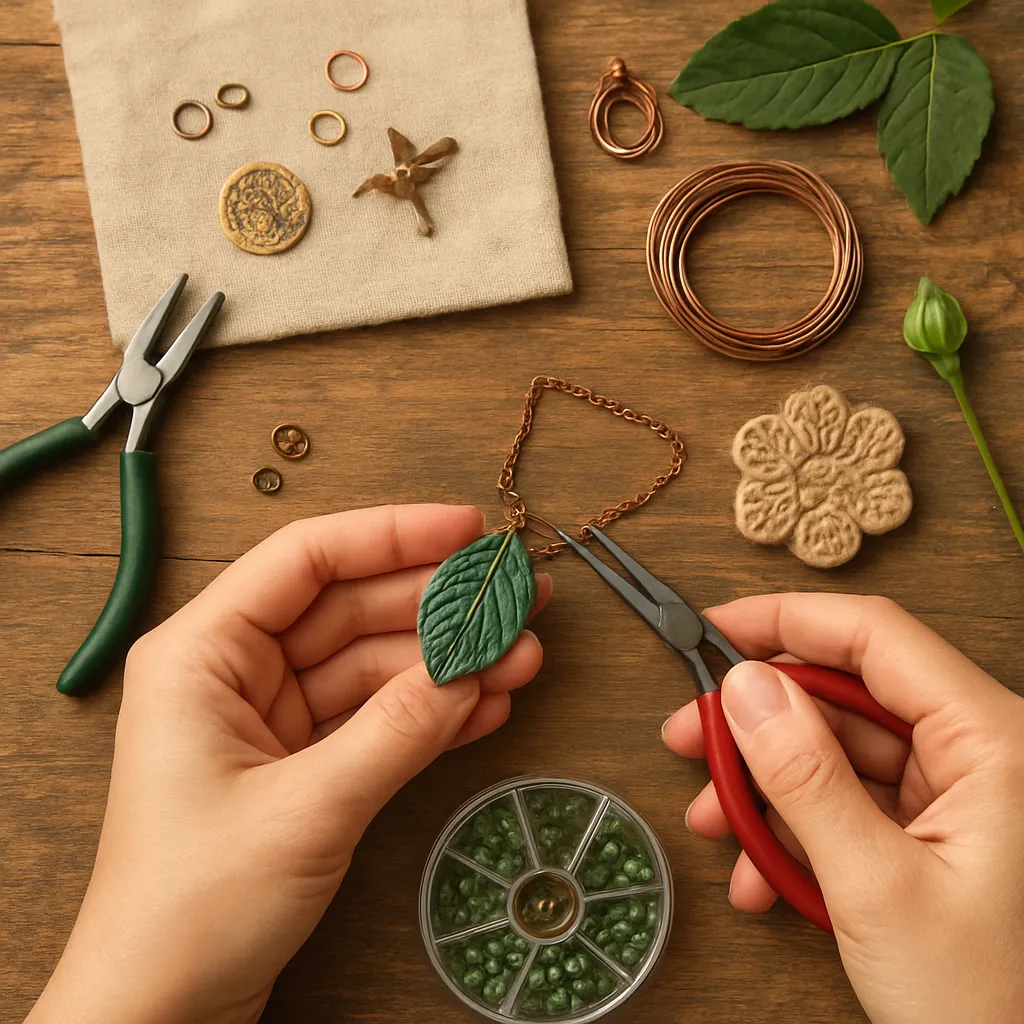
Garden lovers wear the seasons on their sleeves: a curl of vine, the geometry of a seed pod, the soft translucence of a petal after rain. Turning these living motifs into jewelry is both an art and a dialogue with nature. The process rewards patience, curious eyes, and attentive hands. Whether you are shaping metal, setting stones that look like dew, or preserving actual leaves in resin, you will find a rich path of discovery where small details—texture, line, color—carry stories of time spent among plants. This guide gathers inspiration, materials, techniques, and practical routines that can help you create expressive pieces that gardeners will treasure.
Finding Inspiration in the Garden
The garden is a living archive of forms. Walk slowly. Take a sketchbook or a phone camera and study spirals in tendrils, the radial balance of daisies, the architectural stance of foxgloves, and the rugged relief of bark. Turn attention to the negative spaces between stems and the way light passes through thin petals at dusk. These subtle geometries can shape bezels, prongs, chain links, and clasps, transforming jewelry from decoration into a quiet map of place and season.
Collect reference materials ethically: fallen twigs, spent blooms after deadheading, pruned leaves. Press them between paper towels and heavy books or use a dedicated flower-press. Preserve seed pods and cones dry; freeze them only for pest control, not storage. Photograph your finds in soft light to capture structure and shadow. You will return to these references again and again, especially when working at the bench away from the garden.
- Look for repeating patterns: Fibonacci spirals, tessellations in leaves, lattices in seed heads.
- Note textures with tactile potential: ribbed veins, stippled calyxes, cracked bark.
- Record seasonal color palettes: spring greens and blush pinks, summer brights, autumn rusts, winter neutrals.
- Observe movement: droop, sway, curl—these gestures can guide how a pendant hangs or an ear wire curves.
Materials and Techniques That Honor Nature
Choosing materials that reflect the values of gardeners—care, patience, cycles—elevates the work beyond motif. Explore metals, stones, and organic inclusions that harmonize with a plant-forward aesthetic and respectful making.
Metals for Garden Motifs
Silver offers a cool glow reminiscent of moonlit leaves. Brass brings a warm, botanical gold suited to sunflower or marigold themes. Copper pairs beautifully with earthy greens and cultivates character through controlled surface oxidation. For those who work in steel, sealed blackened steel frames can mimic the dark stems of silhouetted grasses. Each metal responds differently to texture stamps, rolling mill impressions, and torch heat, so test your surface treatments with botanical references in mind.
Stones and Organic Elements
- Moss agate evokes miniature forests in stone.
- Prehnite, peridot, and green tourmaline echo leaf tones.
- Rose quartz and morganite suggest tender blossoms.
- Amber holds ancient plant life; dendritic agate reads like fossil ferns.
- Beach glass and recycled glass beads bring water-garden hues and ethical sourcing.
- Resin-encapsulated petals, lichens, and tiny twigs preserve direct botanical memory.
When working with real plant matter in resin or polymer clay, ensure it is well dried to prevent discoloration. Seal fragile inclusions with a suitable archival spray before embedding to stabilize color. Balance organic materials with structured metalwork so the piece feels intentional, not merely preserved.
Surface Texture and Color
Rolling mill prints taken from leaves can be stunning: sandwich a dried leaf between annealed metal sheets and run it through the mill to transfer vein patterns. Hand-engraving can outline silhouettes of herbs or carve delicate midribs. Cold enamel, vitreous enamel, and colored pencils on gessoed metal offer plant-inspired palettes without relying solely on stones. A carefully developed **patina** can deepen recesses and highlight relief, evoking the play of shadow beneath foliage.
Essential Tools and a Thoughtful Workspace
You can practice garden-inspired jewelry in a small area if it is organized. A bench pin, saw frame with fine blades, files, needle files, flush cutters, chasing hammer, planishing hammer, and a few forming stakes or mandrels cover most shaping needs. For metal joining, a torch with a variety of tips, soldering board, third hands, tweezers, and flux are baseline. A tumbler or set of polishing papers refines surfaces. If you plan to cast or electroform organic structures, you will add specialized gear, but start with fundamentals and expand intentionally.
- Keep a tray dedicated to organic samples; label species and collection dates.
- Use sealable containers for sanding dust and scrap to reduce mess and reclaim material.
- Ventilate when soldering, applying patinas, or working with resin; a fume extractor is ideal.
- Gloves, eye protection, and a respirator when necessary; protect yourself as you would a prized plant from frost.
Arrange lighting to show minute textures: a combination of diffused overhead light and a directional task lamp mimics overcast sky and sun beam, revealing scratches and highlights you might otherwise miss. Good lighting, like good soil, supports everything else you do.
Design Principles for Garden Jewelry
Great jewelry lives at the intersection of narrative and wearability. A botanical theme offers narrative richness; your task is to ensure comfort, balance, and durability.
Scale, Balance, and Flow
Garden motifs can become too literal or heavy if scaled up without regard for the body. Consider the path of the eye: does it start at a focal bloom and wander along a vine-like chain? Connect forms using lines that feel like stems and tendrils. Think in families—pendant, earrings, ring, brooch—so the visual language stays consistent across pieces while each item has a distinct role.
Comfort and Wearability
Ask how a piece moves when the wearer bends or reaches to prune a rose. Comfort is not an afterthought; it is the gardener’s daily invitation to wear your work. Smooth snag points, round edges that contact skin, and refine ear wires so that they balance gracefully. The study of **ergonomics** can guide hook length, ring profile, and clasp tension in surprisingly poetic ways.
Color and Material Harmony
Color should support the motif rather than overwhelm it. Use metals as neutrals and let stones or enamel provide the bloom. A restrained palette suggests sophistication and longevity, akin to a well-planned perennial border. Think like a landscape designer: a few strong anchor hues, supporting tones, and measured accents.
Techniques: From Leaf to Locket
Below are approachable pathways for turning garden observations into finished jewelry. Choose methods that fit your tools, budget, and learning curve.
Pressed Botanic Resin Pendants
- Materials: UV or two-part epoxy resin, bezels, pressed plants, archival sealer, silicone mat, toothpicks, alcohol wipes.
- Process: Seal pressed plants; place in bezels; pour a thin resin layer to anchor; demist bubbles with gentle heat; add a doming layer when the first cures.
- Tips: Work in thin layers for clarity; avoid thick inclusions; sand edges with micro-abrasives if needed and polish.
This approach preserves fragile petals and herbs while producing a smooth, glassy surface. It suits minimalist pendants, earrings, and bookmarks with embedded leaves.
Electroforming Leaves and Twigs
- Coat dried, sealed organics with conductive paint; mask areas you do not want plated.
- Suspend in a copper sulfate bath with a power supply; control amperage for even build-up.
- Rinse, neutralize, and reinforce with soldered findings; finish with sealants or patinas.
Electroforming captures vein relief and serrations in astonishing detail, turning ephemeral materials into metal shells. Keep notes on current, time, and agitation like a garden logbook to refine outcomes.
Lost-Wax Botanical Casting
Press actual leaves, seeds, or carved wax interpretations into soft wax sheets to create textures and silhouettes. Attach sprues thoughtfully to preserve detail. After investing and burnout, cast into silver or bronze. The results can be structural, suitable for rings, cuff links, or clasps that withstand daily wear.
Metal Clay for Organic Impressions
Silver or bronze metal clay accepts crisp impressions of leaves and bark. Roll to thickness with spacers, press the texture, cut your form, dry, refine edges, then fire per manufacturer directions. Post-fire, burnish and add selective patina to read the relief.
Enamel for Floral Color
Vitreous enamel provides durable color. Sift or paint enamels onto prepared metal, fire in a kiln or with a torch, and build layers for shading like petals. Cloisonné wires can outline veins; champlevé recesses hold pools of color. If glass-based enamel feels advanced, cold enamel systems can achieve similar palettes with different handling properties.
Step-by-Step Project: Herbarium Locket
A locket frames memories. This project combines metalwork and encapsulation to honor a favorite herb or bloom.
- Concept: A two-part silver locket with mica windows, enclosing a pressed thyme sprig.
- Skills: Sawing, soldering, hinge making, surface finishing, gentle assembly.
1. Prepare the Panels
Saw two identical ovals from 0.8–1 mm silver sheet. Pierce central windows and file smooth. Anneal lightly and plan your hinge position on the longer axis for natural opening.
2. Build the Hinge
Solder three small hinge knuckles along one side, alternating on each panel. Use a well-fitted steel or brass pin. Test swing before further assembly; the hinge is the backbone of function.
3. Create the Inner Bezels
Frame the pierced windows with thin strip bezels to seat mica or glass. Dry fit to ensure the panes will not rattle. Drill a tiny air relief hole to aid closure and prevent suction stress.
4. Finish and Fit
Sand and pre-polish all inner edges, as access will be limited after assembly. Cut mica to size with shears, place the pressed herb between panes, and secure with a discreet, reversible adhesive or a pressure-fit bezel lip.
5. Closure and Bail
Add a catch opposite the hinge and a hidden magnet or tongue for secure yet gentle closure. Solder a bail that complements the oval’s flow. Tumble or hand-polish, then apply a subtle darkening in recesses to enhance depth.
Result: A translucent garden keepsake that protects fragile material and invites sunlight to pass through, animating the sprig within.
Surface Finishes and Weathering
Finish communicates narrative: polished dew at dawn, satin bloom at noon, worn bark at dusk. Combine textures—matte fields with polished edges—to guide attention. Controlled oxidation on copper and silver can recall lichen-dappled stones or rain-dark soil. Seal porous finishes with wax or lacquer when appropriate, especially if the wearer works with soil and water regularly.
For gardeners who prize tools that age well, lean toward finishes that acquire character rather than show every scratch. Stippled and brushed surfaces hide marks from daily tasks while preserving intentional highlights on veins and edges.
Eco-Minded Sourcing and Studio Practices
Gardeners often value closed loops and low waste. Mirror these values by choosing recycled precious metals, responsibly mined stones, and reusing scrap via melt or send-in programs. Collect rainwater for pickle dilution if local regulations allow, and neutralize chemical waste responsibly. Prefer biodegradable polishing compounds and citrus-based cleaners. Small decisions accumulate into meaningful **sustainability**.
- Track metal offcuts; sort by alloy for efficient reuse.
- Use plant-based bench lubricants for sawing and drilling where feasible.
- Design with minimal joins to save solder and reduce cleanup.
- Offer repair and refresh services to extend a piece’s life.
Comfort, Fit, and Long-Term Wear
Gardeners move: kneel, twist, reach. Rings should sit low, with smoothed shoulders that do not trap soil. Necklaces should distribute weight to avoid hot spots when bending forward. For bracelets, consider oval shapes that follow the wrist’s natural form, and hinges or clasps operable with slightly damp or gloved fingers.
Evaluate chains and ear wires for snag risk near knitwear or straw hats. Test prototypes during light garden tasks to assess swing, balance, and closure behavior. The pursuit of **durability** is part of your design ethic, not a last-minute check.
Botanical Motifs with Metal Fundamentals
Translate plant anatomy into robust structures using sound metal practice. Stems become tapered wires for strength-to-weight optimization. Petals become overlapping plates that brace each other. Seed pods inform hollow forms that reduce mass while preserving volume. The rules of **metallurgy**—work hardening, annealing cycles, solder flow—remain your invisible scaffolding, allowing delicate aesthetics to survive daily wear.
When soldering multiple elements, work from higher-flow to lower-flow solders, protecting earlier joints with heat sinks and strategic binding wire. Quench and pickle cycles should be planned to avoid shocking stones or organic inclusions. Document each step, just as a gardener notes sowing dates and bloom times.
Color Work: Enamel, Patinas, and Mixed Media
For enduring botanical color, vitreous **enameling** offers unmatched luminosity. Practice base coats for adhesion, counter-enamel for stability, and controlled firings to avoid devitrification. Shade petals with successive layers, firing cool and frequent. Complement enamel with stamped or engraved lines that read through translucent layers like shadowed veins.
If enamel is not in your toolkit, explore alcohol inks sealed under resin, or milk paint protected by wax for rustic brooches that echo painted garden signage. Combine patinated copper with polished silver highlights to conjure leaf-on-stem interplay.
Botanical Casting Ethics and Care of Sources
When using actual plant materials for molds or textures, adopt a gather small, waste none approach. Prefer pruned trimmings and storm-fallen debris. If you replicate distinctive leaves from a known public garden or horticultural collection, credit the source and confirm permissions for commercial use. Clear **provenance** amplifies the story and keeps relationships with growers warm.
Packaging, Presentation, and Storytelling
Packaging can echo the garden gracefully without excess. Choose recycled paper boxes lined with plant-dyed cotton or linen. Include a small card that names the plant inspiration, the materials used, and care suggestions. A line sketch of the source plant or a pressed leaf tucked inside can delight the recipient and foster connection. Keep plastic to a minimum; compostable glassine envelopes work well for informational inserts or spare ear-backs.
For Sellers: Connecting with Garden Communities
Garden clubs, local nurseries, farmers’ markets, and botanical festivals are natural venues for your work. A compact display with living plants alongside jewelry invites tactile curiosity. Offer a simple cleaning cloth and care sheet with each sale, plus seasonal refresh services—re-oxidize, re-polish, reseal resin—at modest cost. Custom commissions tied to a client’s home garden, wedding bouquets, or memorial plantings carry deep meaning and build trust.
- Photograph jewelry outdoors in open shade among plants; avoid cluttered backgrounds.
- Use names gardeners love: Fern Vein Pendant, Hellebore Halo Earrings.
- Share process snippets: leaf impressions, bench shavings, sketch pages.
- Price transparently: time, materials, and design complexity explained in plain language.
Maintenance and Care for Wearers
Provide straightforward guidance: remove jewelry before heavy weeding or handling fertilizers; wipe with a soft cloth after wear; keep resin out of prolonged direct sun and away from solvents; store silver in anti-tarnish bags. Suggest mild soap and water for metal cleaning, avoiding abrasives on matte textures or enamels. For copper or brass patinas, a microcrystalline wax preserves tone between touch-ups. Reinforce the value of periodic checks for stone security and clasp tension.
Common Pitfalls and Practical Solutions
- Petals discolor in resin: dry longer, seal with archival spray, pour thinner layers.
- Leaf textures look faint: anneal metal fully before rolling, choose leaves with pronounced veins, increase pressure gradually.
- Electroformed edges brittle: reduce amperage, extend time, ensure even conductivity and adequate surface prep.
- Rings deform during work: design with internal braces or thicker bands at stress points, harden with planishing.
- Enamel cracks: apply counter-enamel, avoid sharp corners, adjust firing schedule.
Safety and Stewardship
Good studio habits keep you healthy for the long haul. Torch work demands ventilation and fire safety; resin needs gloves and masks; patina solutions require labeled containers and proper disposal. Keep a tidy bench; sweep filings with a brush, not breath. When collecting plant materials, avoid species treated with pesticides and learn to identify any local irritants. Protect both yourself and the ecosystems you love.
Maintain a small reference of first aid steps: eye-wash location, chemical neutralization protocols, and emergency contacts. Update it as your processes evolve, just as a gardener updates frost dates and pest notes each season.
From Idea to Collection: Building Coherence
Develop a theme like Riverbank Meadow or Night-Blooming Garden. Choose three anchor motifs—leaf, seed pod, blossom—and render each in multiple forms and price points. Build a material palette that reinforces the mood: darkened silver and moonstone for night; warm brass and carnelian for late summer. Arrange pieces on a display in a sequence that tells the story as a stroll would: entrance, path, focal bed, quiet bench.
Use basic principles of visual **composition**—contrast, repetition, alignment—to unify the line. Keep sketches, material swatches, and finish samples in a binder. The discipline of documentation turns inspiration into repeatable quality.
Learning Pathways and Skill Growth
Handmade jewelry rewards iterative practice. Begin with pressed-leaf pendants and textured bands. Add hinges, stone settings, and enamels as your confidence grows. Seek workshops at local maker spaces or community colleges; trade technique days with other artisans; join garden clubs to deepen your botanical eye. Every new plant you study suggests another clasp, another silhouette, another surface treatment to try.
Closing Thoughts: Wearable Habitat
To create jewelry for garden lovers is to invite the landscape to travel with them—to markets, to meetings, to winter’s quiet. The best pieces do not merely imitate plants; they embody cycles of growth, rest, and return through attentive **craftsmanship**. Choose materials with integrity, cultivate finishes that age with grace, and leave room in your designs for light, breath, and touch. In doing so, you build small habitats of memory and meaning that nestle against the skin and bloom anew each time they are worn.
Even as trends shift, the essence remains: a living conversation with leaves, light, and time. Honor that conversation, and your work will grow like a well-tended perennial border—rooted, renewing, and beloved.
