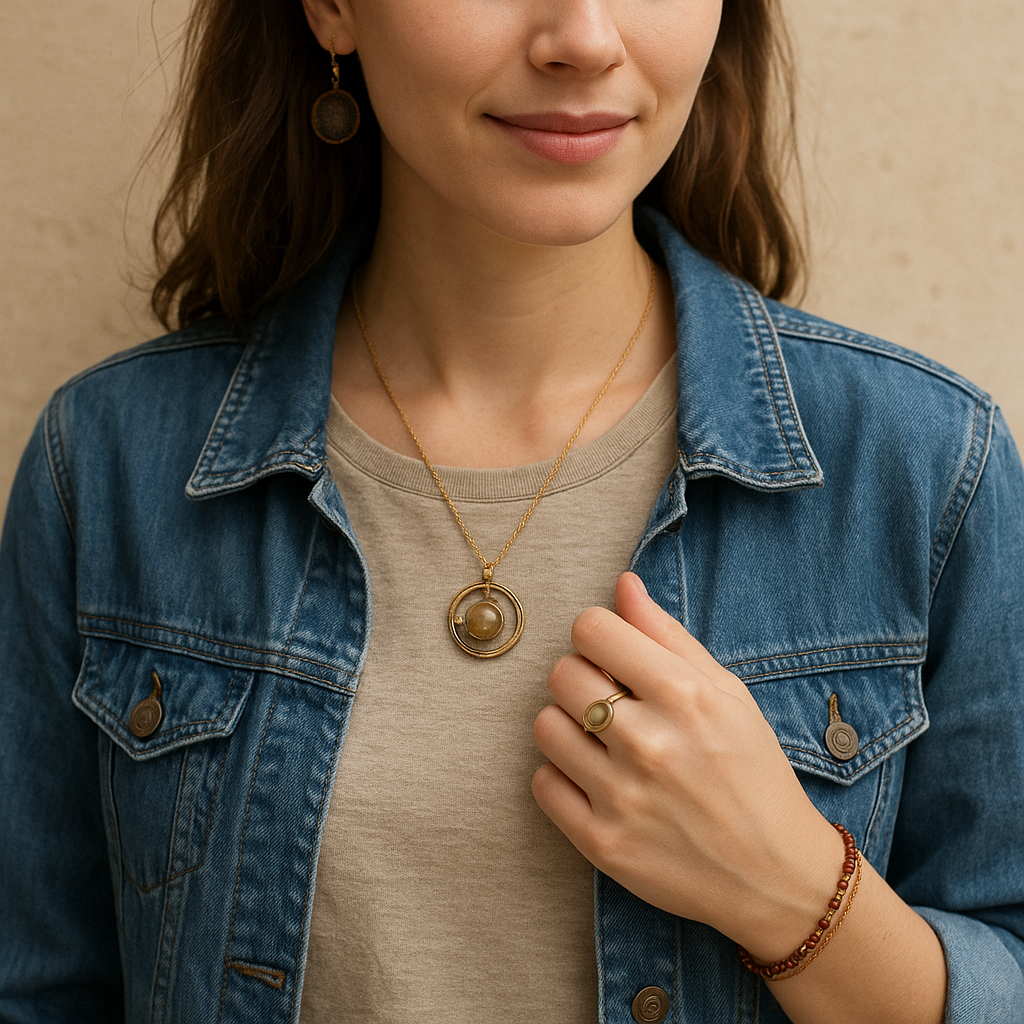
Handmade jewelry carries the pulse of the maker into everyday life, linking the intimacy of the studio bench with the rhythm of your morning routine. Every hammer mark, knot, and bead tells a small story, and those stories blend seamlessly into jeans-and-tee days, weekday commutes, and last-minute dinners. When you treat accessories as companions rather than decorations, you allow the quiet magic of craftsmanship to shape how you feel in your clothes. The result is an effortless presence that favors authenticity over trend-chasing, and a wardrobe that values the human touch as much as the outfit’s overall mood.
Why Handmade Jewelry Elevates Everyday Style
There is a reason a hand-forged bangle or a woven bead choker can transform a simple sweater and trousers. Handmade jewelry offers subtle irregularities—tiny waves in metal, a stone’s natural inclusions, the irregular spacing of knots—that catch light differently and draw the eye with warmth. The difference isn’t loud or theatrical; it’s almost tactile, a visual reminder that real hands were involved. That humanity harmonizes with your day-to-day life, contributing to confidence without overshadowing comfort.
In a world of mass production, a handmade bracelet can become a personal anchor. The piece may have been formed by an artisan who learned through apprenticeships, taught by a grandparent, or developed a modern technique through trial and error. When you wear it, you participate in an intimate cultural exchange—supporting local traditions, independent studios, and slow-fashion ideals—while translating those values into style that feels current and relaxed.
Beyond aesthetics, handmade jewelry adds structure to basic outfits. A simple chain with a textured pendant introduces a subtle focal point that draws attention upward to your face; a stack of rings provides micro-movement that responds to your gestures; an asymmetric pair of earrings invites curiosity. That dynamic energy lets even your most reliable clothes—your white shirt, your favorite black denim—appear new and considered.
Understanding Materials and Techniques
Knowing what went into a piece helps you style it with intention. Materials carry mood, weight, and visual temperature; techniques affect how light dances across your skin. When you understand those nuances, dressing becomes a series of creative micro-choices that you can enjoy daily.
Metals: Sterling silver feels cool and quietly reflective; it complements denim, gray knitwear, and crisp cotton. Brass and bronze lend warmth and patina, pairing beautifully with camel coats, olive cargos, and indigo. Copper makes a statement against black and charcoal; gold-filled chains read polished without being precious. Oxidized finishes offer depth, working well with workwear staples like utility jackets and heavy boots. Hand-hammered metals have a soft sparkle—tiny facets that move with you—while brushed finishes keep the mood modern and understated.
Stones and organics: Semi-precious stones carry color and grounding energy. Labradorite’s labradorescence plays with rain and urban light, while moss agate feels earthy with corduroy and linen. Turquoise, carnelian, and lapis add vibrant punctuation to neutrals. Freshwater pearls bring an offbeat romance to streetwear; their irregular forms feel current and unfussy. Wood and horn invite warmth, shell brings a seaside ease, and ceramic beads add artisanal presence with matte or glazed finishes that accentuate texture.
Textiles and fibers: Macramé, soutache, or handwoven cords contribute structure and softness at once. Fiber-based jewelry sits beautifully under winter collars and with summer tank tops. Consider the interplay between knitwear and fiber cords in cool months, or the lightness of silk knotting that mirrors breezy dresses in spring.
Glass and enamel: Lampwork glass beads deliver color density and subtle transparency, excellent for elevating basics. Enameling offers painterly surfaces or abstract color fields; pair enamel studs with patterned blouses by repeating a single hue in your outfit to keep harmony.
Key techniques: Wire-wrapping brings an airy, sculptural vibe; forged and hammered forms read architectural; lost-wax casting produces organic curves that sit comfortably against the skin; filigree and granulation lend intricate detail that is delicate rather than fussy. Soutache coils, bead embroidery, and off-loom weaving (like peyote stitch) produce soft geometry that partners well with minimal clothing lines.
Principles of Styling: Scale, Proportion, Color, and Texture
Think of jewelry as a conversation with your clothing. Each piece contributes a note: bright, soft, bold, or quiet. When these notes harmonize, the result is pleasing and personal.
Scale and proportion: Balance jewelry size with garment volume. Oversized sweaters, cocoon coats, and wide-leg trousers can carry chunkier pieces: a broad cuff or a statement pendant on a substantial chain. Fitted tees, ribbed tanks, tailored blazers, and pencil skirts are excellent backdrops for fine chains, small hoops, and slender stacking bands. A quick rule: if your outfit is structured, you can amplify with one generously scaled piece; if your outfit is relaxed and loose, anchor it with a strong focal point.
Necklines and silhouette: V-necks elongate the neck and welcome a pendant that echoes the point; crew necks love shorter chains or collar necklaces; boat necks are elegant with longer, vertical pieces that pull the eye down; turtlenecks are a canvas for long pendants or large earrings. If your silhouette is columnar—straight dresses, long cardigans—vertical jewelry lines reinforce length. If your silhouette is cropped or boxy, add arcs (hoops) or circles (disks) to soften edges.
Color and finish: Use jewelry to introduce a single accent color that repeats somewhere else in your look—a belt, socks, a hair clip—to unify the outfit. Cool-toned metals pair effortlessly with blue, gray, and black palettes; warm-toned metals flatter browns, creams, and rust. Mixed finishes (matte and polished) keep minimal outfits engaging without noise.
Surface interest: Clothing with a smooth finish (poplin, silk) benefits from micro-detail jewelry—hammered metal, tiny faceted beads—so light has something to play with. Heavier textiles (tweed, denim, chunky knits) can handle bolder forms that stand proud of the fabric. Matching or intentionally contrasting texture is like pairing wine with a meal; complement or counterbalance for a satisfying effect.
Mixing metals: Handmade pieces often combine silver and brass or gold and oxidized elements. Mixed metals expand your options and relax the rules, helping your jewelry fit more outfits. Keep the mix consistent within a zone—neck, wrist, or ears—or deliberately repeat the mix in two zones for cohesion.
Comfort and movement: Everyday jewelry needs to feel good. Earrings should be light enough to forget, rings smooth enough to avoid snagging, and bracelets that don’t clack loudly on a laptop. The more comfortable the piece, the more effortlessly it slots into your regular wardrobe.
Tip: Before leaving home, do a “mirror blink test.” Blink slowly and notice where your eye lands. If the jewelry doesn’t align with your intended focal points—face, hands, or neckline—adjust lengths or swap one piece.
Everyday Scenarios: Outfit and Jewelry Pairings
Minimal effort, maximum payoff—these pairings work across seasons and cities. Use them as modular templates.
- Workday polish: Tailored blazer, knit tee, ankle trousers, loafers. Pair with medium hoops, a modest pendant with a hand-textured disk, and a slim cuff. In cooler weather, switch to a heavier pendant over a turtleneck; in warmer months, migrate to a shorter collar necklace.
- Creative casual: Oversized oxford shirt, straight jeans, minimalist sneakers. Add a long pendant with a cast organic shape, stack two thin bangles and a braided cord bracelet. Top with small, irregular pearl studs for softness.
- Errands and coffee: Breton stripe tee, utility jacket, relaxed chinos, canvas shoes. Choose a beadwoven bracelet with a small pop of color, simple studs, and a lightweight chain that catches sunlight.
- Desk-to-dinner: Knit midi dress, ankle boots. Elevate with a hand-forged choker and a single sculptural ring. Slip an enamel drop earring set into your bag for a quick evening switch.
- Weekend market: Linen jumpsuit, sandals, straw tote. Opt for a macramé cord necklace with a stone pendant and a wrap bracelet. Complete with tiny stacking rings.
- Quiet luxury: Monochrome silk blouse and trousers. Rely on a brushed metal collar and whisper-thin bangles; finish with satin-finish studs to maintain a cohesive glow.
Remember to match the jewelry’s energy to your destination: quiet for focused tasks, animated for social moments, graphic for creative settings. If you need to switch gears quickly, keep a mini pouch in your bag with alternative earrings or a statement ring.
Building a Capsule Collection of Handmade Pieces
A capsule doesn’t mean minimal; it means purposeful. Aim for a small rotation that combines daily ease with dynamic accents. Curate by mood, material, and versatility so your pieces bridge casual mornings and impromptu dinners.
- Neck: One fine chain in a neutral metal, one short collar with character (hammered or beaded), one mid-length pendant with organic form, and one long pendant for knitwear.
- Ears: Small studs (pearl, stone, or metal), mid-size hoops with subtle texture, and one pair of expressive drops to switch a look from daytime to evening.
- Hands: A set of thin stacking bands in mixed finishes, one sculptural statement ring, and a signet or engraved piece that feels personal.
- Wrists: A smooth cuff; a strand of small gemstones or glass; a fiber or cord bracelet for sportier outfits.
- Wild card: A seasonal piece—enamel color pop for spring, wood-and-brass for autumn—that refreshes the capsule.
As you build, consider compatibility: choose two metals that play well with your clothing tones, and select at least one piece that can handle layering without tangling. Shop with a mental checklist of necklines and sleeves already in your wardrobe to ensure smooth integration.
Layering Like a Pro: Neck, Hands, and Ears
Layering is choreography—a rhythm of lengths, shapes, and finishes. Done well, it looks unstudied and personal.
Neck: Think in tiers. Start with a choker or short chain, add a mid-length pendant, and finish with a long strand. Keep at least 1.5–2 inches between lengths to prevent overlap. Vary the chain style—rope, box, or bead—for light interplay. If your top has a busy pattern, limit to two layers to avoid visual noise.
Hands: Stack rings by mixing widths and profiles—a thin band beside a knife-edge or a hammered ring next to a polished one. Anchor the stack with one piece that has presence (a signet or a stone). On the opposite hand, a single slim band or a minimal ring balances the composition. If you type all day, rotate the statement ring to your non-dominant hand for comfort.
Ears: For single piercings, a hoop plus a tiny ear cuff simulates a layered ear. For multiple piercings, create a gradient of size from lobe to helix—larger hoops down low, smaller huggies or studs higher up. Use one enameled or stone element per ear to avoid competing focal points.
Tip: When in doubt, remove one piece. Let space be part of the arrangement; negative space is as deliberate as the jewelry itself.
Mixing Old and New: Personal History in Daily Wear
Combining modern craft with family pieces brings emotional depth to ordinary outfits. A newly cast pendant on your grandmother’s chain; an antique charm flanking a beadwoven bracelet; a vintage brooch pinned at a blazer’s lapel turned into a pendant—all are gentle ways to merge eras and keep stories alive. A single heirloom piece, worn regularly, becomes an everyday ritual, not reserved for ceremonies.
When blending eras, pay attention to finish. Pair a patinated locket with a satin-finished choker so both feel softly aged. If your antique ring is ornate, set it against a smooth band to highlight its detail. The aim is resonance, not costume.
Sustainability and Ethics in Handmade Jewelry
Many makers prioritize reclaimed metals, responsibly sourced gemstones, and low-waste studio practices. Choosing such pieces turns your style into an everyday vote for better systems. Look for studios that share sourcing transparency or recycle their scrap metal into new work. Support jewelers who collaborate with local stone cutters or bead makers, sustaining regional economies.
Sustainable choices ripple outward: a long-lived piece reduces replacement cycles; repairable designs keep materials circulating; modular components extend function. Ask questions at markets or online: where were the stones cut, who plated the chain, how is the packaging handled? Jewelry built on sustainability principles tends to age gracefully and wear with pride.
Maintenance, Storage, and Longevity
Everyday wear invites contact with lotions, sweat, and air. Protect your pieces to maintain their beauty. Store silver in anti-tarnish bags; keep brass and copper in breathable pouches to avoid moisture buildup. Wipe pieces after wear with a soft cloth. Avoid harsh chemicals; a gentle dish soap solution works for most metals and glass. For oxidized finishes, skip abrasive polishing to preserve the patina. For beaded and fiber pieces, keep away from perfumes and oils that can weaken thread.
If a clasp feels loose, a stone seat looks off, or a ring band warps, visit the maker for repair. Many independent jewelers offer lifetime tune-ups or at-cost repairs. Treat maintenance as you would resoling a favorite shoe: routine care rather than a sign of failure.
Seasonal Styling: Adapting to Weather and Wardrobe Shifts
Spring: Layer fine chains with botanical motifs and translucent stones. Pair with light denim and softly structured blazers. Let color be a whisper—mint, pale citrine, rose quartz—to echo new light. Fiber cords and macramé return as you shed heavy scarves.
Summer: Scale back weight and embrace movement. Tiny hoops, a fabric-wrapped bangle, a thin anklet with a single charm. Natural materials—shell, wood, linen cords—feel at home with breezy fabrics. Sweat and sunscreen are realities; choose low-fuss pieces and rinse them gently after long days out.
Autumn: Invite warmth with brass cuffs, carnelian drops, and wood-grain textures. Pair with flannel, suede, and camel coats. Autumn is a perfect moment for deliberately mixed metals and matte finishes that sit harmoniously against cozy layers.
Winter: Counter heavy knits and coats with bold, simplified shapes. Long pendants over turtlenecks, sculptural hoops that peek from under beanies, and cuffs that slide over slim sleeves. Keep earrings smooth to avoid snagging on scarves; prioritize comfort and visibility.
Personalization, Symbols, and Meaning
Handmade jewelry thrives on narrative. Initial charms, zodiac motifs, carved talismans, and stones chosen for personal significance infuse your daily outfits with quiet intention. Rotate charms on one chain to suit the day’s focus: a protective eye symbol for travel, a tiny leaf for studio days, a carved bone bead for grounding. Commissioning a custom engraving or a small bespoke element is often accessible and profoundly meaningful.
Symbolic pieces pair well with simple clothing because they invite attention without shouting. Wear them near the face or the hands—places where human connection happens—to let their presence enter conversation organically.
Budgeting, Commissioning, and Supporting Independent Makers
Handmade jewelry spans many price points. Set a monthly micro-budget for the “studio fund” and build slowly. Thrift markets and craft fairs are great for discovering regional styles and meeting makers whose techniques and values align with yours. Watch for hallmarks of quality: consistent solder joints, smooth edges, secure stone settings, and balanced weight.
For commissions, bring references: photos, sketches, or a list of adjectives describing mood—architectural, organic, playful, austere. Share how and where you plan to wear the piece: daily ring that won’t snag sweaters, necklace that sits just above a common neckline, earrings light enough for long workdays. Discuss metal sensitivities and maintenance. Respect the maker’s time with clear timelines, deposits, and open communication. A good commission process feels collaborative and produces a piece that integrates seamlessly with your wardrobe.
Culture, Craft, and Context
Many techniques carry cultural heritage: filigree traditions in the Mediterranean and South Asia, turquoise and silverwork among Southwestern artisans, beadwork deeply rooted in African and Indigenous communities, enamel lineages stretching across Europe and Asia. Wearing such pieces with respect means learning their background, buying directly from community makers when possible, and acknowledging the traditions that inform the design. When you understand context, styling becomes an act of appreciation rather than mere consumption.
Micro-Details That Make Daily Dressing Easier
- Clasp orientation: If you wear a pendant with a left-side clasp, keep it consistent across chains to switch pendants quickly.
- Modular extenders: A 2-inch extender turns one necklace into three lengths, streamlining outfits with varied necklines.
- Travel pouch: A small roll with separate pockets prevents tangles and encourages you to bring options.
- Work setup: If bracelets knock on your desk, switch to a soft cord or wear bangles on your non-dominant wrist.
- Hair and earrings: Up-dos showcase ear crawlers and cuffs; loose hair loves glints of light from small hoops or bright studs.
- Nail color synergy: Rings pop against a complementary or contrasting manicure; muted nails spotlight metalwork details.
From Morning Ritual to Signature Style
Set your jewelry where you get dressed—on a dish near your fragrance or watch—so choosing a piece becomes part of your ritual. Ask yourself what feeling you want to carry: grounded, playful, focused, celebratory. Let one piece answer that mood, then build around it. Over time, you’ll notice patterns: perhaps you favor hammered silver on writing days or linen cords on weekends. Those patterns become a signature, as recognizable as your favorite jacket.
A signature doesn’t trap you; it guides you. When you want change, alter one variable—swap metal temperature, shift scale, or move your focal point from neck to ears. Familiarity with your own habits frees you to experiment without overwhelm.
The Quiet Power of Handmade in Everyday Life
Styling handmade jewelry for everyday outfits is less about rules and more about resonance. Pieces that carry human effort meet clothes that carry your history; together, they form an easy grammar for self-expression. You don’t need a special occasion to welcome a special piece—your morning coffee is enough. The right earring can lift a work call; a particular ring can remind you to breathe; a necklace can hold a memory right over your heart.
With practice, you’ll treat your jewelry box like a palette: metals as neutrals, stones as accents, finishes as brushstrokes, and forms as punctuation. Anchor the look with intention, respect the maker’s labor, and trust your eye. Whether you choose a single stud or a chorus of layers, handmade jewelry helps your everyday clothes speak fluently in your own voice—and that voice is the quiet luxury that never goes out of style.
