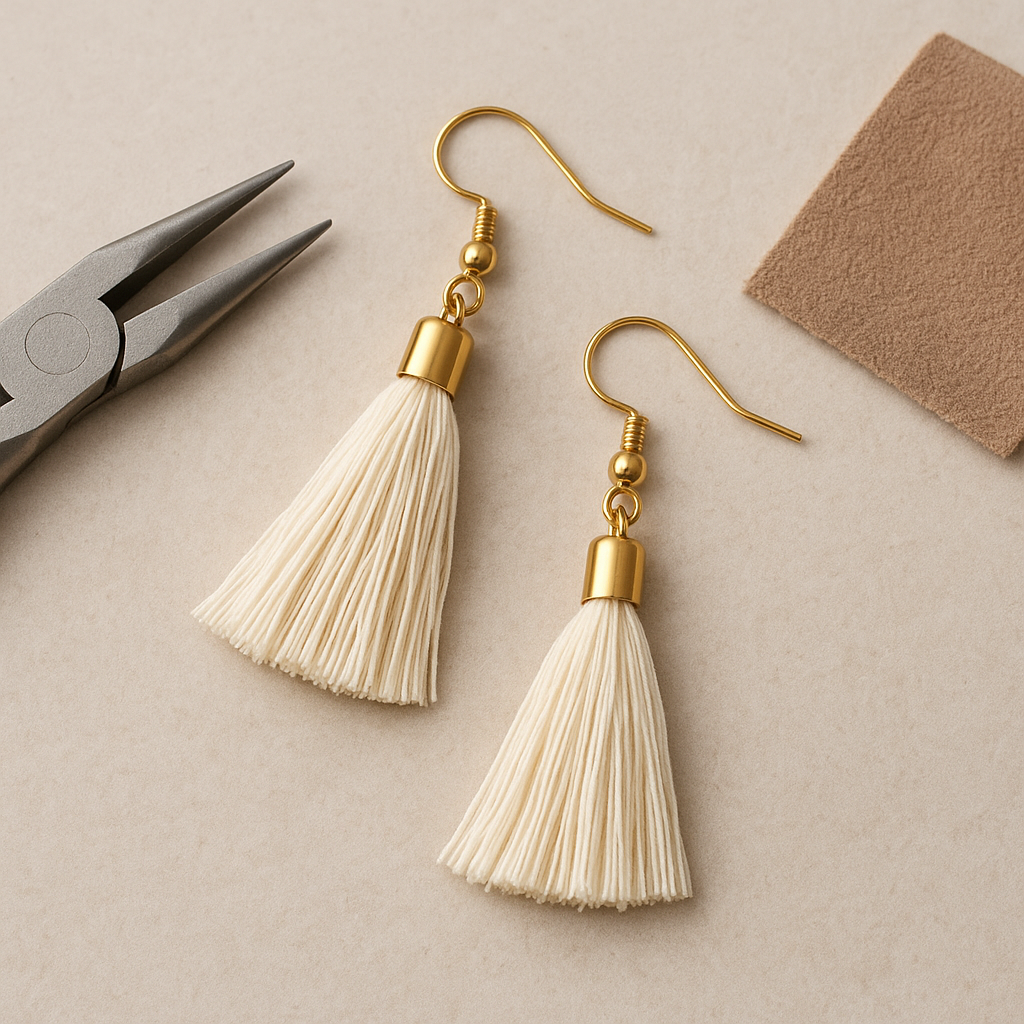
Tassel earrings thrive at the meeting point of playful movement and meticulous making. Whether you lean toward sleek monochrome threads or exuberant, beaded layers, the difference between hobbyist results and boutique quality often comes down to small, repeatable choices. This guide walks through design planning, material selection, and workshop techniques to help you create tassel earrings that swing beautifully, wear comfortably, and look as if they came from a jeweler’s studio. Think of it as a roadmap from first wrap to final flourish—where fiber, metal, and finishing chemistry cooperate to deliver visible refinement and invisible reliability.
Materials and Tools That Make the Difference
The tassel may seem simple—just a bundle of fibers—but its character depends heavily on material and tool choices. Cotton, rayon, silk, viscose, nylon, and polyester each behave differently when cut, combed, steamed, and sealed. Cotton favors a soft matte drape; rayon and viscose deliver liquid movement and higher luster; silk offers elegant body; nylon and polyester bring tenacity and easy-care performance. Pick for both aesthetics and wear needs: a summer festival pair might prioritize color and flow, while a daily-wear office pair might prioritize snag resistance and maintainable length.
Embroidery floss is accessible, consistent in thickness, and colorfast across brands, making it ideal for beginners and for creating matching pairs. For dramatic length with minimal weight, consider fine rayon filament or viscose tassel cord; for sculpted tassels that hold a defined silhouette, blend a modest percentage of stiffer nylon with softer fibers. When mixing fibers, test how they accept adhesives or fray preventers, and how they respond to steam. Small experiments save entire sets of earrings from failure.
Tools anchor repeatable quality. The essentials include:
- Round-nose, chain-nose, and flat-nose pliers for forming loops, opening jump rings, and seating bead caps
- Flush cutters and fine shears (hairdressing scissors excel for clean tassel trims)
- A beading needle and strong thread (nylon or polyester) for binding and attaching
- Earring findings: ear wires (French hooks or leverbacks), jump rings, and if desired, headpins or eye pins for bead caps
- Cardboard or acrylic length templates for wrapping tassels to uniform dimensions
- Masking tape or clips to hold wraps before binding
- Fray preventer or archival PVA glue (diluted), plus a micro brush
- A fine tooth comb or lash brush for grooming fibers
- Optional: thread conditioner for cotton, a travel steamer, and a digital caliper to check diameters
Invest in high-quality findings; the visible metal at the top of a tassel sets the tone for the entire piece. Nickel-safe, gold-filled, sterling silver, or coated brass components can elevate perceived value and improve skin compatibility. When possible, match the finish of bead caps and jump rings to avoid a mixed-metal look unless intentionally designed. Small, weight-conscious bead caps preserve comfort and prevent the tassel from tipping forward on the lobe.
Finally, incorporate a log for colors, sources, and fiber behavior notes. Maintaining a swatch card system—tiny tassel samples with annotations—lets you return to reliable sources and predict outcomes when scaling up production.
Design Planning: Length, Volume, and Visual Balance
The most professional tassel earrings exhibit command of proportion. Before wrapping a single strand, decide on silhouette: straight column, bell-topped with a narrow neck, tiered cascade, or hybrid chain-fringe with soft fibers. Aim for enough fullness to look intentional while avoiding a heavy, blocky mass. A common baseline is 5–7 cm for everyday tassels and 8–12 cm for statement pieces; however, facial features, hairstyle, and wardrobe context should guide length. Create two or three cardboard templates at slightly different lengths and hold them near the face to preview how the line interacts with jaw and collarbone.
Use a thread-count system to ensure consistency between earrings. For instance, if a 12 cm rayon tassel looks correct at 180 wraps around a 6 cm template (folded to become 12 cm), note fiber weight, wrap count, and final fluff after combing. If you switch fibers, expect to adjust wrap count to maintain the same finished diameter. Light fibers may need more wraps for opacity; heavier fibers might require fewer to avoid bulk beneath bead caps.
Visual balance also involves symmetry and alignment. A centered core, a neck wrap of equal height on both earrings, and parallel fiber fall lines create a calm, tailored look. Check these checkpoints at every stage: Are the fibers seated straight under the bead cap? Is the neck wrap the same number of turns on both earrings? Do the ends arc evenly after trimming? Systematic verification ensures twin results.
Color design can be single hue, duotone, or gradient. For ombré effects, either dye pre-cut fibers or stack two tassels—an inner shorter tassel in a lighter color under a longer, deeper shade—to simulate gradient depth. Metallic accent threads (filament or machine embroidery metallics) can be integrated sparingly for flicker without scratchiness. For a luxe feel, satin-finish bead caps and matte fibers produce pleasing contrast; for high glamour, mirror-finish caps with high-luster filament amplify shine.
Step-by-Step Build: From Wrap to Cap
A clean process yields clean results. The following method is reliable for both cotton and rayon and adapts to silk or nylon with minimal adjustments.
Wrapping the Core
Prepare a rigid template cut to half the desired tassel length. Wrap the chosen thread around the template with even tension—tight enough to avoid slack loops, not so tight that the template bows. Mark the start point and count full wraps. Keep the thread path parallel and avoid crossing. This is where precision pays off; sloppy wraps translate into uneven bulk later.
Slide a short piece of strong thread under the wraps near one end of the template and tie a temporary half-knot; this will become the loop point you cut opposite from. Tape the loose tail of your wrapping thread to prevent unraveling as you remove the bundle.
Binding the Neck
Carefully slide the wrapped bundle off the template, pinch the center, and cut the opposite edge cleanly to create a long fringe. Fold the fringe to find the midpoint, then thread a beading needle with binding thread. About 8–15 mm below the fold, make a few tight passes around the bundle to establish the neck. Draw the binding thread through the center, snug it, and wrap again. The goal is a firm seat that won’t creep upward or downward during wear. Add a small dab of diluted glue beneath the wraps for hidden reinforcement, but avoid saturation which can stiffen the tassel.
Attaching the Head and Bead Cap
There are two common tops: thread loop or wire eye. For thread loops, form a small loop at the fold before neck wrapping, stitching through the center to lock it. For wire eyes, create a tiny wrapped loop on a headpin, feed it through a bead cap, then through the center of the tassel head. Seat the bead cap gently, checking alignment from all angles. A micro drop of adhesive inside the cap can stabilize the headpin, but keep glue away from visible surfaces to preserve metal finish. Add a decorative bead above the cap if desired, then finish with a tidy wire wrap to the ear wire or jump ring.
Trimming and Shaping
Comb the tassel lightly to arrange fibers in a uniform column. Lay it on a flat surface and use hair shears to trim in tiny increments, rotating the tassel every few snips. Aim for either a dead-straight hemline or a subtle convex curve that follows the natural spiral of the fibers. The trim determines perceived polish, so take your time. If a fiber refuses to fall straight, steam briefly and comb again before making final cuts.
Sealing and Smoothing
Two sealing strategies dominate. The first is a light fray preventer applied to the tassel’s hemline; the second is a diluted PVA solution brushed sparingly over the last millimeter of fibers. Both should be invisible once dry. Test on a spare bundle to ensure no discoloration or stiffness. For additional smoothness, hold the tassel under gentle steam and lightly comb; a quick pass with a low-heat hair straightener between parchment can tame flyaways for fibers that tolerate heat. The key is restraint—overprocessing can remove life from the tassel’s swing.
Finishing Like a Pro: Surface, Structure, and Longevity
Professional makers manage both the look and lifespan of the piece. Surface finish includes luster control—some fibers benefit from a soft buff against a clean cotton cloth, which reduces static and reveals a refined sheen. Avoid oils or waxes that can attract dust. Structure refers to how the tassel keeps its silhouette over time: a well-executed neck wrap, a properly seated cap, and a top connection that does not torque the tassel during movement are all crucial.
Weight balance affects comfort and swing. Heavy bead caps or large stones can make the tassel front-heavy; counter this by choosing lighter caps or positioning accent beads above the cap where they do not compress the fiber head. A short chain link between the ear wire and the tassel can add movement while isolating tugging forces from the fiber bundle.
To enhance durability, reinforce stress points invisibly. A tiny stitch through the tassel head into the binding zone prevents the bundle from migrating under the cap. Opt for high-tensile thread for the neck and for attaching to hardware. If using rayon, which is slippery, a micro-serrated binding thread can grip better than a slick filament. Each of these choices adds longevity without adding bulk.
Advanced Variations and Techniques
Once the core tassel is mastered, explore configurations that enrich texture, color, and movement.
- Ombre and dip-dye: Pre-cut fibers and dye in stages, moving from light to dark. Rinse thoroughly and dry under slight tension to maintain straightness.
- Tassel-in-tassel: Insert a shorter, contrasting tassel within a longer one for layered depth, ensuring the inner tassel’s neck is narrower to seat neatly.
- Beaded neck wrap: Spiral size 15/0 seed beads around the neck, locking every full rotation with a hidden stitch to prevent slippage.
- Hybrid fringe: Combine fine chain strands with fiber fringe to blend sparkle and softness. Match chain color to bead caps for cohesion.
- Macramé collars: Knot a small macramé band that acts as a decorative neck; seal knots lightly for stability without stiffness.
- Leather or suede tassels: Cut ultra-thin strips for a featherlight look; bevel edges and burnish lightly for clean lines.
- Wire core tassels: For sculpted silhouettes, build a minimal wire armature and wrap with filament; conceal the armature beneath a bead cap.
In each variation, return to precision and planning: test drape, weight, and colorfastness before producing pairs. Keep sketches and measurements to replicate client favorites, and maintain dye recipes for consistent gradients.
Troubleshooting and Quality Control
Uneven ends: Usually a trimming issue or a twist held in the bundle. Steam lightly, comb until the fibers fall parallel, and re-trim in quarter turns.
Cap gapping: If bead caps flare away from the tassel head, reduce bundle diameter or select a cap with a deeper profile. A tiny inner dome of felt or leather can fill space for a perfect seat.
Neck creep: Neck wraps climbing toward the cap suggest insufficient locking stitches or low tension. Add a stitch through the center before final turns and bind decisively.
Static and flyaways: Use a dryer sheet lightly brushed over the fibers or a micro mist of distilled water. Over-spraying can clump fibers; aim for a whisper, not a soak.
Weight imbalance: Check ergonomics by wearing prototypes for an hour. If lobes feel tugged, lighten caps, shorten length, or shift beads above the cap to move mass closer to the ear hook. Comfort is part of perceived quality.
Color bleeding: Pre-wash dyed fibers and test adhesives. If bleeding persists, seal dye with a fixative appropriate to fiber type or switch brands. For production, standardize suppliers and batch-test before assembly.
Hardware failures: Cheap jump rings can spring open. Use saw-cut rings and close with a slight overpass, then settle flush. Where appropriate, micro solder or choose closed rings to eliminate weak points.
Sustainability and Ethical Material Choices
Thoughtful sourcing strengthens both brand story and environmental footprint. Upcycle deadstock embroidery floss, recover high-quality bead caps from vintage jewelry, and choose recycled silver or brass for findings. Minimize plastic by storing components in glass jars or kraft envelopes and ship earrings on recyclable cards with compostable sleeves. As for fibers, Tencel and certain viscose lines are produced with improved solvent recovery; investigate suppliers with transparent manufacturing practices.
Longevity is sustainable, too. A pair that retains shape and color for years displaces future purchases. Offer repairs, sell replacement tassel heads that clip onto existing hardware, and provide clear care guidance. Ethical choices are not only about materials but also about educating customers to keep pieces beautiful for the long term.
Care, Storage, and Everyday Maintenance
Store tassel earrings hanging or laid flat in a dedicated tray. Avoid crushing beneath heavier jewelry. Brush gently with a clean lash brush to refresh drape, and, if fibers allow, pass through gentle steam to remove bends from storage. Keep away from hair sprays and perfumes; apply beauty products first, then wear earrings. If a hemline develops fuzz, micro-trim with sharp shears and reseal sparingly. These small rituals preserve that fresh-from-the-studio look.
From Workbench to Wardrobe: Presentation and Pricing
Presentation communicates value before a customer touches the earrings. Mount each pair on a sturdy card with a line drawing or minimalist logo, and include a short care note. Photograph on neutral backgrounds that celebrate color and texture; show close-ups of the neck wrap and cap seating to demonstrate craftsmanship. Lighting should be soft and directional to reveal fiber flow without harsh glare.
Pricing benefits from a simple model: materials cost plus labor time multiplied by a fair hourly rate, then adjusted for overhead and profit. Track how long each step takes—wrapping, binding, trimming, finishing, and assembling—and look for efficiencies that do not compromise quality. Batch processes help: cut multiple templates at once, prepare bead caps in sets, and standardize your most popular lengths and colors to reduce decision fatigue and waste.
Finally, collect feedback. Ask wearers about comfort, snag resistance, and how the earrings move during a typical day. Each response informs refinements—perhaps shorter lengths for those with scarves, or alternative hooks for sensitive ears. Incremental improvements compound into signature quality.
A Maker’s Checklist for Repeatable Excellence
- Define target length, fullness, and silhouette before wrapping
- Standardize wrap counts and keep a swatch log
- Use high-grade findings and match finishes
- Lock the neck wrap with hidden stitches and minimal adhesive
- Seat bead caps without gaps; verify from multiple angles
- Trim gradually, rotating frequently for a level hem
- Seal invisibly; avoid stiffness and discoloration
- Test wear for balance and comfort; iterate as needed
- Document dye recipes and supplier details for reproducibility
- Package with care notes and photograph details clearly
Why Professional Details Matter
It’s tempting to chase novelty, but most “wow” moments in tassel earrings come from patient, repeatable fundamentals. If the fibers hang straight, the neck is crisp, the cap fits like a tailored jacket, and the finish line is invisible, people notice—even if they cannot name why. That quiet excellence invites the eye to linger on color, shape, and movement, which is exactly where handmade artistry shines. In your hands, humble thread transforms into kinetic sculpture: a small companion that sways with the wearer, catching light, echoing personality, and returning again and again to the reassuring standards of consistency, precision, symmetry, alignment, proportion, polish, sheen, durability, ergonomics, and enduring craftsmanship.
