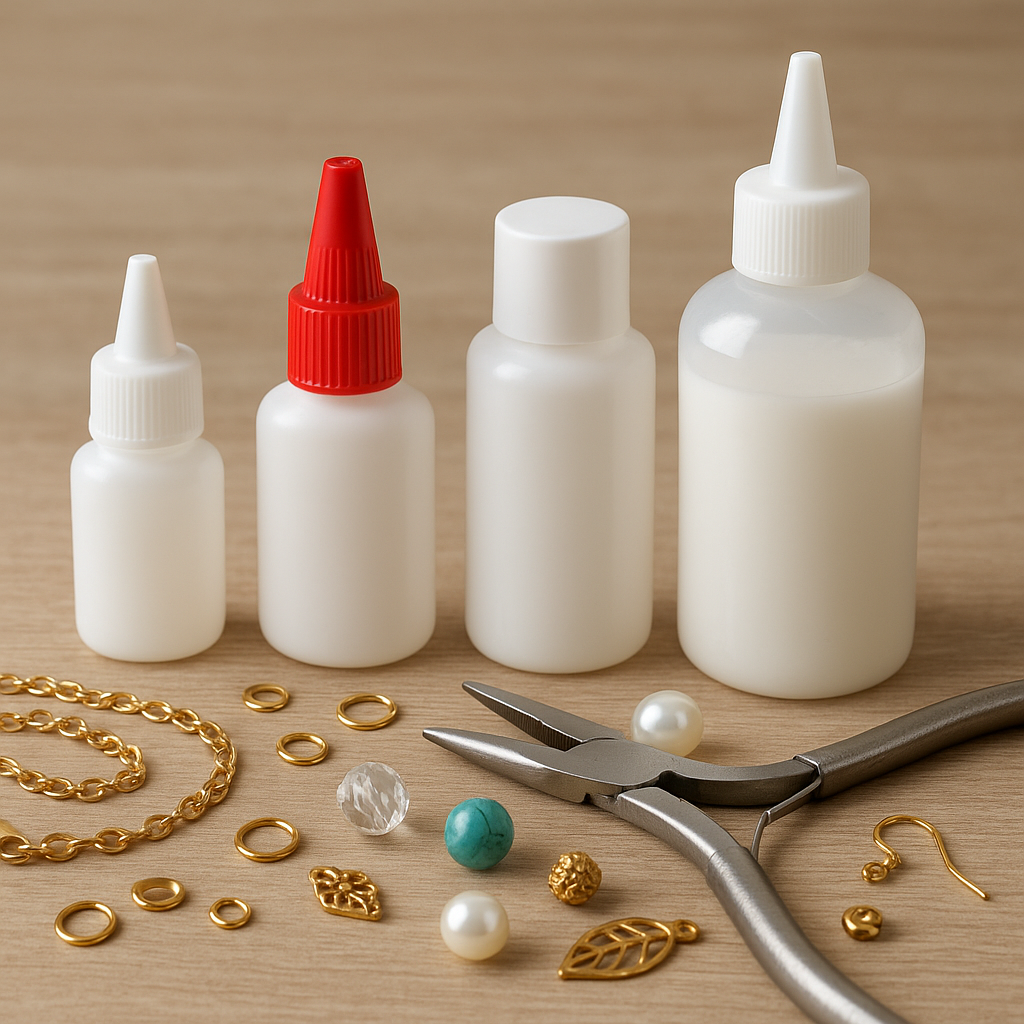
Jewelry artists often talk about the poetry of metal, stone, and light—but the quiet craft of joining those materials is where many pieces either succeed or fail. The right adhesive can turn a delicate idea into a durable heirloom, bridging gaps that solder or cold connections cannot. This guide explores the science and practice behind glue choice, how to prep and apply it like a pro, and when to use it instead of (or alongside) mechanical and thermal joins. Whether you work in fine metals, mixed-media, or beadwork, the goal is the same: reliable bonds that respect the aesthetics, value, and longevity of your handmade pieces.
What Makes a Glue “Best” for Jewelry
“Best” varies by project, material, and design intent. Jewelers care about subtle but crucial factors: bond strength, invisibility, resistance to moisture and oils, skin safety, and long-term stability under heat, light, and wear. Consider how often the piece will flex, what forces it will endure (shear, peel, impact), how smooth or rough the surfaces are, and how much space the glue must fill. The most successful adhesive choices honor not only the chemistry of bonding but also the realities of daily wear—sweat, perfume, humidity, and occasional accidental knocks.
Understanding adhesion helps you choose confidently. On a microscopic level, adhesives work through a combination of surface wetting, chemical attraction, and mechanical keying into micro-roughness. A smooth mirror finish resists glue, while thoughtfully scuffed metal with the right cleanliness profile invites the adhesive to flow, spread, and grip. A thin bond line is usually stronger, but certain formulas are designed to fill voids without shrinking, making them ideal for cabs, bezels, and bead caps with uneven interiors.
The Main Families of Jewelry Adhesives
Not all glues are created equal. Some excel on metal, others on organics like wood or leather, and some only shine under specific environmental conditions. Below are the standouts, with strengths, trade-offs, and typical jewelry uses.
Two-Part Epoxies
When you need strength, gap-filling capacity, and reliable performance, two-part epoxy is often the workhorse. Available in fast-set (5–10 minutes) and slow-cure (30–60 minutes working time; 24 hours to full cure) formulas, epoxies bond metals, stones, glass, ceramics, and many plastics. Slow-cure versions are typically stronger and less brittle than quick-set; they’re better for stress-bearing joins like cabochons in bezels or post pads to metal backings. Clear epoxies remain transparent but can yellow slightly over years, especially in bright sunlight—choose UV-stabilized formulas if transparency is critical.
- Best uses: cabochons to bezels, metal-to-stone, metal-to-glass, leather end caps, filling small voids.
- Pros: strong, great gap-filling, good moisture resistance, versatile.
- Cons: mixing required; some yellowing risk; pot life and cure times demand planning.
Cyanoacrylates (CA, “Super Glues”)
CA glues shine in speed and precision. A drop can wick into tight joints through capillary action, making them excellent for tiny settings, micro repairs, and stabilizing frayed cords before cutting. However, CA can be brittle, struggling with flex, peel forces, and oily or porous materials unless primers are used. Jewelers often reserve CA for emergency tacking, attaching small decorative elements that won’t flex, or setting pearls with specialized cements designed to accommodate the nacre’s delicate surface.
- Best uses: quick fixes, capillary bonding of tight fits, small non-flexing accents, tacking before permanent bonding.
- Pros: fast, precise, cures with ambient moisture, minimal equipment.
- Cons: brittle; fogging/“blooming” on high-gloss surfaces; poor with oily plastics without primers.
For better control of CA on tiny parts, look for needle-tip bottles or jeweler’s cement variants that reduce blooming and give longer open times. One well-known approach is using CA “gel” to keep the adhesive where you want it, aided by accelerators for near-instant sets. Use cyanoacrylate sparingly to prevent mess and residue.
UV-Curable Resins
UV-cured adhesives harden when exposed to a specific light wavelength, enabling accurate alignment and virtually unlimited working time before you hit the light. They’re popular for transparent and translucent elements because the bond line can be crystal clear and almost invisible. They shine on glass, crystals, and some plastics, especially where squeeze-out must be flawless. They do require a proper light source; thick or opaque materials can block light, resulting in a cure that’s incomplete unless the adhesive is designed for “shadowed” areas or dual-cure (UV plus moisture or heat). Properly chosen, UV-curables can be strong and beautifully invisible.
- Best uses: glass-to-glass or glass-to-metal in visible joints; crystal embellishment; precise alignment tasks.
- Pros: on-demand cure, clean appearance, low odor options available.
- Cons: requires a lamp; limited by light access; some formulas are rigid and not for dynamic loads.
When choosing a UV resin for jewelry, select one formulated for adhesive use, not just casting. Adhesive-grade resins prioritize UV throughput, bond strength, and long-term clarity.
Solvent-Based Flexible Adhesives
Solvent-based “jeweler’s cements” and industrial contact adhesives are valued for flexibility, decent strength, and compatibility with diverse materials like metal, glass, leather, and certain plastics. They remain slightly rubbery after cure, which absorbs shock and helps joints survive peel forces. This makes them a favorite for bead caps, leather ends, and embellishments that might catch and tug. Many of these contain volatile solvents; work with good ventilation and heed safety labels.
- Best uses: leather cord ends, bead caps, mixed media where a bit of flex is beneficial.
- Pros: flexibility; good on dissimilar materials; easy to apply without mixing.
- Cons: odor; solvent exposure; strings/threads if over-applied; some yellowing over time.
Polyurethanes and Hybrid Adhesives
Moisture-cured or two-part polyurethane adhesives offer strong bonds with a measure of flexibility, performing well on metals, wood, and some plastics. Some “construction” hybrids are overkill for jewelry, but small-batch versions can be perfect for leather-metal bonds and outdoor-wear pieces. Foam expansion (in some varieties) can be an issue; choose non-foaming formulas for jewelry.
Silicone and RTV
Silicones resist heat and remain deeply flexible, but they often have limited adhesion to metals unless primed. They excel as shock-absorbing bedding (e.g., cushioning delicate stones) rather than primary structural bonds. If used, pick neutral-cure formulas to avoid corrosive byproducts near metals and gems.
PVA and Craft Glues
Water-based PVAs are wonderful for paper, fabric, and porous crafts, but they’re not a primary choice for high-wear jewelry. They can serve as temporary positioners or for lightweight decorative elements protected from moisture, but avoid them for stones, metal joints, or anything load-bearing.
Matching Adhesive to Material and Function
Material compatibility matters as much as brand. Different surfaces, from polished steel to natural gemstones, call for specific strategies.
- Metals: Fine silver, sterling, brass, and bronze bond well when clean and micro-abraded. Stainless can be problematic—use specialized primers or rough the surface aggressively.
- Gemstones: Non-porous faceted stones and glass prefer epoxies or UV adhesives. Porous stones (turquoise, lapis, malachite) and organics (coral, bone) absorb adhesives; use slow-set epoxies for controlled penetration and minimal staining, or seal pores first.
- Pearls: Their nacre is delicate; use gentle, slightly flexible cements or well-chosen epoxies with minimal exotherm and no aggressive solvents. Dry-fit posts and avoid spinning once set.
- Glass and Crystal: UV-curable adhesives offer unparalleled clarity; slow-set epoxies are a good alternative for opaque-backed pieces.
- Wood, Fabric, Leather: Favor flexible formulas or polyurethanes to handle movement and humidity; rigid bonds can crack the substrate over time.
- Plastics: Acrylic and polycarbonate bond with epoxies and UV adhesives; polyethylene and polypropylene need specialty primers for strong bonds.
Think about porosity and movement. A porous substrate encourages soaking and staining; a moving joint (e.g., leather to metal) needs a flexible bond line. Choose the adhesive that fits both criteria.
Surface Preparation: The Unseen Foundation
Even the best glue fails on a dirty or overly smooth surface. Thorough degreasing removes oils (skin, polishing compounds) that sabotage wetting. Wipe with isopropyl alcohol or acetone, using lint-free swabs. Lightly abrade metal with 600–1000 grit or a fine Scotch-Brite pad to introduce micro-tooth, then clean again. For glass, consider a silane coupling agent to improve chemical bonding. For wood and leather, dust off loose fibers and ensure the piece is dry.
Heat can drive off moisture from porous materials before bonding—gently warm stones or wood with a hair dryer (not a torch) and let them cool to room temperature. Mask areas near the joint with painter’s tape to keep squeeze-out off visible surfaces. When aesthetics are paramount, pre-plan the bond line: design tiny gutters or recesses to catch excess adhesive and keep it hidden.
Application Technique: Control, Precision, and Cleanliness
Great technique turns a good glue into a professional result. Mix two-part adhesives on a clean, disposable palette with a measured ratio; under- or over-hardener weakens bonds and can leave tacky residue. Transfer with microbrushes, toothpicks, or syringe tips to place exactly the amount you need. Aim for the thinnest effective layer—thin bond lines distribute stress efficiently. For gap filling with epoxies, slightly thickened formulas or gel variants prevent sagging.
Mind the adhesive’s viscosity. Low-viscosity fluids wick into tight seams but can run; high-viscosity gels stay put on vertical surfaces. Temperature changes viscosity—cooling thickens and extends working time; warming thins and speeds the set. Use jigs, clamps, or gravity to keep pieces aligned, especially for domed cabs or heavy findings.
- Dry-fit everything before opening the glue.
- Apply from the center outward to minimize trapped air.
- Use capillary action for CA glues: assemble first, then touch a tiny drop to the seam.
- For epoxies, “wet” both sides lightly, then assemble; remove tiny squeeze-out immediately with a solvent-damp swab.
Cure Schedules and Bond Development
Set time, handling time, and full cure are not the same. The bond may feel firm in minutes but still be developing for hours. Respect full curing windows before adding load or polishing. Humidity accelerates CA glues; warmth speeds most chemistries; cold slows nearly everything. For UV adhesives, measure lamp intensity and distance—underexposure causes gummy, weak interfaces. If your adhesive allows post-cure heat, a mild low-temperature bake (per the technical data sheet) can boost strength and solvent resistance without harming most stones.
Strength, Stress, and Real-World Wear
Jewelry experiences a blend of forces: shear (sliding), peel (one edge lifted), tensile (pulling apart), and impact. Adhesives typically excel in shear and compressive loads and are weakest in peel. That means a wide, snug-fitting bezel backed by epoxy is a reliable design; a tiny tab pried upward by a snag is not. Rings and bracelets endure constant knocks and handwashing; pendants and earrings face gentler forces. Use adhesives for low- to moderate-stress joins, reserving solder or mechanical settings for high-abuse points like ring heads and chain links.
Plan for serviceability. If your design includes a glued element that might need maintenance, choose an adhesive that can be softened or reversed with heat or solvent—or ensure the joint is accessible for future rework.
Safety, Skin, and Studio Practice
Ventilation and personal protective equipment matter. Wear nitrile gloves; avoid latex with CA glues. Keep CA debonder on hand to release accidental finger bonds. Many solvent-based cements release VOCs—use a fume extractor or work outdoors. Read the safety data sheet for each product, especially when working near heat or with gemstones that can be damaged by chemicals (porous stones, pearls, opals). Store adhesives away from torches and sunlight, and label syringes clearly to avoid cross-contamination.
Finishing: Invisible Glue Lines and Clean Edges
Clean squeeze-out instantly with the correct solvent: alcohol for many uncured epoxies, acetone for CA, manufacturer-recommended cleaner for solvent cements. After cure, mechanical removal (careful scraping, micro-polishing) may be necessary. Aim to place adhesive slightly away from edges so capillary flow reaches the boundary without oozing. For high-clarity joints, UV adhesives can produce nearly invisible lines; for opaque joints, color-tint epoxies with compatible pigments to match metal or stone.
Troubleshooting: Why Bonds Fail
- Contamination: Polishing compound or skin oil prevents wetting. Clean and re-bond.
- Wrong chemistry: Rigid adhesive on a flexing material leads to cracks. Choose flexibility when needed.
- Insufficient surface prep: Smooth, glossy surfaces resist bonding. Micro-abrade, prime, or switch adhesives.
- Improper mix ratio: Epoxies must be precise. Use equal-volume syringes or weight scales.
- Undercure: Rushing handling before full cure undermines strength.
- Environmental mismatch: Constant hot water, UV exposure, or skin oils degrade some formulas. Pick an adhesive rated for the environment.
To remove failed bonds, soften with the appropriate solvent (acetone for many CAs; specific epoxy removers; careful heat for some epoxies and cements) while protecting heat- or solvent-sensitive stones. Patience is safer than force.
Storage, Shelf Life, and Glue Hygiene
Air, moisture, and light degrade many products. Keep caps spotless; purge air from bottles before sealing. Store CA glues cool and dry—some jewelers refrigerate them to extend life, bringing them to room temperature before opening to avoid condensation. For epoxies, keep resin and hardener lids clean and separated to prevent cross-cure. Mark open dates on labels and test a small batch before critical jobs if the adhesive is older than six months. Keep UV-curables in amber containers, away from windows and work lamps.
Environmental Choices and Low-VOC Options
When possible, prefer low-odor, low-VOC adhesives and efficient application to minimize waste. Two-part systems often use fewer solvents and can be measured precisely. Consider the end-of-life of your piece: can components be separated for repair or recycling? Water-based options minimize fumes but rarely meet jewelry-strength needs; hybrid and improved-epoxy chemistries can balance performance with safer handling. Always dispose of excess cured adhesive as solid waste and follow local regulations for solvents.
Choosing by Use Case: Quick Reference
- Pearl to post: Gentle jeweler’s cement or slow-set epoxy with minimal exotherm. Slightly scuff the post; avoid roughening the pearl interior.
- Cabochon in bezel: Slow-cure epoxy; micro-abrade bezel interior; degrease both surfaces; apply a thin, even layer.
- Leather cord in end cap: Solvent-based flexible cement or polyurethane; roughen the cord tip; insert with a twisting motion.
- Crystal embellishment on metal: UV-curable adhesive for clarity and precise placement; cure from multiple angles.
- Glass-to-glass link: UV-curable or clear slow-set epoxy; ensure full light access for UV.
- Emergency micro repair: CA gel with a precision tip; later replace with a permanent bond if needed.
Brands and Product Clues
While brand availability varies by region, look for technical data sheets (TDS) that list shear strength, temperature range, and recommended substrates. Reputable suppliers publish open time, full cure time, and chemical resistance. Jewelers often rely on epoxies with clear packaging and well-controlled ratios, jeweler’s cements with needle applicators for stone settings, and UV-curables paired with compact lamps. For plastics, check whether primers are offered to improve bonds to low-energy surfaces.
Advanced Techniques: Primers, Coupling Agents, and Surface Energy
When ordinary prep isn’t enough, primers and coupling agents can transform a tough bond into a strong, durable one. Silane primers create molecular bridges between glassy surfaces and organic adhesives; metal primers improve corrosion resistance at the interface and promote better wetting. Flame or plasma treatment raises surface energy on certain plastics, giving even modest adhesives a firm foothold. Always confirm compatibility—some primers can discolor or craze delicate materials.
Designing for Strength: Make Adhesives a Feature, Not a Crutch
Small design shifts magnify adhesive performance:
- Increase bonded area: a larger pad or deeper bezel beats a narrow tab.
- Favor compressive and shear over peel: align load paths so the joint is pressed or slid, not peeled.
- Add mechanical aids: tiny pins, shallow grooves, or undercuts provide mechanical keying and backup if the bond weakens.
- Manage edges: chamfers and fillets reduce stress risers and hide glue lines.
Common Myths, Debunked
- “Glue is always weak.” Not true—well-chosen epoxies rival solder in certain configurations and can last for decades.
- “All super glues are the same.” CA formulas vary widely in gap-filling, flexibility, and anti-blooming performance.
- “More glue means stronger bonds.” Excess typically weakens joints; thin, continuous bond lines are best.
- “Any cleaner works for prep.” Some cleaners leave residues. Use pure alcohol or acetone and lint-free wipes.
- “UV resins always cure perfectly.” Without proper light intensity and access, shadowed areas may remain soft; use dual-cure or design for light penetration.
Care Instructions for Glued Jewelry
Inform clients how to keep their pieces beautiful: remove jewelry before showers, pools, or hot tubs; avoid direct application of perfume or hair spray onto glued components; store pieces away from sunlight and extreme heat; and avoid ultrasonic cleaners on glued stones. If a joint loosens, stop wearing the piece and seek a quick studio inspection—early intervention prevents lost stones.
Field Notes: Practical Tips From the Bench
- Use disposable “oiling pins” made from fine wire for pinpoint adhesive placement.
- Warm stubborn, viscous epoxies by standing the syringe in warm water (well-sealed) to improve flow—test first to avoid bubbles.
- Keep a timer visible; curing times slip away faster than you think during complex assemblies.
- Color-match: mix micro-tints into epoxy for hidden seams on dark stones or metals.
- Pre-score leather and wood lightly for mechanical key; vacuum away dust before bonding.
- Seal porous stones with a reversible consolidant if staining is a risk, then bond after evaporation.
Quality Control: Testing Bonds Before Release
Build a habit of destructive testing on offcuts. Bond a scrap cab into a sample bezel and try to pry it apart after full cure. Observe where it fails: cohesive failure (glue tearing within itself) suggests adequate surface prep; adhesive failure (clean separation) hints at contamination or poor wetting. Keep a notebook of batch numbers, mix ratios, open dates, temperatures, and outcomes. Over time, this log becomes your private encyclopedia of success.
When Solder, Rivets, or Bezels Beat Glue
Adhesives are tools, not universal solutions. Use solder or mechanical settings for ring heads, chain links, and anything exposed to constant abrasion or high thermal cycling. Consider rivets for mixed-media joints where heat would damage components. Combining minimal adhesives with mechanical capture creates redundancy—a sign of professional design thinking.
Putting It All Together
Choosing a jewelry adhesive isn’t about brand loyalty; it’s about materials, movement, and the wearer’s world. Start with surface prep, then select a chemistry that suits the substrate and stress pattern. Apply with precision, cure with patience, and finish with care. With practice, your bonds will be as elegant as your designs—quiet partners that let the metal and stone sing while standing up to everyday life.
Before your next project, assemble a compact adhesive kit: slow- and fast-cure epoxy; a fine-tip CA and debonder; a small UV lamp and clear adhesive; a solvent-based flexible cement; primers for glass and plastics; isopropyl alcohol, acetone, microbrushes, syringes, and painter’s tape. With this bench-ready set and a deep understanding of materials, you’ll navigate the subtle decisions that elevate handmade jewelry from simply assembled to truly enduring.
In the end, the “best” glue is the one that respects both the science and the soul of your piece—clean surfaces, smart joint design, and a cure schedule that fits your workflow. Master those, and your adhesives become invisible craftsmanship, supporting artistry that lasts.
