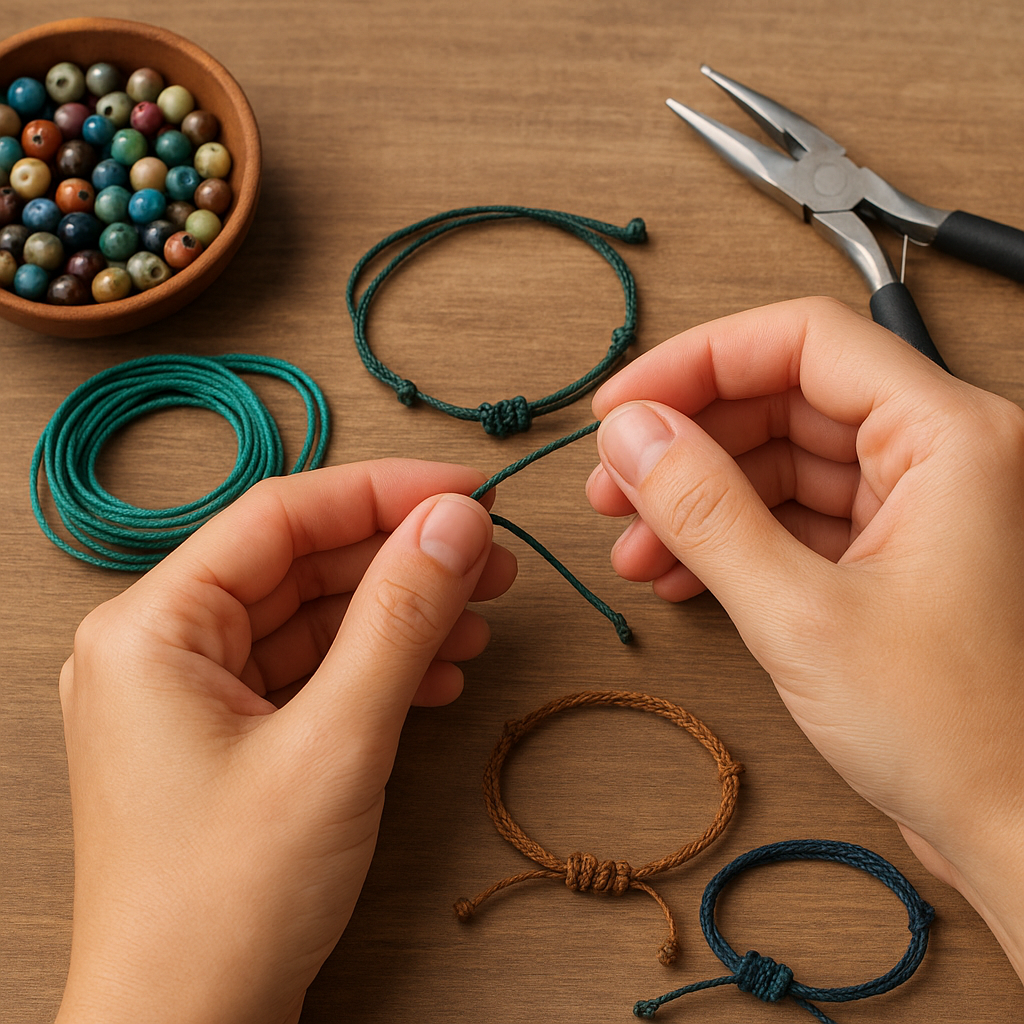
Bracelets that fit every wrist are more than a handy gift idea; they are an elegant exercise in problem-solving, material knowledge, and personal expression. Building an adjustable system into your design lets the same piece move from a summer-bare wrist to a layered winter cuff, from a teen to a grandparent, and from a quick morning routine to a special-occasion ensemble. This guide blends studio-tested methods with practical insights to help you choose materials, engineer reliable sliders, and design patterns that feel thoughtful on the skin and satisfying to make. Along the way you will learn why some knots creep while others lock, how cord geometry affects friction, and how to finish edges so they look clean and wear beautifully over time—valuable skills you can carry into any future jewelry project and your evolving sense of craftsmanship.
Understanding Fit, Comfort, and the Mechanics of Adjustability
Before you pick up a cord or bead, get curious about wrists. They are wonderfully dynamic: they expand slightly in warm weather, compress in cold, and change dimensions with hydration and activity. An all-day bracelet should account for at least 6–12 mm of size variation so the wearer can tighten for a secure fit or loosen for airflow and easy removal. For gifting or selling, the range from 15–21 cm (6–8.25 inches) comfortably covers most adult wrists, while youth sizes often inhabit 12–16 cm (4.75–6.25 inches). Building adjustability into your design allows you to cover most of that range without producing multiple sizes.
A comfortable bracelet respects skin and motion. Try to distribute mass evenly so the piece doesn’t roll or flip. Leave a small cushion (often called “ease”) between the inside circumference and the wrist, typically 4–8 mm for slender cords and 6–10 mm for chunky wraps. Think of ergonomics not as a constraint but as a creative axis: soft cords near bony prominences, low-snag textures for knitwear season, and closures that can be operated with one hand—useful for people with limited dexterity or those who simply want a quick on-and-off routine.
Mechanically, nearly every adjustable system relies on friction, geometry, or a combination of both. A knot that slides must compress the standing parts of a cord predictably; a bead that glides should do so without catching or wearing harshly on fibers. Cord diameter, surface texture, and fiber composition determine how the slider behaves. Nylon satins glide; waxed polyesters grip; leathers respond to moisture and stretch. The right pairing creates a pleasant action that resists unintended loosening yet remains easy to operate.
Tools and Materials That Make the Difference
Strong results start with reliable components. You can improvise most setups with a simple kit, then refine as your practice grows. Below is a compact overview of the essentials.
Cords and Threads
- Waxed polyester or nylon (0.5–1.5 mm): Versatile, crisp knotting, resists abrasion, and seals cleanly with heat. Great for beaded sliders and micro-knotting.
- Nylon satin “rattail” (1–2 mm): Silky feel and elegant drape; slides smoothly but may require a stopper bead or extra knot friction to prevent creep.
- Waxed cotton and linen: Matte finish with a rustic look, excellent grip in sliders. Ends benefit from glue rather than heat-sealing.
- Hemp: Sturdy and tactile; ideal for casual styles. Can swell slightly with moisture—design sliders accordingly.
- Silk cord: Luxurious and supple. Best for lightweight beads and delicate, dressy bracelets.
- Leather lace and thong: Strong visual presence with minimal components; ideal for button-and-loop adjustability. Keep in mind that leather softens and molds to the wearer over time.
Beads and Components
- Beads with large, smooth bores: For bolo-style sliders; metal, glass, or ceramic with chamfered edges to reduce wear.
- Tubes and slider beads with internal silicone: Offer gentle braking action that preserves cord surfaces.
- Crimps and end caps: Neat finishes for chain-based designs; choose correct internal diameter to avoid slippage.
- Chain extenders (2–5 cm): Convert any clasp bracelet into a flexible size range, useful in mixed-material designs.
- Jump rings (18–20 gauge for strength): Secure hardware transitions; always close rings fully so they meet flush.
Adhesives and Finishes
- Flexible craft adhesive: Ideal where slight movement is expected (e.g., cord bundles and macramé closures).
- Cyanoacrylate (gel): Good for fixed tips and invisible reinforcement; use sparingly to prevent stiffness wicking up the cord.
- Two-part epoxy: High bond strength for metal findings and end caps; allow full cure before wearing.
- Heat sealing: For synthetic cords, a thread burner or lighter can mushroom tips neatly; practice on scraps first.
- Conditioners and waxes: Nourish leather and reduce squeak; beeswax can lubricate threads for smoother knotting.
Tools
- Sharp shears or flush cutters: Clean cuts resist fray and make professional tips possible.
- Thread burner or lighter: For heat-sealing synthetics; keep a heat-safe surface nearby.
- Needles, beading awl, and pliers: Guide threads, open and close rings, and coax knots precisely into place.
- Measuring tape and calipers: Verify lengths and bead diameters; precise components make smoother sliders.
- Clipboard, macramé board, or simple tape: Stabilize work so your hands can focus on even tension.
As you refine your selections, keep an eye on durability. Test wear by tugging your sliders, rolling cords between fingers to feel for abrasion, and pulling knots tight under controlled tension. A prototype worn for a few days will tell you more than any spec sheet.
Core Adjustable Mechanisms You’ll Use Again and Again
There are many roads to a size-flexible bracelet, but a handful of mechanisms carry most of the load. Master them, and you can build hundreds of variations with confidence.
Classic Sliding Knots on a Single Cord
This minimalist method uses the working ends of the bracelet to create two opposing sliders. It’s fast, elegant, and requires zero hardware.
- 1. Cut cord to a length that accommodates your design plus 15–25 cm extra for sliders. String any feature beads, leaving 6–8 cm of plain cord at each end.
- 2. Cross the ends so they overlap by 5–7 cm. On the left end, tie a firm overhand wrap around the right standing part—then add a second wrap before tucking the tail through both turns. Snug gently, forming a compact double overhand that can move along the opposite cord.
- 3. Repeat symmetrically on the other side. Work both knots back and forth to seat the turns evenly. If motion is too loose, add a third wrap; if too tight, gently massage the coils with an awl.
- 4. Trim tails to 3–5 mm and finish: heat-seal synthetics to a low-profile mushroom, or dab a tiny drop of gel adhesive to lock fray on natural fibers.
- 5. Test: Pull both ends to tighten, and spread knots apart to loosen. The two sliders balance one another to center the bracelet on the wrist.
What makes this work is geometry and surface interaction: the coiled knot gently compresses the opposite cord, allowing motion when you pull and resistance when you stop. Heavier cords may call for more wraps, while slippery cords often benefit from a micro-dot of glue under the last wrap to stabilize the coil without freezing the slide.
Square-Knot Macramé Sliding Closure
A small band of decorative knotting acts as a central slider bridge. This is the workhorse closure for beaded cords and multi-strand bracelets.
- 1. Tie your bracelet so two cord ends emerge side-by-side, pointing in opposite directions, with at least 8–10 cm of free length each.
- 2. Cut a short working cord (10–15 cm) and place it beneath the two bracelet ends. Use the working cord to tie alternating square knots—Left over, Right over—around the two core strands. Aim for 8–14 knots depending on cord diameter.
- 3. After knotting, flip the slider and secure the working-cord tails: tuck under the final knot with a needle, add a dot of flexible adhesive, and trim flush when set.
- 4. Finish the bracelet ends with small stopper knots or beads so they don’t retract completely through the slider. Optional: add decorative dangles.
This compact band of macramé delivers stable control even on slick cords because there’s a long surface area gripping the core. Keep tension consistent so the sandwich is firm, not strangled. You can match or contrast the slider color, integrate tiny accent beads between knots, or expand to a wider panel for a focal moment that doubles as the adjustment unit.
Bolo-Style Bead or Tube Slider
Inspired by the bolo tie, this approach uses a bead or tube with a smooth interior to glide along two parallel cords. It’s strikingly efficient for dressy pieces and stacks well with other bracelets.
- 1. Construct the bracelet with two free tails exiting the back. Thread both through the slider bead in opposite directions.
- 2. Check friction: the slider should move with gentle pull and stop under light tension. If too loose, add internal silicone rings or choose a bead with a smaller bore.
- 3. End the tails with tiny knots, micro-caps, or charms as weighted pulls. Heavier pulls often improve the glide.
The quality of the sliding action depends on consistent cord thickness and a burr-free bore. Avoid abrasive materials that could fuzz or cut soft cords; a chamfered metal tube or glass bead is ideal. For leather, consider a slider engineered for thicker strands or split the leather ends and glue into thin tips that fit standard beads.
Chain-and-Clasp with Extender
For mixed-media designs—bead weaving, wirework, or gemstone focal pieces—a traditional clasp plus a short extender chain lets you accommodate a wider audience without altering the artistry up front.
- 1. Attach a lobster or toggle clasp on one side, a 2–5 cm extender chain on the other.
- 2. Add a small charm to the last link as a counterweight and style note.
- 3. Finish all jump rings securely and check that the extender geometry doesn’t twist the bracelet under wear.
While not a friction-based slider, this system is robust, classic, and easy to repair. It pairs well with stiff structures where knot-based sliders would feel out of place.
Button-and-Loop with Multi-Stop Knots
Especially good for leather and thicker cords, a button-and-loop can offer two or three size positions. Tie a series of overhand knots as “stops” so the button can seat at different points, or use a braided loop that cinches flatter wrists and relaxes for broader ones. To prevent accidental release, size the loop so it jumps snugly over the button head.
Design Planning: From Palette to Proportion
Adjustability is a function; design is the poetry. Begin with a focal idea—material, color story, or mood—then choose an adjustment method that supports it. For a serene, beach-glass palette, a soft satin cord with a low-profile slider complements the calm. For rugged, trail-ready bracelets, waxed polyester with a well-anchored macramé band makes practical sense.
Color theory guides harmony: complementary pairs (teal and russet), analogous runs (indigo–blue–violet), or a monochrome gradient can all work. To prevent visual noise, vary one element at a time—size, sheen, or hue—while keeping the others consistent. Odd numbers of accent beads often look balanced, while symmetry at the clasp end helps bracelets center themselves on the wrist.
Proportion matters when building for comfort. Heavy center beads with featherweight cords tend to roll; counter this with small stabilizer beads flanking the focal or with a slightly heavier tail finish to keep the slider below the wrist. Leave at least 2–3 cm of free cord at the ends after the slider so wearers have something to grasp. And always check that your slider, stopper beads, and tips clear sleeves and jacket cuffs without catching.
The most persuasive designs resolve function into form: the slider becomes part of the composition. Consider framing your closure with decorative knots or a subtle color shift, or choose a statement tube slider that reads like a piece of modern hardware. A thoughtful transition between cord and metal, matte and gloss, color and neutral, is the quiet language of refined aesthetics.
Finishing Methods and Long-Term Wear
A professional finish is invisible when it needs to be and proudly precise when it becomes a design element. Trim cords with a sharp tool to avoid ragged ends. For synthetics, touch the tip with a flame or thread burner and immediately flatten with a metal tool for a crisp, low-bulk mushroom. For natural fibers, a tiny dot of flexible glue massaged into the last 2–3 mm controls fray without leaving a shiny spot.
Test your slider by cycling it 30–50 times while holding the bracelet in a gentle curve (mimicking a wrist). Observe whether the knot pack compresses too tightly, whether tails twist, and whether stoppers catch. If a slider binds, lighten the tension, reduce wraps, or switch to a smoother cord. If it creeps open, add a wrap, choose a grippier cord, or install a micro silicone bead as a hidden brake.
For care, advise wearers to remove bracelets before prolonged swimming in chlorinated pools or hot tubs (both can attack finishes and adhesives). Neutral soap and cool water clean most cords; pat dry and air thoroughly. Leather appreciates occasional conditioning. Metal accent parts benefit from a soft cloth polish; avoid abrasive pastes that can scratch plating. Periodic inspection of knots and tips prevents surprises—better to replace a frayed tail than to lose a favorite bracelet.
Inclusive Design, Safety, and Ethical Choices
People come to jewelry with different bodies and needs. Single-handed operation is a gift to many users; prioritize sliders that tighten and release with a gentle pinch-and-pull. For kids and active wearers, build in a safe “give” point—either a lighter cord upstream of the focal or a small breakaway component—so accidental snags don’t cause injury. Hypoallergenic metals like surgical stainless, solid titanium, or niobium minimize skin reactions; if using sterling or brass, add a clear seal to parts that contact skin in humid climates.
Materials choices also communicate values. Plant-based cords and conscientious leather sources, recycled metals, low-VOC adhesives, and durable construction all support sustainability. Packaging can echo this ethos with minimal plastic, recyclable cards, and repair-or-resize guarantees that keep pieces in service longer. Remember: the most sustainable bracelet is the one people love to wear for years.
Troubleshooting and Studio-Proven Tips
- Slider too tight: Reduce a wrap, switch to a smoother cord, or dress the interior of a slider bead with micro silicone tubing.
- Slider too loose: Add a wrap to the coil, switch to waxed fiber, or add a discreet overhand knot directly behind a tube slider to increase friction.
- Ends fraying despite glue: Trim again with a fresh blade, then bind the tip with a short whipping of fine thread before sealing.
- Beads abrading cord: Ream sharp bead holes lightly or add small metal or glass spacer beads that distribute contact over a larger radius.
- Bracelet won’t center: Balance weight by adding a small charm near the tails or by moving the heaviest bead closer to the middle.
- Leather stretching: Pre-condition and pre-stretch before final sizing; design the loop slightly undersized knowing it will relax.
- Adhesive bloom (white haze): Use less, switch to gel formula, or allow more cure time away from moisture.
- Color bleeding: Pre-test cord and beads in warm water; seal porous beads or choose stabilized alternatives.
Practice on scraps to build intuition. Maintain a swatch ring: short samples of each cord type labeled with diameter, fiber, and your notes on sliders that perform well with it. This library becomes a fast-reference when you design under deadline.
Project Recipes to Build Skill and Style
Minimalist Two-Knot Cord Bracelet
Cut 60–70 cm of 1 mm waxed polyester. String a single 6–8 mm gemstone or metal focal, centered. Tie overhand knots 5–6 mm from each side of the focal to keep it anchored. Cross ends, tie two opposing double overhand sliders as described earlier, and trim tails to 4 cm with tiny end beads. The result is featherlight, layer-friendly, and adjusts with a single pull.
Beaded Stack with Macramé Slider
Use 0.8 mm nylon and 4 mm round glass beads. String 32–40 beads depending on wrist size, leaving 8–10 cm tails. Bring ends together and build a 1.5–2 cm macramé square-knot band around both. Finish with stopper beads and short dangles. The slider band becomes a visual anchor, turning a classic beaded look into something easy to manage one-handed.
Leather Wrap with Button and Multi-Position Loop
For a rugged accent, cut 3 mm leather to about 60 cm for a double wrap. Secure a metal button on one end using a tight lark’s head or a stitched binding. On the opposite end, form a snug loop that fits over the button head; behind it, add a second overhand knot 1 cm away to serve as a larger setting for layered clothing days. Finish tips cleanly with glue-in caps or a neatly trimmed and sealed end.
From Workbench to Wrist: Process Flow That Saves Time
Efficient making comes from sequencing. Lay out materials, pre-cut cords, and mark checkpoints. Build five bracelets assembly-line style: tie all sliders first, then add beads, then finish tips. Batch testing reveals issues early; if a particular cord and bead combo binds, you catch it before the entire set is finished. Keep a small “repair and resize” kit in your bag—micro pliers, jump rings, a short length of matching cord—so you can adjust at a market stall or during a client fitting.
Documentation pays off. Note final lengths, number of beads, and which slider variant you used on the back of your pattern card. When someone returns asking for the same bracelet “but in forest green,” you’ll reproduce it exactly and with less stress.
Care Cards, Gifting, and Selling With Confidence
Whether you make for friends or for a shop, include a small care card and a quick how-to: “Pinch slider, pull tails to tighten; spread knots to loosen.” Invite the wearer to contact you for a free first resize—this small promise builds trust and encourages long-term use rather than abandonment if the fit isn’t perfect at first try. For packaging, align the slider to a medium setting so recipients experience the adjustability right away. If you sell online, photograph the bracelet in three size positions and on different wrist types; clarity prevents returns and demonstrates your mastery.
Pricing should reflect materials, time, and design IP. Adjustable mechanisms add value because they reduce the risk of sizing issues. When quoting custom orders, clarify the slider style and color, tail length, and any metal sensitivities before you start. For wholesale, keep at least two proven slider systems in your line so staff can explain them quickly at point of sale.
Going Deeper: Advanced Variations and Experimentation
Once you’re fluent with the fundamentals, explore new territory. Micro-knotting with ultra-fine cords produces delicate, almost lace-like sliders that glide precisely. Kumihimo braids yield round, consistent cords whose structure creates predictable friction for sliders. Hybrid builds—chain in front, cord in back—blend elegance and comfort. For a modern twist, try 3D-printed slider beads with internal channels or low-friction liners, or wrap a tiny coil spring inside a tube slider for controlled resistance.
Texture studies are illuminating: pair matte cords with mirror-polished metal for contrast, or keep everything satin for a calm, whispery presence. Stitch bead embroidery onto a suede strip, then finish the back with an efficient slider so all the drama sits on the top of the wrist while the mechanism stays discreet underneath. In every case, review how the slider behaves after hours of movement—your best teacher is wear-time.
A Closing Word on Making for Every Wrist
There’s a quiet satisfaction in engineering a bracelet that welcomes any wearer. You’re designing for the wrist in motion—breathing, flexing, living—not a static measurement on a board. The techniques in this guide grant practical control; the rest is your eye and hand learning to listen: how tightly a coil prefers to sit, which bead feels like home on a cord, how a tail length encourages an easy one-handed pull. With practice, your adjustments become intuitive, and your pieces feel destined for the people who find them. That is the art of the truly adaptable bracelet—responsive, considered, and beautifully made to meet the day.
