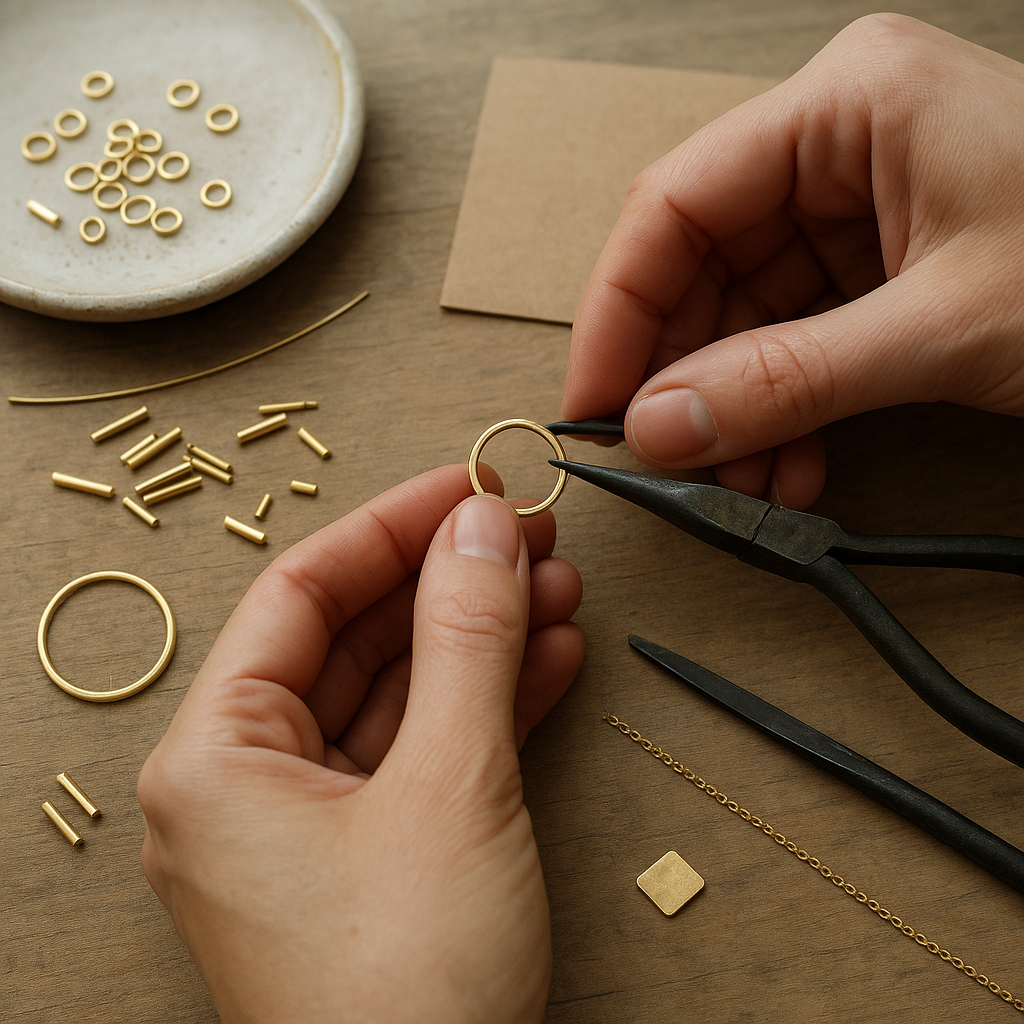
Minimal waste in jewelry making is both a philosophy and a set of hands-on practices that treat every fleck of metal, every moment at the bench, and every design decision as an opportunity to honor material, time, and the wearer. The approach belongs to the deep lineage of artisans who learned to see value where others saw leftovers, to plan shapes so offcuts become components, and to engineer beauty that ages well rather than demands constant replacement. It is a craft compass that points toward responsible sourcing, lean processes, and a creative mindset that turns constraints into form-giving insights.
The Ethos and History of Minimal Waste in the Jeweler’s Studio
Long before sustainability was a buzzword, goldsmiths were quietly practicing it as a survival skill. Traditional workshops swept their floors to collect filings known as “sweeps,” stitched leather to benches to catch dust, and learned to push metal with a burnisher rather than file it away. These methods protected margins in precious materials, but they also nurtured a discipline of restraint—use only what the work truly needs.
Minimal waste does not mean sparse design. It means intelligent design. It means building with purpose so that structure and ornament share the same gesture. It honors the trade’s core values—enduring craftsmanship, uncompromising precision, and practical efficiency—and reframes them as environmental and emotional commitments. Waste is not only metal scraps; it is excess motion, redundant packaging, needless remakes, and neglected aftercare that shortens a jewel’s life.
Three continuous threads weave through the discipline:
- Design with the end in mind: anticipate wear, repair, and future resizing so parts can be accessed, replaced, or melted back.
- Respect for material character: let metals flow, harden, and texture in ways that minimize removal and maximize strength.
- Total recovery mindset: treat dust, slurry, and even polishing cloths as inventory to be tracked, reclaimed, and returned to the melt.
In a modern context, minimal waste extends to digital modeling, data-informed sourcing, and transparent storytelling so clients understand the value chain. This is where traditional bench wisdom meets contemporary tools and where artisanal intuition meets measurable goals for sustainability and circularity.
Materials and Sourcing for Lean Making
Metals: Choosing, Tracking, and Melting Intelligently
Base your metal strategy on clear lot control and alloy discipline. Mixing unknown karats or alloys creates brittle casts, porosity, and unnecessary remelts. Keep distinct scrap jars for 14k yellow, 18k yellow, 18k white, sterling silver, and specialty alloys. Document weights in and out to calculate yield and scrap rates per project so your process evolves with evidence rather than guesswork.
Recycled precious metals are a cornerstone of modern minimal-waste practice, but recycled is not a panacea; workability, porosity, and contamination still demand vigilant technique. Pair recycled feedstock with reputable refiners, assay results, and, when possible, chain-of-custody programs to maintain traceability. For new metal, certifications such as Fairmined or Responsible Jewellery Council CoC allow you to balance ethics with technical performance.
Plan thickness and temper so metal flows rather than gets removed: half-hard sheet for precision saw work, dead-soft wire for intricate forming, grain or casting shot when you need complex geometry in one pour rather than many soldered parts. Each choice reduces offcuts, solder joints, and rework.
Gemstones: Reclaimed Beauty and Resourceful Setting
Gemstones present unique opportunities for minimal waste. Reclaimed stones—from antique pieces or estate lots—carry embodied energy forward, bypassing new extraction. Small offcuts from lapidary work can become inlay, micro-pavé accents, or asymmetric highlights that celebrate the stone’s journey. Work with cutters who will recut chipped gems with minimal loss and who can provide calibrated parcels that nest tightly in settings, avoiding extensive seat adjustment.
Lab-grown gems can reduce some mining impacts, yet they, too, require energy and responsible supply oversight. The minimal-waste approach is less about a single perfect choice and more about well-documented provenance, efficient setting strategies, and designs that protect stones from needless damage over a lifetime.
Alternative and Hybrid Materials
Wood veneers, bio-resins, antique glass, ceramics, horn, and textile composites can enrich a piece while lowering precious-metal mass. The key is intelligent pairing: use metals where strength and longevity are necessary; use lower-impact materials where function allows. Treat adhesives and finishes as part of the waste equation—small tubes reduce expiration waste, and reversible finishes support repair and refurbishment. Every material choice is an act of stewardship toward both ecology and heritage.
Design Strategy: From Sketch to Intentional Geometry
The cheapest waste to eliminate is the kind you never create. Transform your ideation stage into a discipline of forecasting.
- Start with scaled templates in paper or thin acetate to map out nesting on sheet stock. Nesting rings, tabs, and motifs reduces kerf loss and leaves reusable offcuts.
- Engineer parts for design for disassembly: keyed bezels, snap-fit hinging, standardized pin diameters. Access to parts = efficient repair.
- Model with parametric CAD so dimensions like wall thickness, sprue sizes, and bend radii can be tuned globally. Fewer reprints, fewer remakes.
- Prototype in scrap copper or brass to prove assembly order and heat behavior before committing precious metal.
- Validate comfort and wearability (edge radii, balance on the finger, clasp force) early; poor ergonomics drive returns and refits.
Think in families of parts. If a pendant, ring, and earrings share a geometry, design them to extract from the same sheet layout or casting tree with only minor post-processing differences. Standardize jump rings, ear posts, and screw threads to reduce inventory and simplify training. Smart standardization is a quiet engine of efficiency.
Bench Techniques That Turn Waste into Wisdom
Sawing and Piercing
Correct saw-blade selection minimizes kerf and broken blades. Tension your frame until it sings, lubricate with beeswax, and cut with strokes that let the blade work rather than force it. When patterns allow, guillotine shears or disc cutters turn continuous curves into near-zero-waste operations. Keep offcuts flat and labeled; today’s scrap is tomorrow’s link, tab, or setting gallery.
Filing, Forming, and Moving Metal
Every stroke removed becomes dust; every stroke avoided preserves value. Use safe-edge files to protect adjacent surfaces, and switch to draw filing to true long flats without overcutting. Whenever possible, move metal with a planisher or polished hammer rather than removing it—compressing rims for bezels, thickening edges by upsetting, or pulling shoulders by forging. A burnisher can close tiny gaps and work-harden surfaces, saving solder and time while enhancing long-term durability.
Soldering and Thermal Strategy
Most solder excess is born from poor fit-up. Joint faces should meet cleanly with neutral tension. Pre-cut paillons by size and grade, memo them in trays, and use paste flux sparingly. Heat the mass, not the solder; guide flow rather than chasing it. By designing tight joints and reducing reflows, you conserve solder, spare pickle, and prevent structural embrittlement from repeated heating.
Casting with Intent
Lost-wax casting can be lean if you treat sprues as part of the design. Size sprues to minimize turbulence and porosity, then arrange trees so runners become reusable stock (prongs, posts, spacers) rather than awkward scrap. Record button weights, porosity incidents, and surface quality to dial in burnout schedules, flask temperatures, and vacuum or centrifugal parameters. Clean, well-planned casting reduces rejects—a silent but massive source of waste.
Setting: Secure Seats with Minimal Removal
Use sharp burs sized exactly to stone girdles, then transition quickly to gravers and burnishers to refine seats by moving—not excavating—metal. Microscope-assisted setting reduces slips and unnecessary re-cuts. In pavé work, evenly spaced pilot marks with a scribe guide accurate drilling and minimize corrections. The fewer corrections, the less dust and the more consistent security for the stone.
Studio Recovery and Workflow Design
True minimal waste is won or lost in studio systems. Think like a refinery in miniature.
- Install bench skins, lap aprons, and floor mats that funnel filings. Vacuum with HEPA and water traps to catch fine particulates.
- Dedicate polishing buffs and compounds by metal; label trays; collect spent buffs, filters, and wipes for periodic incineration and refining.
- Use ultrasonic and steam cleaners over chemical-heavy baths when possible, and filter ultrasonic sludge for metal particles.
- Set up a simple Kanban for solders, saw blades, sandpapers, and adhesives to avoid overbuying that leads to expired consumables.
- Weigh parts at checkpoints—after blanking, after forming, post-polish—to learn where mass leaves the process and to spot anomalies early.
Workflow should also protect attention. Clear lighting, tool shadow boards, and bench zoning reduce hunting for tools, which reduces errors. This is where shop ergonomics quietly acts as a sustainability engine: fewer mistakes, less rework, more time for thoughtful finishing.
Finishing, Longevity, and the Second Life of a Jewel
Finishes should be beautiful on day one and forgiving on day one thousand. High polishes reveal scratches quickly; stonewashed, satin, or micro-hammered textures hide daily wear and can be refreshed with minimal material loss. When you design bezels and prongs with access in mind, future stone tightening does not scar nearby surfaces.
Consider modular clasps, snap-fit brooch mechanisms, and thread-in components that allow upgrades—swapping a center stone, adding a charm, or resizing a shank—without wholesale remakes. Include care instructions with every piece: how to clean at home, how often to check settings, and when to return for professional service. Longevity is the twin of minimal waste; together they build product resilience and reduce the churn of replacement.
Finally, design packaging as part of the jewel. Reusable pouches, nestable boxes, and minimal ink printing cut waste and can become keepsakes. Offer repair credits or trade-in programs so old pieces flow back into your material loop rather than into drawers.
Metrics, Pricing, and Storytelling Clients Understand
Numbers make the invisible visible. Track three simple metrics for each collection:
- Material yield: finished weight divided by starting stock weight (target 75–95% depending on complexity).
- Scrap return rate: percentage of offcuts and dust recovered and refined.
- Rework rate: percent of pieces requiring re-polish, re-cast, or major adjustment.
Translate those metrics into a narrative. Clients connect with specific, honest claims: “This ring returned 92% yield with 7% reclaimed to future batches; cast from recycled 18k with documented traceability.” Tie pricing to this clarity. Offer a scrap credit when clients provide heirloom gold, or maintain a “metal bank” on their account for future commissions. Value transparency fosters trust and frames minimal waste as a benefit they can feel and verify.
A Practical Scenario: Building a Minimal-Waste Ring
Consider a custom 18k yellow gold ring with a reclaimed sapphire.
- Design: Parametric model locks wall thickness at 1.6 mm, seat depth at 0.8 mm. A comfort inner bevel is specified to prevent later grinding.
- Material plan: 10.5 g of 18k sheet and wire allocated; expected finished weight 8.7 g with 1.8 g offcuts intended as future jump rings.
- Blanking and forming: Nested templates let the shank and gallery share a single sheet, leaving a rectangular offcut that becomes the clasp tongue for a matching chain.
- Joint prep: Edges squared with a safe-edge file; gapless fit eliminates the need for excessive solder. Two 0.5 mm paillons of medium solder pre-measured.
- Setting: Seat drilled to near-final with a ball bur; fine-tuned by pushing metal with a polished graver and burnisher. No re-cuts required.
- Finishing: Satin exterior, bright inside bevel. Buffs labeled for 18k only. Polishing dust captured and logged.
- Results: 83% yield to finished piece, 17% into segregated, reusable stock and reclaim. Zero rework. Documented process shared with the client card.
In this scenario, each decision shrubs away the brambles of waste—no dramatic heroics, just accrued good choices. The payoff is a cleaner bench, a healthier margin, and a story the client is proud to wear.
Tooling and Habits That Pay for Themselves
- Sharp gravers, regularly honed: more shaping by displacement, less by removal.
- Safe-edge and needle files in known cuts; diamond laps for precise, conservative correction.
- Microscope or high-quality optics: fewer slips, cleaner seats, lower scrap.
- Disc cutters, drawplates, and dapping blocks that let offcuts become components.
- Accurate scales and calipers: weigh, measure, record; data drives improvement.
- HEPA shop vac with water trap; dedicated filters for polishing stations.
- Small batching trays and lot cards for metal and stones to prevent cross-contamination.
Habits matter as much as hardware. A five-minute end-of-day sweep and weigh-in becomes a weekly recovery bag for the refiner. A preflight checklist before solder keeps flux, heat, and fit-up aligned. A quiet rule—touch each part with intent—reduces fidgeting that scuffs surfaces and costs finish time.
Digital Tools, Additive Methods, and the Lean Frontier
CAD/CAM can be high-waste or high-value depending on choices. Dense component nesting, hollowing with structural ribs, and sprue-as-feature approaches all shrink material and post-processing. In resin printing for casting, orient parts to minimize supports and post-cure distortion; use calibrated exposure to avoid reprints. In direct metal printing, choose lattice strategies that cut powder use but retain strength; plan for post-process burnishing rather than aggressive machining.
Material libraries that track minimum wall thickness by alloy and process reduce failed prints and collapsed castings. Cloud-based templates standardize winning geometries across a studio, while lightweight PLM systems capture production notes so each iteration gets cleaner. The future will widen with generative design that optimizes flow, weight, and comfort simultaneously—where computational precision serves artisanal fingertips.
Human-Centered Craft: The Wearer as a Co-Designer
Minimal waste is deeply human. Rings shaped to knuckles, clasps tuned to dexterity, earrings balanced to hair length and lifestyle—all reduce returns and refits. Invite clients into the process with digital mockups and quick metal maquettes. Listen for their thresholds: how snug, how soft an edge, how luminous a finish. By designing around the body, you invest in comfort that prevents premature abandonment. That is waste avoided before it starts.
Teach care in small rituals: how to roll a ring on and off rather than pry it; how to store chains; when to avoid chlorinated pools; how to check prongs with a fingernail. These lessons extend the life of beauty and align wearer and maker in shared stewardship.
Beyond the Bench: Culture, Community, and Value
Minimal waste flourishes in community. Share offcuts with local schools, trade sweep insights with neighboring studios, and co-purchase refining runs to improve returns. Commission local toolmakers when possible, and repair tools instead of replacing them. Document and publish yield improvements; give credit to mentors and peers whose tricks saved grams and hours. Collective knowledge is a renewable resource—a quiet source of industry-wide resilience.
Value in jewelry is a compound: material, memory, labor, and intention. When a jewel contains careful sourcing, frugal geometry, and a promise of repair, it holds value that outlasts trends. Clients feel it in the hand and see it last year after year.
A Compact Checklist for Lean Jewelry Making
- Define the function and lifetime service plan for every piece before you draw its silhouette.
- Keep metal lots segregated, logged, and weighed; refine frequently.
- Design for disassembly and standardize hardware dimensions.
- Prefer moving and compressing metal to removing it.
- Capture every particle: bench, polish, ultrasonic, floor.
- Finish for wear and refresh, not just for showroom sparkle.
- Teach clients care; build repair into your brand promise.
- Measure yield, scrap, and rework; improve one variable at a time.
Minimal waste is not a constraint so much as a lens. Through it, metal becomes story, process becomes pride, and the finished piece becomes a durable bond between earth, hands, and wearer. With attention to efficiency, transparent traceability, and a commitment to durability, the art of jewelry making evolves into a quiet practice of care—care for material, for people, and for the future these objects will inhabit.
