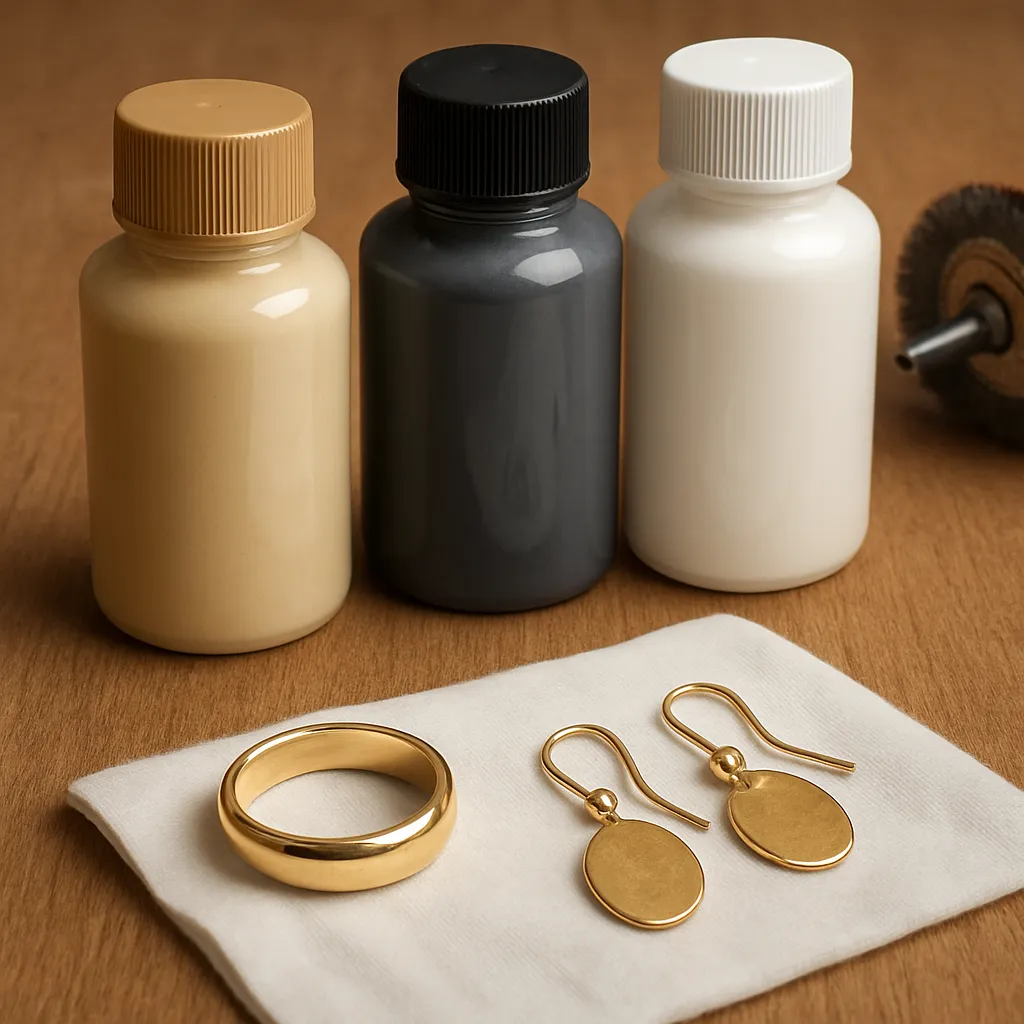
Metal jewelry earns its character not only from design and fabrication, but from the way light travels across its surfaces. A good finish can make a modest pendant gleam like a treasure, or give a hammered cuff the soft glow of an heirloom. For artisans working at the bench, the final polish is both a science of abrasives and a craft of touch, pressure, and patience. This guide focuses on finishing polishes that bring handmade pieces to their peak—what works best for different metals, how to avoid frustration, and which tools help you reach a repeatable, competition-level sheen.
Understanding Finishing Polishes and the Science of Shine
Polishing is controlled abrasion. At each stage you replace deeper scratches with finer, shallower lines until the surface begins to reflect. That reflective clarity—often called a piece’s luster—arrives only when the final abrasive particles are small enough, the pressure is right, and heat is managed so the metal doesn’t smear. Finishing polishes contain extremely fine abrasive particles suspended in waxy bars, greases, water-based pastes, or slurries. When the particles are matched to the metal’s hardness and microstructure, they erase marks that your eye reads as noise, revealing a continuous, bright field.
The sequence matters. An inadequate pre-polish makes final polishing slow or patchy. Conversely, a good pre-polish lets the finisher work lightly, keeping edges crisp and details sharp. In practice, the last one or two compounds determine whether a ring looks hazy or crystal-clear. The best results come from clean tooling, defined steps, and deliberate moves—always keeping the workpiece cool to avoid distortion or streaking.
Finishing also has a tactile rhythm. Too much pressure loads the wheel and can drag grit across the surface; too little fails to engage the abrasive. Move steadily in one direction at a time and inspect under raking light. The moment you think you can stop, take two more gentle passes—often that’s where the glow appears.
Matching Polish to Metal: What Works Best and Why
Each alloy responds best to particular abrasives. Soft, noble metals accept finer compounds quickly; work-hardened or tough alloys need more aggressive particles followed by a very refined step. Temperature sensitivity, oxide behavior, and work-hardening all factor into the choice.
Silver: Fine, Sterling, and Argentium
Silver is soft and thermally conductive, which means it can heat quickly under the wheel, but also shows a deep, mirror finish with the right compound. After a careful pre-polish (up to 2,000–3,000 grit equivalent), use a dedicated finishing bar designed for silver or a high-clarity white compound. Many bench jewelers love green or blue specialty bars for silver because they cut cleanly without smearing. Keep buffs clean and cool to minimize firescale visibility. For tarnish resistance on sterling, consider finishing with a low-residue compound followed by hot soapy wash, and store pieces with anti-tarnish materials. If you need absolute brilliance on a competition piece, finish under cool light, make broad passes, and avoid rounding edges.
- Pre-finish: fine abrasive wheels or papers to 2,000–3,000 grit
- Finish: non-greasy white finishing compound or specialty silver bar
- Optional: gentle final touch on a loose cotton buff at slow speed
Note that sterling’s copper content is why tarnish returns. Protective lacquers, rhodium accents, or tight storage can help, but a high, clean finish slows visible re-oxidation by reducing surface area where reactions start.
Gold: Yellow, Rose, and White
Gold alloys polish easily but vary in hardness. 18k yellow is forgiving; 14k white (nickel- or palladium-based) can be tougher. After a true pre-polish, a gentle finishing bar gives a warm, liquid gleam—avoid heavy greases that can animate swirl marks. Work cool, particularly on prong tips and pavé settings. For white gold that will be rhodium plated, polish to near-mirror so the plating sits evenly. For rose gold, take lighter passes—smearing can occur if the wheel is overloaded.
- Pre-finish: 1,500–3,000 grit equivalent
- Finish: high-clarity fine finishing bar labeled for gold
- Alternative: white finishing compound for brisk, bright pop on 14k white
Platinum and Palladium
Dense and tough, these metals don’t move like gold or silver. They respond to a refined cutting compound followed by an ultra-fine finisher. Keep tools used on platinum separate to avoid cross-contamination. Moderate pressure and lower rpm prevent heat smears. A firm felt wheel blends tool marks before a soft mop imparts the final gleam. Expect a slightly different visual quality than gold—the shine is crisp but cooler, with depth that shows under strong light.
- Pre-finish: up to 2,000–3,000 grit equivalent, firm felt for blending
- Finish: ultra-fine platinum-rated finishing compound on a clean loose buff
Copper, Brass, and Bronze
Base metals can drag, smear, and reveal streaks if overheated. A clean progression is essential. Avoid loaded wheels that streak zinc-rich brasses. Final finishing favors bright white or specialty base-metal finishing bars that cut cool and leave minimal residue. After finishing, wash promptly to remove residues that can etch the surface over time. Seal or wax if the piece will be worn against skin, as these alloys patinate and fingerprint quickly.
- Pre-finish: up to 2,000 grit equivalent, very even groundwork
- Finish: clean, cool-cutting white or blue finishing compound for base metals
Stainless Steel and Exotic Alloys
Stainless hardens under abrasion and can form persistent lines if the groundwork is rushed. Use a structured pre-polish, then a finishing compound designed to brighten chromium-bearing alloys. Keep the piece moving and cool; stainless can blue or warp if overheated. After final polish, allow oxygen exposure so the metal’s protective layer strengthens. In jewelry contexts, this benefits comfort and appearance over time.
- Pre-finish: thorough, structured abrasives to uniform scratch pattern
- Finish: green or blue stainless finishing bar, light pressure on a loose buff
The protective oxide layer reconstruction, often called passivation, is why clean stainless tends to stay bright with minimal maintenance once finished well.
Titanium and Niobium
Reactive metals are springy and resist abrasion, but they can take a rich luster with the right sequence. Finish at lower rpm with cool-cutting compounds and very clean tooling; any grit from other metals will score them. Frequent cleaning between steps is vital. Anodized pieces must be polished before coloring; once oxide colors are applied, mechanical polishing will erase them.
- Pre-finish: consistent abrasives, watch heat, no contamination
- Finish: specialty titanium finishing bars or fine oxide pastes on soft wheels
Types of Polishing Compounds and When to Use Them
Final-stage polishes differ by their abrasive and binder. Understanding what’s inside the bar or paste helps you choose wisely.
- Tripoli: A classic brown cutting compound with relatively coarse particles used for pre-polish on soft metals. It removes file marks quickly but is not a true finisher. Follow with a finer compound to achieve clarity.
- rouge: Traditionally iron oxide-based finishing bars loved for gold and silver. They cut very finely, creating a warm, high-gloss finish. Best applied with light pressure on clean, loose buffs to prevent greasy swirls.
- White finishing compounds: Often based on alumina, they provide a bright, neutral shine with low residue. Particularly good for silver, base metals, and white gold alloys when you want a crisp, colorless reflectivity.
- Green finishing compounds: Typically chromium-oxide based for stainless and tool steels. They impart a sharp, clean finish and resist smearing on hard alloys.
- Blue and specialty blends: Formulated to cut cool and leave very little residue on silver and base metals; excellent for filigree and textured zones where cleanup is tedious.
- Premium micro-finish bars: Ultra-fine abrasives for the last whisper pass; superb for show pieces where haze must vanish.
- Pastes and slurries: Water- or oil-based liquids that charge felt, leather, or cloth for precise control, especially useful near stones or delicate settings.
- diamond paste: Extremely hard particles that burnish and cut difficult alloys and carbide details; best used sparingly on very firm felt or wood laps for tight control.
For bench work, keep finishing compounds limited to one or two trusted bars per metal family. This simplifies wheel management, reduces mess, and builds muscle memory for consistent results.
Tools, Wheels, and Media for a Consistent Finish
The same compound behaves differently on different wheels. Wheel density, nap, and edge geometry determine how the abrasive meets the metal.
- Loose cotton buffs: Gentle contact for final brightening; ideal for fine finishing compounds.
- Stitched cotton or spiral-sewn buffs: Slightly firmer face for control on flats and edges; useful before the very last pass.
- Felt wheels and bobs: High control, especially on flats, bezels, and tight interiors; excellent for paste polishes and for blending before final buffing.
- Flannel or ultra-soft buffs: Whisper-light touch when you want to avoid rounding and keep crisp geometry.
- Mini buffs and points: For flex shafts, essential in filigree, inside rings, and near settings; use gentle pressure and frequent cleaning.
- Wood laps and leather strops: Perfect for charging with pastes to refine flats and avoid edge rounding; a favorite for professional finishing on signets and seals.
Rotational speed matters. Many finishing compounds prefer moderate to low rpm so they engage without heating the work. Let the abrasive do the work; increase contact time before increasing pressure. Re-dress wheels often by raking or trimming away loaded surfaces. Store each wheel in a labeled bag to prevent cross-transfer of grit.
Workflow: From Clean-Up to Mirror Finish
A smooth, repeatable sequence saves time and improves results. Below is a robust approach for hand-fabricated jewelry:
- Clean-up: Refine solder joints and tool marks with files, then progress through abrasives, changing directions by 90 degrees at each step until a uniform, fine scratch pattern remains.
- Pre-polish: Use a firm wheel and an intermediate cutting bar to replace sanding lines with an even, satin glow. Inspect under raking light; if any line persists, back up one step.
- Detailing: Switch to felt bobs or wood laps with a fine paste to tune flats, inside curves, and around settings without rounding edges.
- Final polish: Charge a clean, soft buff with your chosen finishing compound. Work lightly and consistently. Refresh the compound sparingly; overcharging smears residue.
- Cleaning: Degrease with hot water and soap or an ultrasonic cleaner. Rinse and dry thoroughly. Inspect; if a haze remains, give a short second pass.
Between every step, eliminate cross-carry of grit. Dedicated wheels and frequent washdowns protect your finish and prevent microscopic scratches that cloud the final look. Those fine lines—often called micro-scratches—are the difference between bright and breathtaking.
Surface Effects: Satin, Brushed, Burnished, and High Polish
Not all jewelry should be mirror-bright. Contrasts between matte and gloss heighten form and texture. Finishing polishes can refine even matte surfaces by removing torn metal without erasing texture.
- Satin finishes: Achieved with fine abrasive pads or radial bristle discs; a brief touch with a very mild finisher cleans the surface without raising a mirror.
- Brushed textures: Use consistent stroke directions and grit; protect with wax if the piece will see daily wear.
- Directional gloss: Polish only select zones—crown lines, bevels, or edges—to draw the eye; mask areas you wish to keep matte.
- burnishing: Mechanically compressing metal with a smooth tool or tumbler; it brightens without removing significant material and tightens the surface for greater reflectivity.
Combining a controlled satin ground with sharp, polished accents is a hallmark of advanced handicraft: it defines geometry, reveals volume, and makes stones appear brighter by contrast.
Care, Storage, and Maintenance of Polished Jewelry
A great finish deserves protection. Oils from skin, environmental sulfides, and household chemicals can dull surfaces or leave films. Wash pieces gently after bench polishing to remove residues, then dry fully. Store silver with desiccants or sulfur-absorbing strips; keep pieces separate to prevent friction marks. Teach clients how to clean at home: mild soap, soft cloth, and patience. Avoid tissues or rough fabrics that re-scratch the surface.
For base metals and sterling, microcrystalline waxes can add a thin barrier. For stainless and titanium, a simple detergent wash and dry preserves their brightness; allowing clean air exposure helps the natural protective oxide layer reform and harden over time. Regular, gentle care means you won’t need to re-polish aggressively, which preserves design details and prolongs the life of the jewelry.
Troubleshooting: Common Polishing Problems and Fixes
- Haze that won’t leave: Groundwork likely incomplete. Return to a finer abrasive step, reset a uniform scratch pattern, then re-polish with a cleaner wheel.
- Streaks or smears: Wheel overloaded or pressure too high. Rake the wheel, reduce rpm, and apply compound sparingly.
- Edge rounding: Wheel too soft or technique too aggressive. Switch to firmer tooling for flats, reserve loose buffs for the last whisper pass.
- Residue in textures: Use low-residue compounds and miniature tools; clean in ultrasonic and use a soft brush to lift trapped waxes.
- Color cast on white metals: Try a neutral, oxide-free finisher and a freshly cleaned buff; some compounds warm the tone subtly.
- Pits that appear after polishing: Casting porosity revealed by shine. Fill and refinish or embrace texture; polishing alone won’t fix voids.
- Heat discoloration: Lower rpm, lighter pressure, and short passes; keep a cup of water nearby to cool the piece between runs.
Safety, Cleanup, and Eco Considerations
Finishing creates fine particulate and aerosolized binders. Use dust extraction or a polishing hood, eye protection, and a good respirator when needed. Keep hair and loose clothing away from rotating tools. Dedicated gloves are generally avoided near spinning wheels to prevent snag risks; instead, hold work with finger cots or a leather palm guard.
Compound residues can stain cloths and benchtops; contain your workflow with trays and liners. Water-based or low-residue finishers simplify cleanup and reduce environmental load. Collect dust for metal recovery; you may be surprised how much value accumulates in polishing sweeps and filters over time. Label containers and store chemicals out of sunlight and heat.
Buying Guide: Selecting Reliable Brands and Kits
Rather than hoarding dozens of compounds, build a compact, disciplined set tailored to your metals:
- For silver-focused studios: one clean-cut pre-polish bar, one crisp white or blue finisher, and a soft loose buff dedicated solely to the final step.
- For goldsmithing: a gentle high-gloss finisher for yellow and rose alloys, and a brisk neutral finisher for white alloys; add a firm felt wheel and soft mop.
- For platinum/palladium: a structured pre-polish system with felt and an ultra-fine platinum finisher; dedicated wheels to avoid cross-carry.
- For mixed base metals: cool-cutting white finisher; budget extra wheels for inside work and textures.
- For stainless/exotics: a green or blue stainless-specific finisher, dedicated buffs, and patient technique.
Test small bars before committing to bulk. A good finisher should load predictably, cut evenly with light pressure, and wash away without stubborn films. Keep notes in your bench log: wheel type, rpm, compound, and results. Those records turn occasional success into reliable process.
Workshop Tips from Bench Jewelers
- Keep it cool: Heat is the enemy of clarity. Short, gentle passes beat long, hot sessions every time.
- Mark your wheels: Color-code arbors and store each buff in its own bag; this prevents accidental grit mixing.
- Dress often: Rake or skim the wheel face to expose fresh fibers; a glazed wheel just smears compound.
- Light is a tool: Inspect under raking light and rotate the work; shallow haze hides in overhead lighting.
- Mind your edges: Approach edges with the wheel tangent, not head-on, to avoid rounding and roll-over.
- Minimal compound: A little goes a long way. When in doubt, clean the wheel and reapply sparingly.
- Isolate stones: Tape or shellac fragile gems; many compounds can scratch softer stones.
- Finish last: Polish after final fitting; polishing away and then filing back is wasted effort.
- Practice plates: Keep scrap strips of each alloy on hand; test compounds and pressures before touching the client’s piece.
- Document: Snap photos of finishes you love and note the exact sequence; build your personal reference library.
The Best Finishing Polishes by Metal: Quick Reference
While every bench has favorites, these pairings have proven reliable for artisan work:
- Silver (sterling, fine, Argentium): clean white finisher for a bright, neutral mirror; specialty silver bars for low residue in filigree; finish on a loose cotton buff.
- Gold (yellow, rose): gentle high-gloss finisher that warms the tone; white alloys respond to neutral brighteners.
- Platinum/Palladium: ultra-fine platinum-rated finisher after firm felt blending; low rpm, light pressure.
- Copper/Brass/Bronze: cool-cutting white finisher; cleanse promptly to prevent fingerprints etching the surface.
- Stainless: green or blue stainless finisher on clean loose buffs; allow the protective oxide to reform after polishing.
- Titanium/Niobium: specialty cool-cutting oxide finisher in paste form on felt or soft wheels; avoid grit carryover.
For delicate details and flat signet faces, supplement bar compounds with pastes on felt or wood laps; for deep cavities, miniature cotton mops with a low-residue finisher prevent gumming up textures.
Clean Transitions and the Role of Abrasive Equivalency
Moving from abrasives to compounds smoothly is easier when you think in particle sizes. If your last sandpaper is roughly 2,000 grit, your pre-polish compound should replace that scratch depth, and your finisher should be dramatically finer. Skipping steps forces a finisher to do too much work, which creates heat and haze. Smooth transitions deliver a stronger, brighter result with fewer passes.
Equivalency charts help, but metals vary in response. Keep a small matrix: final abrasive used, compound chosen, rpm, wheel type, and outcome notes. Over a few projects, you’ll develop a reliable “two-compound finish” for each alloy that covers most scenarios, with a specialty paste reserved for showpiece perfection.
Finishing Near Stones and Difficult Details
Final polishes can mar softer gems and glass, so mask or set aside those zones. Use felt points charged with paste for bead-tipped prongs, gallery curves, and tight inside corners. Work outward from settings so the wheel carries residue away from the stone. Ultrasonic cleaning afterward helps lift residual waxes; check stone compatibility first and use warm, not boiling, solutions.
For enamels and inlays, polish the metal frame first, then refine edges with micro-felt and paste by hand. Keep compounds off porous materials like wood or bone; protect with tape and burnish the edges to a bright line instead of wheel polishing.
Cleanliness is Finish Quality: Avoiding Cross-Carry
Perhaps the most overlooked factor in finishing quality is cleanliness. Every stage should be isolated: separate bins for buffs, labeled arbors, and dedicated rags. Wash pieces between each compound. Even a trace of coarse grit carried into the final step can create scratches your eye reads as fog. Habitual housekeeping yields faster, brighter finishes and far fewer do-overs, saving both time and material.
Keep a mental checklist at the wheel: Is the buff clean? Do I really need more compound? Is the part warm? Is my direction consistent? These small checks reshape results in profound ways, especially on reflective signets, bangles, and mirror-backed pendants where imperfections broadcast themselves.
When to Use Alternatives: Tumbling and Hand Polishing
Mass finishing with steel shot in a rotary or vibratory tumbler can brighten metal and tighten surfaces after pre-polish. It is especially helpful for chains and small components that are hard to hold at a wheel. However, tumbling rarely replaces the crispness of a wheel-buffed finish on flats and bevels. Consider it a supportive step: burnish first in the tumbler, then deliver the final pop at the wheel with your chosen finisher.
Hand polishing with cloths charged with fine paste gives incredible control on heirloom-level pieces. A few minutes of deliberate, linear strokes can eliminate swirls and raise clarity, especially on gold signets and curved cufflinks. It is slower but grants precision that machines sometimes erode.
Final Word: The Craft Behind the Shine
Finishing polishes are only as good as the hands that wield them. The finest compound on the wrong wheel, with too much pressure or too little cleaning, will frustrate the most patient artisan. Conversely, a well-chosen finisher on a clean, soft buff can transform a well-prepped surface into that breathtaking, liquid glow that makes handmade jewelry feel alive. Hone your sequence, record your findings, and protect your tools from stray grit. With method and care, your pieces will reflect not just light, but the intention and skill behind them—an unmistakable signature of true handicraft.
As a closing reminder, keep wheels and bars segregated and preserve the bench’s hygiene. Even trace contamination can undo twenty minutes of careful work. Master the essentials, then experiment with specialty bars and pastes until you’ve found the two or three perfect finishers that make your metals sing.
