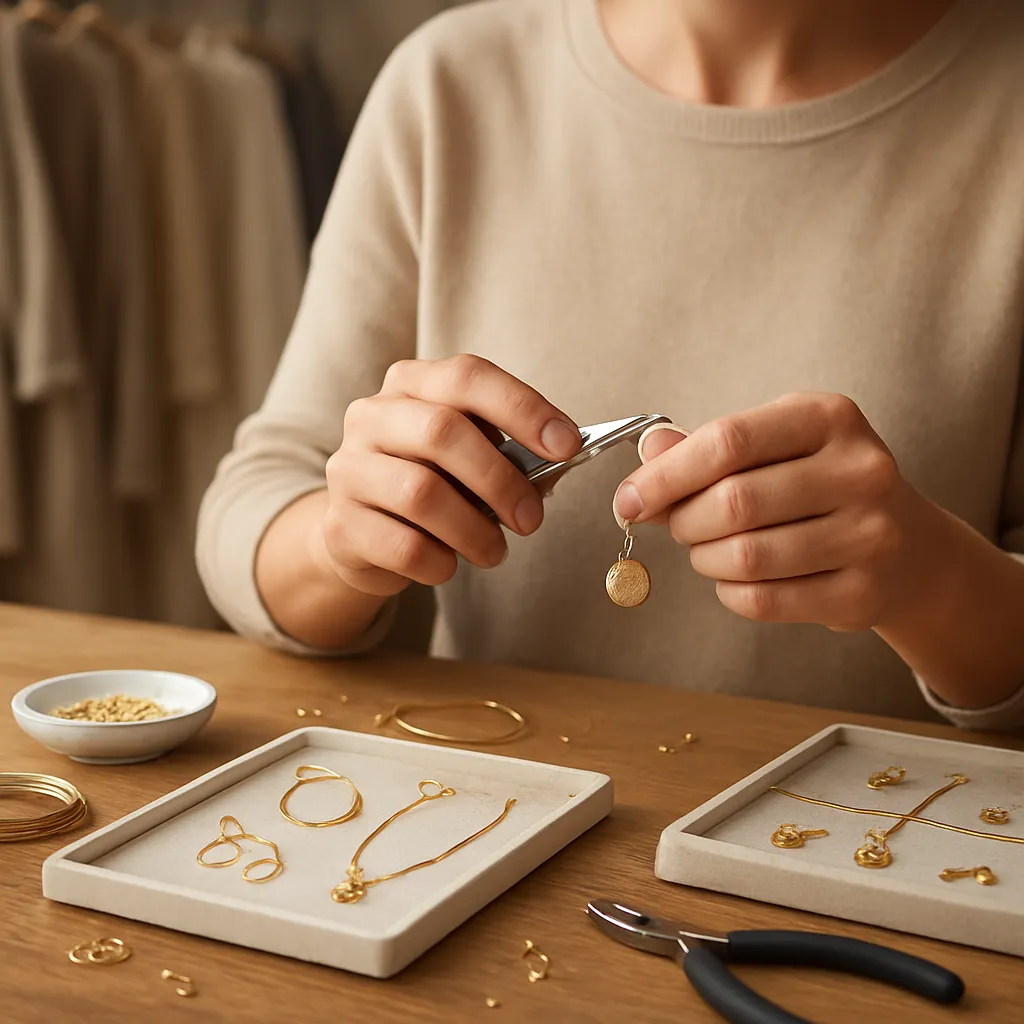
Jewelry can be the quiet architecture that holds a minimalist closet together. When you treat accessories as a compact, flexible toolkit aligned with your clothing, every outfit becomes faster to assemble and more expressive. This guide explains how to handcraft pieces that speak the visual language of a capsule closet—pieces that transform, layer, and travel well—so that a small number of components produces wide styling options without clutter. You will learn to translate a clothing palette into metals and stones, to scale designs to silhouettes, and to engineer components that connect, detach, and recombine with ease. The heart of the approach is a maker’s mindset: plan with intention, build with care, test rigorously, and iterate until the results feel effortless to wear.
The Role of Jewelry in a Capsule Closet
A capsule closet thrives on clarity: limited silhouettes, a restrained color palette, and reliable outfit formulas. Handcrafted jewelry supports this by providing focal points and finishing touches that echo or counterbalance each garment’s structure. Instead of chasing trends, your workshop can produce a tightly edited set of components that “speak” to the same palette and shapes already living in the closet. Imagine a short set of chains at varying thicknesses, a ring of pendants that click on and off with micro-connectors, and earring elements that can drop or hug depending on the day—all built from the same material family.
Good capsule jewelry design follows five principles:
- Anchor with metals that harmonize with the clothing palette and complexion.
- Prioritize scale that matches the garment architecture: bold forms for clean lines, finer links for delicate fabrics.
- Use repeatable textures and profiles to create visual continuity across pieces.
- Engineer connection points so pieces recombine rapidly—no tool bench needed at the mirror.
- Design for practical wear: snag-resistance, balanced weight, and skin-friendly materials.
When a maker aligns jewelry with outfits this way, the collection delivers daily versatility without growing in size. A few well-made pieces behave like many.
Mapping Wardrobe Aesthetics Into Jewelry Decisions
Palette Translation
Start with the closet’s core: two to four neutrals, one to two accent colors, and any recurring prints. Convert these into a materials map. Cool palettes generally love sterling, platinum, and white rhodium finishes; warm palettes favor bronze, brass, yellow or rose gold. If the closet mixes cool and warm, design a “bridge” piece blending tones—such as a two-metal chain or a bimetal pendant—to unify both directions without forcing a choice.
Next, assign stones and beads sparingly. Minimalist closets often look best with subtle translucence (rock crystal, moonstone, smoky quartz) or opaque calm (onyx, jade, porcelain). If you introduce accent color, echo the wardrobe’s dominant hue rather than adding new ones. For patterned clothing, select stones with low contrast and consistent texture so they don’t argue with prints.
Form, Scale, and Body Geometry
Silhouette harmony is critical. Consider height, shoulder breadth, and face shape. Architectural collars and blazers like strong geometry: medium-to-thick chain gauges, structural pendants, and cuff bracelets. Soft knits and draped fabrics want more fluid lines and rounded edges. Build a worksheet for each client (or for yourself) noting necklines, sleeve lengths, and typical lapel shapes. Then set size “rails” for each jewelry type so you do not drift into extremes. This is the domain of proportion, and it rewards restraint: choose one bold dimension per look (length, thickness, or focal size), and keep the others moderate.
Texture and Finish as Quiet Repetition
Consistent surface treatment ties pieces together. If your chain links are satin-brushed, echo that finish on earring hoops and pendants. Mixing matte with high polish can work if you treat one as an accent. Texture also controls light: matte diffuses, reducing visual volume; polish collects highlights and makes smaller pieces read louder. Think of finishes as a way to create cohesion across many forms.
Materials and Tools for Handcrafted Capsule Jewelry
Metal Choices
- Sterling Silver: Workable, affordable, easily patinaed. Oxidize selectively to emphasize texture.
- Gold-Filled and Vermeil: Offer gold color with cost control; choose thick plating or filled stock for longevity.
- Brass and Bronze: Warm tone, excellent for sculptural forms. Protect skin with sealants on parts that touch often.
- Stainless and Titanium: Hypoallergenic, strong, great for minimal chains and ear wires.
Standardize wire and sheet gauges across projects to improve interchangeability. Keep a chart of preferred dimensions for jump rings, chain link sizes, and standard earring posts so components play well together.
Findings and Connectors
- Jump Rings: Use saw-cut rings for superior joins; solder where needed to prevent accidental opening.
- Clasps: Lobster and toggle clasps for reliability; magnetic clasps only with strong, encased magnets and secure crimps.
- Micro-Locks: Tiny swivels, bayonet fittings, and tension clips enable fast swaps for pendants and drops.
- Extenders: Short chains that convert length; finish with a small charm as a grip point and brand mark.
Stones, Beads, and Soft Materials
Choose minimal, repeatable forms: round, oval, or cushion cuts with low visual noise; seed beads in matte neutrals; tubular bone, horn, or ceramic. Natural materials introduce warmth without loud color. For cords, consider leather, microfiber suede, linen, or silk-wrapped cable. When using thread, select abrasion-resistant options like nylon-coated wire for beads with sharp edges and use thread guards near clasps.
Source with care and track provenance. Recycled metals and traceable stones reduce impact and align the craft with long-horizon sustainability.
Engineering for Modularity
Capsule jewelry earns its keep by transforming. Design connection ecosystems that allow parts to recombine safely. Establish a few “standards” such as 3 mm interior diameter bails, 1.2 mm pin thickness for interchangeable drops, or 0.8 mm ear wire gauges so pieces remain compatible as the collection grows. This approach embeds modularity into your brand identity.
Core Systems to Build
- Necklace Spine: Two or three chains in distinct weights and lengths with identical end fittings. Add extenders to shift positions around necklines.
- Pendant Library: A ring of bails that fit each chain; a mix of flats, talismans, and geometric frames. Keep back surfaces smooth for knit friendliness.
- Earring Architecture: A small hoop or huggie that accepts click-on drops; studs with removable jackets; threaders with stoppers to set precise drop lengths.
- Bracelet Stack: One rigid cuff, one flexible chain with charm points, and one beaded strand whose color matches the clothing accents.
Connectors and Converters
- Convert Pendants to Brooches: Solder a discreet pinback with a safety catch and a bail that folds flat.
- Necklace-to-Bracelet: Use a double-wrap chain with a centered clasp; add a short connector to turn it into a necklace.
- Magnetic Bridges: Hide micro-magnets inside tube components that snap together to create longer lines or break into travel-sized segments. Secure magnets so they cannot dislodge.
- Clip-In Frames: Open geometric frames that accept a stone charm by a tiny gate latch.
Label every connector specification in a maker’s notebook. Consistency allows parts made months later to remain fully interchangeable.
Handcraft Techniques That Serve a Capsule Approach
Wirework Fundamentals
Master clean loops, wrapped loops, and tensioned hooks. Use a loop mandrel or stepped pliers for consistency. Anneal thicker wire before forming, and work-harden finished shapes by tumbling in stainless shot to resist deformation. Create your own ear wires from hypoallergenic stock, rounding ends and polishing to a mirror finish for comfort.
Sheet Metal Forming
Cut with a jeweler’s saw, smooth with progressive grits, and file all edges that touch skin or fabric. For light-catching minimalism, try shallow domes using dapping blocks. Stamp hallmark and maker’s mark discreetly. Apply textures with sandpaper blocks, scotch-brite, or chasing tools; seal patinas with microcrystalline wax.
Chainmaking and Assembly
While commercial chain is efficient, hand-fabricated chains in a signature link can define a capsule identity. Soldered links prevent snags; vary link thickness across your three standard lengths to avoid redundancy. If using bought chain, stock spools of the same style for repeatability and keep cut lengths recorded.
Bead Stringing and Knotting
For beaded components, pre-plan sequences that echo wardrobe colors. Use bead boards to test spacing; incorporate metal spacer beads in your chosen finish to tie back to other pieces. When knotting silk, maintain even tension and finish with French wire or guards to protect against abrasion at the clasp.
Project Blueprints: Four Workhorse Builds
1) The Two-Metal Pendant System
Objective: Create a nucleus that harmonizes outfits spanning both cool and warm tones.
- Materials: One cool-toned chain (sterling), one warm-toned chain (gold-filled), three pendants: a flat disk, a bar, and a frame, each in both metals; matching bails; extenders.
- Steps:
- Fabricate pendants in 0.8–1.0 mm sheet; brush finish one face, high-polish edges for light line control.
- Standardize bails at 3 mm interior and solder closed for security.
- Assemble with identical lobster clasps; add 5 cm extenders with branded tag charms.
- Test combinations: single pendant, layered two-pendant stack (bar behind frame), mixed-metal pairings.
- Result: One set yields at least eight distinct looks across necklines.
2) The Interchangeable Hoop and Drop Kit
Objective: Earring flexibility without a drawer full of pairs.
- Materials: Two hoop sizes in hypoallergenic metal; six drop components (stone briolettes, metal disks, geometric wire forms), micro-lock jump rings, stud posts with jackets.
- Steps:
- Forge hoops from 1.2–1.5 mm wire; integrate a click-in closure or sturdy French clasp.
- Create consistent drop loops (2.5–3 mm ID) and attach micro-locks to prevent loss.
- Make two stud pairs and two jackets (halo ring and bar) that slip behind the lobe.
- Polish contact points to a mirror finish for smooth assembly.
- Result: Day-to-night shifts take seconds; a travel essential.
3) The Convertible Chain-Into-Bracelet
Objective: One chain that manages turtlenecks, open collars, and wrist stacking.
- Materials: A 40–45 cm chain with midline clasp points; a short connector (5–7 cm) with matching ends; safety chain.
- Steps:
- Build the chain in two equal halves with clasps at each end; ensure both ends fit the connector piece.
- Add a small, elegant safety chain across the primary clasp area.
- Finish with a matte-brushed surface for low glare and fabric friendliness.
- Result: Worn as a short necklace, extended for lower necklines, or double-wrapped as a bracelet with the connector.
4) The Brooch-Pendant Hybrid
Objective: Support blazers and knitwear with a single focal form.
- Materials: 1.2 mm sheet; pinback with safety; folding bail; tube-set stone optional.
- Steps:
- Cut a clean geometric silhouette; bevel edges slightly to reduce snagging.
- Solder a low-profile pinback; test on multiple fabric weights.
- Add a folding bail that disappears when worn as a brooch.
- Finish with a directional satin texture to catch lapel light elegantly.
- Result: A blazer anchor that also hangs beautifully from your chain system.
Finishing and Quality Validation
Even the smartest design fails if edges scratch or closures misbehave. Make finishing a ritual. Tumble-polish sturdy pieces; hand-buff delicate textures. Pass every edge through a “snag test” using a sample knit swatch. Weigh earrings and compare to a comfort threshold—often under 6 grams per ear for long wear. The goal is visible and invisible craftsmanship that makes the collection a pleasure to touch and use.
- Comfort: Round all contact points; deburr internal bail edges; check balance so pendants hang plumb.
- Security: Solder critical jump rings; test magnetic clasps by tugging with a small scale to a minimum standard (e.g., 1.5–2 kg pull force).
- Durability: Simulate wear by opening/closing clasps 200+ times; tumble bead strands in a soft pouch to check abrasion resistance.
Style Playbook: Fast Outfit Formulas
Build small, repeatable recipes that the wearer can memorize. Keep a card in the jewelry box with two to three combinations for each base outfit. This turns a minimalist closet into a stage for quiet, reliable statements while preserving a sense of timeless ease.
- Black Turtleneck + Straight Trousers: Mid-weight chain + geometric pendant; small hoop with metal disk drop; single cuff bracelet.
- White Shirt + Dark Denim: Fine chain doubled with extender; stud with bar jacket; beaded bracelet matching denim undertone.
- Crewneck Knit Dress: Two-layer chain mix (warm + cool); frame pendant; slim ring stack.
- Blazer + Tee: Brooch-pendant on lapel; small hoop alone; chain bracelet; optional second chain tucked under collar.
- Travel Capsule: One chain, one extender, three pendants, hoops with two drops; all fits in a flat pouch and covers five days of looks.
Wardrobe Integration and Color Discipline
Avoid color drift by deciding on a strict set of two accent hues for stones and beadwork derived from the clothing rack. This heightens the signal of each piece while keeping choices quick at the mirror. Snap photos of outfits and jewelry combinations; keep them in a shared album to review what worked. Over time, patterns emerge: which chain weight flatters which neckline, which drop length wakes up a crewneck, which stone intensity is too loud for your prints. This practice keeps the jewelry aligned with the evolving wardrobe rather than fighting it.
Ethics, Sourcing, and Environmental Considerations
Capsule thinking pairs naturally with responsible making. Fewer, better components require fewer resources, and well-built interchangeability reduces duplication. Seek recycled precious metals, certified supply chains, and low-toxicity studio practices (citric pickle, ventilation, dust collection, water reuse). Upcycle heirloom stones into modern frames sized to your system standards. Offer repair programs and buyback or refresh services. The goal is to create long-lived objects that meet the values of both maker and wearer and to reaffirm the craft’s commitment to long-horizon sustainability without compromise.
Documentation: The Maker’s Operating System
A capsule-friendly workshop runs on documentation. Maintain a spec book with:
- Standard gauges, bail diameters, clasp types, and finish recipes.
- Palette maps for current clients or seasonal capsules.
- Quality thresholds: acceptable weights, pull strengths, and finish textures.
- Replacement part codes so clients can add compatible pieces years later.
Photograph assemblies on neutral backdrops and on the body at standardized distances. Archive files by collection and connector type so you can audit gaps: maybe you need a medium-dark matte stone option or a thicker chain between your fine and heavy standards.
Fit and Comfort Across Diverse Bodies
Design for adjustability. Include extenders in two lengths; offer multiple hoop diameters; shape cuffs with an oval interior more than a round one to match anatomy. Consider accessibility: one-handed clasps, magnetic alternatives encased for safety, and tactile cues on ends help many wearers. Skin sensitivities demand clear labeling and options in titanium or niobium for ear wires and posts. Comfort is not an afterthought; it is a condition for daily use.
Maintenance, Care, and Longevity
Write care routines that respect materials. Store each finish separately to avoid micro-scratching; use anti-tarnish tabs with silver. Recommend a quarterly polish with a non-abrasive cloth and a yearly studio refresh: tighten joins, replate heavy-wear gold, replace stretched thread guards. Provide spare silicone earring backs and a travel pouch with segmented pockets so parts don’t tangle.
Pricing and Value in a Capsule Context
Price not only by material and labor but also by transformability. A pendant designed to anchor five looks provides multiplied utility; communicate that value. Offer modular bundles: one chain + two pendants + hoop set with two drops, discounted slightly versus separate buys. Track which components produce the most combinations and reinvest design time there.
Iterating With Feedback
Encourage clients to audit their daily choices. Do they reach for a weight class more often? Are there friction points—sticky clasps, snag-prone textures, an extender that dangles too much? Use small-batch updates to correct issues and keep compatibility intact. Seasonal refreshes might add a single new accent stone or a fresh texture rather than a whole new color story.
Common Pitfalls and Practical Fixes
- Overcrowding the Palette: Limit to two metal tones maximum in a single look unless one is a tiny accent. If chaos creeps in, remove the loudest piece.
- Ignoring Neckline Geometry: V-neck prefers a single, centered focal or a Y-drop; crewnecks love stacked chains with a shorter brightest layer.
- Excessive Weight: Hollow or pierced forms can keep visual presence without fatigue.
- Unfinished Edges: Any burr will snag knits; re-sand and burnish.
- Inconsistent Connectors: Standardize or retrofit older pieces with adapter bails so they stay in the system.
Design Language: Creating a Signature
Choose one or two motifs that whisper through every piece: a gentle radius corner, a particular file-mark texture, a custom link shape. Repeat them at different scales so the collection reads as a family. Brand with a micro-tag on extenders or a hallmark that doubles as a design note. The more your collection speaks a consistent language, the easier it is to wear many ways.
Workshop Efficiency for Capsule Production
Batch process steps: cut multiple blanks, texture them together, solder bails in runs, then finish in grouped stages. This keeps costs down while maintaining artisanal qualities. Create jigs for repeat angles and lengths—especially for ear wires, chain segments, and drop loops—so replacements are perfect matches. Keep a small parts library organized by size and finish so you can fulfill custom requests quickly.
Photography and Presentation to Support Use
Teach the wearer how to use the system visually. Photograph assemblies on a style card: three ways to wear each piece, plus an “elevate” option that adds one more element. Include a QR code linking to a short video showing how to attach drops and change extenders. Present the collection in a compact, sectioned case that mirrors the system: chains, pendants, drops, and connectors each in their own pocket.
Mindset: Fewer, Better, and More Personal
At the bench, resist the call to chase novelty. Innovate at the level of function, feel, and subtle detail. Ask: Does this piece extend options in a meaningful way? Does it fit the system? Does it earn its place in daily rotation? Capsule jewelry is quiet power: it supports outfits rather than overpowering them, and it invites the wearer to author combinations effortlessly.
Putting It All Together
Start small. Build one necklace spine, one earring architecture, and one bracelet stack. Translate the closet’s palette and silhouettes into metal and stone with discipline. Engineer connection points that behave intuitively. Finish with care and test beyond what seems necessary. Document standards so the collection grows without losing compatibility. In time, your compact set of components will create a cascade of looks from a handful of parts. This is the deep satisfaction of a capsule approach: clarity, speed, and the quiet confidence that every element has a purpose—and that purpose is to amplify the wearer’s life with durable, graceful capsule logic, wearable cohesion, and true, lived-in modularity.
