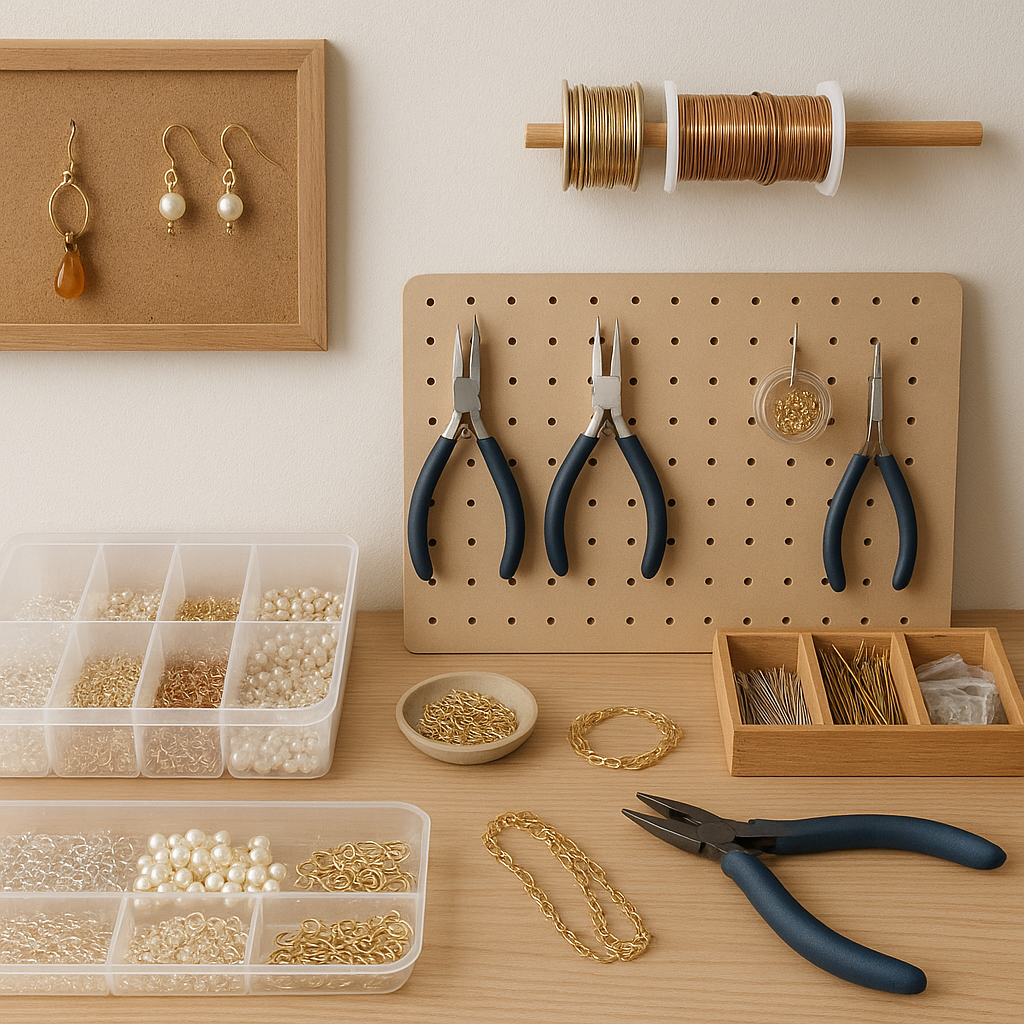
Jewelry-making thrives on order and flow: a place for every tool, a map for every motion, and a rhythm that turns creative sparks into finished pieces. An organized workspace not only reduces stress and errors, it safeguards health, protects materials, speeds production, and preserves the delicate joy of craft. Whether you work at a kitchen table or in a dedicated studio, the strategies below will help you carve out a calm, productive bench where ideas travel smoothly from sketch to sparkle—without lost findings, scratched stones, or burned tabletops getting in the way.
Clarify your practice and define space zones
Start by asking what you actually make and how you like to make it. Wire-wrapping and beading require different setups than solder-heavy fabrication or lapidary work. Sketch the steps for your favorite projects from left to right on paper, highlighting recurring actions like measuring, cutting, bending, soldering, quenching, pickling, polishing, assembly, and packaging. This project journey becomes the blueprint for your bench layout and sets the tone for workflow.
Divide your space into zones so materials and tools align with their function:
- Measuring and cutting: rulers, dividers, calipers, scribes, saw frames, shears; a sacrificial cutting mat or bench pin.
- Forming: mandrels, pliers, dapping blocks, mallets, stakes; a quiet surface that absorbs impact.
- Heat and joining: soldering board or charcoal block, third-hand, flux, solder, pickle pot, quench bowl, fire brick; heat-proof mats and clearances.
- Finishing: files, sandpaper grits, polishing compounds, rotary tools, tumbler; dust collection and clean rags.
- Assembly and packaging: trays for findings, soft cloth surface, brand cards, boxes, tape, labels.
Arrange zones so work can flow without backtracking. If right-handed, place cutting left of forming and forming left of heat to move left-to-right; reverse if left-handed. Keep the quiet, clean tasks furthest from the noisy, dusty ones to prevent contamination.
Layout and bench fundamentals
Choose a bench that fits you and your tasks. Traditional jeweler’s benches are higher than desks: 95–105 cm (37–41 in) tall with a recessed semi-circle and a slide-out catch tray to collect filings. If you sit, use an adjustable stool with lumbar support and a footrest so knees rest around 90 degrees; if you stand, add an anti-fatigue mat and set bench height near elbow level. Good ergonomics saves wrists, shoulders, and back.
Anchor frequently used tools within a forearm’s reach. A common approach is the bench triangle: materials to your non-dominant side, tools to your dominant side, and active work directly in front. Vertical space matters; mount racks, magnetic bars, and small shelves to keep surfaces clear without hiding tools. Avoid deep, dark drawers that become black holes—shallow drawers with dividers are better.
Ventilation is critical for any heat or chemical work. Use a dedicated fume extractor with a HEPA + carbon filter close to the soldering area, or duct to the outdoors. Place flammables in a metal cabinet away from ignition sources. Keep open floor space clear; tripping while holding a torch is a hazard you never want to test.
Light that reveals detail
Jewelry is miniature. Good lighting is both a safety measure and a creative tool because color, facet edges, and surface scratches all hide in poor light. Layer three types:
- Ambient: room lighting that prevents harsh contrast; 300–500 lux overall.
- Task: adjustable arm lamps positioned 15–30 cm (6–12 in) above the work; 1000–2000 lumens with CRI 90+ at 4000–5000K to balance warmth and clarity.
- Accent: small LED strips under shelves, or ring lights around magnifiers to eliminate shadows when setting stones.
Use two lamps from different angles to reduce glare on polished metal. Consider a magnifying visor or microscope for micro-prongs and pavé; align lenses with your natural posture to avoid neck strain. Keep bulbs and lenses dust-free; even a thin film dims brightness and shifts color accuracy.
Tool access and containment
Inventory your tools by frequency: daily, weekly, occasional. House daily tools in plain sight, weekly ones in labeled drawers, and occasional ones remotely. Tool organizers that work well include:
- Pliers rack: horizontal racks that keep tips visible; arrange by jaw shape for muscle memory.
- Shadow board: outline silhouettes on a pegboard so missing tools are obvious at a glance.
- Magnetic bars: for steel tools like files and tweezers; avoid for small steel parts that could magnetize unintentionally.
- Drawer grids and foam: compartmentalize burs, bits, and gravers; label each cavity for size and shape.
- Heat station caddy: corral flux, boric acid, solder snips, and solder chips; a small ceramic dish prevents melting plastics.
Prioritize storage that supports fast resets: trays that lift out, bins that stack, and lids that shut with one hand. A slide-out wooden board can add temporary space for laying out patterns without reshuffling your main bench.
Materials, findings, and the art of tiny parts
Small components vanish easily. A consistent labeling system and resilient containers are non-negotiable. Use clear boxes with adjustable dividers for beads and findings; glass vials for precious stones; coin envelopes or anti-tarnish zip bags for silver sheet and wire offcuts. Place desiccant packs in compartments to fight humidity, and store silver away from sulfur sources like rubber bands.
For wire and sheet, adopt color-coded tags: gauge on one side, alloy on the other. Stamp tube ends with a micro marker. Keep a “first-in, first-out” divider so older materials get used first.
Build a lightweight inventory system without heavy software:
- Assign each material a code (e.g., SS-20G-WIRE-5M).
- Record quantity, supplier, and reorder point on a small card or in a shared spreadsheet.
- Attach QR codes to bins that open a digital sheet with specs, heat treatment notes, and care tips.
Gemstones require special handling. Line trays with flocked inserts, store softer stones (opal, turquoise, pearl) away from harder ones, and label hardness and treatments. Add a “staging tray” for in-progress projects so loose stones never sit directly on the bench.
Surfaces and micro-stations
Your main bench surface should be smooth but not glossy; wood with a protective finish works well. Add micro-stations tailored to your process:
- Sawing corner: a bench pin at chest height, bright side lighting, and a sweep tray to catch filings.
- Soldering island: ceramic tiles on top of a heat-resistant pad; separate tins for hard, medium, and easy solders; flux and quench bowl stationed to the right if right-handed.
- Pickle zone: a lidded, labeled crock pot (only for studio use) and copper or plastic tongs; baking soda bath nearby to neutralize acids.
- Finishing bar: abrasives from coarse to fine arranged left-to-right; polishing compounds in covered tins; a dedicated clean cloth for final buffing.
For metal filing capture, stretch a canvas apron or a bib tray under the work area. Gold and silver filings add up; periodic collection and refining can fund new tools.
Safety and environmental health
Jewelry studios mix heat, dust, and chemicals. Build safety into your layout and habits:
- Personal protective equipment: impact-rated eyewear, hearing protection near motors, and P100 respirators for fine particulates; nitrile gloves for chemicals.
- Fire readiness: a class ABC extinguisher within reach, a clear torch rest, and a metal tray beneath soldering work. No paper towels near open flame.
- Ventilation: local extraction at soldering, polishing, and patination stations; store solvents in a ventilated metal cabinet.
- Chemical handling: label all solutions, keep Material Safety Data Sheets accessible, neutralize pickle before disposal, and never pour metal-heavy sludge down the sink—collect for hazardous waste drop-off.
- Noise and vibration: isolate motors on rubber feet; place tumblers on dense foam to cut resonance.
Establish a no-food zone around chemicals and a mandatory cool-down period for torches before storing. Good habits prevent close calls.
Cleaning rhythms and bench reset
Clean as a ritual. Treat cleanliness as part of production rather than an afterthought. A reliable cadence keeps dust low, tools sharp, and your mind clear:
- Per task: put away tools not used in the next step; clear swarf with a soft brush and mini vacuum.
- Daily: return all tools to homes, wipe surfaces, empty catch trays into labeled scrap containers by metal type.
- Weekly: inspect burs and files for wear, wash polishing buffs, replace worn abrasive papers, and clear vents.
- Monthly: deep-clean drawers, oil hand tools lightly, inventory consumables, and review what never got used—those items may move off the bench.
Adopt a 5S-inspired approach: sort, set in order, shine, standardize, sustain. Simple checklists taped inside a cabinet door make resets fast and predictable.
Digital order for analog craft
Even the most tactile studio benefits from digital scaffolding. Create a folder for each collection with subfolders for sketches, CAD files, reference photos, BOMs (bills of materials), and process notes. Use consistent file names and versions (e.g., RING_AURORA_v03.stl). Keep a master spreadsheet for suppliers with item codes, lead times, price breaks, and preferred substitutes.
Print mini process cards with steps and quality checkpoints for recurring designs, then store them in a small stand by the bench. QR codes on tool drawers can link to maintenance instructions or grit sequences for finishing. Back up files automatically to a cloud account and an external drive.
Streamlining for speed and joy
Every reach, re-clamp, and search adds friction. Hunt for incremental gains in efficiency:
- One-piece flow for bespoke orders: set up tools once and complete a piece end-to-end to minimize context switching.
- Thoughtful batching for production runs: cut and pre-form multiples, but avoid batching steps that invite defects to multiply unseen (e.g., soldering before test-fitting).
- SMED for tool changes: store mandrels and burs in the order they’re used; pre-load a spare handpiece collet.
- Kitting: pre-pack findings, stones, and wire for each project in a lidded tray so you can “grab and go.”
- Visual controls: color-code zones and trays; use silhouette labels so missing pliers are obvious.
Continually evaluate time sinks. If a tool is used more than ten times per session, it deserves prime real estate. If it’s used rarely, it goes higher, deeper, or off the bench entirely.
Comfort, creativity, and the senses
A studio should feel like a place you want to enter each day. Small shifts nurture inspiration as much as output: add a corkboard for color swatches and sketches; keep a tray of sample textures and test pieces you can touch; display a few favorite stones to remind you why craft matters. Curate sound with a small speaker for focus playlists and keep a plant nearby to soften edges and improve air quality.
Introduce a “warm-up” ritual: five minutes of filing on scrap to center your hands, or a quick sketch of yesterday’s idea. These cues train your mind to slip into making mode quickly.
Small space and mobile studios
Not everyone has a dedicated room. For compact or shared homes, a fold-down wall bench or a wheeled cart can transform a corner into a capable studio:
- Use stackable, lidded trays labeled by process; the top tray becomes your active surface.
- Mount a small pegboard inside a cabinet door for pliers and tweezers.
- Choose a butane micro torch and a folding solder screen for heat work; put a flashing or tile layer below.
- Store chemicals in a sealed tote and place it under a window when in use with a fan exhausting outward.
For travel kits, a tool roll plus a compact box for findings covers most needs. Add a light clip-on magnifier and a small USB task light to guarantee consistent visibility on the road.
Sustainable, budget-friendly choices
Organization needn’t be expensive. Upcycle jars for small parts and label lids; turn thrifted spice racks into bur caddies; cut cork sheet into drawer liners to cushion tools. Choose durable, repairable items over disposable ones. Capture and refine precious metal scrap. Use citric acid pickle instead of harsher alternatives, and consider water-based flux where possible.
When buying new, prioritize tools you can maintain yourself—files you can card clean, handpieces with replaceable brushes, lamps with standard bulbs. Good organization lets a modest tool set punch above its weight.
Scaling from hobby bench to studio
As orders grow, your workspace must evolve. Add duplicate tools for the steps most often bottlenecked. Upgrade dust collection at polishing with a hooded motor and filter. Consider a dedicated solder station with a hard-plumbed gas line and flashback arrestors if local codes allow. Formalize your parts library with vendor codes and reorder thresholds. Track time per piece to quote accurately and plan capacity.
If you hire help, document standard work: photo-based guides, jigs, and go/no-go gauges. Store the most error-prone steps at a dedicated station with clear checks to protect quality. Insurance, fire safety plans, and compliant ventilation become part of the studio infrastructure.
Troubleshooting common pain points
- Lost tiny parts: work over a light-colored cloth and a tray with shallow sides; keep a magnetic sweeper for steel items, and a handheld vacuum with a nylon stocking over the nozzle to catch small pieces safely.
- Tangled chains and wire: store chains in straws or small sleeves; wind wire on labeled cards with notches.
- Tarnish and contamination: separate metals; keep dedicated files, sanding sticks, and buffs for each metal; store silver with anti-tarnish strips.
- Overcrowded bench: apply the “one new tool in, one tool out” rule; quarterly, box up items not used in 90 days and store elsewhere.
- Dust on stones: keep a soft makeup brush at the bench; cover staging trays when sanding or polishing nearby.
A first-day setup plan
If you’re starting from scratch, this one-day plan delivers a functional workspace quickly:
- Morning: place bench and chair, set task lights, mark zones with painter’s tape; mount a simple shelf and a pliers rack.
- Midday: build the soldering island with tile, brick, quench, and pickle; connect a fume extractor; position extinguisher.
- Afternoon: sort tools by frequency and give each a home; load materials into labeled bins; prep a staging tray with your next project’s kit.
- Evening: write a 10-step daily reset checklist and tape it inside a cabinet; do a short test project to validate flow and adjust placements.
Work a week, then review. What did you reach for most? What felt awkward? Adjust one zone at a time and keep notes. Organization is living infrastructure; it grows with your skills and preferences.
Kaizen mindset: continual refinement
Make improvement its own habit. At the end of each week, list one friction you felt and one idea to ease it. Maybe it’s a sliding tray, a new jig, or a better bur sequence. Keep a “next upgrades” list prioritized by impact, not novelty. Over months, small changes stack into a studio that feels tailor-made.
Closing reflections
An organized jewelry-making workspace is not merely neat; it’s responsive. It guides your hands, protects your body, and respects your materials. It helps you find flow when ideas are fresh and keeps you moving when deadlines loom. Choose clarity over clutter, function over fuss, and systems that serve how you work today—with room to evolve tomorrow. When your bench supports you, craft becomes a conversation between mind, material, and motion—and the result shines.
