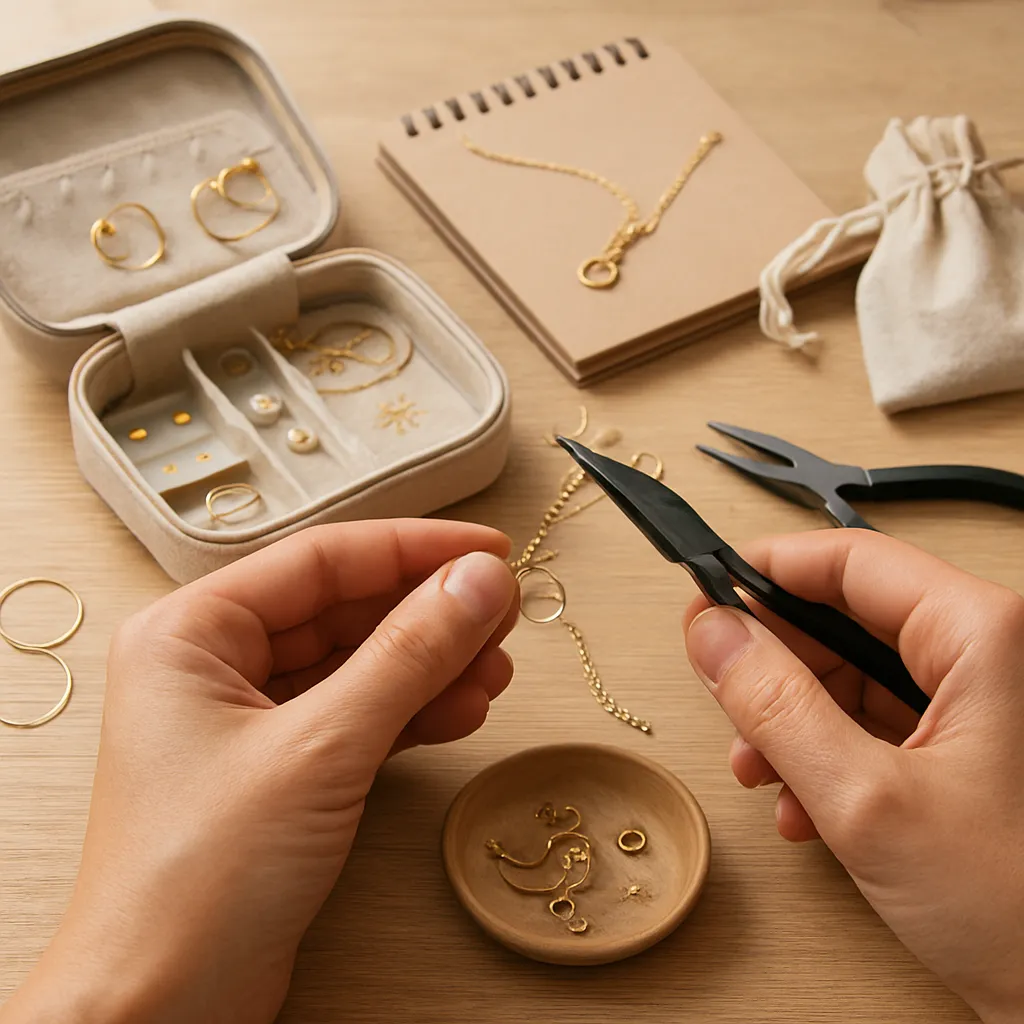
Whether you’re hopping between hostels or navigating airport lounges, making jewelry that thrives on the move is an art of restraint, ingenuity, and good engineering. Handicraft gives you the freedom to shape pieces that are beautiful and effortless to wear far from your workbench, avoiding tangles, quick tarnish, and baggage hassles. The following guide blends craft benchmarks with field-tested tricks so your creations stay comfortable, compact, and ready for the road—without losing the poetry of handmade detail. Think finishes that shrug off humidity, components that convert in seconds, and cases you can stitch or cut in an evening. The goal is jewelry that is as travel-ready as your passport.
Core Design Principles for Travel-Perfect Jewelry
Before you choose a metal or reach for pliers, frame your design with constraints that keep pieces wearable and worry-free in transit. These constraints aren’t limits so much as a creative brief: they’ll push you toward smart silhouettes and finishes that look intentional rather than improvised.
1. Weight, volume, and comfort
Favor a lightweight silhouette and balanced mass distribution. Dense focal beads at the center of a necklace can cause neck fatigue during long flights, while heavy earrings can stress piercings. In practice, thin-gauge sheet elements, hollow forms, and openwork (pierced or sawn designs) reduce load while keeping visual impact. For beadwork, trade glass or stone bulk for polymer, wood, bone, cork, or high-quality acrylics that simulate gemstones without the heft. For metal, consider tubing rather than solid wire for larger forms.
2. Modularity and convertibility
Designs that reconfigure save space and multiply outfit options. A modular system uses compatible clasps, standardized ring sizes, and removable segments so one chain becomes a lariat, a belt accent, or a wrap bracelet. Ear jackets and climbers change scale quickly without adding a second pair. Charm clusters that detach shift from daytime subtlety to evening drama. Use small, reliable jump rings (closed and soldered where possible) and mini S-clasps to connect segments invisibly.
3. Durability and repairability
High-mileage jewelry must be durable and simple to fix with a pocket tool kit. Reinforce stress points (loops at pendants, bracelet terminations, ear wires) and choose closures designed for repetition. Opt for leverbacks over simple hooks for travel earrings, or screw-backs for studs that won’t vanish in a taxi. Use crimp covers and wire guardians in beaded strands to prevent fray. Build with a logic you can troubleshoot fast: symmetrical designs, redundant links, and components that can be swapped on the go.
4. Skin-first materials
Sweat, sunscreen, and new climates test skin tolerance. Use hypoallergenic options—titanium, niobium, 14k+ gold, surgical steel—for posts and hooks. For corded pieces, choose waxed cotton, microfiber suede, or silk with sealed ends. Seal porous organic elements (wood, bone) with food-safe oils or microcrystalline wax to reduce irritation and staining.
5. Surface protection
Humidity and salt air speed oxidation, so guard your finishes. A tarnish-resistant coating—micron plating, PVD on stainless steel, or clear lacquer for brass and copper—keeps shine intact longer. When you love raw metal, design patina intentionally (liver-of-sulfur blacks, sealed with wax) so darkening looks like design, not neglect.
Material Choices That Love the Road
Selecting materials with predictable behavior is half the craft. Good travel jewelry resists kinks, shrugs off moisture, and feels at home from desert to monsoon.
Metals
- Stainless steel (304/316L): Tough, budget-friendly, and low-maintenance; PVD coatings extend color options.
- Titanium/niobium: Feather-light, naturally hypoallergenic; anodizing creates vibrant color without plating.
- Gold-fill vs. plating: Gold-fill (1/20 by weight) outlasts flash plating; choose it for everyday chains and ear wires.
- Brass/bronze: Warm tone with strength; seal with lacquer or wax to slow oxidation and garment staining.
- Aluminum: Extremely light; great for big looks; anodized finishes increase scratch resistance.
Strings and cords
- Beading wire (7×7 or 49-strand stainless): Flexible, kink-resistant; pair with quality crimps.
- Micro-macramé cords (0.4–1 mm): Nylon or polyester holds knots well and dries quickly; burnish cut ends.
- Silk thread: Lush drape for pearls; pre-stretch and knot between beads; carry a tiny reamer for emergencies.
- Thermoplastic elastomers: For stretch bracelets that won’t sag; pre-stretch and glue the surgeon’s knot.
Beads and components
- Wood/cork/seed beads: Light, textural, and forgiving against clothing; seal lightly to resist sweat.
- Polymer clay: Sculptural color, very light; bake-in wire armatures for strength.
- Resin: Encapsulate tiny maps, pressed flowers; finish with UV-resistant coats to reduce yellowing.
- Silicone and rubber: Soft, modern; excellent for bracelets that pass airport security without removal.
Closures, Findings, and Fail-Safes
Travel amplifies the cost of a failure point. Choose hardware that clicks shut, resists snags, and forgives hurried dressing in a cramped seat.
Best-in-class closures
- Leverback earring findings: Close securely and rarely deform in a bag.
- Threaded posts: Resist loss; include spare silicone clutches in your kit.
- Lobster and trigger clasps: Strong, widely available; add a short extension for convertibility.
- Magnetic clasps with safety: Pair with a figure-8 safety catch for scarves or active days.
Wire gauges and reinforcement
- Use 20–22 ga for ear wires (tempered), 18–20 ga for jump rings that need strength.
- Work-harden by hammering lightly or tumbling to reduce deformation risk.
- Solder critical jump rings closed; where soldering isn’t possible, double-ring chainmaille links add redundancy.
Anti-snag profiles
Avoid open claws, thorny prong settings, and rough crystal points that catch knitwear and travel scarves. Favor bezel settings, burnished cup chain, or tumbled edges. Polished profiles glide over clothes and reduce micro-abrasion that causes premature tarnish and fiber pulls.
Convertibility: One Set, Many Looks
Transformers win in luggage. Build a collection that morphs from subtle to statement with minimal parts.
The capsule system
- Base chain at 45–50 cm with discrete micro jump rings every 5 cm for length control.
- Two short extenders (5–7 cm) that double as bracelet connectors.
- A pendant with hidden bail and detachable frame to wear it as a brooch with a slide-in pin.
- Ear jackets that stack under simple studs for day-to-night change.
Recipe: Wrap necklace to bracelet
- String 60–70 cm of beads on 49-strand wire with a low-profile magnetic clasp plus a safety chain.
- Add three evenly spaced “hinge” rings along the strand.
- For bracelet mode, clip the clasp to ring 1; for choker mode, use ring 2; for lariat, connect ring 3 to a small tassel.
Recipe: Nesting bangles
- Form three thin aluminum bangles (2–3 mm round wire) in slightly different diameters.
- Texturize each (hammer, satin wheel, sandblasted) for visual depth without weight.
- Drill tiny alignment holes and install micro-detent pins so bangles lock into a wide cuff when aligned, then separate for stacking.
Packing and On-the-Road Organization
Great designs deserve protection. A smart case prevents tangles, absorbs shocks, and controls humidity while taking almost no space.
DIY travel cases
- Felt roll: Stitch narrow channels into two layers of wool felt; add a flap to cover earrings and a ribbon tie. Wool cushions metal and wicks moisture.
- Straw-and-card trick: Thread delicate chains through a paper straw; clasp; slide into a postcard-weight sleeve. Zero tangles.
- Pill organizer or film canisters: Assign each day or outfit to a compartment; add anti-tarnish tabs.
- Silicone bead mat pouch: Fold a thin silicone mat into a wallet; grippy surface prevents slide, and it doubles as a portable workbench.
Environmental control
- Slip in anti-tarnish strips and a few silica gel packets, especially for coastal or tropical trips.
- Keep away from hotel bathroom steam; store in zip pouches inside your roll to buffer humidity swings.
Travel tool kit (carry-on friendly)
- Mini pliers set (round-nose, chain-nose, flush cutters) with blunt tips.
- Pre-soldered closed jump rings in common sizes; a few crimps and crimp covers.
- Beading wire scrap, headpins/eyepins, clear-drying jewelry adhesive (under 100 ml rule), toothpicks for precise glue.
- Spare earring backs, silicone stoppers, and a short extender chain.
- Microfiber cloth and alcohol wipes for quick degreasing.
Finishes That Endure Planes, Pools, and Sun
Surface finishing choices dictate how your work ages on the road. Aim for a finish that looks fresh with minimal fuss.
Metal finishing
- Tumbling with stainless shot: Work-hardens and burnishes wirework evenly; follow with a mild soap rinse.
- Micron plating and PVD: Specify thickness; 0.5–2.5 microns for occasional wear, thicker for daily use. PVD is especially abrasion-resistant on steel or titanium.
- Wax and lacquer: Renaissance wax or catalyzed lacquers protect brass/copper; apply thin coats to preserve feel.
Patinas and matte surfaces
Matte textures hide fingerprints and micro-scratches better than mirror polish. Sandblasting, Scotch-Brite brushing, or satin wheels deliver soft sheens that age gracefully. If you use chemical patina, seal thoroughly to prevent rub-off on clothing.
Fabric and fiber protection
For textile elements, pre-wash and color-set with vinegar or commercial fixatives to minimize dye transfer in sweaty conditions. Edge-seal ribbons, and consider detachable textile components so you can hand-wash them separately in a sink.
Comfort, Ergonomics, and Clothing Compatibility
Travel clothes are often technical: stretch knits, merino, quick-dry shirts. Jewelry must play nicely with these textures.
- Round all edges and bury wire tails; snag-free finishing saves your base layers.
- Choose drape over stiffness: soft cords, flexible chains, articulated segments.
- Limit profile height for collars and scarves; low relief avoids pressure points on long transit days.
Security, Etiquette, and Airport Practicalities
Chic doesn’t need to shout. Plan for safety and cultural sensitivity.
- Keep the look versatile and understate value in transit; skip large flashy stones in transit hubs.
- Avoid sacred motifs or political symbols unless you’re sure they’re welcome.
- Metal detectors: Small titanium/niobium pieces rarely trigger alarms; chunky steel cuffs likely will. When possible, wear minimal pieces through security and pack the rest.
Care and Maintenance on the Road
Your best cleaner is a gentle routine. Wipe pieces nightly with a microfiber cloth to lift oils and sunscreen. Wash occasionally with mild soap, rinse well, and dry thoroughly. For stones, avoid harsh chemicals; for pearls and porous materials, skip soaking altogether—wipe only. Refresh waxed finishes with a fingertip of microcrystalline wax and buff.
Climate-specific tips
- Tropics: Focus on sealed metals, water-friendly cords, and anti-tarnish storage.
- Desert: Hydration affects skin acidity; wipe often to reduce salt crusts.
- Cold regions: Scarves and knit hats snag—keep earrings small and profiles smooth.
Step-by-Step: A Convertible Travel Set
This set packs into one compact roll and covers casual mornings to dressy dinners.
Piece A: Chain base with stealth adjusters
- Materials: 50 cm of 1.3–1.7 mm cable chain (gold-fill or stainless), 2 lobster clasps, 3 soldered closed rings, 5 cm extender, 2 crimp covers (for camouflage), 2 small decorative beads.
- Build: Attach lobster clasps at both ends to clip anywhere along the chain. Add closed rings at 35, 40, and 45 cm. Camouflage ring junctions with crimp covers and beads for a finished look.
- Wear: As a standard necklace, choker, lariat, or belt accent using the dual-clasp trick.
Piece B: Pendant-brooch hybrid
- Materials: 25–35 mm bezel frame, pin back, hidden bail plate, epoxy glue, micro file, wax.
- Build: Solder or glue the bail behind the frame so it’s invisible from the front; mount a secure pin back. Seal front finish to resist fingerprints.
- Wear: On chain as pendant; on jacket or hat as brooch; on scarf to anchor folds.
Piece C: Ear jacket duo
- Materials: Titanium studs, lightweight jacket plates with three height holes, silicone clutches.
- Build: Ensure hole spacing accommodates different earlobe shapes; round edges carefully. Apply a satin finish to hide wear.
- Wear: Studs alone for movement days; add jackets for evening.
Piece D: Wrap strand
- Materials: 65–70 cm of 49-strand beading wire, small accent beads (acrylic/wood/resin), low-profile magnetic clasp with safety, wire guardians, crimps.
- Build: String beads with occasional small rings. Crimp securely, add guardians and covers. Test bite strength of the clasp; add a 3–4 cm safety chain.
- Wear: Wrap as a bracelet, short necklace, headband under a scarf, or lariat when clipped to ring points.
Upcycling and Sustainable Choices
Travel is a perfect lab for sustainability: fewer pieces, more use. Repurpose denim seams as soft bracelet bases, bicycle inner tubes as matte black cuffs, wine cork slivers as ultra-light beads, ocean plastic fragments set in resin. Choose modular construction so individual worn parts can be replaced, not the whole piece. A repair-friendly design extends life and lowers footprint.
Aesthetics for the Road: Style Without Bulk
Lean into the power of silhouette and repetition rather than size. Negative space, pierced metal, and rhythmic bead sequences create visual richness without mass. A secure focal doesn’t need to be heavy; a small high-contrast element (blackened bezel, colored enamel dot) draws the eye. Rely on texture—satin, hammered, braided—over large volume for presence in photos and real life.
Testing Protocol Before You Pack
Prototype like a product designer. Wear-test every piece for at least a day of errands. Note hotspots, snag points, and closures that are fiddly in low light. Tumble or simulate rough handling in a pouch with soft items for 10 minutes to reveal weak crimps and open rings. Salt-spray test with a light mist of saline; check for immediate reactions on raw brass or copper and refine sealing if needed.
Airport and Transit Workflow
Make a routine: before security, remove statement cuffs and long chains; keep studs and slim rings on. Store pieces in one minimalist roll to avoid pocket dumping. After re-dressing, do a quick clasp check. On planes, avoid using the tiny tray table gap as a workspace; instead, place your silicone mat pouch on your lap if you must repair mid-flight.
Color, Culture, and Versatility
Pick a tight color palette that coordinates across outfits: two neutrals plus one accent. Use reversible elements—one side matte, the other glossy—to double styling options. For cultural sensitivity, research local norms, especially for religious sites; opt for understated silhouettes and neutral motifs when unsure, thereby keeping the jewelry packable in both aesthetic and logistical senses.
Finish Recipes and Maintenance Cheats
- Renaissance wax: Warm slightly with hands, apply a whisper-thin coat, buff with microfiber; reapply after salty beach days.
- DIY anti-tarnish paper: Store small squares of activated charcoal paper in each pouch; replace every few months.
- Quick matte: If a high polish shows scratches mid-trip, gently rub with a fine Scotch-Brite pad to convert to satin and hide wear.
Common Pitfalls and How to Avoid Them
- Over-accessorizing the kit: Bring a modular core rather than a dozen singles; redundancy comes from convertibility.
- Ignoring sweat and sunscreen: Build with sealed metals and frequent wipe-down plans.
- Underestimating closure fatigue: Choose high-cycling clasps; avoid micro lobster clasps if dexterity is an issue.
- Heavy earrings: Keep drop length moderate and weight centered; swap to threaders or huggies if lobes tire.
Handicraft Joy, Anywhere
Making jewelry for the road invites deliberate choices that amplify craft: considered edges, elegant mechanisms, finishes that age well, and hidden engineering you’ll quietly appreciate in a bumpy tuk-tuk ride or a midnight hostel bunk. The best travel pieces favor clarity of line and daily dependability. They celebrate hands—your own, in the making, and the hands that fasten them each morning far from home. With a palette tuned for movement, a toolkit of reliable findings, and a traveler’s sense of simplicity, your handmade work will keep pace with you—graceful, resilient, and ready for whatever the itinerary brings.
Checklist before departure:
- One chain base with extenders and matching metal tone across pieces.
- Convertible pendant/brooch and 1–2 charm accents.
- Studs plus ear jackets; spare backs packed.
- Wrap strand that doubles as bracelet and lariat.
- Anti-tarnish roll with silica packets and labeled pockets.
- Mini repair kit with crimps, closed rings, and pliers.
- Microfiber cloth; small bottle of gentle soap.
Travel-perfect jewelry is not an afterthought—it is a design philosophy. Keep forms lean, finishes protected, and mechanisms honest; let texture and proportion carry the story. The reward is a collection you can count on: made by hand, tuned for motion, and as quietly dependable as your favorite well-worn map.
