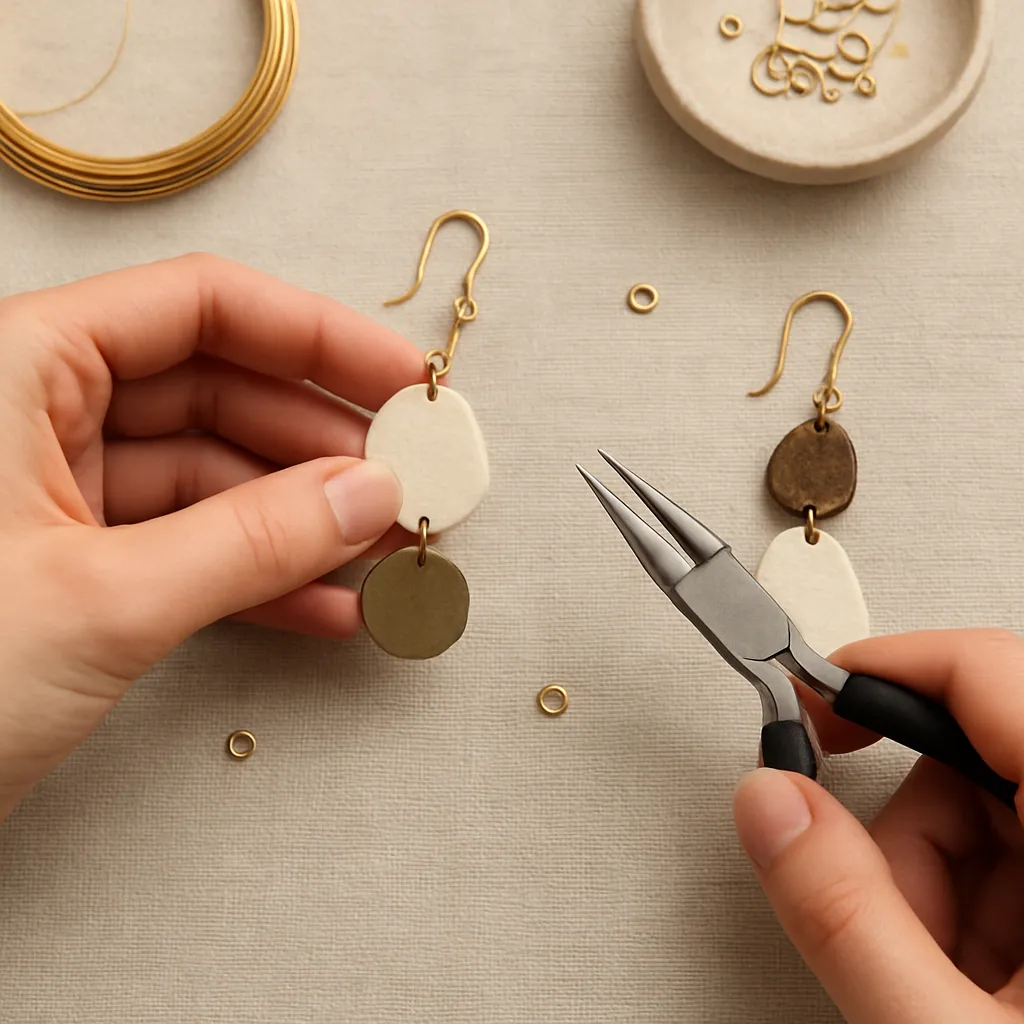
Handmade jewelry often tells a story with the smallest of gestures, and few pieces speak as eloquently as a pair of asymmetrical earrings. Instead of chasing duplication, you learn to choreograph contrasts—long beside short, matte near gloss, soft meeting sharp—until the two halves converse. This approach invites intuition, experimentation, and a playful eye for what feels right rather than what merely matches. It turns scraps into statements, everyday textures into talismans, and personal quirks into wearable design principles. Most of all, it rewards patience and curiosity: the way a chain swings on one side can make a stud on the other seem brighter; a quiet bead can amplify a dramatic shape just by staying calm. In this guide, you will explore theory, practical methods, projects, and care, all aimed at balancing difference with coherence so your mismatched pair looks intentional, thoughtful, and wholly yours.
The aesthetics of asymmetry and artistic balance
Asymmetry in earrings is not about chaos; it is about guided surprise. Designers consider how the eye travels and where it rests, how shapes create tension, and when that tension eases. Three concepts help: visual weight, hierarchy, and rhythm. Visual weight comes from size, color value, shine, and density of detail; hierarchy decides what should be seen first; rhythm suggests repeated echoes that tie the pair together—perhaps the same metal, a recurring bead, or a shared curve.
In practice, you orchestrate relationships: a long bar might pair with a cluster of small discs; a single gemstone might counter a ring of seed beads. Negative space is a tool—leaving one side airy can make the other look sculptural. The silhouette carries more emotional force than tiny surface details; simplify the outline first, then add texture or color.
Traditional jewelry often pursues near-perfect mirroring, yet many craft traditions celebrate deliberate irregularity. Think of wabi-sabi, where beauty lies in the incomplete; or folk beadwork that evolves pattern-by-pattern with available materials. Asymmetrical earrings thrive on these philosophies, embracing the human hand’s minute variations and the dialogue between difference and cohesion.
Within this framework, certain terms guide the maker’s eye and hand. Designers talk about asymmetry not as an error but as a strategy, tuned by visual balance, informed by proportion, shaped through thoughtful composition, and polished with surface texture that catches or softens light. Good work holds internal harmony, visible in confident lines and neat joins that reveal deliberate craftsmanship. It should respect ergonomics—how the earring feels, moves, and rests—and aim for sustainability in material choices and studio habits, all while achieving practical durability that withstands the rituals of daily wear.
Materials, tools, and safe habits
Your materials define engineering and mood. Hard metals carve crisp lines; fibers add softness and motion; ceramics and stones bring gravity; resin captures light. Start with what you have, then expand strategically.
- Metals: brass, copper, sterling silver, Argentium silver, aluminum, gold-fill. Niobium and titanium are excellent for hypoallergenic ear wires.
- Organic and fiber: cotton tassels, linen thread, silk cocoons, wooden beads, leather offcuts, rattan, paper beads.
- Mineral and glass: gemstones, glass seed beads, Czech glass drops, beach glass, porcelain, enamel components.
- Polymers and resins: polymer clay for sculpted forms, UV or two-part resin for encapsulating botanicals, glitter, or pigment.
- Findings: ear hooks, leverbacks, posts and backs, jump rings, headpins, chain, crimps.
- Adhesives and finishes: two-part epoxy for secure bonds; microcrystalline wax or Renaissance wax to seal patinas; lacquer for copper and brass to slow tarnish.
- Tools: round-nose, chain-nose, and flat-nose pliers; flush cutters; jeweler’s saw; files; needle files; steel bench block; chasing hammer; rawhide or nylon mallet; mandrels; small bench vise; micro torch (optional); Dremel with polishing wheels; drill press or rotary tool with 0.8–1.5 mm bits; digital calipers; kitchen scale.
- Safety and setup: eye protection; fine-particulate mask for sanding resin or fiber; ventilation when patinating or soldering; nitrile gloves for chemicals; dedicated surfaces for chemicals and separate rags for polishing compounds.
Wire gauges and ear-friendly choices matter. Commonly, 20–22 gauge (0.8–0.7 mm) makes comfortable ear wires, while 24–26 gauge suits wraps and small links. When in doubt about skin sensitivities, choose niobium, titanium, surgical steel, or 14k gold posts. Avoid nickel content where possible, test patina stability under light abrasion, and finish any part that contacts skin to a smooth, snag-free surface.
From idea to pair: design methods for intentional asymmetry
Concept-mapping the relationship
Before you reach for metal or beads, define the relationship between the two earrings. You might decide one is the anchor (calm, structured, slightly heavier) and the other the wanderer (lively, articulated, slightly lighter). Or think in echoes: same metal tone, different shapes; same bead color, different lengths; same motif, different scale. Sketch a quick “map” in five minutes with arrows and notes—what repeats, what changes, and why.
Sketch to paper prototype
Translate your idea into paper cutouts to test scale, silhouette, and movement. Cut 1:1 shapes, punch holes, and hang them from a strand of thread. Try the pair in a mirror to see how they frame the face. Paper reveals instantly which side feels heavy or too busy; you can adjust by removing length, opening negative space, or simplifying.
Balancing weight and motion
Physical comfort hinges on weight distribution and motion. Long, articulated elements reduce perceived weight by moving with the wearer. Small chains spread load. Dense stones or ceramic beads belong on the shorter or simpler side unless counterweighted. If one earring swings forward, add a small counterweight at the back (a discreet bead close to the ear wire), or move the hole slightly off-center to shift the pivot. Test each prototype on a kitchen scale: aim for a difference of no more than 1 gram between sides.
Focal points and echoes
Build cohesion through recurring elements: repeat a metal finish, echo a curve, or dot both sides with the same bead in different roles. Use hierarchy: one star, one supporting actor. If both sides shout, nothing is heard; if both whisper, nothing is remembered.
Families of asymmetry
- Scale shift: same motif, different sizes (large leaf vs. tiny leaf cluster).
- Negative/positive: a cutout circle on one side, a solid disc on the other.
- Color echo: one strong hue mirrored by a small accent of that hue across the pair.
- Length contrast: a shoulder-grazing bar paired with a cheekbone-grazing drop.
- Material conversation: metal form meets fiber tassel, both tied by a shared bead or rivet.
- Story pair: two items that narrate a theme, like “moon and tide,” “seed and bloom,” or “key and door.”
Three hands-on projects to build skill and confidence
Project 1: Geometric metal duo with hammered light
Mood: architectural, graphic, minimal. One long triangular drop contrasts a compact disc-and-bar cluster; both share the same metal and hammered finish.
- Materials: 0.6–0.8 mm brass sheet; 1.0 mm brass wire; 2 small brass discs; chain segments; ear hooks (niobium recommended); 6 mm jump rings; microcrystalline wax.
- Tools: jeweler’s saw, 2/0 blades; bench pin; files; 400–1200 grit paper; steel block; cross-peen hammer; hole punch (1.0 mm); pliers; torch (optional); pickle (optional).
- Steps:
- Design and saw: Cut a 60 mm isosceles triangle and a 20 mm circle. File edges smooth; round the triangle tip slightly for comfort.
- Texturing: On a steel block, gently hammer a cross-peen pattern along the triangle’s edges and the disc’s face to throw light.
- Drill/punch: Create a hole 3 mm from the triangle apex and at the disc’s top edge.
- Assembly: Build Earring A with the long triangle hanging from chain (40–50 mm). Build Earring B with the disc and a short bar (20–25 mm) formed from 1.0 mm wire, attached by jump rings.
- Finishing: Deburr holes, polish lightly, then seal with wax to stabilize sheen and retard tarnish.
- Balancing: Compare weights; if the triangle side is too dominant, shorten its chain by 5–10 mm or add a tiny 3 mm disc to the compact side.
Project 2: Botanical pair—pressed flora in resin versus forged leaf
Mood: nature-forward, romantic, subtly luminous. One earring encapsulates a pressed fern tip in resin; the other presents a forged copper leaf with a vein-line texture.
- Materials: UV resin and UV lamp (or two-part epoxy resin), tiny dried fern, copper sheet 0.5 mm, copper wire 0.8 mm, bezel cup or open frame, patina solution (liver of sulfur), sealer, ear wires (titanium recommended), fine chain.
- Tools: silicone mat, toothpicks, lighter or heat gun for bubbles, needle files, chasing hammer, stylus, steel block, rotary tool for polishing.
- Steps:
- Encapsulation: Place the fern in a small open frame, flood with resin in thin layers, and cure. Guard against bubbles by warming resin slightly and exhaling gently across the surface (or pass a quick flame).
- Forging: Cut a 35 mm leaf shape. With a stylus and chasing hammer on a leather pad, articulate a center vein and a few branching veins. Slightly cup the leaf over a dapping block or a wooden spoon.
- Patina: Dip the leaf briefly in liver of sulfur, rinse, then highlight raised veins with fine abrasive pad. Seal.
- Assembly: Hang the resin frame from a delicate chain to shoulder length; keep the copper leaf closer to the jawline.
- Balancing: If the leaf’s mass outweighs the resin, use a hollow bead or small spacer behind the resin frame to shift balance, or shorten the chain by 10–15 mm.
Project 3: Textile tassel and gemstone cluster
Mood: bohemian, kinetic, color-forward. A silk tassel swings on one side; on the other, a petite cluster of faceted stones sits near the lobe.
- Materials: silk floss, 8–10 small gemstones (3–4 mm), headpins, small caps, jump rings, leverback ear findings (secure for movement), thin chain.
- Tools: scissors, fabric glue, pliers, flush cutters, fine comb, small card for wrapping tassel, scale.
- Steps:
- Make a 60–70 mm tassel, wrap tightly at the neck, trim clean, seal the cut ends lightly with diluted fabric glue.
- Wire-wrap gemstones on headpins to create petite dangles; gather them into a cluster under a small cap.
- Assembly: Tassel hangs longer; cluster sits shorter. Share metal tone and one bead color across both sides to unify.
- Balancing: If the tassel feels light, add a small bead inside the cap as a hidden counterweight. If heavy, reduce tassel diameter or shorten length by 10 mm.
Color, finish, and mixed-media harmony
Color can unite opposites faster than shape can. Echo a bold hue with a whisper: a red bead against a field of brass on one side, and a tiny red seed bead tucked into chain on the other. Understand temperature: pairing warm brass with cool blue stones builds lively tension, while rose gold with mauve feels close and gentle. When mixing finishes, think contrast by purpose: matte diffuses light and reads larger; polish concentrates light and reads smaller. A heavily textured surface can balance an untextured larger shape without adding actual weight.
If you work in multiple media, let one lead. A strong textile or a patterned ceramic wants simple metal framing; a complex metal form wants quiet beads. Resin can be the bridge between a loud pattern and a delicate silhouette, especially if tinted to the middle value of both sides.
Comfort, wearability, and maintenance
Comfort is a design constraint, not an afterthought. Most ears are happy in the 3–6 gram range per earring for prolonged wear. Try the coin test: a U.S. nickel is about 5 grams; plan around that threshold as your maximum for one side, keeping the other at or under its weight. Larger pieces can be deceptively light if they are hollow, pierced, or fiber-based.
Hardware choices shape comfort and security. Leverbacks keep long earrings from slipping out; silicone stoppers on hooks prevent losses. Oversized clutch backs stabilize statement studs. Smooth every contact point: polish ear wires to a mirror at the tip, round all corners, and test snag points on a silk scarf.
Care extends life and sheen. Store pairs clipped to a card to prevent tangling, and include desiccant for silver. Wash metal-and-stone pieces with mild soap and water; avoid soaking fiber and wood. Use polishing cloths sparingly on plated components. For patinated copper or brass, seal with wax; reapply every few months with a soft cloth. Keep perfumes and hairsprays away from resins and pearls to prevent clouding or damage.
Sustainable making and ethical sourcing
Asymmetry and sustainability make natural allies. Scraps and singletons—leftover discs, orphan beads, short chains—become features rather than compromises. Keep a “mismatch box” of intriguing odds; design pairs around their quirks. Favor recycled silver and brass; consider Fairmined or Fairtrade gold for premium lines. Seek FSC-certified wood beads, vintage glass, or lab-grown stones to lower extraction impact. Reduce waste by planning piercings and cutouts so offcuts become charms. Minimize harsh chemicals: use citric acid pickle, ventilate for patinas, and capture sanding dust for proper disposal. Package with kraft cards and cotton string, plastic-free by default.
Selling, gifting, and storytelling
Asymmetry can feel daunting to buyers until they understand the intention. Photography should show the pair both side-by-side and worn, with scale references (millimeters listed in captions). Use neutral backgrounds and a single diffused light; a white card as reflector softens shadows. Write concise product notes explaining the relationship: “leaf and seed,” “sun and shadow,” or the design echo you used. Include a care card and a short origin note about materials (e.g., recycled metal, vintage beads).
Pricing needs clarity: account for time (bench rate), materials, overhead, and profit. A simple formula is materials + (time × hourly rate) + overhead percentage = wholesale; retail at 2× wholesale. Limited editions and complex hand-texturing may warrant higher rates. For gifting, lean on small story tags that make the asymmetry feel purposeful and personal—people love to retell those stories when complimented.
Troubleshooting common issues
- Earring flips forward: Add a small counterweight behind the lobe near the top connection, widen the ear nut (disc backing), or shift the hanging point slightly backward.
- Tarnish or patina rub-off: Seal with microcrystalline wax and buff; for high-friction areas, consider a clear lacquer designed for metal jewelry.
- Allergic reaction: Switch to niobium or titanium findings; avoid unknown plated alloys; smooth and clean all skin-contact areas.
- Resin bubbles or tackiness: Pour in thin layers, warm resin to reduce viscosity, and fully cure under consistent UV intensity; finish with a thin doming coat.
- Wire kinks and memory: Anneal work-hardened wire gently (if the alloy allows) or straighten using two pliers and slow, even tension.
- Uneven movement: Break long components into articulated segments with jump rings; reduce pendulum effect by shortening the lever arm slightly.
- Too busy visually: Remove one texture, reduce color count to two plus a neutral, or enlarge negative space on one side.
Advanced techniques for expressive asymmetry
When you are ready to push further, expand your vocabulary of making. Soldering opens doors to clean joins, tiny geometric frames, and hinges. Riveting creates strong cold connections between dissimilar materials—wood to metal, ceramic to leather—without heat. Keum-boo bonds fine gold to silver for vivid contrast lines. Fold-forming yields organic leaves and spines with little material waste. Granulation adds a constellation of tiny spheres that can be echoed sparingly on the opposite earring. Kinetic techniques like counterbalanced arms or multi-axial swivels produce quietly dramatic motion; test hinges and swivels with paper mockups to predict how they hang in the ear’s vertical frame.
Historical and cultural notes on intentional mismatch
Asymmetry holds deep roots across craft traditions. Japanese aesthetics embrace irregularity and the poignancy of imperfection; you see it echoed in contemporary metalwork that pairs a textured plate with a plain bar. West African beadwork often adapts to material availability, where pattern becomes an evolving conversation rather than a fixed rule, inspiring modern makers to honor resourcefulness. In European modernist jewelry, artists in the mid-20th century questioned ornament’s role, producing sculptural one-offs that feel fresh today. Punk and avant-garde fashion in the late 20th century mainstreamed the single statement earring and the unapologetic mismatch, a lineage continued by designers who treat the ear as a curated space. Learning these threads helps you design with respect and fresh eyes—borrowing principles rather than copying artifacts.
Exercises and creative prompts
- Ten-minute mismatch: Set a timer, pick three scraps from your box, and produce a rapid prototype pair on paper or wire. Speed loosens perfectionism.
- Echo hunt: Make a pair where the only shared element is a single 3 mm bead; let everything else diverge.
- Negative/positive: Cut a shape and its frame; make one earring from each.
- Color restraint: Use one hue plus a metal; vary saturation and finish to generate depth.
- Material inversion: Heavy-looking, light-feeling vs. light-looking, heavy-feeling; trick the eye safely.
- Narrative pair: Pick a two-part concept (north/south, seed/bloom, day/night) and design supporting forms.
- Portrait test: Photograph the pair on a face from three angles; adjust lengths and focal points so both sides read clearly.
Closing encouragement
Making asymmetrical earrings teaches you to listen with your eyes and think with your hands. You will discover that “mismatch” is simply another path to coherence, one built from intent, iteration, and a confident sense of when to stop. Treat each pair as a conversation between elements: a pause here, a flourish there, a steady note that holds them together. Keep notes on what feels balanced, track weights and lengths, and refine your studio habits so comfort and care come naturally. In time, your pairs will not only look deliberate; they will move beautifully, last well, and carry stories that are unmistakably your own.
