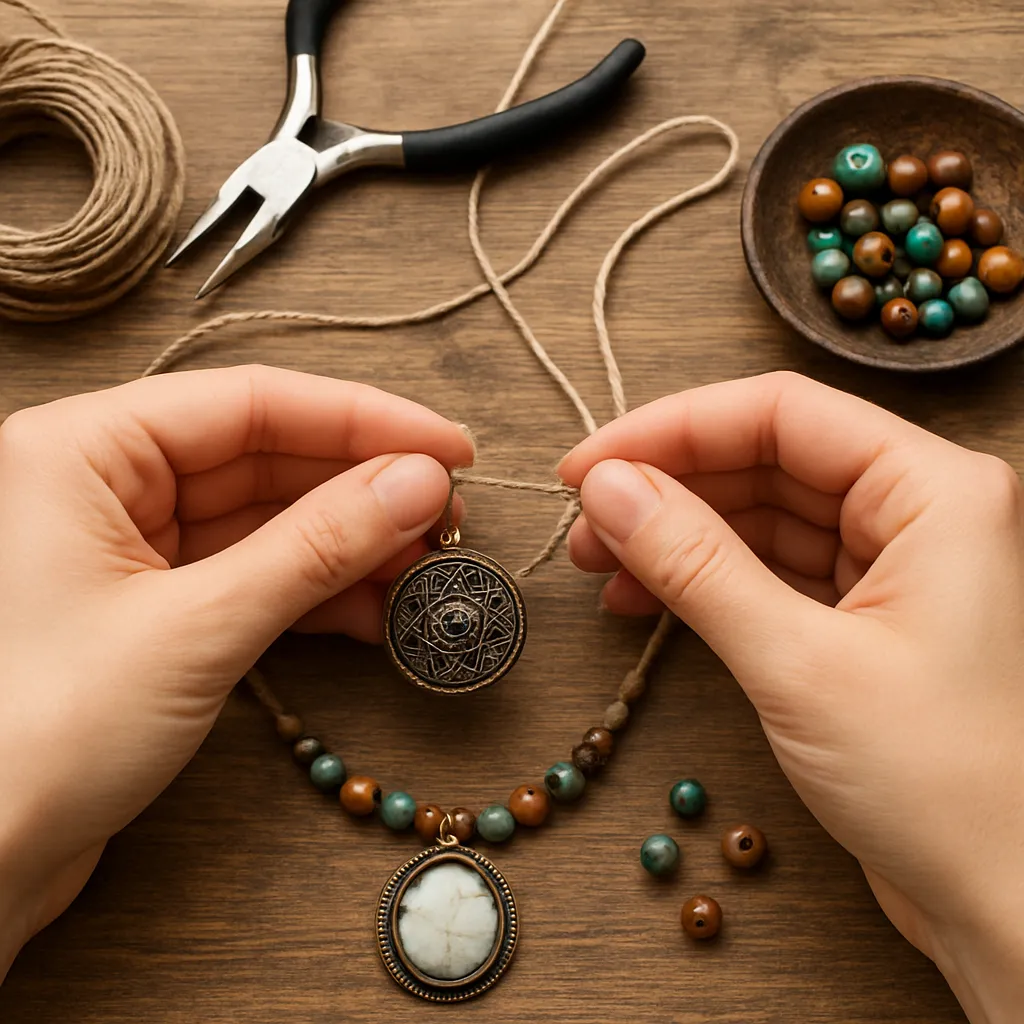
Boho jewelry celebrates movement, texture, and personal myth, and a long necklace is its most generous canvas. Whether you prefer earthy beads, vintage coins, or silky fringe that swings with your stride, the key is thoughtful composition and a willingness to mix materials in ways that feel free yet intentional. This guide blends detailed technique with inspiration, walking you from design planning to finishing touches, so you can craft long boho necklaces that wear beautifully and tell a story.
Understanding the Boho Aesthetic for Long Necklaces
Boho style grew from folk crafts, traveler traditions, and countercultural fashion. In necklaces, that heritage shows up as organic silhouettes, unpolished surfaces, warm metals, dyed cords, and souvenirs-turned-amulets. There is room for both measured symmetry and playfully off-center focal points; the magic lies in balancing those choices so the piece drapes well and feels alive. Long lengths invite generous movement and layering across fabrics, making them ideal for linen, denim, crochet, and flowy knits.
Consider how the necklace interacts with the body in motion. Length changes the story: an opera strand at 32–36 inches skims the ribcage; a rope at 40 inches or more doubles over; a lariat with no clasp rests where you tie it; and a Y-drop naturally finds the sternum. If you rely on heavy metal pendants, distribute weight with wooden or seed beads near the nape to prevent fatigue. Visual weight matters as much as grams on a scale: high-contrast beads look “heavier,” while matte neutrals “lighten” a dense strand. Keep an eye on proportion—big beads at the chest read bold and grounded; smaller beads create a whispery line that elongates the torso.
Tools and Materials You Will Love
Gather a toolkit that supports variety and comfort. The more methods you try, the more your hands learn which combinations feel like you.
- Cutters and pliers: flush cutters; chain-nose and round-nose pliers; bent-nose for tight spaces.
- Stringing and cord: braided nylon, silk, cotton, linen, waxed polyester, micro-fiber suede, leather, and beading wire (7–49 strands for drape). Each has its own personality—silk breathes and knots elegantly, waxed cords grip, and multi-strand wire resists kinks.
- Beads: wood, bone, horn, glass, seed beads, ceramics, shell, and natural stones. A single carved bead can anchor your whole design, as can a richly veined gemstone.
- Findings: crimps, crimp covers, wire guardians, bead tips, jump rings, split rings, headpins, eyepins, extenders, and various clasps.
- Metals: brass, copper, bronze, sterling, gold-filled, and plated options. Aging metals develop character; a natural green-blue or brown patina turns brass or copper into a softly timeworn treasure.
- Pendants and accents: horn slices, coins, crescent moons, shell shards, hammered plates, and fabric or thread tassel elements.
- Adhesives and finishes: flexible jewelry cement for knot security; microcrystalline wax to condition leather; renaissance wax or clear coatings if you want to slow oxidation.
Length standards help you plan: opera (32–36 in / 81–91 cm), rope (over 36 in / 91 cm), lariat (variable). For dramatic silhouettes, try 50–60 inches (127–152 cm) so you can double and even tie a small knot near the waist. If you prefer metric, multiply inches by 2.54 for centimeters. Measure the wearer’s torso and note where natural breakpoints occur—collarbones, bustline, ribcage—to place focal elements accordingly.
Design Planning: Color, Texture, and Drape
Long necklaces succeed when they play with rhythm. Repeat shapes in threes or fives, alternate matte and shine, and design rests for the eye—sections of small spacer beads, knotted cord, or plain chain between high-impact beads. Reserve space for a focal: a stone spear, a coin cluster, or a fan of seed bead fringe. Map the strand on a bead board or a towel to stop parts from rolling away. Photograph arrangements before stringing so you can revert if needed.
- Color: Earth tones (sienna, olive, ochre) feel grounded; coastal palettes (shell, sand, seafoam) feel airy; jewel tones (garnet, lapis, emerald) feel ceremonial. Warm metal pairs well with rust and cream; cool metal sings with slate and indigo.
- Texture: Mix carved wood with faceted glass, hammered brass with silk thread, rough stone with smooth seed beads. Texture keeps a long strand from feeling flat.
- Motifs: Crescent moon and star for night travelers, leaves for growth, coins for luck, talons and spikes for strength. Combine gently, and stay respectful of symbols with cultural weight.
- Structure: Decide on alternating blocks—five small beads, one medium, spacer, repeat—or freeform clusters broken by knots. If going asymmetrical, make sure the visual “pull” is balanced on the chest.
Finally, plan for layering. Long boho pieces are friends with chokers and mid-length strands. When stacking, vary thickness, metal tone, and silhouette: a thin chain above a rope of seed beads; a corded pendant above a tassel; a carved wooden strand beneath a minimal bar. If you are making a set, design all three at once so echoes—repeated beads or metals—tie them together without feeling matchy.
Step-by-Step Methods for Long Boho Necklaces
Method 1: Simple Continuous Beaded Strand (Over-the-Head)
This is the fastest route to a long, meditative necklace. No hardware, only uninterrupted texture. Ideal for wood, seeds, and small stones.
- Measure: Choose 34–44 inches for an easy over-the-head fit. Add 6–8 inches to your cord to allow for tying.
- String: Load spacers between larger beads, introducing occasional irregularities to keep the relaxed boho voice.
- Closure: Tie a surgeon’s knot or double fisherman’s knot; add a tiny dab of flexible cement inside the knot, let cure, then slide a bead or knot cover over it.
- Tip: If your beads have sharp edges, use a bead reamer to smooth holes or add small vinyl tubing sections where they rub against the cord.
Method 2: Knotted Strand on Silk or Nylon
Knots between beads add air and protect fragile materials like glass or pearl. It also produces luxurious drape and prevents cascading loss if the strand breaks.
- Tools: Silk or nylon cord with needle, tweezers, awl, bead tip or clamshell if ending with hardware.
- Process: String all beads first. After each bead, form a simple overhand knot; use an awl to seat the knot tightly against the bead. Repeat the length you planned.
- Finish: Use bead tips or wire guardians to present a neat loop to your hardware. Cover end knots with bead tips; close gently with chain-nose pliers.
- Variation: Insert small clusters—three tiny seeds between larger stones—before knotting to create rhythm.
Method 3: Beading Wire with Crimps and Hardware
Beading wire (19–49 strands) gives strength and flexibility, perfect for long necklaces that carry weighty elements like metal charms.
- Cut a length 6 inches longer than your final measurement.
- Slide on a crimp, a wire guardian, and half of your closure. Return the wire through the crimp, leave a small loop around the guardian, and crimp flat or with a crimping tool.
- String beads. Keep 1.5–2 inches at the end for the finishing crimp. Mirror the first step with the other side of the closure.
- Disguise crimps with covers for a beadlike look. Tug-test gently.
Method 4: Leather or Suede Cord with Slider Knots
Leather evokes travel and sun, and a slider knot lets the wearer change length. Great for pendants with big bails or wrapped stones.
- Cut 40–50 inches of 1.5–2 mm cord. Thread the pendant to the middle.
- Form two adjustable sliding knots near the back: tie each cord end around the opposite cord with a series of two or three half knots, snug but movable.
- Trim ends and add tiny metal cones or burnish with wax to prevent fray.
Method 5: Wire-Wrapped Links and Charms
Build a chain of custom links so your necklace reads like a line of found objects.
- Use 20–22 gauge wire for most links. Load a bead on a cut segment, form a simple loop on each side with round-nose pliers, and connect loops as you go.
- Alternate with pre-made chain sections to conserve time and lighten weight.
- Cluster small charms near the focal to create gentle movement and chime.
Method 6: Soft-Fiber macramé Lariat
A lariat bypasses a traditional closure and invites you to tie or wrap it in different ways. Square knots and half hitches build a soft, sculptural cord.
- Cut two long working cords and one core cord (for a 40-inch lariat, start with 3 cords at 120 inches each; trim later).
- Mount working cords to the core with lark’s head knots, then alternate square knots for 10–12 inches. Add beads on the core every few inches, framing them with hitches.
- Finish each tail with a wrapped binding and fringe, or tie on metal cones. Add end weights so the lariat hangs with intention.
Method 7: Making and Mounting a tassel
Tassels amplify length and sway. They can be sleek and silky or rustic and frayed.
- Wrap thread around a card 60–90 times. Slide off carefully, tie at the top with strong thread, and cut the bottom loops.
- Create a neat neck with a tight wire or thread wrap; secure with a dab of cement.
- Seat the tassel inside a bead cap or cone. Attach to your necklace with a jump ring or a wire-wrapped loop.
- For a weathered look, brush with a stiff toothbrush; for sleekness, steam lightly and trim the ends clean.
Hardware and Closures that Look Good and Work Hard
A beautiful clasp is part function, part jewelry in its own right. For long necklaces, you can often skip hardware, but a well-chosen closure adds versatility and polish.
- Toggles are easy to handle and become a decorative element when worn to the side.
- Lobster and hook-and-eye clasps secure delicate beadwork and allow extenders for variable length.
- Magnetics are convenient; choose high-pull-force types and avoid pairing with pacemakers or strong electronic storage media.
- Button-and-loop closures on corded pieces feel organic and are simple to make with waxed linen or leather.
- Consider placement: a side-set closure becomes a feature; a back-set closure keeps focus on the pendant.
Personalization and Storytelling
Boho is autobiographical. Build a talismanic language using charms from your travels, a pressed-flower resin pendant, or a bead made by a local artisan. Stamp initials on a brass tag, engrave a date, or sew a tiny fabric scrap under a cone as a private memento. Combine found and refined materials; a river stone wire-wrapped beside cut crystal feels both wild and precious. This is also a perfect arena for gentle repair and restyling of keepsakes: give an orphan earring new life as a pendant or cluster centerpiece.
Comfort, Wearability, and Longevity
Long necklaces should feel effortless on the body. Balance weight so the back of the neck isn’t overloaded, and let surfaces that touch skin be smooth—polish rough metal edges, bury thread tails neatly, and round sharp cut ends of wire. For sensitive skin, favor hypoallergenic metals or seal raw brass where it contacts the neck. If you work with fibers, lightly wax knots that see friction to resist wear. Strategize for durability from the start: double thread where heavy beads gather, reinforce stress points with wire guardians or bead tips, and tug-test every connection before gifting or selling.
Troubleshooting and Common Mistakes
- Sagging in the center: move heavier beads closer to the focal and add lightweight spacers toward the back; check that your cord is rated for the load.
- Kinks in beading wire: upgrade to more strands (49) and coil wire loosely during storage.
- Uneven knots: practice with scrap cord, pull steadily, and use an awl to seat knots precisely against beads.
- Scratched metal or stone: use bead bumpers or tiny rubber spacers; deburr sharp bead holes with a reamer.
- Color imbalance: snap a grayscale photo of your layout; redistribute dark elements to even out visual weight.
- Allergies: switch to niobium, titanium, or sealed brass; keep raw copper away from direct skin contact if it stains.
Care, Storage, and Gentle Cleaning
Keep fiber-based necklaces laying flat or hanging so cords don’t kink. Store metal away from humidity; zip bags with anti-tarnish tabs slow oxidation. Clean wood with a dry cloth and a hint of wax; glass and stone with a damp cloth, dried immediately; avoid harsh chemicals that strip color from dyed beads or loosen glue. If patinated metal begins to over-oxidize, buff lightly with a cloth and seal if you like the current tone—or let it evolve; a living surface is part of boho charm.
Ethical and Sustainable Choices
A long boho necklace can be a love letter to material stewardship. Choose fair-trade beads, salvaged brass, recycled glass, and vintage chains. Gather driftwood and beach glass responsibly; avoid taking from protected areas. Steer clear of newly sourced endangered materials, and ask vendors about provenance. Embrace upcycling—rehabilitate broken jewelry, integrate surplus textile trims, and refinish old metal pendants instead of buying new. Seal porous vintage beads to stabilize surfaces without altering their character.
Styling, Gifting, and Selling
Long pieces shine with simple necklines: scoop, V, boat, and turtlenecks. For gifting, include a small card with care tips and a sentence about materials or symbolism. If selling, price by factoring labor minutes, material cost, overhead, and a profit margin that sustains your practice. Photograph at multiple lengths on a mannequin or model; show scale with a ruler or a hand for online listings. Packaging can be unpretentious yet thoughtful—kraft paper, a cotton bag, a stamped tag—so the story of handmade work continues into the unboxing.
Project Recipes to Try
Recipe A: Sun-Worn Coastline (36 in / 91 cm)
- Materials: 6 mm matte white glass, 8 mm aquamarine chips, sand-colored seed beads, small shell pendants, brass chain, beading wire (49 strand), crimps, toggle.
- Plan: Alternate three seeds, one aquamarine, three seeds, one matte white; every four repeats, insert a tiny shell on a short chain dangle.
- Build: Crimp on one side, string the sequence, finish with the other side, cover crimps, attach toggle. Let two short dangles hang near the center for tide-like motion.
Recipe B: Forest Path Lariat (50 in / 127 cm)
- Materials: waxed linen in olive, carved wood rondelles, brass leaf charms, small faceted pyrite, two cones.
- Plan: Work a sequence of ten wood beads and one pyrite, tying a small overhand knot after each pyrite for texture. Split the strand for the last 8 inches into two tails.
- Build: Finish each tail with a cone and a brass leaf on a short chain. No closure—wrap and tie at will.
Recipe C: City Night Opera Strand (34 in / 86 cm)
- Materials: onyx rounds, hematite cubes, slender crescent pendant, silk cord with needle, bead tips, lobster clasp, extender chain.
- Plan: Knot between each onyx; every three beads, swap one for a hematite cube to introduce shine. Place the crescent 4 inches below the collarbone point when worn.
- Build: String and knot, attach bead tips, add clasp and extender. The extender allows winter layers or summer tanks to share the same piece.
Recipe D: Market Morning Mixed Chain (40 in / 102 cm)
- Materials: assorted brass chain styles, small glass charms in citrus colors, split rings, hook-and-eye closure.
- Plan: Compose a collage of chains—2 inches of cable, 3 inches of rolo, repeating but rearranged. Hang citrus charms randomly in the middle third.
- Build: Connect with split rings to avoid accidental opening; finish with hook-and-eye. Wear doubled or long over a simple tee.
Measurement Helpers and Pro Tips
- Bead count math: final length minus hardware length, divided by average bead plus spacer size, gives a quick estimate. For 36 inches using mostly 6 mm beads (0.24 in), you’ll need about 150 beads, minus space taken by a pendant or focal.
- Weight planning: aim for a back-of-neck weight no more than one-third of the total. If your pendant is heavy, keep the nape section minimal and cushiony.
- Jump ring security: work-harden by opening and closing each ring several times; when closing, feel for the click and smooth seam.
- Color fastness: test dyed cords; dampen a cotton swab and rub a hidden spot. If color lifts, seal the cord or position it away from light clothing.
- Textile ends: for polyester cords, carefully melt tips to seal; for cotton or linen, use a tiny drop of fray-check or a tight whipping thread wrap.
Respectful Motifs and Cultural Sensitivity
Many boho favorites—coins, talismans, knots—carry lineages. Study meanings before incorporating sacred symbols or textiles and, where possible, support makers from those traditions. A respectful approach strengthens your design’s integrity and connects you to communities of craft that inspire boho in the first place.
From Workspace to Wardrobe
Prepare a simple workflow: sort beads by color or mood into shallow trays, keep a scrap sketchbook of patterns you admire, and maintain a small box of pre-made components—wrapped charms, tassels, chain segments—so assembly feels like play. Lay a soft cloth to prevent runaway beads and keep a magnetizer for tiny needles. Over time, your long necklaces will start to feel like sentences in a language you speak fluently, each material a syllable, each knot a comma.
Finishing Touches that Matter
Before declaring a necklace done, do three checks. First, surface quality: run the piece lightly across the inside of your wrist to find snags. Second, balance: hang it on a hook and see how it settles; adjust bead distribution if it leans. Third, narrative: ask what the necklace says when viewed from across a room—does the focal command attention, does the color rhythm read clearly, does the drape flatter the body? If yes, your long boho necklace is ready to meet sun, wind, and movement, adding a soft, artful line to any day you wear it.
