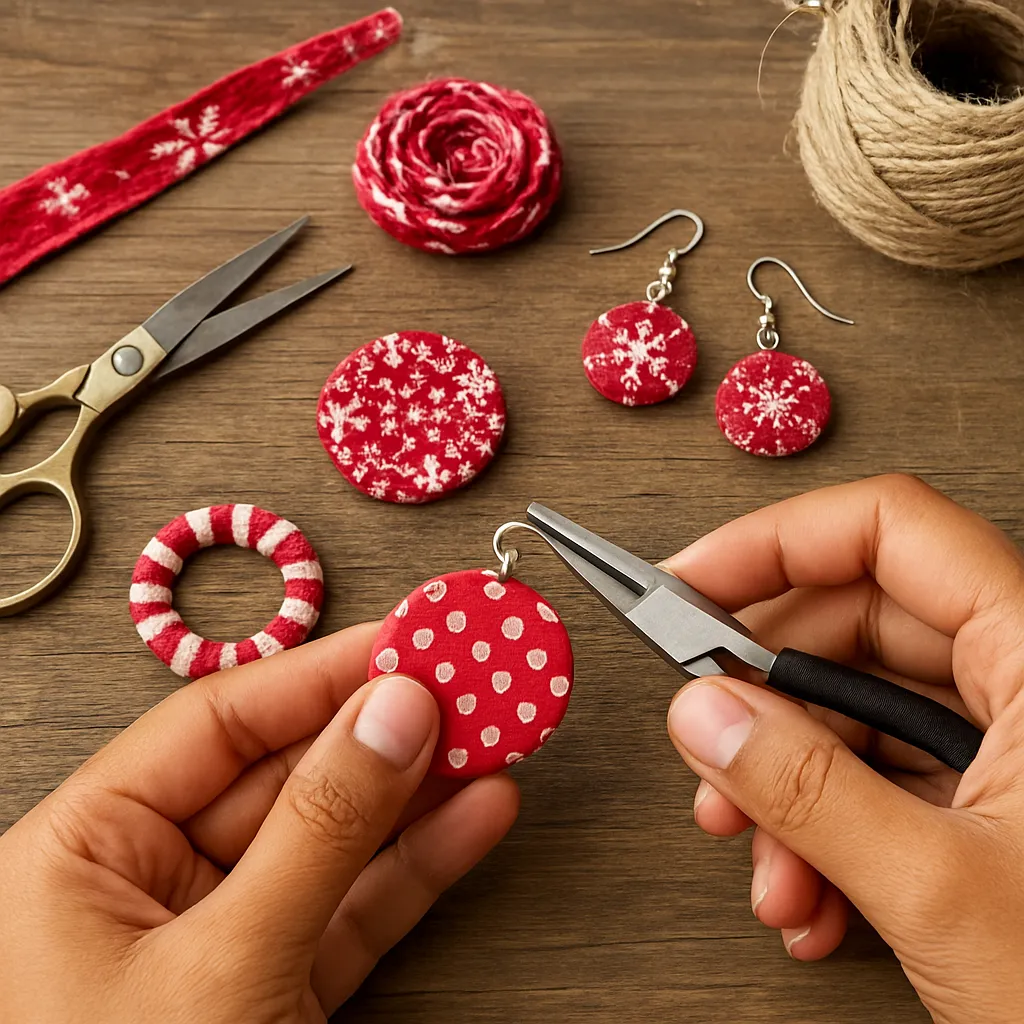
Turn forgotten cloth into wearable stories: that is the quiet magic of fabric jewelry. By transforming offcuts, thrifted garments, and heirloom textiles into earrings, necklaces, bracelets, and brooches, makers fuse personal narrative with material intelligence. Fabric is soft, lightweight, richly patterned, and endlessly adaptable. It invites handwork, rewards patience, and opens a path to sustainability that feels intimate rather than abstract. Whether you are a beginner curious about simple wrapped bangles or an experienced artisan designing sculptural statement pieces, upcycled fabric can become a signature medium that carries memory, color, and form with surprising grace.
Why Fabric Jewelry Captivates: History, Culture, and Material Poetry
Across cultures, textile adornment has long served as portable identity. From West African wax-print headwrap trims fashioned into festival earrings to Japanese tsumami kanzashi blossoms pinned near the face, cloth-based ornament is both practical and expressive. Using fabric in jewelry connects the body to the familiar tactility of garments—our most personal objects—and turns remnants into heirlooms in their own right.
Fabric also breaks away from the weight and coldness of metal. It moves with the wearer, settles on skin gently, and encourages experimentation with volume. There is humor and warmth in a cuff made from a father’s frayed denim, poetry in a pendant assembled from a child’s floral dress, and reverence in a brooch honoring a grandparent’s lace. Each piece can hold provenance as surely as any gemstone; the story resides in the weave.
From a craftsperson’s perspective, cloth’s fray, bias, drape, and weave density become creative levers. Hand-stitching, pleating, couching, and wrapping translate textile knowledge into ornament engineering. The practice honors craftsmanship while inviting play. For many makers, the gentle learning curve of fabric techniques lowers the barrier to entry, encouraging an iterative, intuitive design process.
Materials and Tools: Building a Thoughtful Palette
Fabric Selection
Begin with a careful eye. Select fabrics by fiber type, weave, weight, and surface quality. Natural fibers like cotton, linen, and silk are breathable and comfortable on skin; they accept dye and stitch readily. Synthetics such as polyester and nylon offer tenacity and clean heat-sealed edges; blends balance performance with handfeel. Lightweight fabrics pleat easily for petals and ruffles; medium weights excel in rolled beads and wrapped bangles; heavier textiles can become sculptural collars when stabilized.
- Woven cottons (poplin, lawn, chambray): versatile, easy to handle, friendly fray.
- Silks (habotai, dupioni, shibori-pleated): luminous, elegant drape for couture pieces.
- Linen: crisp body and breathable comfort; beautiful relaxed texture.
- Denim and canvas: rugged, holds structure, great for bohemian cuffs.
- Jersey and interlock knits: curl and stretch for cord making and soft knots.
- Vintage sari silk, kimono remnants, or household textiles: rich patterns and history.
When upcycling, inspect for stains, wear, and colorfastness. Pre-wash and color-test. Cutting around imperfections can create intentional pattern placement. Remnants from tailoring, soft furnishings, or quilting shops are treasure troves.
Stabilizers, Interfacing, and Stiffeners
Fabric becomes jewelry-ready when you manage its flexibility. Fusible interfacing (light to heavy) adds body. Woven interfacing preserves drape; non-woven creates paper-like firmness. Buckram or millinery crin can support collars and structured bibs. Water-based stiffeners (PVA or fabric-specific solutions) harden petals and ruffles; matte acrylic mediums seal fray and enrich color depth. Choose a finish that matches intended comfort and durability.
Hardware, Findings, and Connectors
Pair cloth with metal elements to secure and elevate. Consider:
- Ear wires, studs, and clip-on bases (hypoallergenic options for sensitive skin).
- Jump rings, split rings, wire guardians, and chain for modularity.
- Ribbon clamps, fold-over crimps, and cord end caps to finish textile cords.
- Magnetic, toggle, or lobster clasps; add extenders for adjustable fit.
- Beads, cabochon settings, bezels, and flat-back stones for embellishment.
Adhesives and Threads
Opt for flexible, clear-drying adhesives rated for textiles; test for bleed-through. E6000-type industrial adhesives and two-part epoxy (in well-ventilated areas) secure metal-to-fabric joins. For stitches, use polyester thread for strength, silk thread for couture finishes, and nylon beading thread for micro-embellishment. Waxing thread reduces tangles and adds longevity.
Essential Tools
- Shears and micro-snips; a rotary cutter with self-healing mat for clean strips.
- Fine needles, beading needles, curved upholstery needles for tight spots.
- Round-nose, chain-nose, and flat pliers; flush cutters for wire work.
- Awl and leather punch for holes in stabilized fabric.
- Iron and pressing tools; mini iron for precise pleats and petals.
- Rulers, French curves, and templates; chalk and tailor’s pens for marking.
Preparing Fabric: Clean, Stabilize, and Cut with Intention
Pre-wash upcycled textiles to remove finishes and potential allergens. Dry as the final wearer will. Press thoroughly; crisp edges mean clean cuts. If a fabric bleeds dye, use a color-catcher in the wash or reserve it for components that won’t contact moisture-prone areas (like earrings).
Study grain. Cutting on the straight grain maintains stability; bias cuts invite gentle stretch and elegant curves. For cords, bias strips wrap smoothly; for crisp beads and petals, straight-grain pieces reduce warping. Stabilize before cutting repetitive shapes to maintain consistency. When fusing interfacing, use a press cloth and measured pressure, allowing the adhesive to fully set; impatient lifting leads to bubbles and delamination.
Templates guide repeatability. Draft shapes on cardstock or acetate; label grain direction, size, and allowance for folds. Plan pattern placement; a bold motif near the collarbone can become a focal point, while micro-prints yield subtle, all-over interest. A maker’s discipline at this stage pays dividends in elegant composition later.
Core Techniques for High-Impact Results
Rolled and Wrapped Fabric Beads
Rolled beads transform narrow strips into cylinders or cones. Tapered strips wind into sleek cones; straight strips yield classic barrels. Apply a thin line of adhesive along the tail; use a bead roller or a skewer to maintain alignment. For extra structure, back the strip with lightweight interfacing or add an inner core of paper or felt. Embellish with couching thread or metallic floss spiraled as you roll. With careful selection of prints, your beads mimic marbling, agate, or wood grain, but at a fraction of the weight.
Stuffed Spheres and Fabric Buttons
Small circles gathered with a running stitch and filled with fiberfill create light orbs. Wrap with floss or soutache to define segments, or cap with bead cones for sophisticated endings. Covered button kits become instant earring studs or brooch centers; mount them onto pads with strong adhesive, then surround with seed beads or tiny pleated fans.
Cords, Braids, and Knots
Bias strips folded and stitched into tubes form elegant cords. Knit fabrics can be stretched into curled t-shirt yarn for bold knotwork. Explore macramé for adjustable lariats, lucet braiding for square cords, and kumihimo for complex patterns. Knot families—reef, Josephine, Carrick bend, Turk’s head—become sculptural centers. Strategic knot placement creates rhythm, a key element of composition.
Petals, Yo-Yos, and Fabric Origami
Tsumami-style petals made from small squares of silk or tightly woven cotton open a couture vocabulary of earrings and brooches. Circle yo-yos add dotted texture; stack sizes for dimensional florals. Fabric origami folds yield stars and geometric medallions; a dab of stiffener preserves crisp edges. These techniques shine when paired with luminous textiles—dupioni’s slubs catch light, while satin contrasts matte weaves to highlight texture.
Pleats, Shibori, and Sculptural Surfaces
Shibori-pleated silk, heat-set on synthetic blends or softly wrinkled on natural fibers, becomes wave-like cuffs and collars. Knife pleats form modern fans; accordion pleats create kinetic fringes. Fuse a thin knit interfacing to retain movement without collapse. Edge-finishing with narrow hems, zigzag, or fray-check offers different aesthetics: crisp couture vs. artful fray.
Appliqué and Embroidery
Appliqué small motifs onto a stabilized base—leaves, moons, glyphs—then edge with blanket stitch. Embroidery adds micro-topography: seed stitches for noise, satin stitch for sheen, couching for linear emphasis, beading for sparkle. Keep thread paths secure and tidy on the reverse; comfort against skin matters as much as looks.
Hybrid Constructions with Metal and Wire
Marry fabric with wire armatures for shape memory: cuffs wrapped in sari silk over hammered wire, collars supported by millinery wire, or petals veined with fine gauge wire. Hide wire ends beneath bindings or inside tubes. Where metal meets cloth, reinforce with a stitched leather or felt pad to distribute stress and enhance durability.
Design Intelligence: Color, Scale, and Wearability
Color Strategies That Sing
Color mastery elevates even the simplest techniques. Work with color theory frameworks:
- Complementary pairs (e.g., teal and coral) for energetic contrast.
- Split-complements for vibrancy with less tension.
- Analogous harmonies for gentle flow across the neckline.
- Neutrals as rest notes; metallics act as light reflectors.
Consider value (light and dark), temperature (warm vs cool), and saturation. High-saturation accents make striking focal beads; desaturated grounds keep the whole wearable. When upcycling, let the fabric speak—honor its palette and integrate supporting tones from your stash.
Scale, Proportion, and Face Framing
Scale influences impact and comfort. Large elements read from a distance; small elements invite intimacy. Balance component sizes against the wearer’s features and torso length. Long, vertical lines elongate; wide bibs emphasize the collar line. Test proportions on a bust form and in a mirror. Subtle shifts in spacing and length can transform the piece’s ergonomics and presence.
Texture, Rhythm, and Focal Points
Contrast smooth and rough, matte and sheen, dense and airy. Repeat motifs to build rhythm, then break the pattern with a focal point: a printed bead at center, a unique knot, a blossom of pleats. Avoid competing focal points unless the design is intentionally maximalist; let the eye rest and travel.
Four Guided Projects to Build Skill
1) Rolled-Bead Necklace from Printed Cotton
Materials: printed cotton remnants, lightweight fusible interfacing, clear-drying textile adhesive, kebab skewer, seed beads (optional), chain, jump rings, lobster clasp, crimp covers or bead cones, polyester thread, needles, pliers.
- Fuse interfacing to wrong side of cotton. Cut tapered strips 2–3 cm wide, 20–30 cm long.
- Roll tightly on a skewer, wrong to right side, applying a hairline of adhesive along the final 3 cm to secure.
- Slide off, allow to cure, then tidy edges with micro-snips.
- String on beading wire or thread, interspersing seed beads for breathing room.
- Finish ends with crimps and attach to chain; add a short extender for adjustability.
Design tip: Place the boldest prints at the necklace’s center; mirror patterns outward to create balance.
2) Shibori Silk Cuff with Wire Armature
Materials: shibori-pleated silk, 16–18 ga wire (brass or aluminum), bias-cut silk lining, fusible fleece, PVA-based fabric stiffener, edge ribbon, ribbon clamps, chain and clasp.
- Form a cuff shape from wire; smooth ends with a file. Wrap with bias-cut silk to cushion.
- Cut shibori silk to length; back with fusible fleece for comfort and body.
- Hand-stitch silk around the armature, preserving pleats; apply light stiffener to areas that need memory.
- Finish edges with narrow ribbon; attach ribbon clamps, then chain and clasp.
Ergonomic note: Curve the armature to match wrist anatomy; a gentle taper prevents spin and improves versatility across wrist sizes.
3) Statement Knot Earrings from T-Shirt Yarn
Materials: recycled jersey yarn (cut from tees), fabric glue, earring studs or hooks, small felt circles, jump rings, optional bead accents.
- Cut continuous jersey strips; stretch to curl into cords.
- Tie two Josephine knots or Carrick bends; trim and glue tails on the back.
- Back with felt circles to protect edges and skin; stitch or glue carefully.
- Add a suspended bead from the lower loop if desired; attach to hooks with jump rings.
Style angle: Bold but featherlight; excellent for markets and quick gifts from otherwise unwearable garments.
4) Wrapped Bangle with Sari Silk Ribbon
Materials: metal or wooden bangle base, torn sari silk ribbon, clear-drying adhesive, embellishment thread, small charms (optional).
- Anchor the ribbon with a dab of adhesive inside the bangle.
- Wrap with slight overlap; smooth twists for even coverage.
- Spiral a contrasting thread to add linear interest; tie off invisibly inside.
- Attach a charm at a seam for a discreet focal point.
This project is an ideal gateway into upcycling—fast, tactile, and richly patterned.
Finishing Techniques That Elevate Your Work
Good finish transforms a clever idea into a professional piece. Hide knots beneath caps or inside beads. When gluing fabric into end caps, roughen the inner surface with sandpaper for better grip and allow full cure time. Use thread wraps to compress bulky joins before adding hardware. Seal cut synthetic edges with controlled heat from a thread zapper; for naturals, apply fray-check sparingly or stitch narrow hems.
Back earrings and brooches with ultrasuede or felt to protect skin and clothing. Align findings so that pieces hang correctly; rotate loops and correct torque with pliers so pendants face forward. Where stress is high—near clasps or heavy focal points—add hidden stitches through multiple layers to share the load. These small decisions extend durability and communicate care.
Comfort, Safety, and Skin-Friendly Choices
Choose nickel-free metals for findings, and consider titanium or niobium for sensitive ears. Avoid rough backings or protruding wire ends; test wear your designs for snags. Keep weight concentrated near the collarbone rather than the nape for long necklaces; distribute mass across wider surfaces for cuffs. Add breakaway magnetic clasps for children or for scarf-like necklaces to enhance practical safety.
Cleanliness matters with upcycled materials. Pre-wash thoroughly and store fabrics in breathable conditions with cedar or lavender to deter pests. For pieces likely to contact sunscreen or makeup, choose darker textiles or apply a washable protective finish.
Sustainability, Ethics, and the Joy of Resourcefulness
Fabric jewelry offers a direct path to responsible making. Use thrifted garments, tailor’s cast-offs, or deadstock yardage. Note your sourcing in product tags—customers appreciate transparency and the poetry of material rescue. Each piece models circularity, where remnants gain second life and imagination becomes a renewable resource.
Beyond materials, design for longevity and repair. Modular constructions allow replacement of components without discarding the whole. Publish care instructions and offer tune-ups. This is where environmental intent meets practical sustainability: a beautiful object that lives long, not just one made from reclaimed cloth.
Troubleshooting Common Issues
- Fraying edges: switch to tighter weaves, use fray-check, or embrace controlled fray aesthetically.
- Deformation over time: add interfacing or a hidden wire core; store on forms that preserve curvature.
- Adhesive bleed: apply with a fine tip; test on scraps; use minimal pressure during curing.
- Color transfer: pre-wash with color-catchers; seal highly saturated fabrics; avoid pairing with white garments.
- Unbalanced hang: adjust connection points; use heavier chain at the back; re-space beads for symmetry.
Advanced Methods: Surface Design and Encapsulation
When you want to expand your language, consider:
- Hand-dyeing or overdyeing remnants to unify palettes; use low-impact dyes for health and environment.
- Stencil and block printing to create repeat motifs scaled for jewelry components.
- Needle felting onto woven bases for organic relief, then edge-stitch for containment.
- Partial resin encapsulation of tiny fabric disks to create glossy cabochons; seal fibers first to prevent bubbles.
- Goldwork-inspired couching with metallic threads to trace paths across stabilized cloth.
With each technique, weigh tactile experience against visual drama. Jewelry is touched and worn; finishes should remain pleasant against skin, and the piece should retain its character through handling.
Design Workflow: From Found Fabric to Finished Piece
A practical workflow saves time and reduces waste:
- Audit: Sort remnants by fiber, thickness, and motif scale. Photograph promising prints next to potential metal findings.
- Concept: Sketch silhouettes near a neck and ear outline to preview proportion and ergonomics.
- Prototype: Make a single component in scrap to test stiffness and edge behavior.
- Palette: Choose a dominant color, two supporting tones, and a metallic accent for cohesion.
- Build: Work from focal to periphery; stabilize high-stress zones early.
- Refine: Edit elements. Remove one thing if the piece feels noisy. Rhythm and negative space are as important as detail.
- Finish: Tidy threads, seal edges, condition surfaces, and align hardware.
- Document: Record source, dimensions, and care notes for future reference and storytelling.
Presentation, Pricing, and Storytelling
Packaging that protects textiles while showcasing their hand is key. Use soft pouches or recycled card mounts; include a care card. Photograph on neutral backgrounds and on a model to show scale and drape. In your listing or market display, share the material’s origin and making approach; the narrative helps customers connect and remember. Price for time, materials, overhead, and profit—your labor and ingenuity are real costs. Offer tiered collections: everyday studs and bangles, mid-range statement pieces, and limited-edition couture works built from rare textiles.
Care and Maintenance for Fabric Jewelry
- Cleaning: Spot-clean with a barely damp cloth; avoid soaking unless designed for washability.
- Storage: Keep in breathable containers away from direct sunlight; avoid crushing pleats and petals.
- Refresh: A gentle steam can lift minor wrinkles; protect metal parts during steaming.
- Repairs: Offer restringing, rewrapping, or hardware replacement; design with repairability in mind.
Provide clear instructions to buyers. The more confident they feel about caring for the piece, the more often they will wear it.
Ethical Aesthetics: Beauty with Purpose
Fabric jewelry sits at the intersection of adornment and intention. By centering reclaimed cloth, makers challenge fast-fashion waste and demonstrate that refinement doesn’t require virgin materials. The result is work that reflects values without sacrificing elegance—a fusion of craftsmanship, narrative, and responsible resource use.
Let your practice evolve: keep a materials journal; map which stabilizers complement which fibers; note which adhesives behave in heat and humidity; test new knots, pleats, and closures. Over time, your eye sharpens, your hand steadies, and your signature emerges. Along the way, embrace the medium’s kindness: it forgives mistakes, encourages invention, and rewards curiosity.
A Maker’s Checklist for Confident Results
- Source intentionally: prioritize meaningful textiles and test colorfastness.
- Stabilize smartly: match interfacing to fiber and function.
- Cut with purpose: respect grain and pattern placement.
- Compose thoughtfully: manage scale, rhythm, and focal points.
- Finish meticulously: protect skin, secure joins, align hardware.
- Design for life: allow for repair, comfort, and versatility.
- Tell the story: share provenance and process to deepen connection.
- Care for the piece: guide storage and cleaning for long-term durability.
With these habits, cloth becomes more than leftover material—it becomes a medium of intention. Guided by color theory, informed by composition, tuned to ergonomics, and enriched by sustainability, your upcycled-fabric jewelry can transcend trend and settle into the timeless territory of pieces people reach for, day after day, because they feel made for them.
