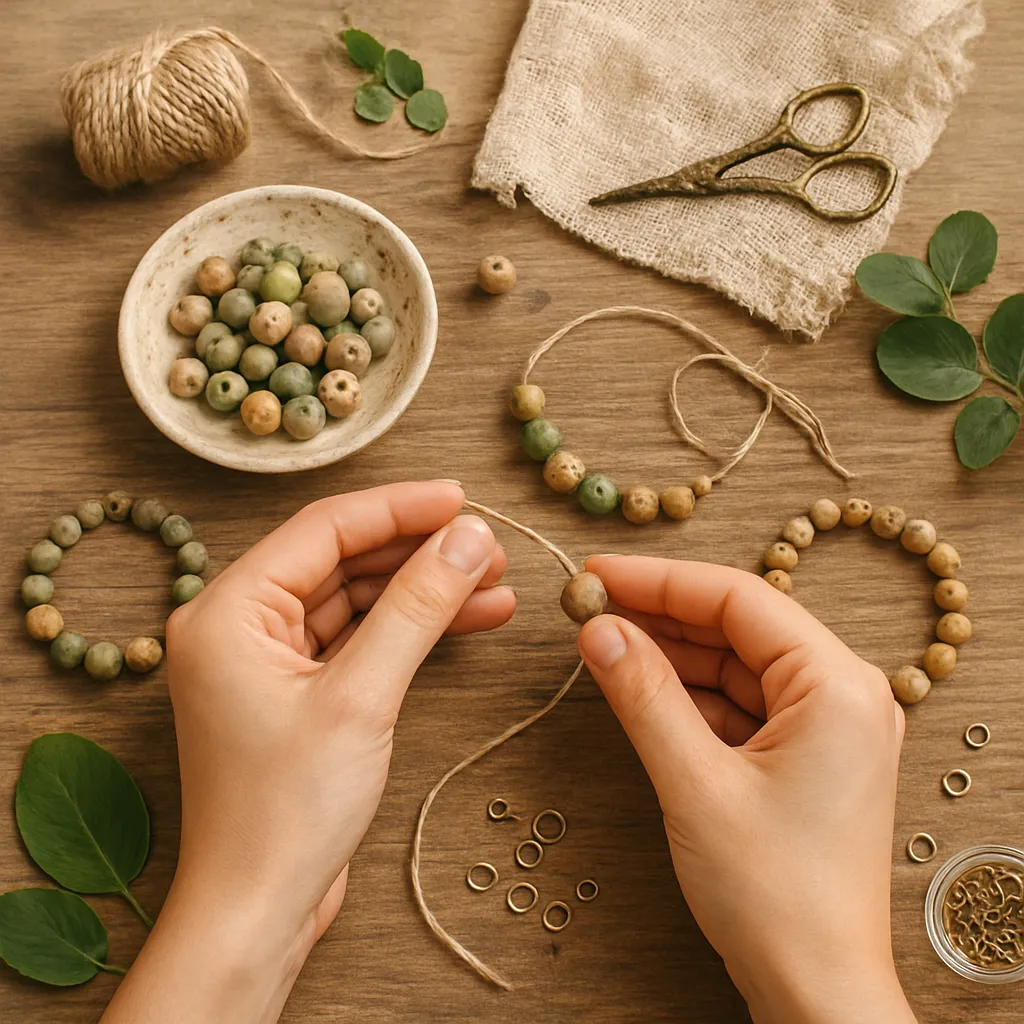
Eco-friendly jewelry is a meeting point between art, resourcefulness, and practical environmental care. It proves that style can be expressive without being extractive, that waste can be reborn as wearable color and texture, and that personal adornment can tell a story about place and values. Whether you are just starting with pliers and thread or already comfortable with torches and metal files, this guide opens a toolkit of materials, design strategies, and projects that celebrate sustainability and thoughtful upcycling. The focus is on craft techniques that respect the planet, produce durable pieces, and replace high-impact inputs with inspired alternatives.
Principles and Aesthetics of Eco-Friendly Jewelry
The heart of eco-friendly jewelry is intention. Every component—wire, clasp, bead, and finish—carries a trace of where it came from and where it will go. Good design starts with fewer parts and smarter choices. Forging a cuff from a scrap of copper sheet, wrapping stones with repurposed wire, or transforming textile offcuts into braided chokers: each choice transforms the life of a material and softens the footprint of adornment.
Eco-forward aesthetics are wonderfully plural. Some makers embrace a raw, patinated look that highlights reclaimed metals and subtle imperfections. Others prefer clean lines—laser-cut wood, polished shells found on post-storm beaches, or minimalist settings for heirloom gems. The common thread is respect for material authenticity and a preference for finishes and adhesives that are kinder to skin and ecosystems. Think of your jewelry box as a living archive; pieces can be disassembled and recomposed, celebrating evolution instead of permanence.
Materials: Responsible Choices and Sourcing
Metals
Recycled sterling silver, brass, and copper are widely accessible through jewelers’ suppliers or local metal scrap yards. Even small offcuts (“drops”) can be cold-forged into charms, toggle bars, or tiny studs. When purchasing new, look for suppliers that certify recycled content. Keep a “sweep drawer” for micro-scraps and filings; these can be sold back to refiners or melted if you have the setup.
Organic and Plant-Based Elements
Wood from storm-fallen branches, pruned orchard limbs, or certified reclaimed lumber offers warmth and grain. Hard seeds and nuts (such as tagua) carve beautifully and accept dyes made from kitchen spices. Cotton, linen, and hemp cords are strong and compostable; vintage silk ribbon adds fluid movement. Paper from magazines or maps can be rolled into beads and sealed for longevity. When possible, choose finishes and sealants that are biodegradable or easily reversible.
Stone, Glass, and Ceramic
Beach glass and pebbles, tumbled by waves, need only a drilled hole (or a wire cage) to become a pendant. Broken ceramics can be reshaped and edged with copper foil tape for a stained-glass feel. Old chandelier crystals or orphaned buttons can be recast as focal points. Avoid collecting from protected habitats; urban and domestic sources yield plenty.
Adhesives and Coatings
Where possible, choose water-based, non-toxic adhesives and finishes. Shellac flakes dissolved in alcohol, milk paint, and beeswax-based balms can replace conventional lacquers for wood and paper. For resin-style encapsulation, bio-based resins reduce petrochemical content, though they still require masks, gloves, and ventilation. Always cross-check for skin sensitivities.
Hardware and Findings
Salvage jump rings, clasps, and earring hooks from broken jewelry. Surgical steel and titanium are hypoallergenic choices for ear wires. Learn to make your own S-hooks, ear wires, and chain links; the fewer purchased components, the clearer your piece’s story.
Sourcing is as much about relationships as materials. Thrift stores, tailor shops (for fabric offcuts), cabinetmakers (for wood scraps), and glass studios (for cullet) can become allies. Document origins with photos or notes; collectors increasingly value provenance alongside beauty.
Tools and Safe Practices
A core toolkit for low-impact jewelry making is small but mighty:
- Flat-nose, round-nose, and chain-nose pliers
- Flush cutters and a jewelers’ saw with fine blades
- Needle files and sanding sticks in varied grits
- Hand drill or pin vise with micro-bits; optionally a bench drill with dust extraction
- Beeswax or plant wax for thread and saw blades
- Eco-friendly polishing compounds and a soft cloth
Work with a bench tray to capture metal filings. Wear a dust mask when sanding; wood and bone dust can irritate lungs. Ventilate whenever heating, gluing, or using finishes. Designate containers for sharp offcuts and used sandpaper for responsible disposal or recycling.
Project 1: Tide-Tumbled Cap Earrings
Concept
Transform aluminum bottle caps and sea glass into lightweight, modern earrings. This is an exercise in texture and composition using humble waste.
Materials
- Two aluminum bottle caps, cleaned and flattened
- Two small sea-glass pieces or ceramic shards
- Recycled aluminum or stainless wire (0.8–1.0 mm)
- Surgical steel ear wires (or handmade)
- Beeswax balm, fine sandpaper, non-marking mallet
Steps
- Flatten each cap on a leather pad with a non-marking mallet; preserve subtle ripples for character.
- Mark and drill a small hole near the top rim for the hanging loop. Deburr with a needle file.
- Wrap sea glass with a simple wire cage: create a frame, then bind crosswise, tucking ends neatly.
- Make a jump ring from wire, attach the wrapped glass to the cap through the drilled hole.
- Finish edges with fine sandpaper; coat the cap lightly with beeswax to deepen sheen and resist moisture.
- Attach ear wires and test balance by gently tapping; adjust jump ring position if they splay.
Result: a pair that juxtaposes gentle matte glass with soft-shimmer metal, proving that lowly waste can masquerade as high design.
Project 2: Pressed-Flower Bio-Resin Pendant
Concept
Encapsulate seasonal botanicals in a plant-based resin for keepsake pendants. Controlled thickness and curing yield clarity and lightness.
Materials
- Pressed flowers or leaves (very dry, pre-pressed in a book for a week)
- Bio-based casting resin with hardener; silicone mold or bezel frames
- Natural fiber cord or reclaimed chain
- Popsicle sticks or bamboo stirrers; gloves and mask; covered curing box
Steps
- Mix small batches carefully by weight. Stir slowly to minimize bubbles.
- Pour a thin base layer; allow it to gel slightly.
- Place the pressed flower face down; top with a second thin pour.
- Cover to protect from dust; cure per manufacturer’s guidance in ventilated space.
- Wet-sand edges through progressively finer grits; polish with plant-based compound.
- Drill a tiny hole for a bail or embed a jump ring during the pour.
Tip: Avoid thick pours, which trap heat and yellow. Small, slow layers are kinder to both the material and the motif.
Project 3: Reclaimed Copper and Textile Wrap Bracelet
Concept
Combine patinated copper with braided textile offcuts for a piece that molds to the wrist and ages gracefully.
Materials
- Reclaimed copper wire (1.5–2 mm) or a slender strip for a cuff core
- Textile offcuts: cotton, linen, or silk bias strips
- Homemade patina (vinegar, salt), beeswax finish
- Optional: tiny rivets or wire wraps for closures
Steps
- Form the copper into a gentle oval that fits the wrist; file ends smooth.
- Create a mild patina by fuming over warm vinegar with a sprinkle of salt; monitor until desired hue forms.
- Rinse, dry, and seal lightly with wax to fix the color.
- Braid or twist textile strips; wrap tightly around the copper core, tacking with minimal stitching at intervals.
- Secure ends with a tiny rivet through fabric and copper, or bind with fine wire neatly tucked.
The juxtaposition of metal memory and textile softness invites daily wear; each scuff enriches the story.
Project 4: Map-and-Magazine Paper Bead Necklace
Concept
Turn old atlases and magazines into graduated beads that are surprisingly strong once sealed. Patterns and type add graphic rhythm.
Materials
- Old maps, magazine pages, or sheet music
- Water-based glue; plant-based varnish or shellac
- Skewers for rolling; hemp or cotton cord
- Reused metal spacers or seeds
Steps
- Cut long isosceles triangles; base width sets bead length.
- Roll tightly from base to tip on a skewer, adding tiny dabs of glue as you go.
- Let dry completely; then dip in diluted varnish or brush on shellac.
- String in color-blocks; alternate with seeds or reclaimed spacers for movement.
- Finish with a handmade toggle: a loop of cord and a short twig or metal bar.
Well-sealed paper beads resist splashes and develop a soft luster with wear.
Design for Repair, Comfort, and Longevity
Eco-friendly jewelry favors repairability over replacement. Opt for openable jump rings, knot covers that can be untied, and modular components. Balance weight so earrings don’t tug and bracelets don’t twist. Durability starts at the sketch: stress-test connections, choose abrasion-resistant cords, and avoid finishes that flake. When possible, design in layers that can be dismantled—a quiet nod to durability and care.
Finishes, Patinas, and Surface Play
Surface treatment can be done gently and safely. Homemade patinas—vinegar-salt fuming for verdigris on copper, egg sulfur for subtle silver darkening—avoid many harsh chemicals. Always rinse and neutralize. For shine, use plant-based compounds with muslin wheels or hand-polish with soft cloth. On wood, natural oils followed by wax yield a touchable matte. Resist the urge to overcoat; thin, maintainable layers age with grace and can be refreshed without stripping.
Closures and Findings You Can Make
- Ear wires: Form a gentle shepherd’s hook from 0.8 mm wire; file the tip round and harden with a few taps.
- S-hook clasps: Hammer a graceful S, add tiny ball-ends with a file, and harden along the curves.
- Chain from scrap: Saw uniform rings from a coiled wire, close carefully, and solder if your setup allows—or double-wrap cold connections for strength.
Handmade findings reduce dependency on new parts and harmonize with your piece’s language.
Comfort, Skin, and Metal Sensitivities
Not all ears and wrists agree with every metal. Keep a small stock of hypoallergenic options—titanium, niobium, or surgical steel—for skin-contact components. Seal brass or copper areas touching skin with a thin coat of natural wax if needed. Smooth every edge; comfort is a quiet hallmark of quality and care.
Waste Minimization in the Studio
Set up labeled jars for all offcuts: ferrous and non-ferrous metals, sandpaper, plastic bits, and organics. Reuse polishing rags as padding for travel. Plan “scrap days” where leftovers dictate the design—a charm burst, a medley chain, or a mosaic brooch. Strive for workshop rhythms that echo circularity: nothing leaves your bench without a plan for its next life.
Storytelling and Ethics
Jewelry is a vessel for narrative. Share where your metal was sourced, who saved those textile offcuts, or which storm brought the driftwood ashore. Display a simple material map on product tags or your website. Buyers increasingly seek objects aligned with ethical values and traceable journeys; this transparency also honors collaborators and local ecosystems.
Packaging With Purpose
Packaging is part of the piece. Use reclaimed boxes lined with shredded kraft, fabric pouches sewn from offcuts, or paper envelopes stitched with natural thread. Stamp care tips on a small card. Minimize adhesives and plastics; a packaging practice oriented toward zero-waste turns unboxing into an education in mindful design.
Caring, Cleaning, and Repair
Include a maintenance note with every piece. Suggest a soft brush for dust, a microfiber cloth for metal, and a light wax refresh twice a year for wood or paper beads. Offer lifetime or low-cost repairs—restringing, re-oxidizing, or replacing a missing finding—because service is a cornerstone of responsible making.
Advanced Techniques for the Adventurous
Cold Connections
Rivets, tabs, and folds join materials without solder or glue. Copper and brass rivets peen beautifully; practice on scrap to control mushrooming. Cold-connecting ceramic shards to metal backplates can birth striking brooches.
Low-Impact Casting
Sand-casting with reclaimed metal is accessible and compact. Melt small lots with a micro-torch in a ventilated space, pour into carved sand impressions, and finish with files. Avoid over-melting; repeated cycles can embrittle alloys.
Textile-Metal Hybrids
Stitch metal plates to felt or heavy linen with waxed thread; the give of fabric can make cuffs surprisingly ergonomic. Consider macramé for gemstone settings that avoid metal entirely.
Teaching, Community, and Skill-Building
Eco-friendly jewelry thrives in community. Host material swaps, teach rolling paper beads to neighbors, or learn to forge with a local blacksmith. Apprenticeship, even informal, accelerates technique and honors craftsmanship. Share process notes and failures alongside victories; the culture of transparency is as important as the artifacts.
Troubleshooting Common Issues
- Bead cord frays: Wax it lightly, or switch to a tighter braid; add a wire guardian at abrasion points.
- Resin yellows: Work in thin layers, avoid high heat, and store finished pieces out of direct sun.
- Patina rubs off: Degrease metal before fuming, then seal with a micro-layer of wax; patina is a surface, not a paint.
- Earrings tilt forward: Shorten the drop or move the loop central to the mass; test on a card before final assembly.
- Paper beads swell: Ensure thorough sealing; consider edge-burnishing with wax to lock fibers.
Costing and Pricing Without Compromising Values
Track time, even when materials are reclaimed. Price for both labor and creative expertise, not just inputs. Explain your process in listings; when buyers understand scouring flea markets for vintage findings or tumbling beach glass for weeks, they perceive value beyond commodity costs. Offer a repair credit or trade-in toward redesigns—this invites long-term relationships and reduces idle stock.
Measuring Impact and Continuous Improvement
Keep a simple ledger of sources, waste diverted, and energy used. Weigh offcuts before and after projects; record how many clasps you fabricated versus bought. Reflect annually: what steps minimized solvent use, which designs proved most repairable, where could shipping be consolidated? This is not bureaucracy; it is a calm practice of alignment with your values and a living record of provenance and intention.
Inspiration From Nature and Architecture
Let shapes emerge from your materials: the arc of a leaf for a brass pendant, the negative space between driftwood knots for earrings, the grid of city windows echoed by square links. Constraints—limited stock of a certain wire gauge, a box of only blue paper scraps—often yield the most original outcomes.
Safety, Allergies, and Responsible Disposal
Label containers and keep food away from the bench. Store sharp tools with tips covered. Dispose of resin cups once cured; never pour liquid resin down drains. Collect metal dust with a damp cloth rather than blowing it. If soldering, use ventilation and keep a fire extinguisher handy. For sensitive clients, note all materials that will touch skin and offer alternatives on request.
From Hobby to Micro-Enterprise
If you begin selling, set a rhythm: design days, fabrication days, admin days. Photograph pieces in natural light against neutral backgrounds. Share making-of glimpses to reveal the careful choices behind each piece. Join local markets with a clear visual story—sample materials, process boards, and a small repair kit for on-the-spot fixes. Aim for small batches so your inventory feels curated rather than crowded.
A Quiet Practice of Making Differently
Eco-friendly jewelry is both creative outlet and practical activism. Each cap you flatten, map you bead, or wire scrap you reform is a small refusal to accept linear consumption. It is also an invitation to notice: the grain of salvaged wood, the soft click of paper beads against skin, the way a patina deepens in a season. Keep notes, refine joins, and simplify where you can. Over time, the hand remembers, the bench becomes a landscape of possibilities, and adornment becomes a gentle practice of care for the self and the world.
Further Experiments to Stretch Your Practice
- Harvest silk from retired garments to twist into cords; dye with onion skins or indigo.
- Cut thin veneers from scrap wood and laminate into layered, carved pendants.
- Turn tiny ceramic offcuts into mosaic inlays on brass backplates with cold enamel substitutes.
- Try electroforming leaves using a low-impact bath and reclaimed copper anodes.
- Develop a palette of finishes—matte, satin, mirror—using only abrasives and waxes.
There is no single correct path, only an evolving conversation between your hands, tools, and materials. Let curiosity lead, let waste guide form, and keep your eye on the small, accumulative wins that define a studio anchored in biodegradable finishes, non-toxic process, and ethical exchange. Keep designing for durability, documenting circularity and provenance, celebrating craftsmanship, and pursuing zero-waste habits. The outcome is jewelry that looks like the future: resourceful, radiant, and responsible.
