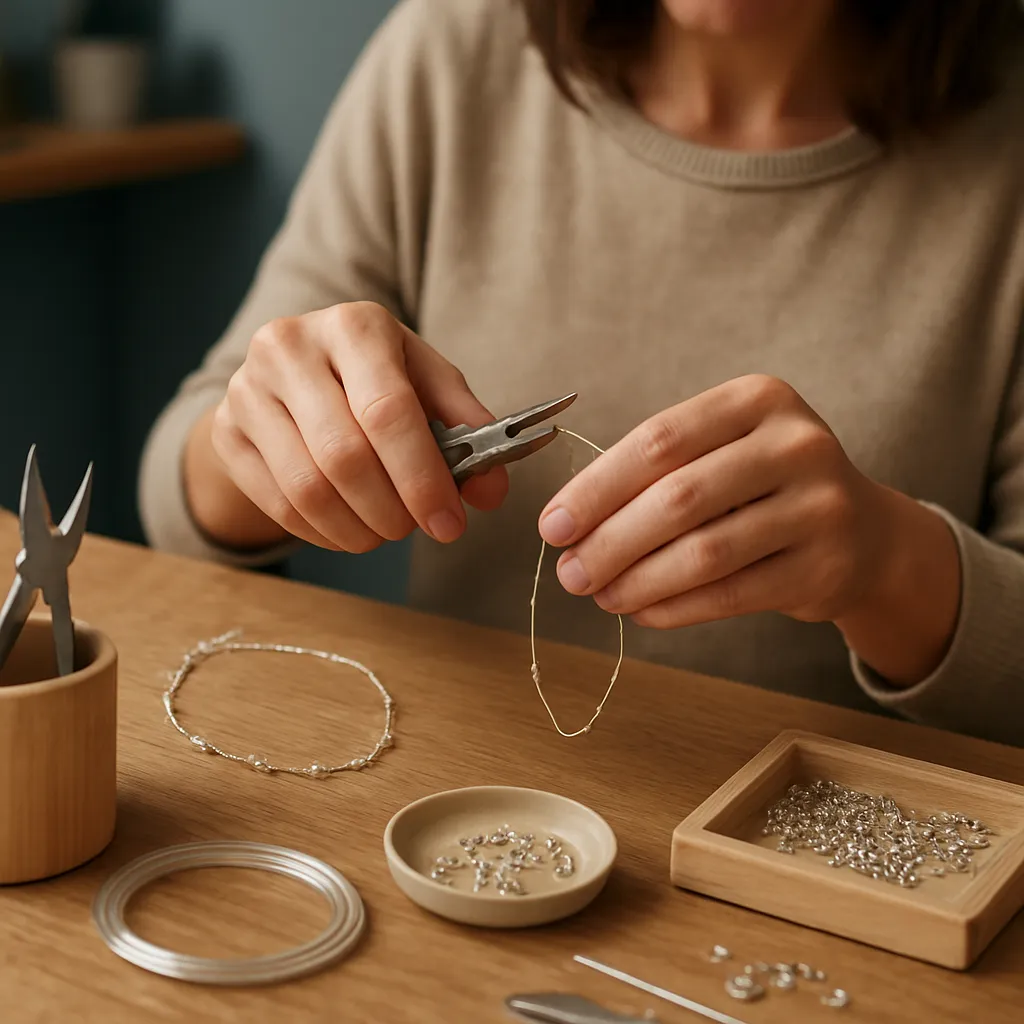
Handmade jewelry thrives on shared curiosity and careful craft. Whether you set stones at a traditional bench, string intricate bead patterns at the kitchen table, or sculpt polymer clay on a portable mat, the most effective way to grow is to learn alongside others. Online communities form the connective tissue of the jewelry world: they help you master new skills, troubleshoot a stubborn solder seam, find ethical suppliers, navigate pricing, and build a resilient creative practice. This guide maps the best types of online spaces for jewelry makers—places where knowledge is deep, feedback is kind, and opportunities to collaborate are real.
Why online communities matter to jewelry makers
Jewelry is a craft of precision and patience. Bench techniques often demand repetition, but the questions that appear during practice—why did my bezel ripple, why is this wire temper so springy, which torch tip is best for this joint—are easier to solve with peers. Communities shorten the distance between problem and solution. They also reduce isolation, a real risk in solo studios, and can be the difference between quitting in frustration and finding your next breakthrough.
Beyond support, communities are effective discovery engines. They highlight overlooked materials, introduce emerging artists, and surface suppliers you might never find alone. Many groups host monthly challenges that push you to test new processes or design prompts that refine your style. And because jewelry spans art, fashion, history, and engineering, meeting others expands your vocabulary in each of those domains.
Finally, online spaces are where your future collaborators, collectors, and mentors already spend time. Even if you sell locally, the conversations you join online influence your studio standards, your product photography, and the story you tell about your work.
How to choose the right community
Not every group is for every maker. Before you commit energy, evaluate potential spaces with a few practical criteria:
- Depth of knowledge: Are questions answered with nuance? Do people cite experience, show process shots, or link to technical resources?
- Signal-to-noise: Are posts mostly sales pitches, or is there sustained conversation and problem-solving?
- Moderation: Are there clear rules about attribution, originality, feedback, and civility? Is spam removed promptly?
- Searchability: Can you easily find past threads about casting defects, stone setting, or polishing compounds?
- Diversity: Are different materials and traditions represented—fine metals, beads, enamel, resin, polymer, recycled media?
- Accessibility: Are beginners welcomed thoughtfully without diluting advanced discussions for seasoned professionals?
- Opportunities: Does the group host challenges, critique sessions, studio tours, or resource exchanges?
As you explore, consider your current goals. If you want to refine torch control, a bench-focused space helps more than a general crafting group. If you’re launching a brand, business-minded groups will accelerate decisions on packaging, pricing, and marketplace strategy.
Time-tested forums and knowledge archives for jewelers
The most enduring communities are built around well-organized forums with years of indexed conversations. While social media is fast, forums are where you’ll find deep technical discussions that stay findable long after the day’s hashtag trends out.
Ganoksin Orchid Community
For bench jewelers and metalsmiths, Ganoksin’s Orchid forum is legendary. With decades of archived posts, this space covers alloy behavior, casting troubleshooting, setting fixturing, ergonomic bench setups, ventilation, torch systems, and finishing theory. It’s especially strong for small-shop production workflows and studio safety. Search any issue—firescale, porosity, rolling mill care—and you’ll find case studies from working professionals. Here, you’ll encounter vocabulary that broadens your craft literacy, from grain growth to eutectic temperatures and investment ratios. If you’re serious about metalsmithing, this archive alone is worth your time.
Lampwork and glass beadmaking communities
Glass beadmakers flourish in specialized forums that document torch chemistry, kiln schedules, mandrel prep, and glass compatibility charts. Archival posts often include photo sequences, making it easier to diagnose heat control or color reactions. These spaces also foster swapping events that grow your palette knowledge and annealing discipline in a hurry.
Q&A-style knowledge bases
Question-and-answer platforms devoted to crafting can be surprisingly precise about tool selection and sequence. Their best threads pair concise solutions with links to standards—for example, when to use wet tumbling vs. hand burnishing; or how to test a mystery alloy before attempting a repair. The structured format is a useful counterpart to conversational groups when you need a definitive answer fast.
Reddit hubs for every jewelry path
Reddit’s topic-based communities (subreddits) excel at quick feedback and broad exposure to different styles. Popular hubs feature:
- Process diaries: step-by-step posts from wire, sheet, and wax to finished piece, often with bench photos and notes on hurdles.
- Beginner clinics: recurring threads dedicated to entry-level questions—torch selection, saw frames, basic stone setting.
- Design critiques: clear, time-bound calls for feedback on balance, proportion, wearability, and fastening solutions.
- Material spotlights: posts that dissect surface treatments, patinas, or the practical limits of mixed media.
Reddit’s upvote mechanics surface practical advice and keep noise lower than many large social groups. When posting, include clear titles, tool lists, and what you’ve already tried to attract helpful responses. It’s one of the best places to get honest critique without the performative gloss of social feeds.
Social media groups and hashtag-driven communities
Social platforms reward visual storytelling, which suits jewelry well. They also excel at trend sensing and networking. But to use them as true communities rather than just galleries, look for groups and tags that prioritize education and process transparency.
Facebook groups worth seeking
Large, craft-specific groups can be chaotic, yet many maintain strong moderation and weekly themes: Tool Tuesday for bench hacks, WIP Wednesday for in-progress shots, and Critique Friday for structured feedback. Well-run groups typically enforce attribution rules and ban listing-only posts to preserve learning value. Before joining, skim the group’s featured posts to gauge tone and quality. Save posts that double as mini-tutorials—things like jig setups for consistent loops, shop-made burnishers, or trick fixtures for soldering tiny components.
Instagram and the power of tags
Instagram is not a forum, but it’s a vibrant scene for micro-communities organized by hashtags. Search and follow clusters that match your style and materials: enamelists, wire artistry, gemstone carving, or upcycled jewelry. Join prompt-based events—like 30 days of bezel settings or ring-a-week—to build cadence and visibility. The comment threads under process reels can be as instructive as the videos, especially when makers share failed attempts or lighting setups for studio shots. Practicing excellent photography will also make your questions clearer and your portfolio more compelling.
Pinterest and mood boards
While not conversational, Pinterest supports research and design iteration. Curate boards by clasp solutions, chain styles, prong aesthetics, or historical periods. Many communities share board links during theme challenges to gather references in one place. Used ethically—with attribution and careful distinction between inspiration and copying—this becomes a silent but powerful collaborator.
Real-time chat: Discord, Slack, and live cohorts
If forums are encyclopedias and social feeds are galleries, chat servers are studio lounges. They feel like the bench neighbor you can ask in the moment. The best servers organize channels by technique and by discipline—casting, stone setting, wax carving, lapidary, polymer clay—so questions don’t get lost. Voice rooms allow live troubleshooting, while short live sessions can turn into spontaneous workshops.
Because these spaces are intimate, culture matters. Look for posted guidelines on professional conduct, inclusive language, and process transparency. Expect to give as much as you get: share test pieces, show your jig builds, and document decisions (why you chose 20-gauge over 22-gauge, why a chisel back-bevel helped). If your work centers on wire-wrapping, look for servers that push design geometry and structural stability rather than only ornamental flourish; the difference will elevate your outcomes quickly.
Learning and challenge-based communities
Some groups form around classes, workshops, or seasonal challenges. Their advantage is focus. With a shared syllabus, you’ll cover a coherent set of skills and vocabulary. Many cohorts host critique walls where everyone posts the same assignment—say, a flush-set round in 1.5 mm—to compare outcomes and iterate. Instructors or peer moderators help you calibrate expectations: what’s achievable in an hour, what’s a stretch goal, and what standards to adopt for client-ready work.
Challenge groups, meanwhile, build mileage. A ring-a-day challenge forces efficiency and simplification, a chain-a-week prompt strengthens consistency and ergonomics, and a bezel marathon exposes weak torch habits fast. Consider joining at least one prompt group per year to keep your practice limber.
Business-focused communities: from branding to pricing
Turning skill into livelihood introduces new puzzles. Business groups specialize in marketing cadence, brand voice, packaging, and sales channels. Many host threads on fair applications, wholesale line sheets, SEO for product listings, and customer service scripts. Discussions about authentic storytelling help you position your values—recycled metals, local production, heirloom repair—in a way that resonates without posturing.
These spaces also share vendor experiences, shipping insurance tips, and returns policies. When pricing, peers can sanity-check your labor estimates and margins. Templates for cost-of-goods spreadsheets or production calendars often circulate in pinned posts. If you join a marketplace-specific group (like a seller team), learn their best practices for listing quality and seasonal timing.
Marketplace and guild communities
Marketplaces and guilds are both powerful, for different reasons.
- Marketplace teams: Seller collectives on large platforms coordinate seasonal promotions, share photography backdrops and copywriting feedback, and often maintain supplier lists that save real money. They’re excellent for peer benchmarking.
- Guilds and associations: These bodies set standards, host juried showcases, and offer mentorship. Many run digital lecture series on conservation, history, and contemporary practice. A guild’s code of ethics provides a foundation for sustainable studio growth.
These communities skew professional; expect to document process integrity, material origins, and consistent quality control. You’ll likely encounter discussions on alloy selection, customer education about care, and topics like hallmarking in jurisdictions where it applies.
Regional and material-specific groups
Geography and material choice shape constraints: shipping costs, metal prices, tool availability, and repair norms vary widely. Regional groups connect you with service providers—stone setters, engravers, casters—who understand your local market. Material-specific groups (for resin, enamel, polymer clay, wood, horn) focus on the chemistry and care techniques that general jewelry spaces gloss over. Expect deep dives on curing schedules, adhesion systems, UV stability, or wood stabilization methods, and tips on ethical sourcing for organics.
What to post, how to ask, and how to give back
Strong communities are built by members who communicate clearly. A good help post includes:
- Concise problem statement: “18g sterling jump rings open in wear; looking for stronger closure method without torch.”
- Context: tools used, metal/alloy, gauges, stone types, solders/adhesives, environmental conditions, finishing sequence.
- Visuals: in-focus, well-lit images from several angles; add a ruler for scale.
- What you’ve tried: methods attempted and results, including failures; this earns targeted advice.
- Constraints: budget, safety limitations, deadlines.
To give back, document your solutions with the same care you hope to receive. If you discover that a specific file pattern avoids chatter on a particular bezel profile, post a short recipe. If you tested three mandrel releases for lampwork, share your ranking with photos. Be generous with attributions when you adapt someone’s jig or technique.
Core jewelry skills that benefit most from community feedback
Some aspects of jewelry respond dramatically to peer input. Focus community time where it compounds:
- Joinery: Posts about solder joint design, fit-up discipline, and heat management often unlock invisible plateaus. Sharing thermal strategy diagrams can transform your soldering.
- Stone setting: From bead and bright cutting to bezels and prongs, videos and close-up critiques are invaluable. Ask for feedback on tool geometry and hand posture.
- Surface finishing: Staging grits, compound selection, and buff pressure are subtle. Community recipes save hours of trial and error.
- Ergonomics: Bench height, sawing posture, and lighting reduce fatigue and improve precision. Studio tours help you reconfigure intelligently.
- Design for wear: Clasps, hinges, and earring weight distribution benefit from long-term user stories shared by peers.
Ethics, safety, and sustainability in online spaces
Good communities normalize safe practice. They highlight ventilation standards for fumes, PPE for dusts, and disposal protocols for pickle and polishing waste. Expect regular threads about torch storage, regulator checks, and the risks of cyanide-based plating. Make it second nature to describe your safety controls when sharing process; peers will help you spot blind spots.
Ethics also extend to cultural respect and design integrity. Communities should encourage research into motifs and forms, especially when drawing from living traditions. If you’re adapting a design lineage you don’t belong to, ask mentors how to approach the work with humility and credit, or whether to choose a different direction entirely.
Finally, sustainability conversations—recycling scrap, re-refining flows, and material provenance—help you set studio policies you can proudly share with clients.
From hobbyist to professional: using communities to level up
Online communities can be a ladder. Here’s a simple progression many makers follow:
- Foundations: Learn tool handling and vocabulary. Post WIPs and ask “what am I not seeing?”
- Repeatable quality: Share batches to refine consistency; seek critiques that focus on tolerances and QA.
- Distinct voice: Join design-driven groups and prompts; solicit feedback on cohesion and collection logic.
- Market fit: Enter business communities; test pricing, packaging, and product-market hypotheses.
- Mentoring: Teach what you know; run mini-challenges; help moderate. Teaching cements mastery.
At each rung, recalibrate your community mix. You might keep one archive-heavy forum for research, one fast-feedback hub for technique, one business channel for strategy, and one intimate chat for mutual accountability.
Finding suppliers and tools through community wisdom
One of the most practical benefits of community is peer-vetted sourcing. Makers track alloy consistency, delivery speed, scrap policies, and customer service across vendors. They share which bristle discs last, which micro-motors hold up under daily load, and which stonesetter can rescue a fragile antique mount. Thread archives often list local casters and platers. For ethical buyers, communities flag recycled sheet/wire providers and Fairmined or traceable gemstones dealers. Keep a private supplier log with date-stamped notes and ratings so your studio memory compounds over time.
Building a resilient studio routine with community touchpoints
Consistency beats intensity. Use communities to scaffold a weekly cadence that respects both making and learning:
- Monday: Review saved posts; plan one targeted skill drill (e.g., sawing curves to a scribed line).
- Wednesday: Share a WIP with a clear question. Reply to three peers with constructive observations.
- Friday: Post a micro-case study—two photos and three bullet points about a process you refined.
- Monthly: Enter a challenge or host a small prompt for your circle (clasp redesigns, chain variations, or setting practice).
- Quarterly: Audit your tool habits; ask the community what they’ve retired or upgraded and why.
This rhythm prevents overwhelm, grows your visibility without spam, and steadily hardens your technical floor.
How to evaluate advice and avoid pitfalls
Online advice ranges from brilliant to risky. Strengthen your filter:
- Ask for context: tool types, alloys, studio environment. What works with propane may fail with oxy/acetylene.
- Seek convergence: If multiple experienced makers agree, confidence rises. If answers scatter, prototype cautiously.
- Prioritize standards: When safety or legality is involved (e.g., electrical mods, chemical handling), defer to codes and authoritative references.
- Document experiments: Keep a bench log; post results so the community learns with you.
- Beware absolutes: Materials behave; they don’t obey slogans. Nuance beats certainty in craft.
Underrepresented niches and inclusive spaces
Look for communities that make room for adaptive tools, neurodivergent workflows, and the financial realities of starting small. Ask about low-cost alternatives, tool-sharing, and DIY fixtures for accessibility. Spaces that normalize different learning speeds and celebrate non-linear progress tend to produce stronger makers—and kinder professionals.
A compact onboarding plan
To turn this guide into action, try this 30-day plan:
- Days 1–3: Join one archive forum, one social group, and one chat server. Read the rules. Introduce yourself with a single goal.
- Days 4–10: Search the archives for three recurring issues in your work. Save key threads and extract checklists.
- Days 11–17: Post one specific question with photos. Offer three helpful replies to others.
- Days 18–24: Share a finished piece with process notes. Ask for feedback on one element only.
- Days 25–30: Compile what you learned into a mini-guide for your peers. Suggest a small group challenge.
By the end, you’ll have a tailored feed of mentors, reference threads, and friends who care about your progress. You’ll also have built a habit of contribution—essential fuel for any thriving community.
Glossary of high-impact skills and conversations you’ll encounter
To navigate confidently, expect to meet concepts that reward deeper study:
- Heat control: shadowing, thermal mass, and sequential fusing to protect earlier joins.
- Work hardening and annealing: how to cycle sheet and wire to manage spring and memory.
- Fixture-making: jigs, third-hands, binding wire tricks, and investment dams for complex assemblies.
- Surface engineering: abrasives staging, compound compatibility, and final sealing methods for reactive metals.
- Stone care: Mohs scale nuance, cleavage planes, and safe setting practices for soft or heat-sensitive materials.
- Documentation: photographic standards, naming conventions, and provenance records for heirloom redesigns.
The long arc of mastery
Great jewelry is intimate engineering that lives on a body. Every clasp, hinge, solder seam, and surface is a promise to the wearer. Online communities won’t do the work for you, but they will compress learning curves, reveal blind spots, and surround you with people who believe standards matter. Over time, you’ll move from gathering tips to shaping conversations, from asking for help to hosting clinics, from copying demos to originating methods. Keep showing up, keep sharing both success and failure, and let the chorus of peers tune your ear for quality.
When you open your bench tomorrow, choose one small experiment and one generous contribution. Over months and years, those two acts—curiosity and generosity—will compound into a practice you can trust. And as you grow, your posts will become the threads that a new maker searches at 2 a.m., the missing explanation that helps them master a bezel or fix a stubborn seam, the reason they stay with the work. In that way, every post is part of craft lineage—quiet, cumulative, and fiercely alive.
Appendix: a short list of focal topics to seed your search in any group—casting defects, prong geometry, chain repairs, patina chemistry, bench ergonomics, alloy selection, clasp engineering, torch safety, lapidary preforms, and finishing schedules. Use them to build playlists of posts you’ll revisit. And when you document your own hard-won lessons—on annealing cycles, polishing media, or heat sinks—tag them clearly so that others can find them later. That’s how good knowledge becomes shared infrastructure in the jewelry field, from raw stock to finished heirloom.
